AURORA
February 14, 2025 | Mare Island, Vallejo, California
Aurora was at Lind Marine’s Mare Island facility in Vallejo, California, on February 14, 2025, during her dismantling. Built in Hamburg in 1955 as Wappen von Hamburg, the former passenger ship had sailed in the North Sea, Mediterranean and Alaska before spending her later years in California.
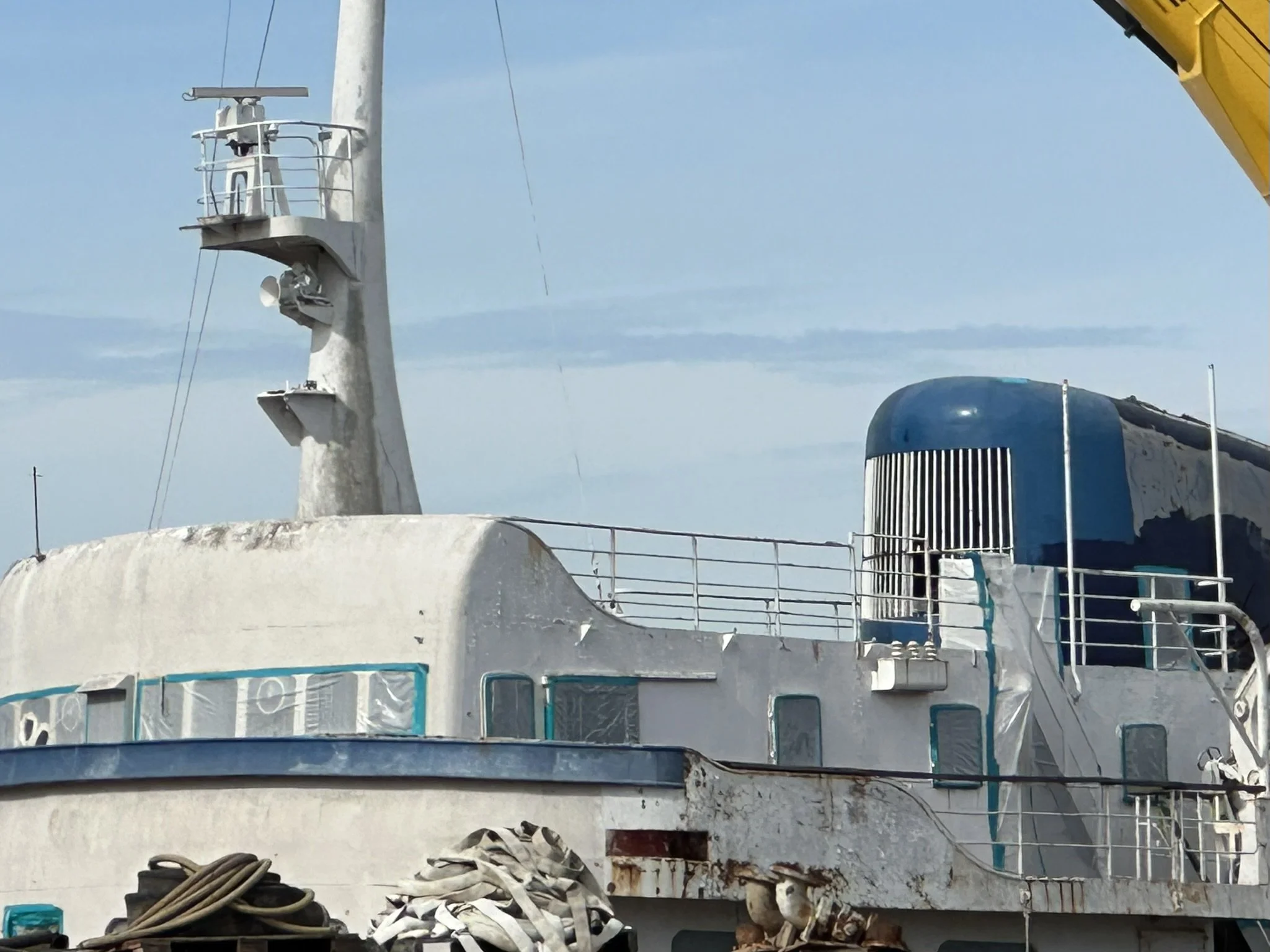
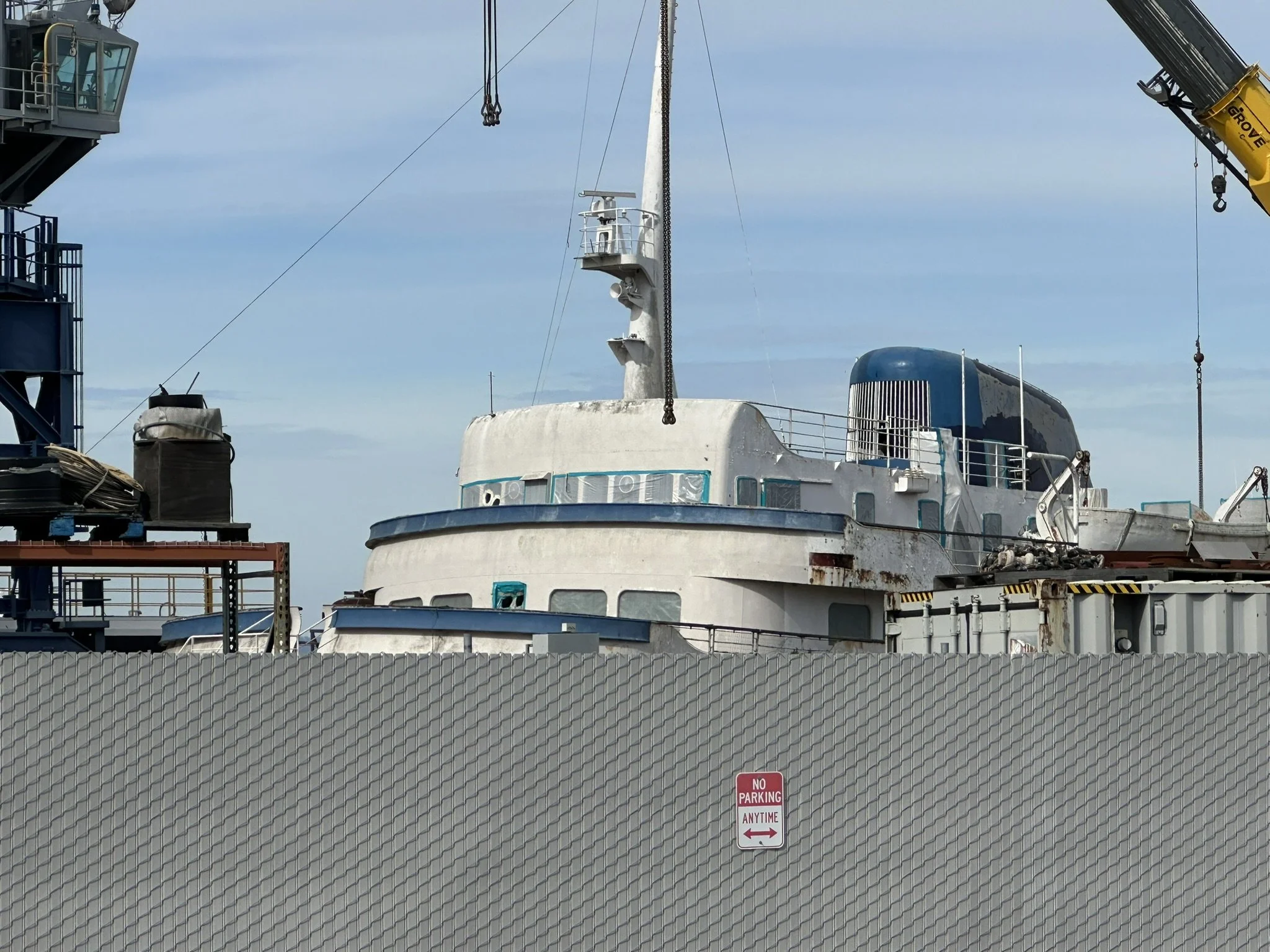
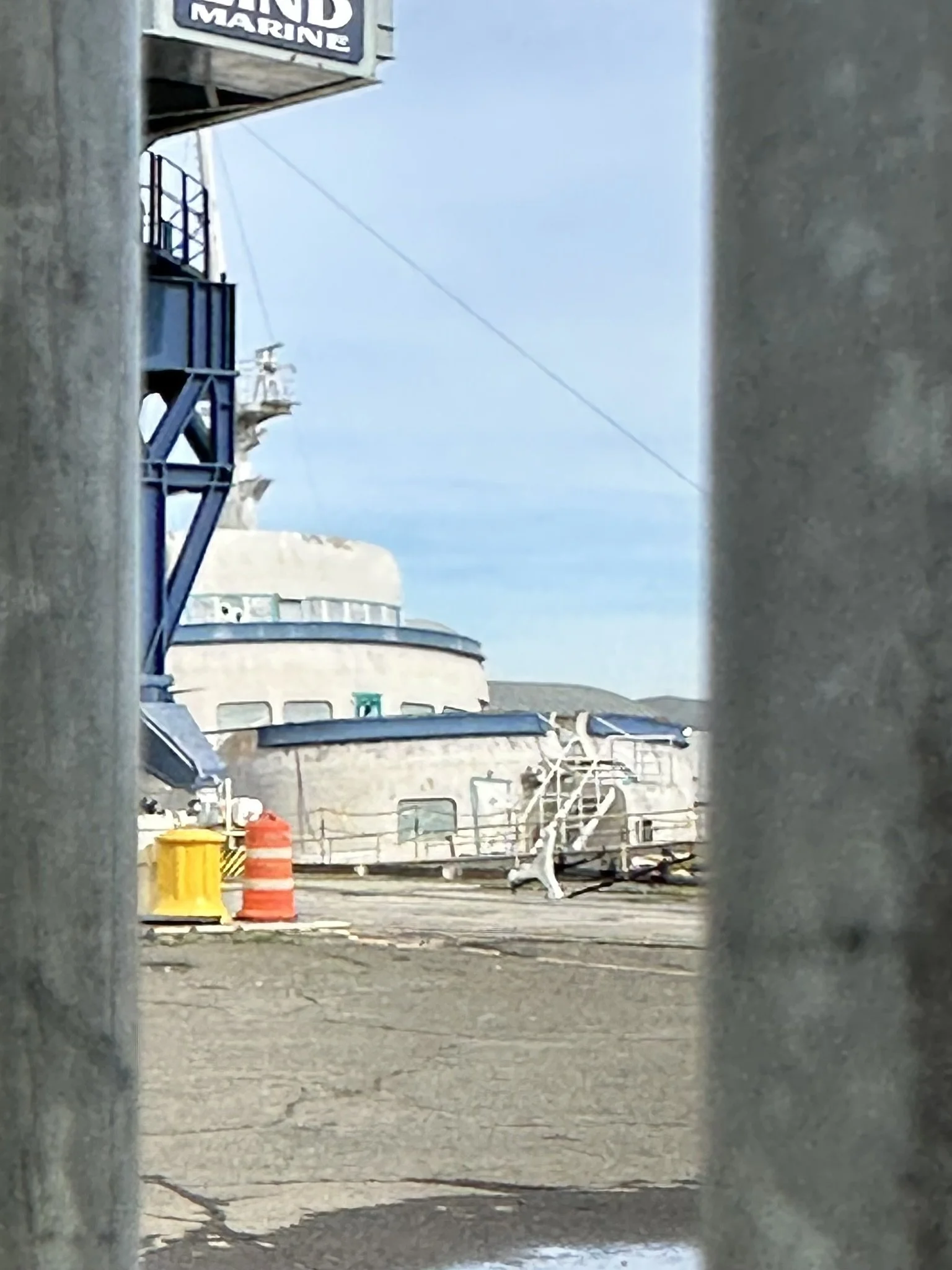
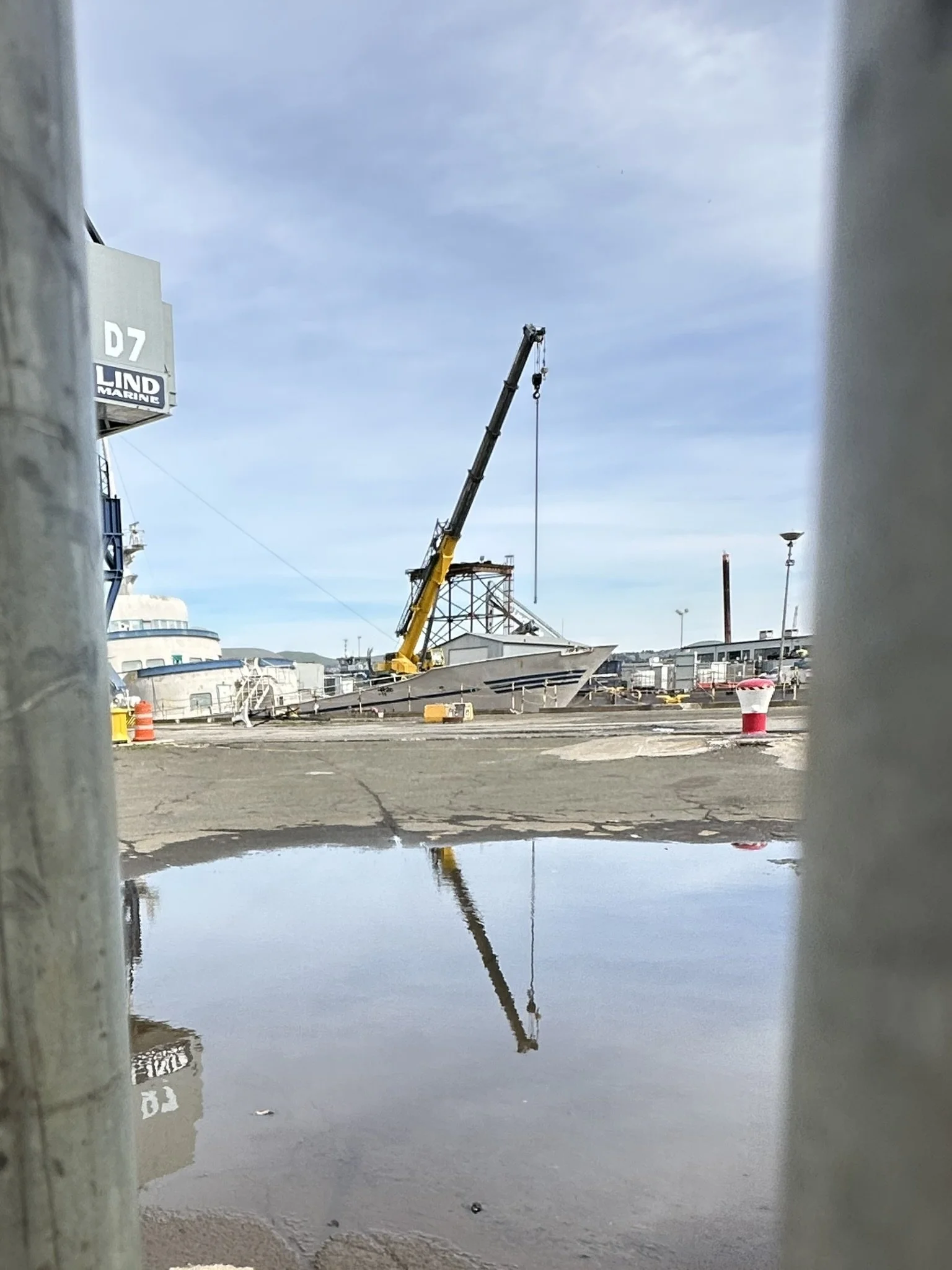
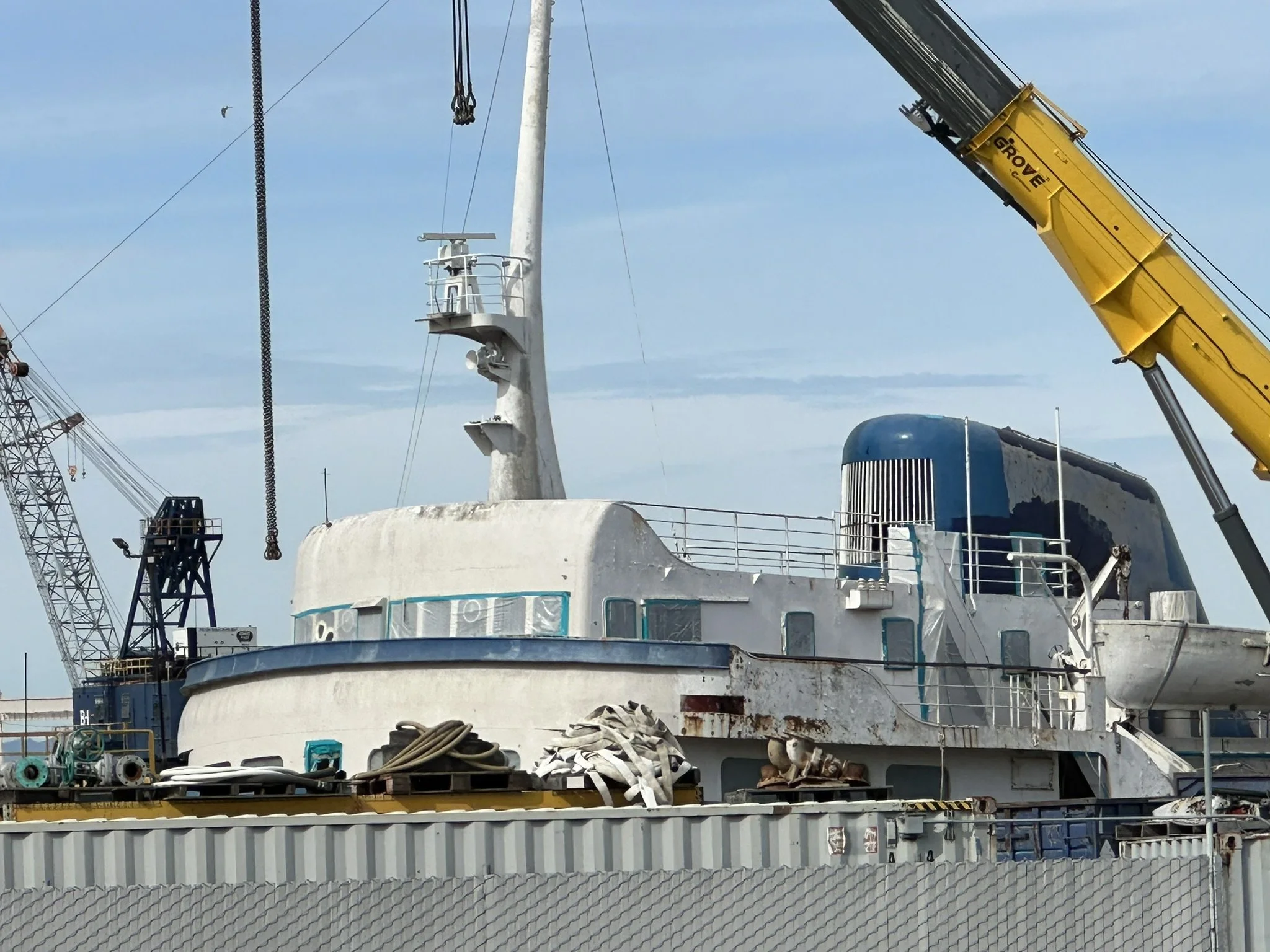
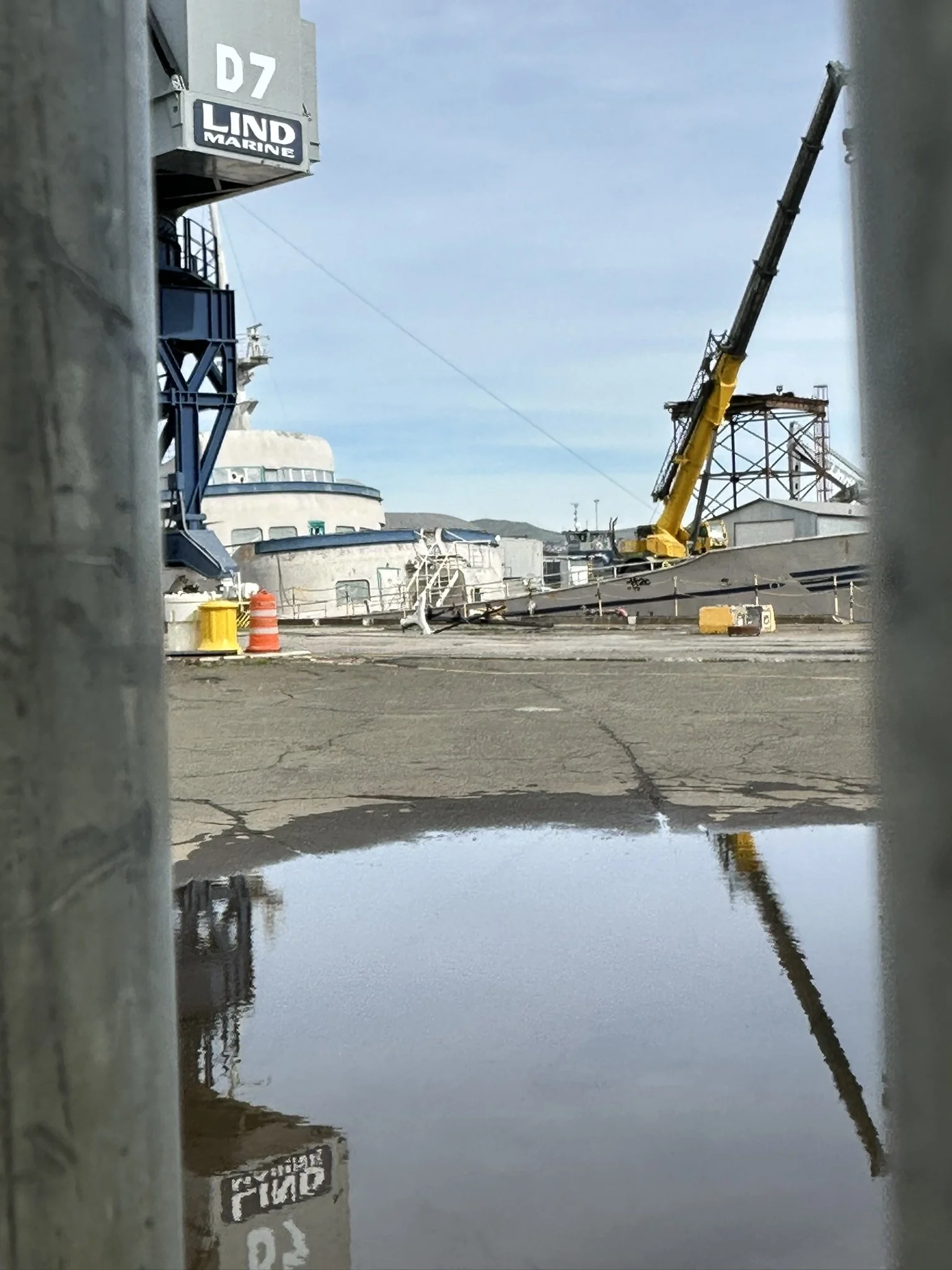
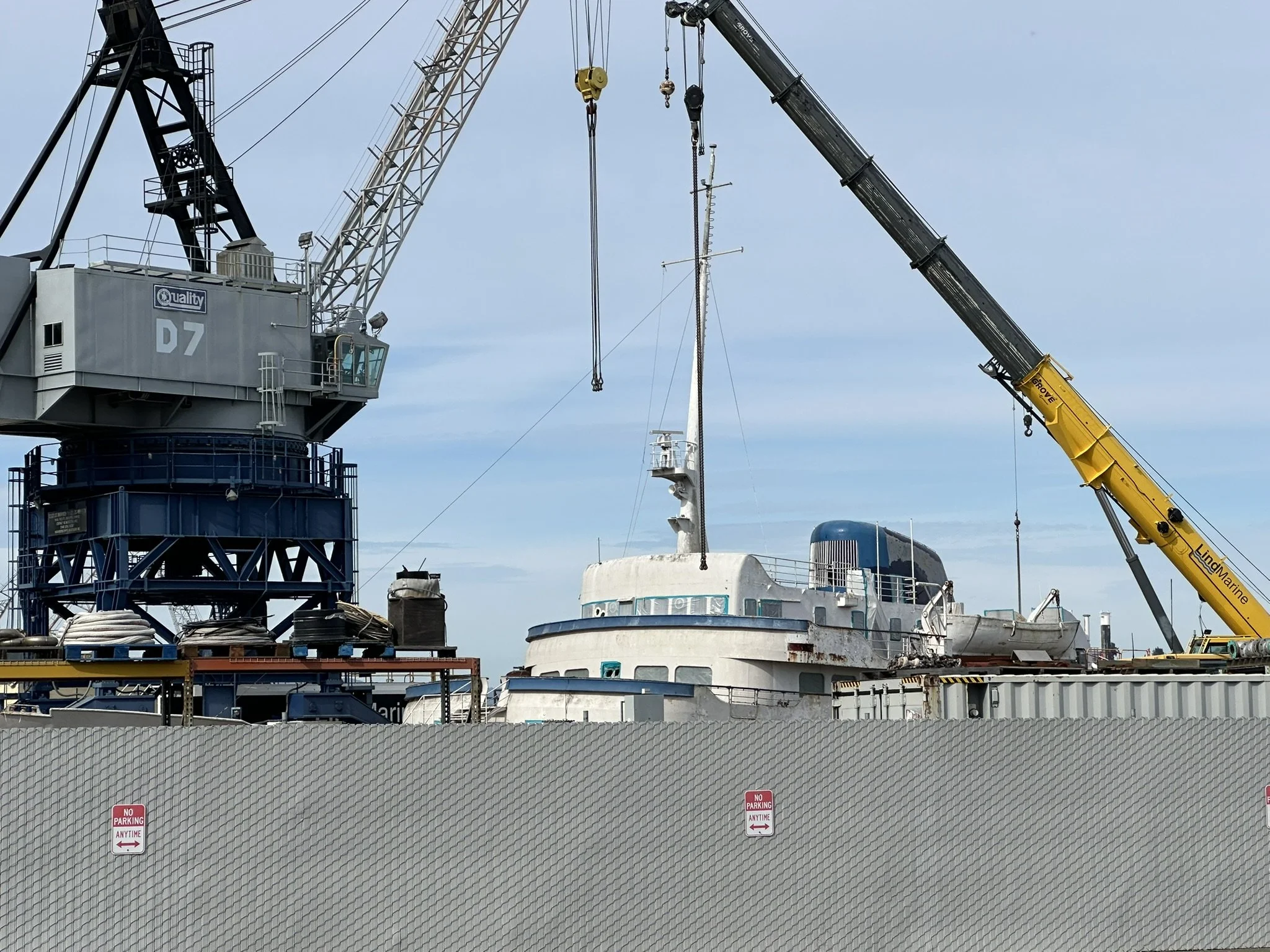
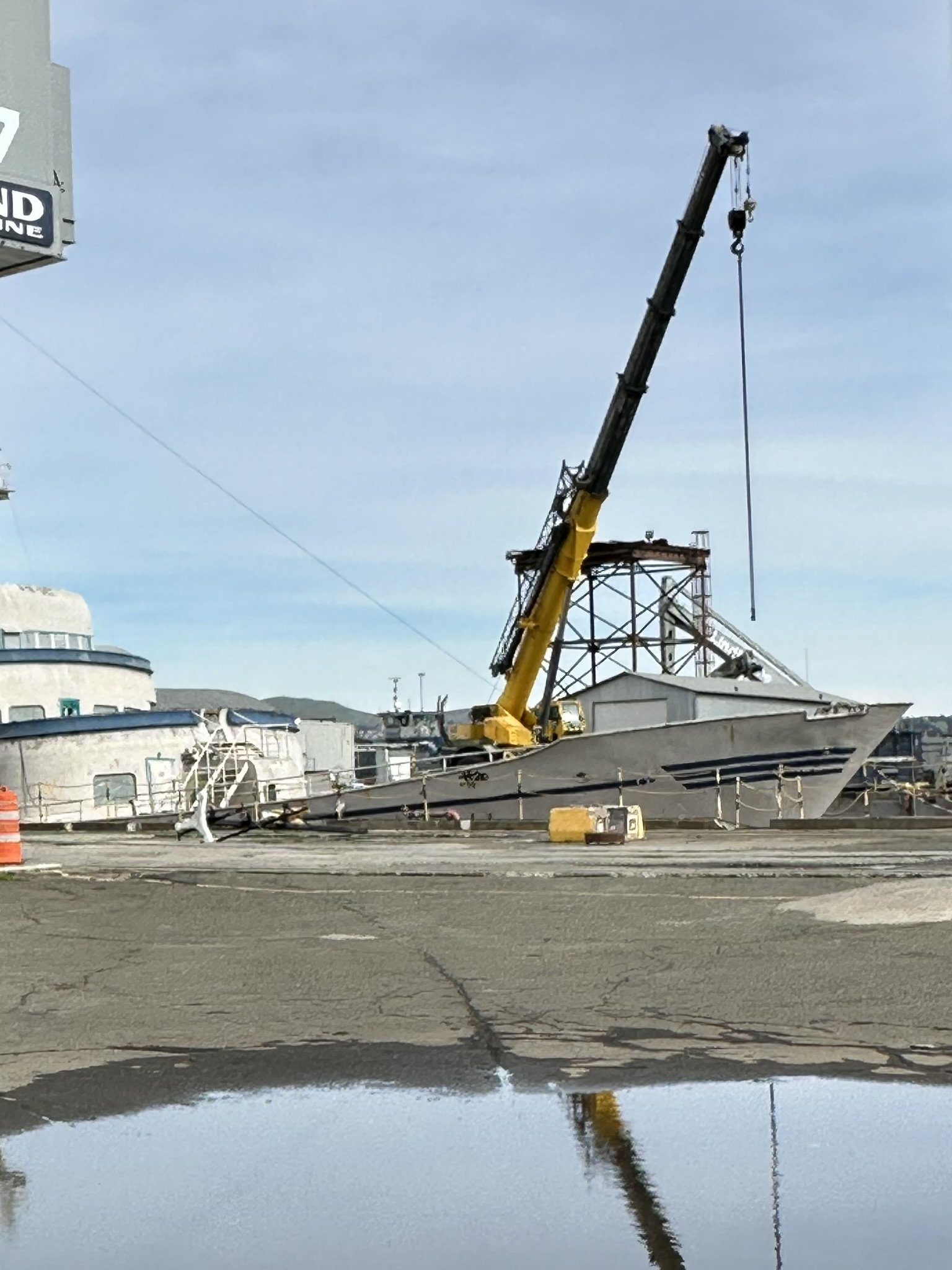
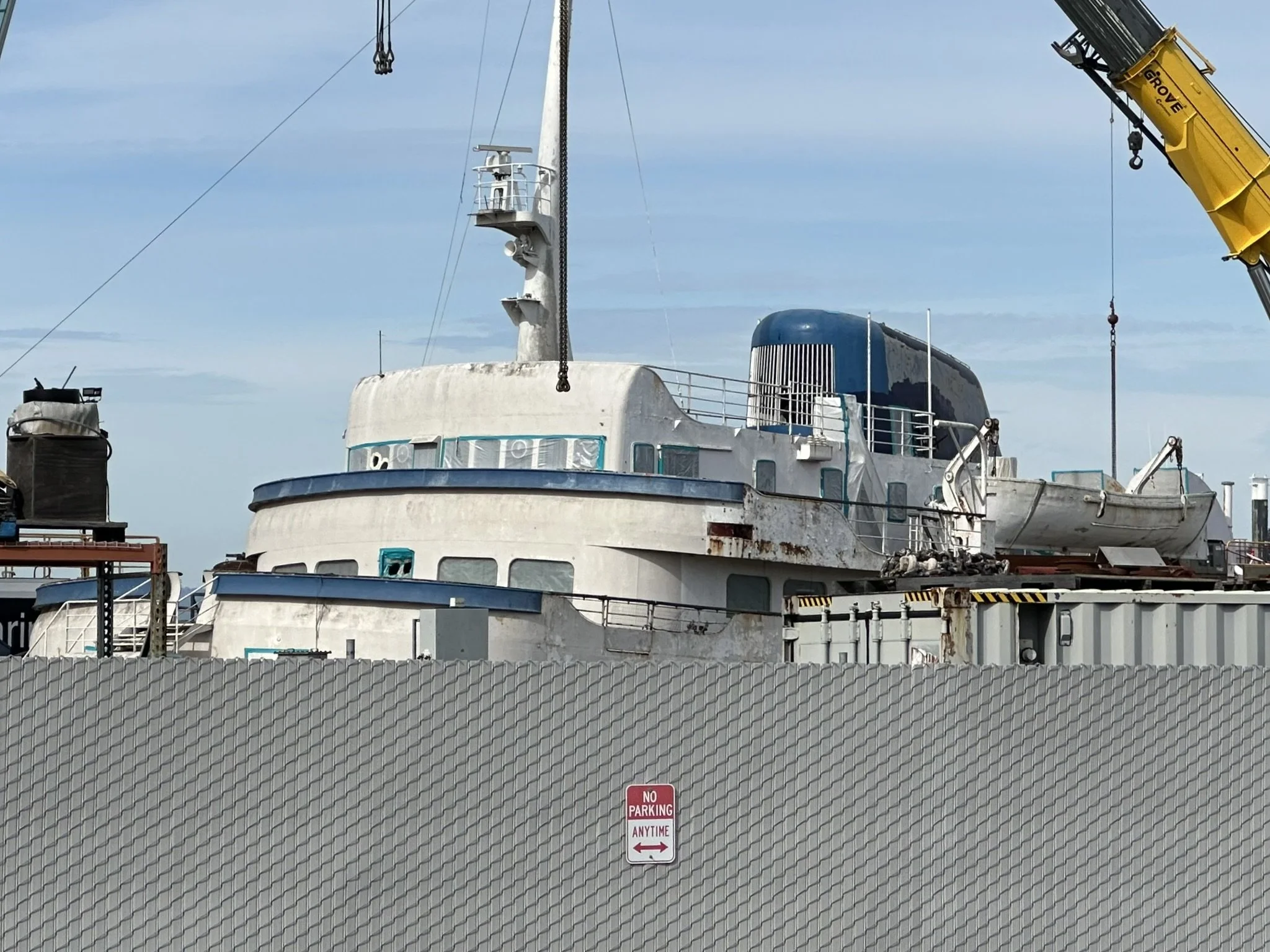
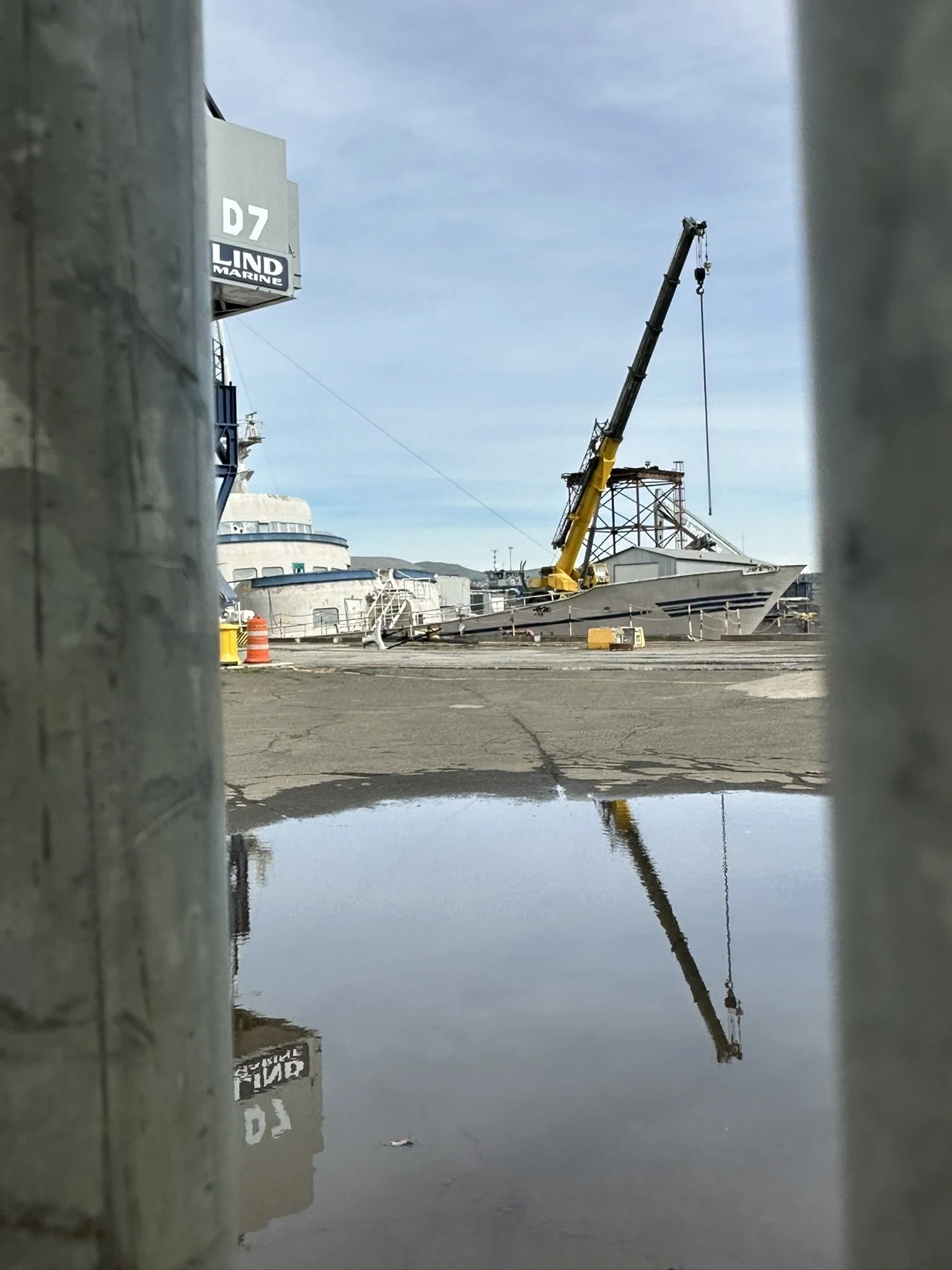
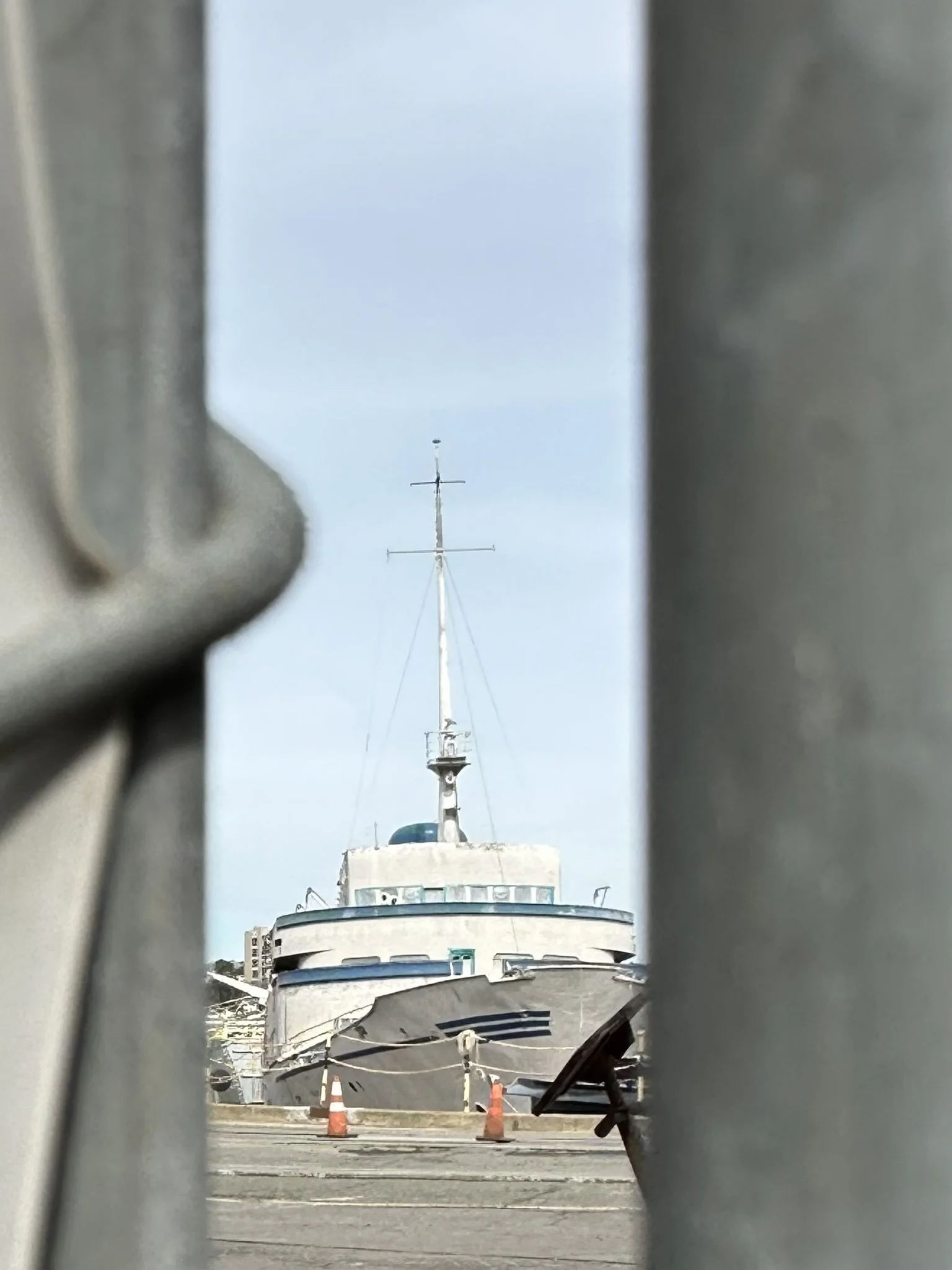
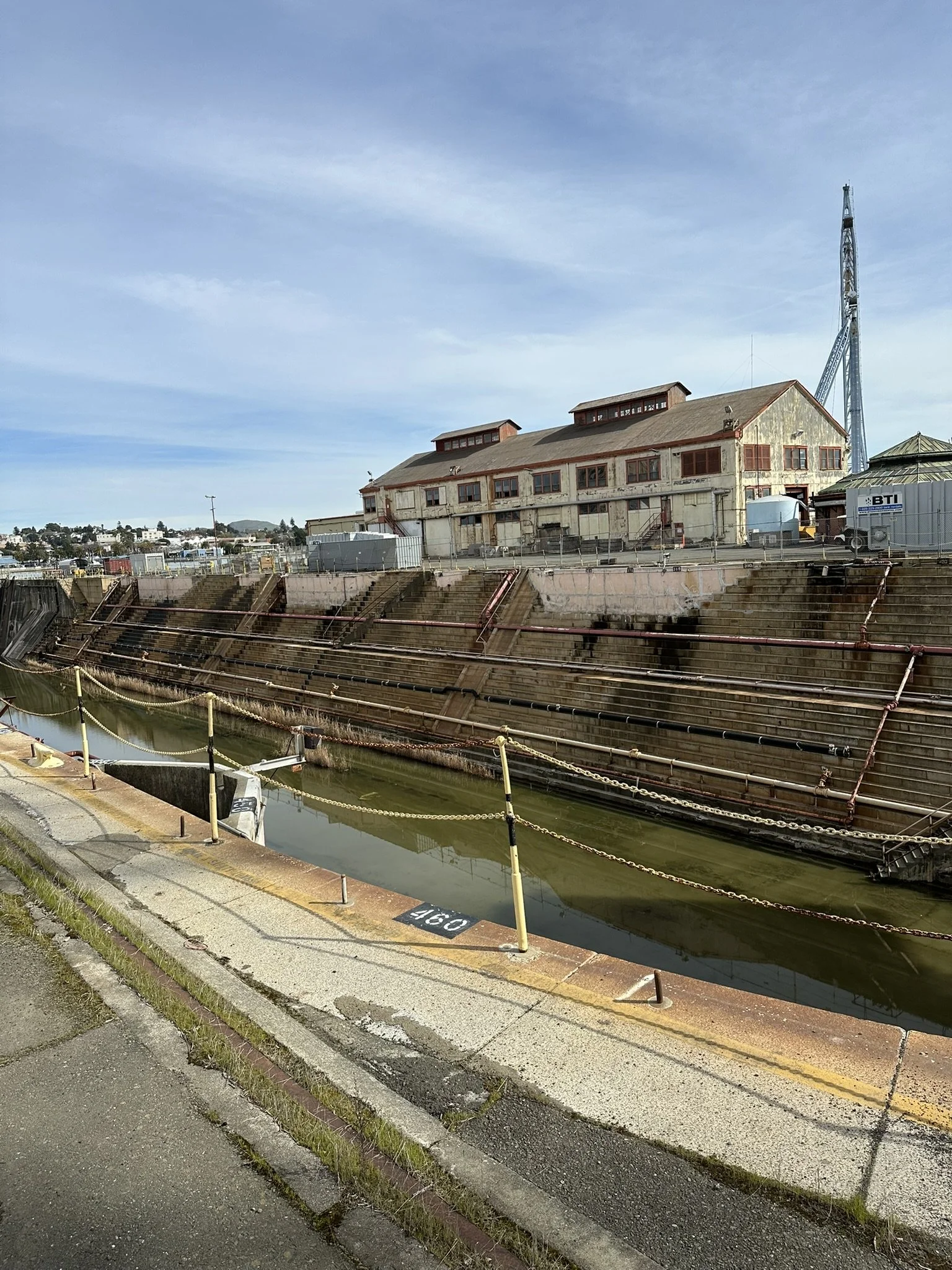
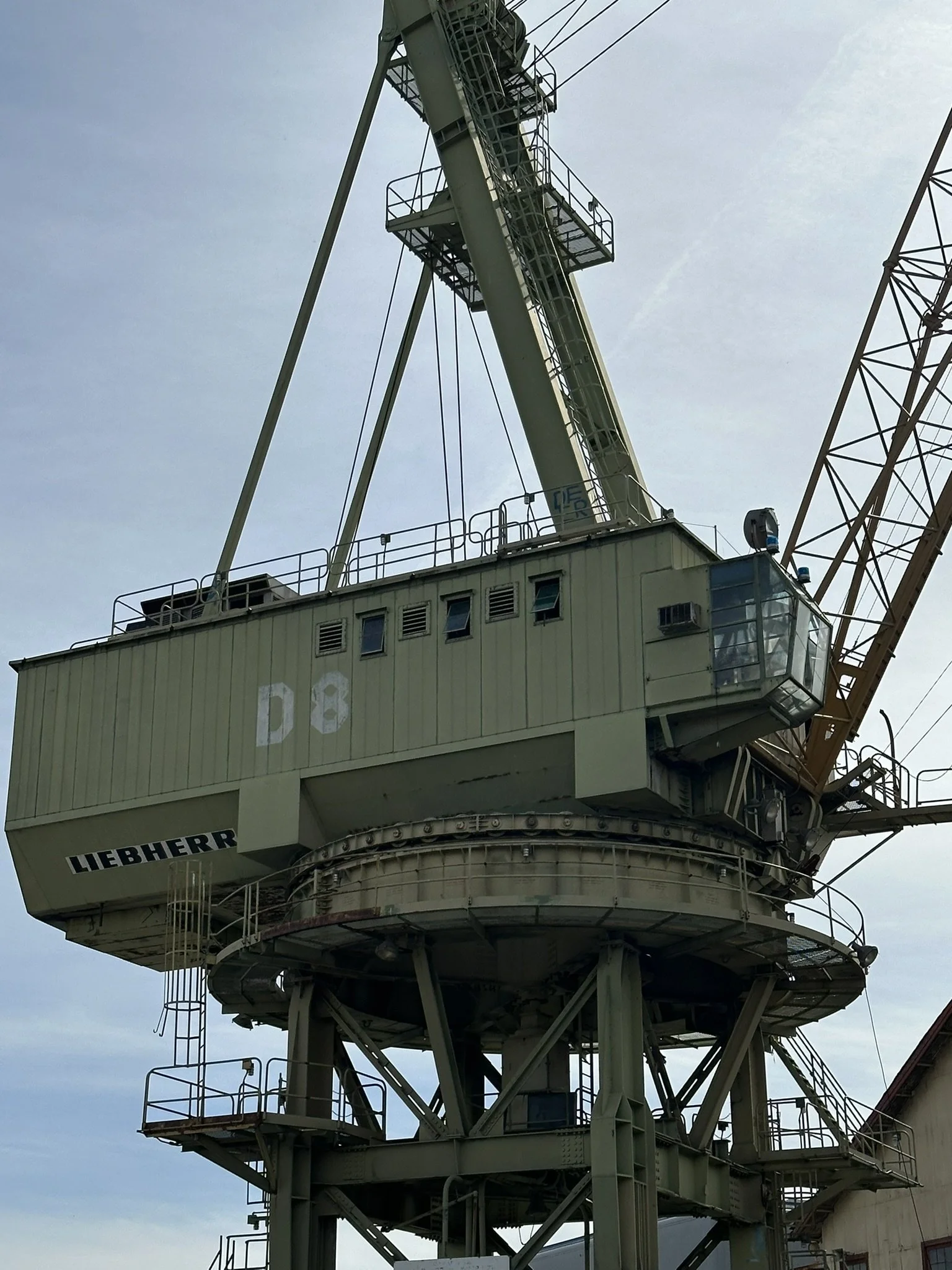
Aurora was at Lind Marine’s facility on Mare Island in Vallejo, California, on February 14, 2025, during the dismantling of a passenger ship whose history stretched back to postwar Germany. Originally named Wappen von Hamburg, she had entered service in 1955 carrying excursion passengers between Hamburg and Helgoland before being converted for overnight cruising.
Over the following decades, the ship sailed as Delos, Polar Star, Pacific Star and Xanadu. Her career connected the North Sea excursion trade with the development of cruising in the Greek islands and Alaska. Later known as Expex and Faithful, she passed through several proposed uses before becoming the subject of a lengthy restoration effort under the name Aurora.
Following her partial sinking near Stockton in May 2024, Aurora was refloated and eventually towed from the Sacramento–San Joaquin Delta to Mare Island in December. These photographs document the ship during her final months, approximately 70 years after her construction.
Information List
Name: Aurora
Original Name: Wappen von Hamburg
Other Former Names: Delos, Polar Star, Pacific Star, Xanadu, Expex and Faithful
Type: Former excursion ship and cruise ship
Original Operator: HADAG, Hamburg
Builder: Steinwerder Industrie AG / Blohm & Voss, Hamburg, West Germany
Launched: February 1, 1955
Entered Service: 1955
IMO Number: 5088227
Length Overall: Approximately 294 feet / 89.5 meters
Beam: Approximately 43 feet / 13.2 meters
Propulsion: Diesel-electric, driving twin propellers
Original Day-Passenger Capacity: Approximately 1,600
Cruise Passenger Capacity Following Conversion: Approximately 186
Status at Gallery Date: Decommissioned; undergoing dismantling
Dismantling Facility: Lind Marine, Mare Island
Gallery Date: February 14, 2025
Gallery Location: Mare Island, Vallejo, California
History and Features
Wappen von Hamburg and the North Sea:
The ship was launched in Hamburg on February 1, 1955, as Wappen von Hamburg, a name meaning “Coat of Arms of Hamburg.”
Built for HADAG, she carried passengers on excursions from Hamburg through Cuxhaven to Helgoland.
Her original arrangement emphasized public rooms, dining facilities and open decks for large numbers of day passengers.
The service formed part of the revival of leisure travel in West Germany during the 1950s.
Although her appearance later became associated with small cruise ships, she began her career as a North Sea excursion vessel rather than a transatlantic liner.
Conversion to Delos:
After her sale to the Greek Nomikos Line, the ship was renamed Delos and converted for Mediterranean cruising.
The conversion introduced overnight accommodation for approximately 186 passengers, a substantial change from her original day-excursion role.
Air conditioning and a swimming pool helped adapt the vessel to warm-weather voyages.
As Delos, she became an early participant in the developing Greek-island cruise market.
Her compact size and comparatively small passenger complement distinguished her from the much larger ships that would later dominate Mediterranean cruising.
Alaska and Pacific Cruising:
In 1967, the ship moved into the Alaska cruise trade under the name Polar Star.
Operating in association with Westours, she sailed Inside Passage itineraries from Vancouver.
Her subsequent Pacific Star identity formed another chapter in a career that had shifted from European waters to the Pacific coast.
These years placed the ship within an earlier period of Alaska cruising, when smaller passenger vessels played a prominent role in the region.
The Xanadu Years:
Renamed Xanadu in 1972, the ship continued her career as a small cruise vessel.
Her interiors incorporated decorative objects and furnishings intended to give the ship an individual character.
Open promenade areas and outdoor deck space remained important features of her passenger layout.
The difficulties facing smaller cruise operators during the 1970s, including rising fuel costs, contributed to the end of this stage of her career.
Later Names and Proposed Uses:
After leaving regular passenger service, the vessel passed through further ownership changes and periods of inactivity.
As Expex, she was associated with a proposed exhibition and trade-show operation in Los Angeles.
Under the later name Faithful, plans included humanitarian service.
Other proposals involved conversion into a hospital ship or private yacht.
These projects did not establish a lasting new operating role, and the ship remained in California.
Restoration as Aurora:
Chris Willson acquired the vessel in 2008 and began a restoration effort that continued for many years.
Renamed Aurora, she spent time at Rio Vista, San Francisco and later Little Potato Slough near Stockton.
Work by Willson and volunteers included cleaning, repairs and the refurbishment of interior spaces.
The project attracted attention to a ship that had survived long after the end of her commercial cruising career.
Despite that effort, Aurora never returned to regular passenger service.
The 2024 Sinking and Removal:
On May 22, 2024, Aurora partially sank at her berth in Little Potato Slough.
A coordinated response addressed leaking petroleum products and the environmental risks posed by the vessel.
After refloating and inspections, arrangements were made to remove her from the Delta.
The tow toward Vallejo began on December 20, 2024.
Moving the ship required a deadship tow because she could not make the passage under her own power.
February 14, 2025 – Mare Island:
By the date of this gallery, Aurora was at Lind Marine on Mare Island for dismantling.
Her removal followed decades of changing roles, extended layups and attempts to preserve or repurpose the vessel.
The photographs record the closing chapter of a ship whose passenger career had encompassed North Sea excursions, Mediterranean cruises and Alaska voyages.
Aurora’s history illustrates how a relatively small passenger ship could be adapted repeatedly as travel markets and ownership changed.
OLP Social: Dismantling marked the end of a 70-year history that began as Wappen von Hamburg and included Greek-island and Alaska cruising before a lengthy California restoration effort.