QUEEN MARY 2
February 6, 2026 | San Francisco, California
Queen Mary 2 (Cunard) spent February 6, 2026, in San Francisco during her 108-night World Voyage, completing an overnight call before departing beneath the Golden Gate Bridge for Hawaii and the Pacific. The visit came just four days after her historic Royal Rendezvous with RMS Queen Mary in Long Beach, placing San Francisco at an especially memorable point in the ocean liner’s journey around the world.
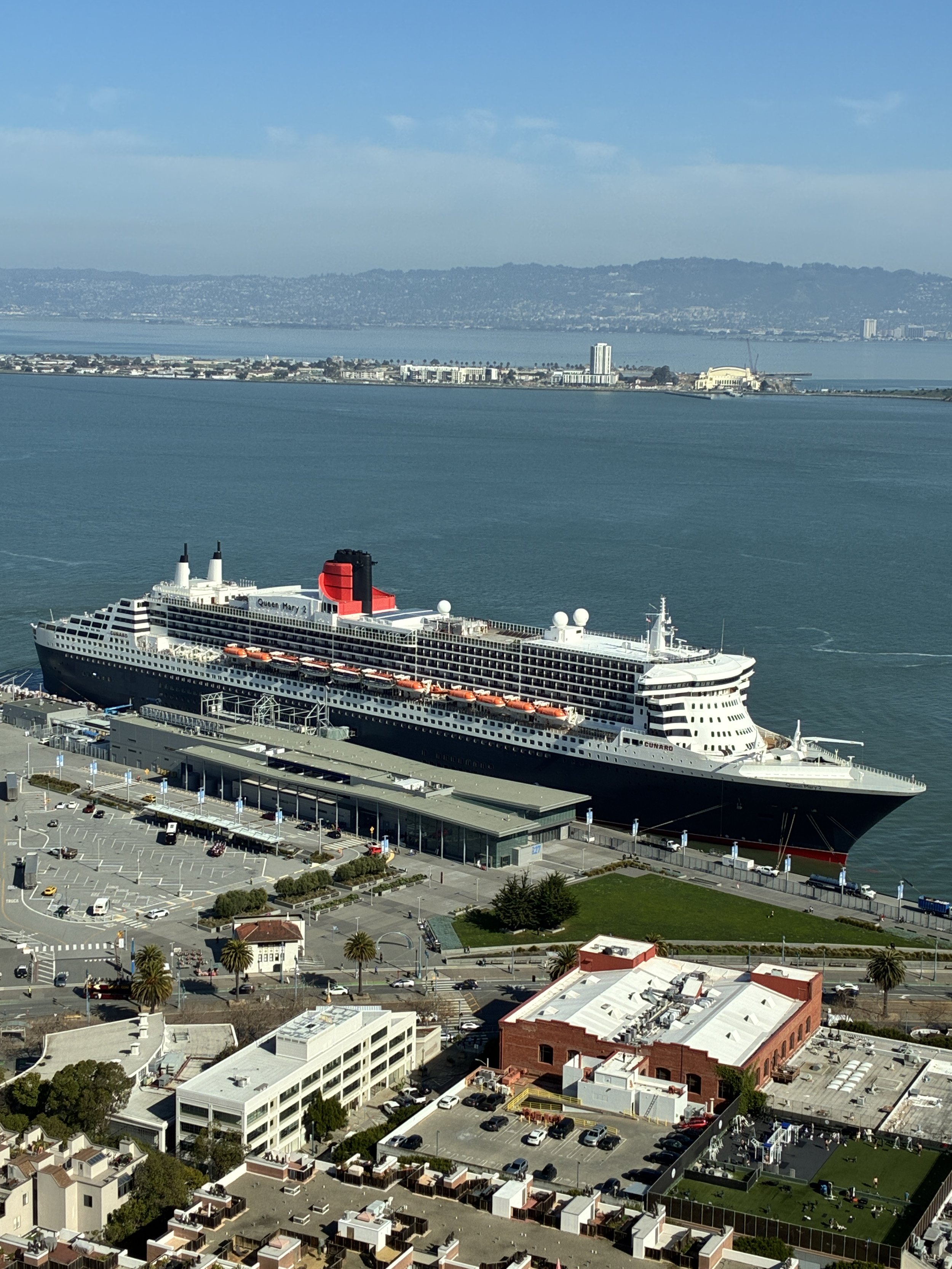
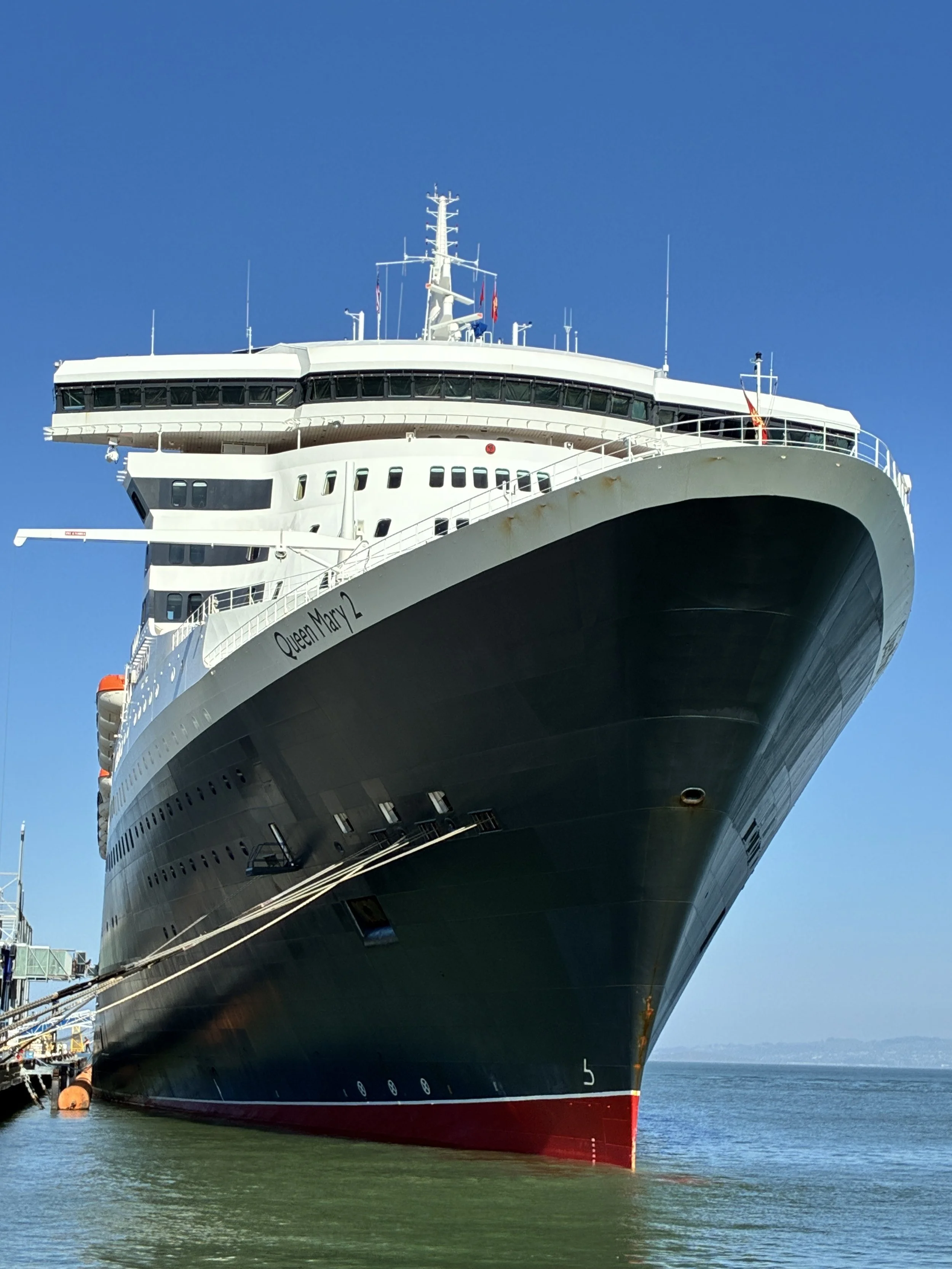
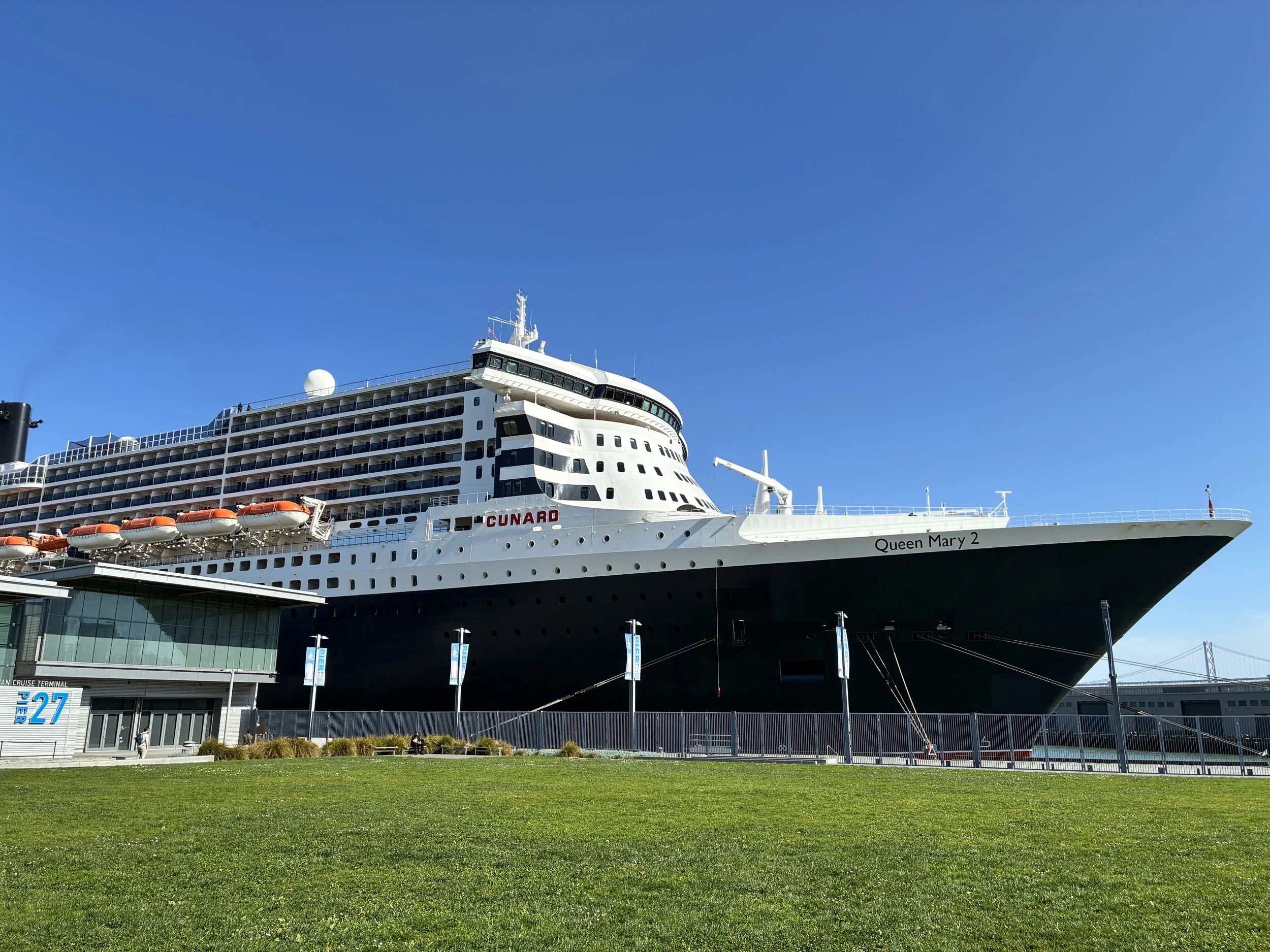
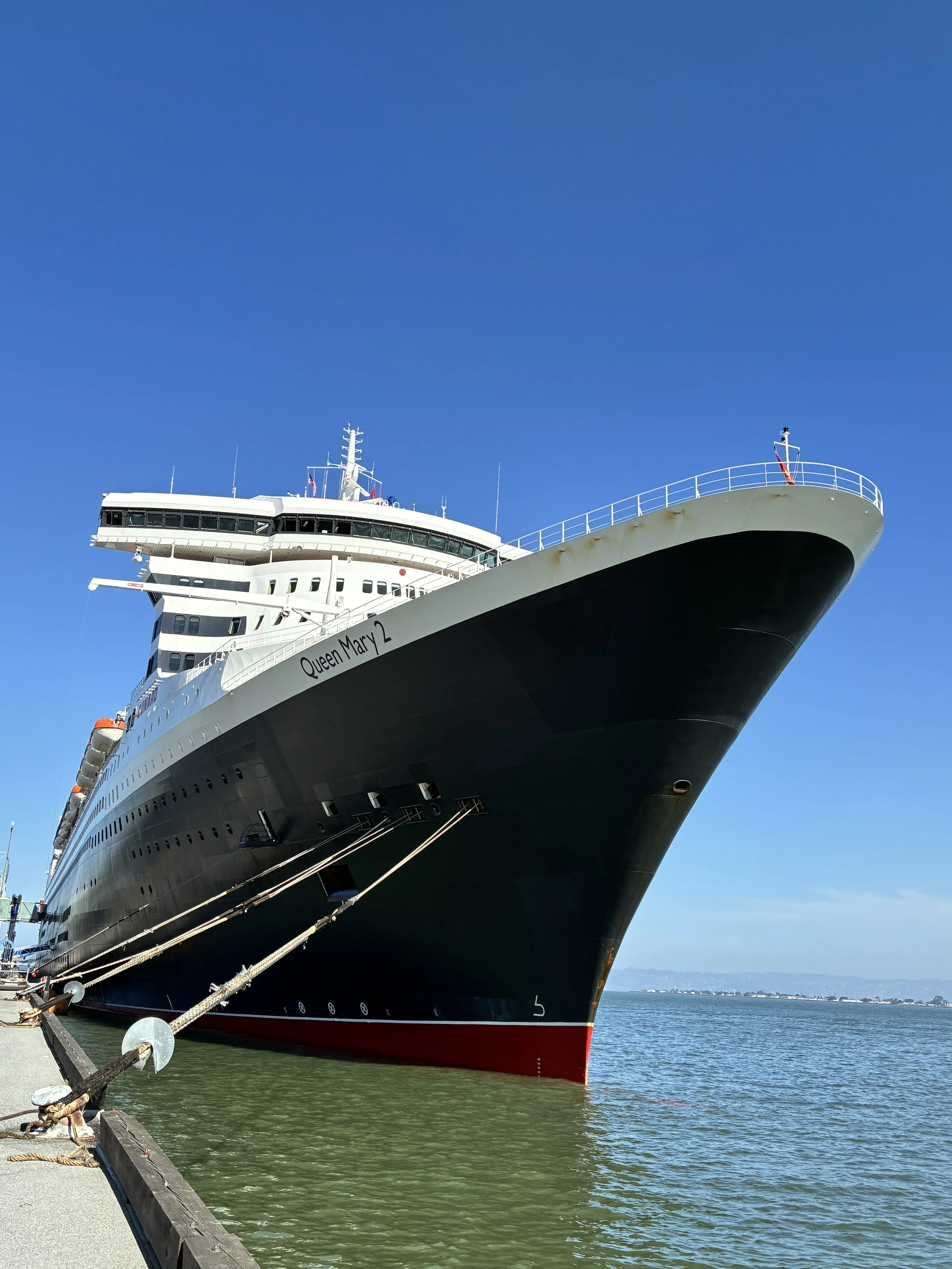
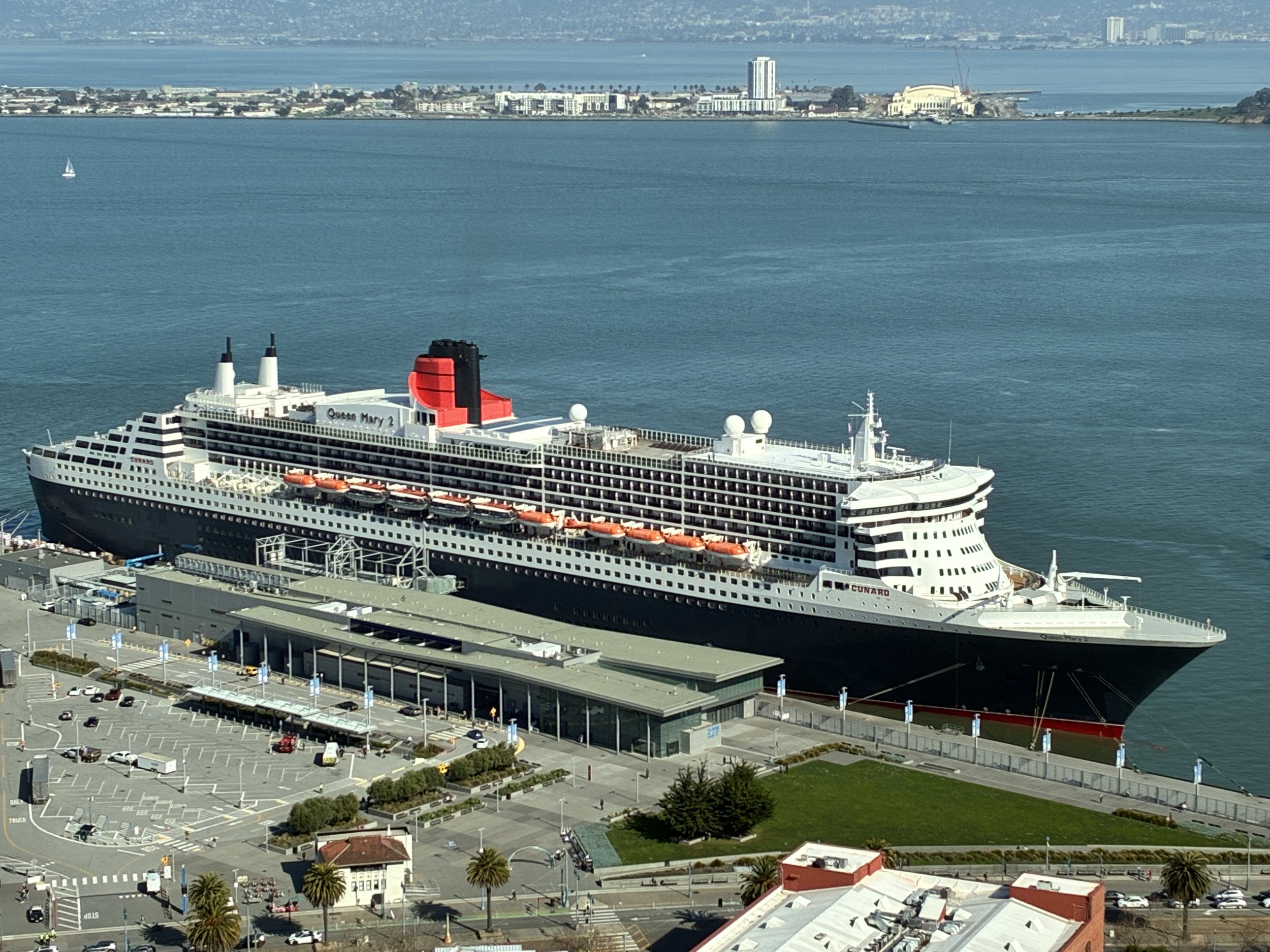
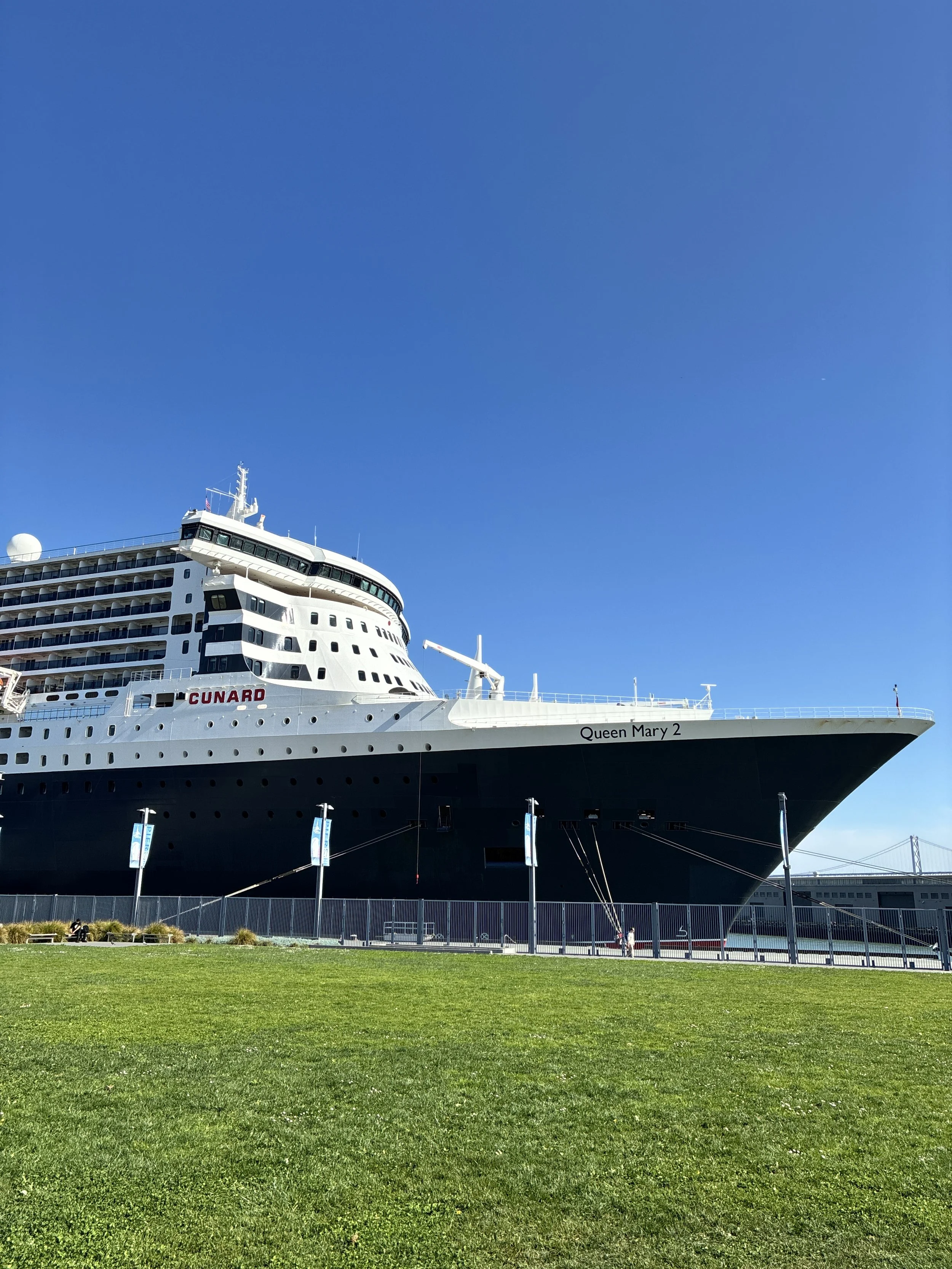
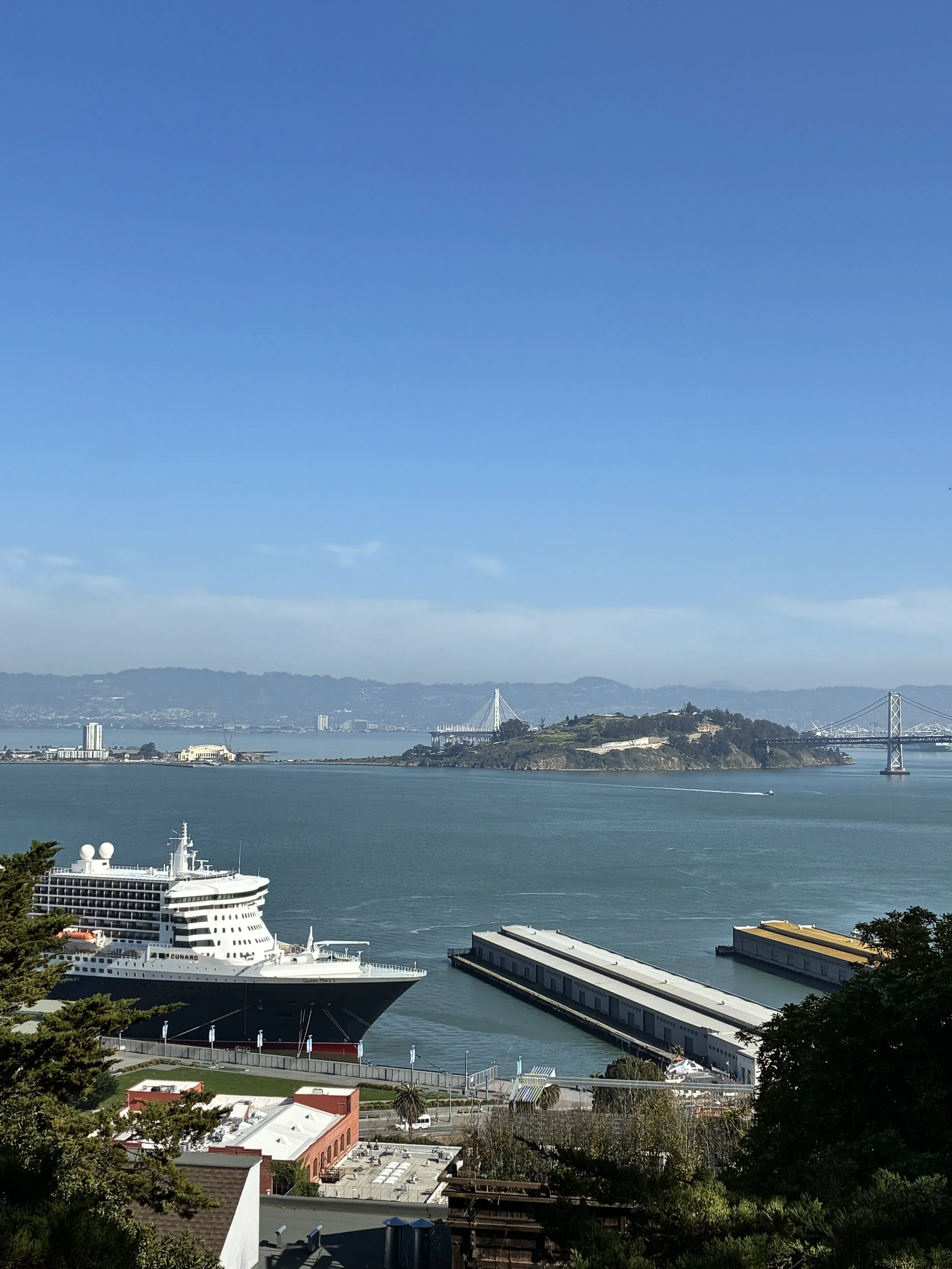
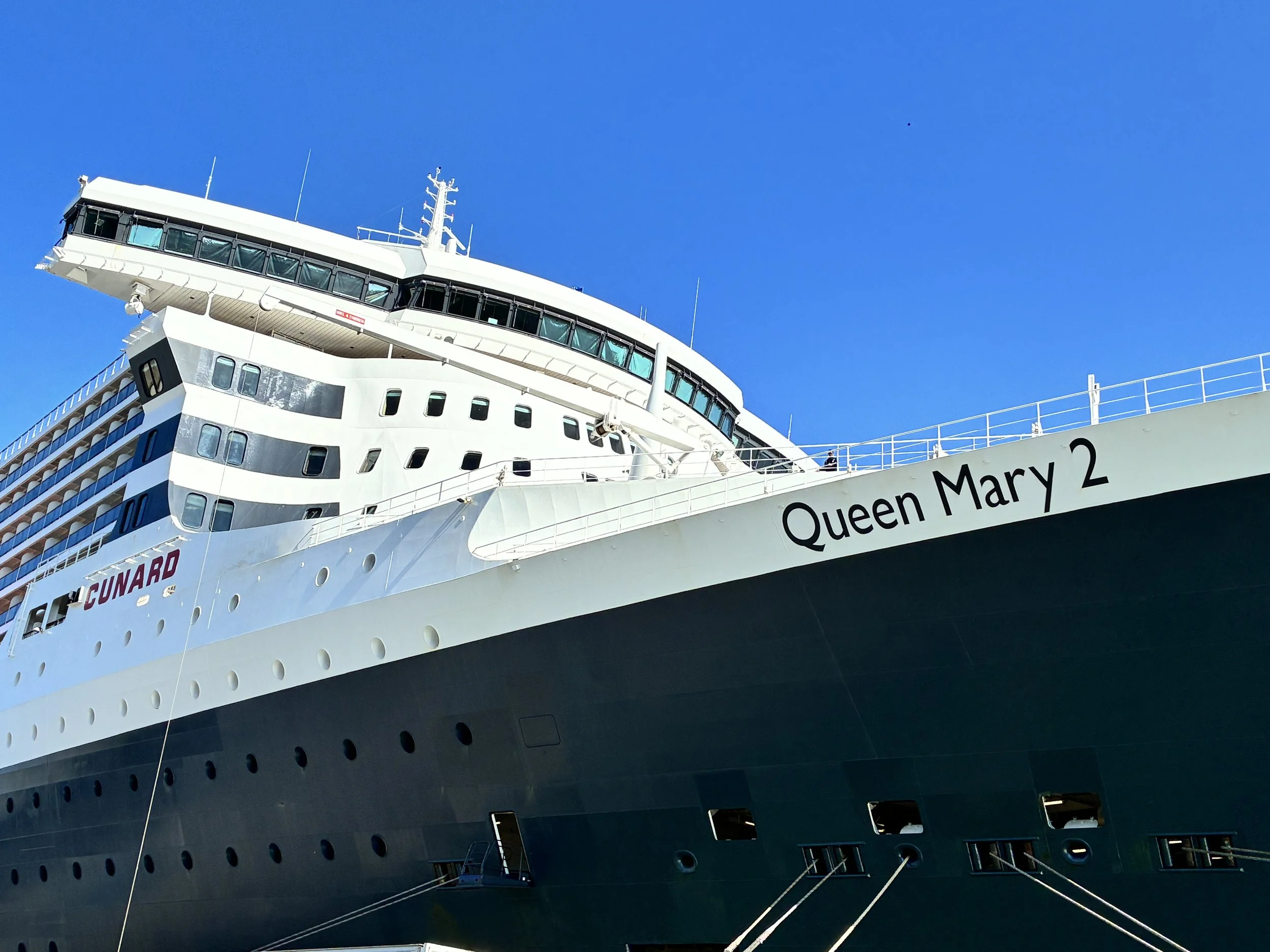
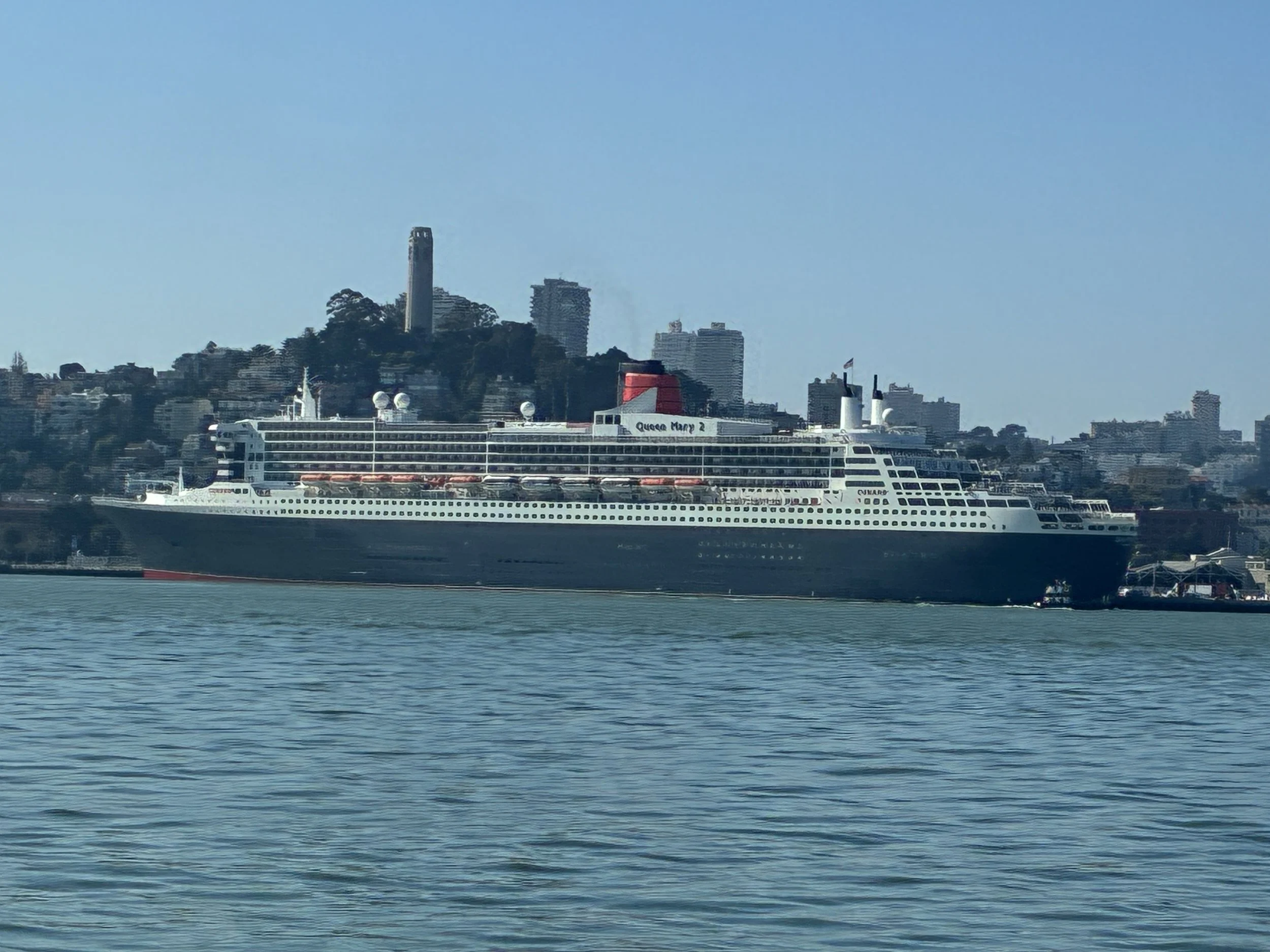
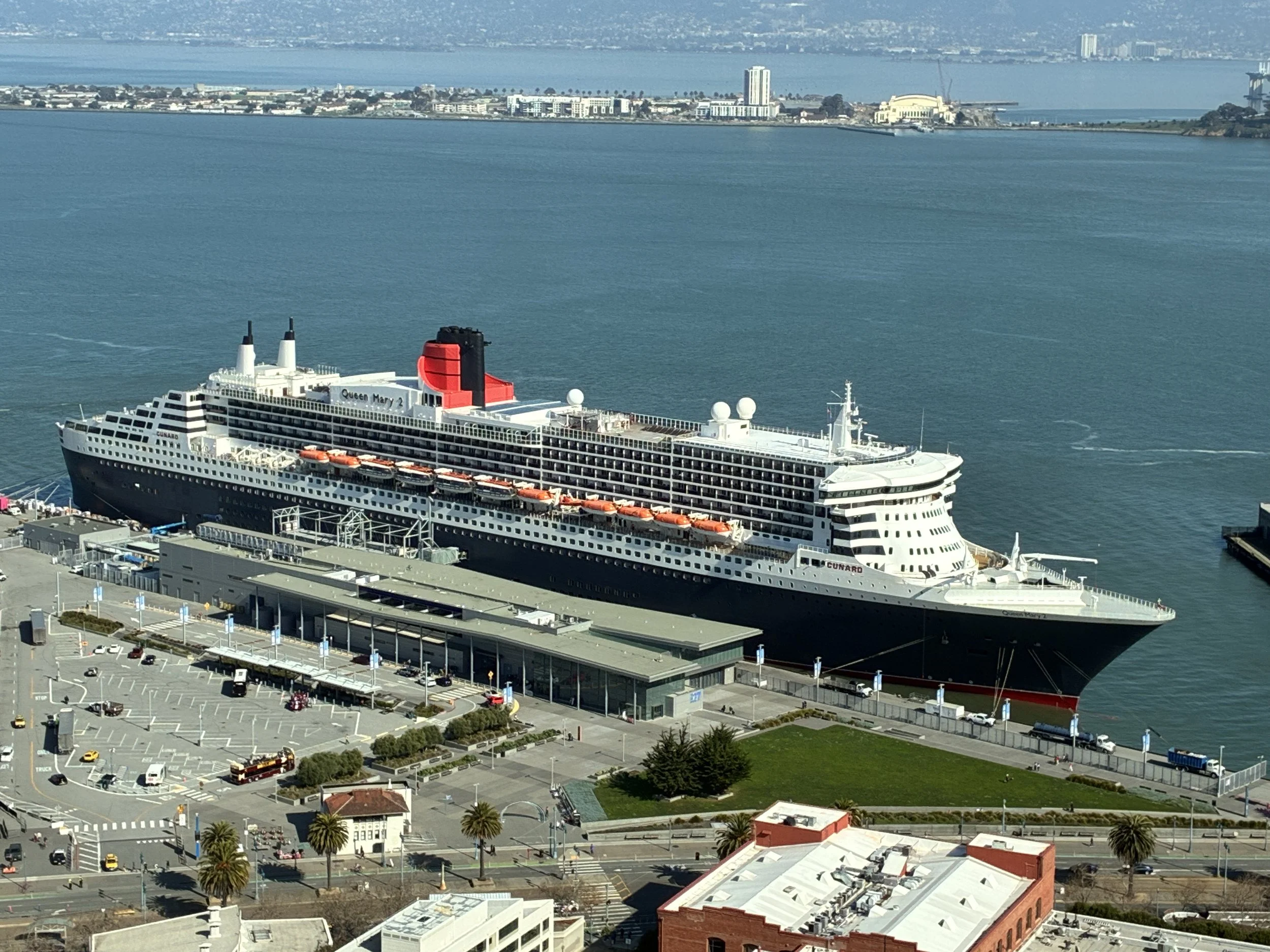
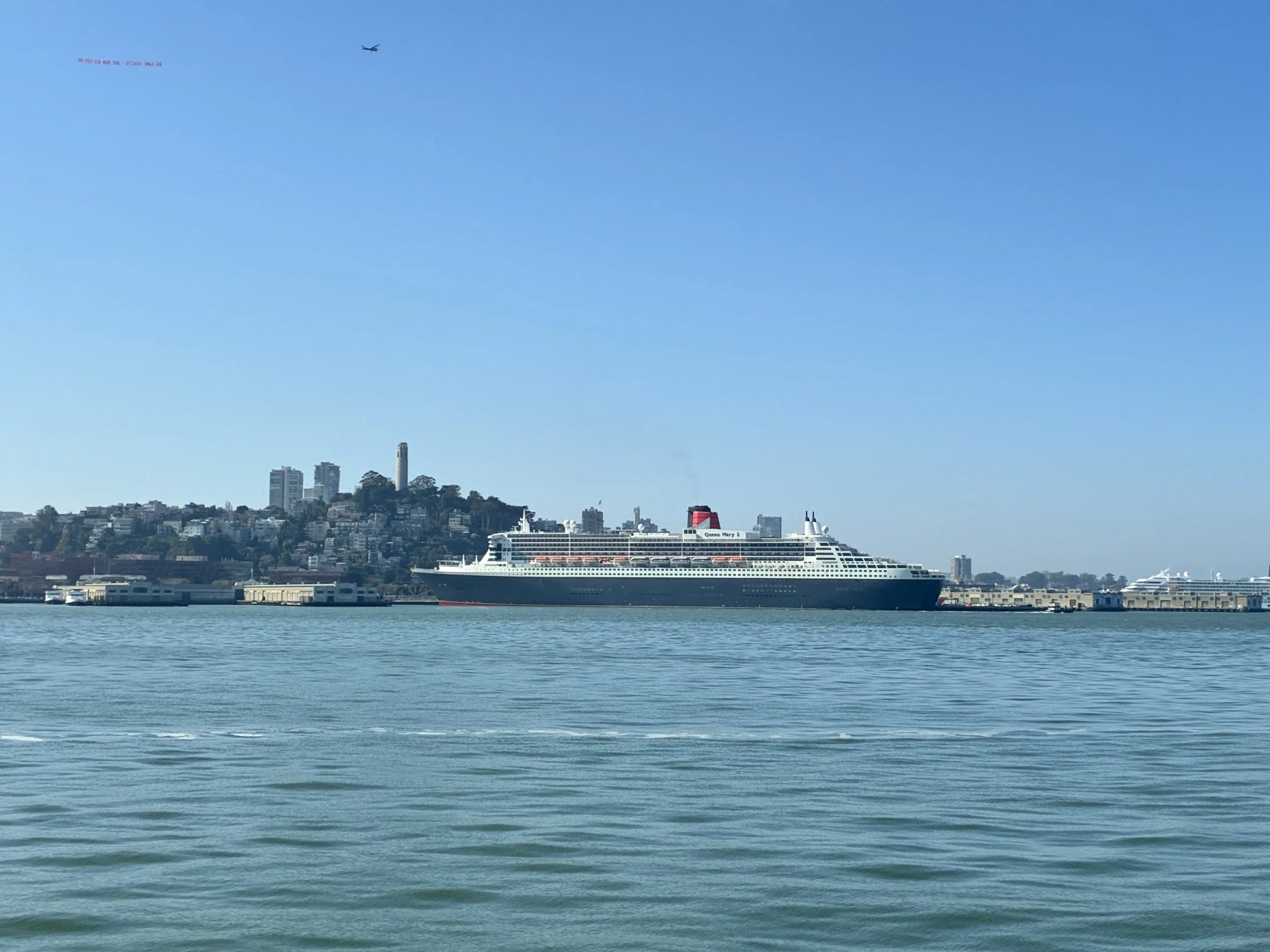
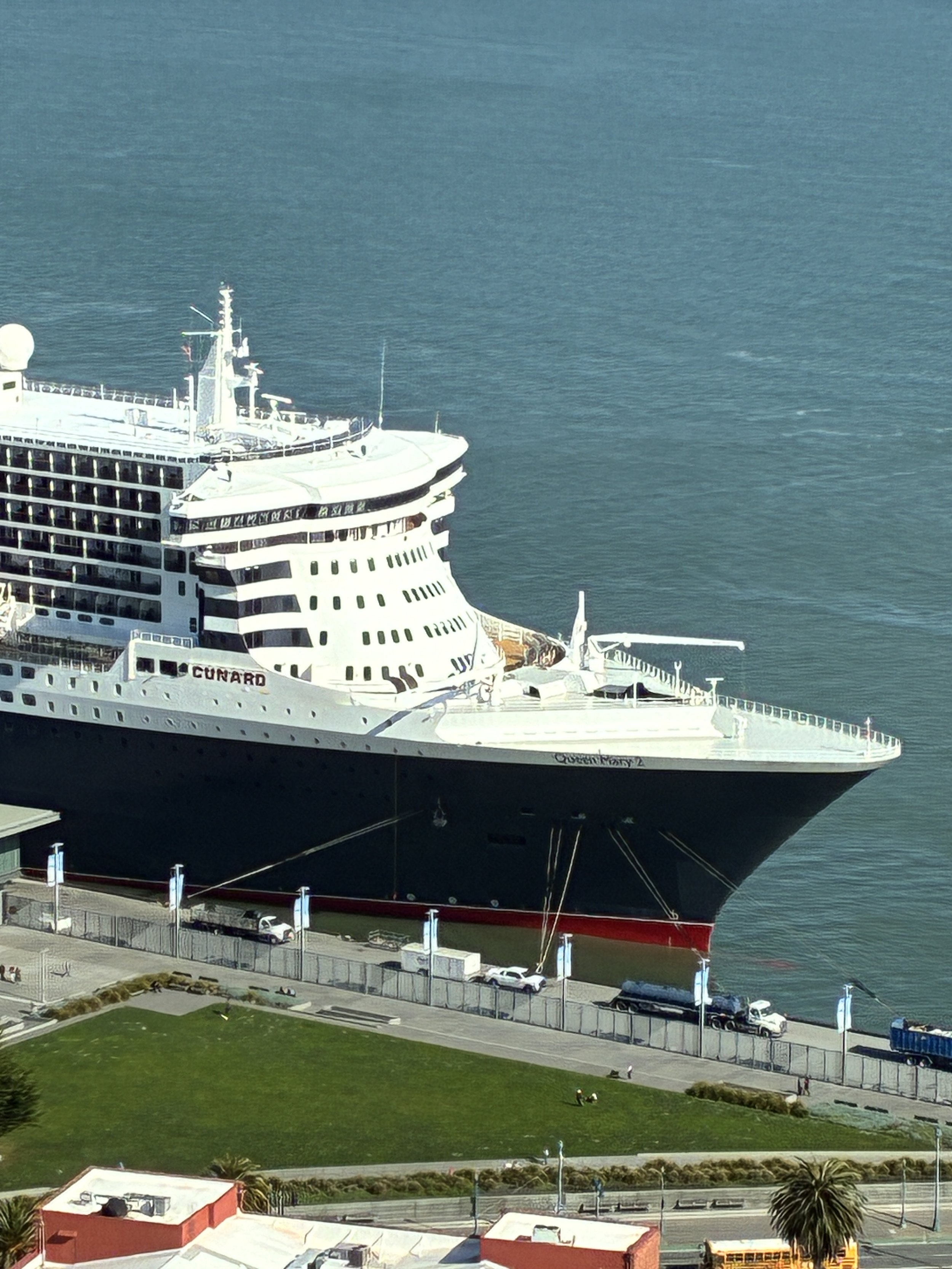
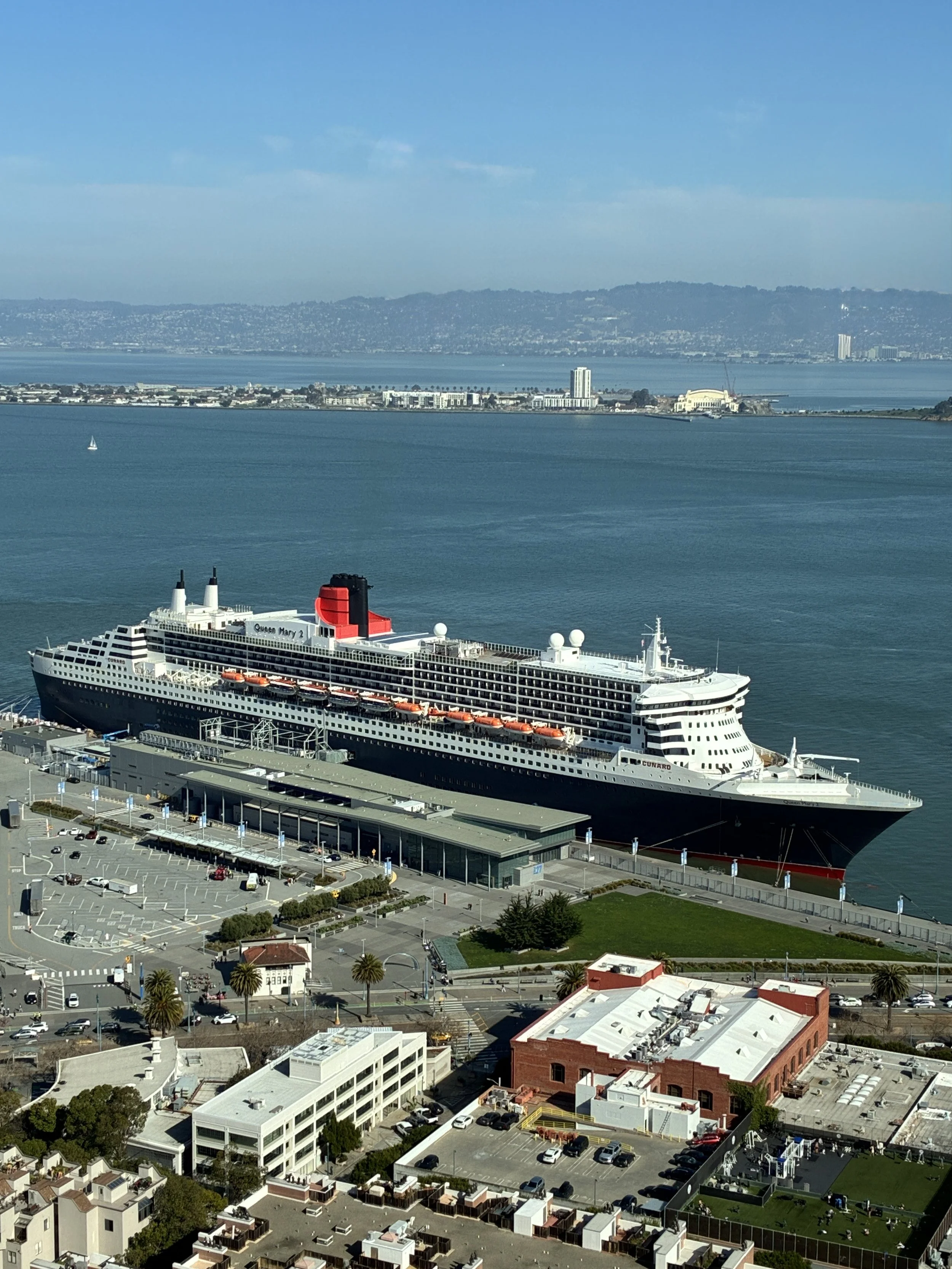
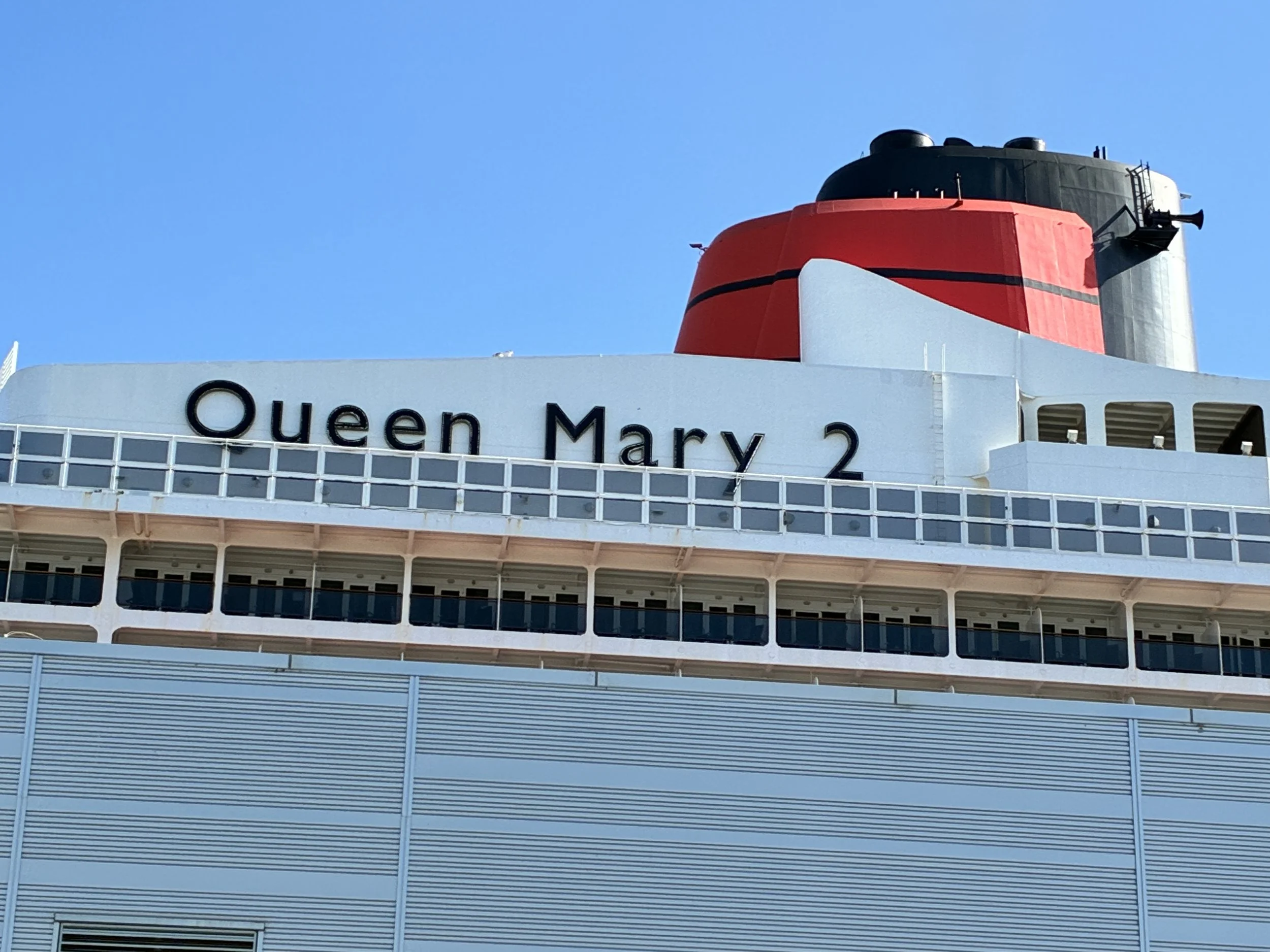
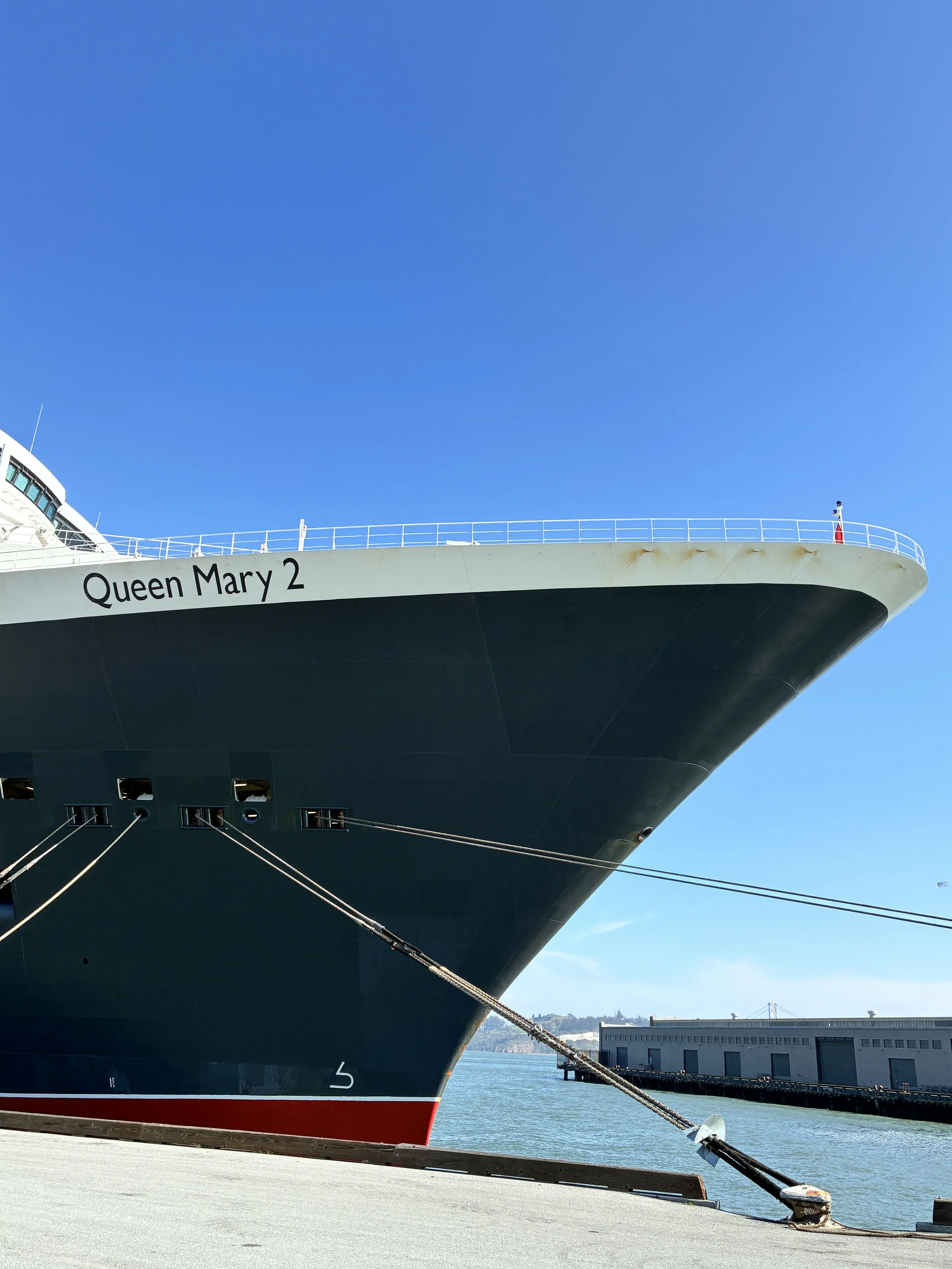
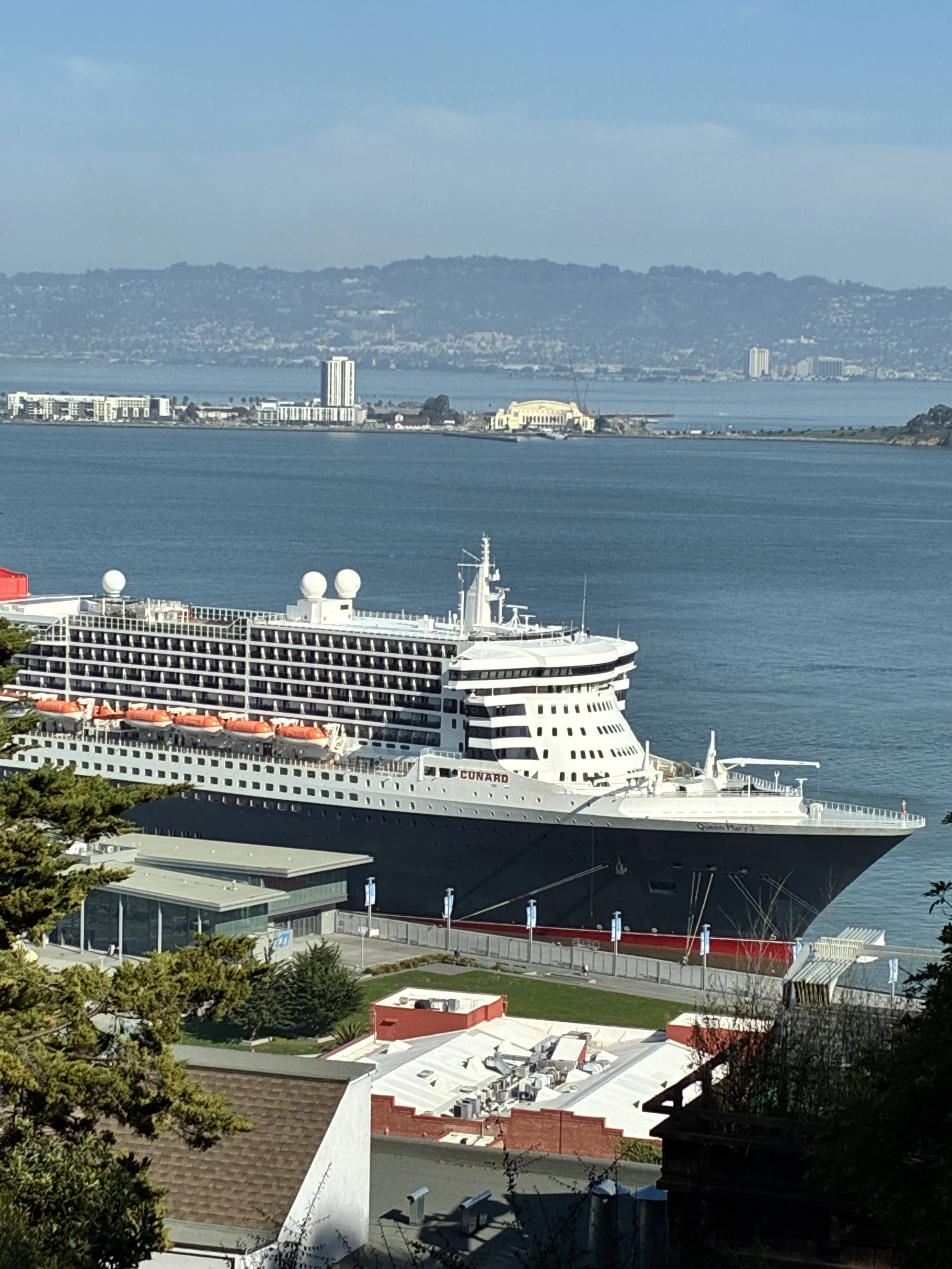
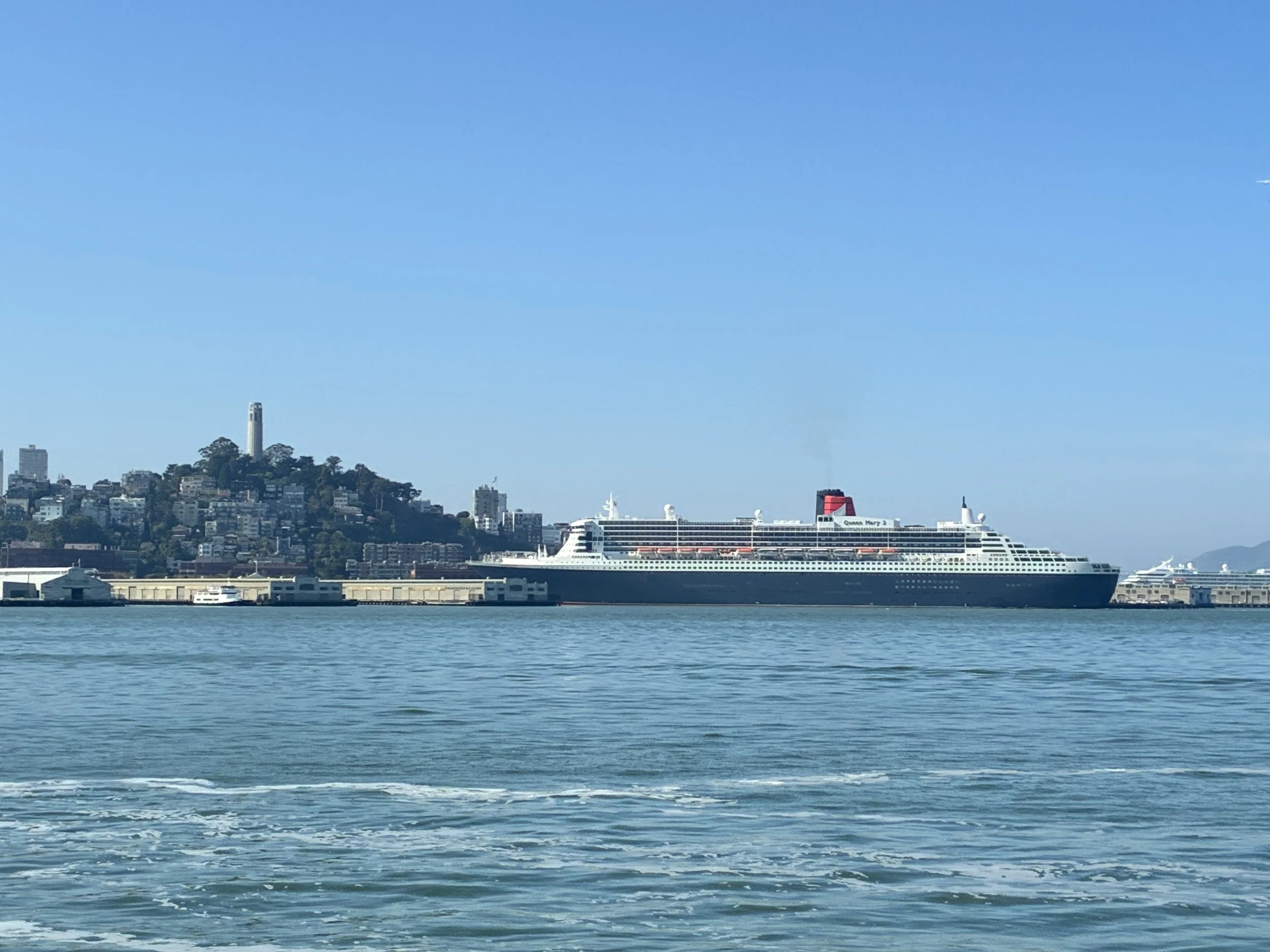
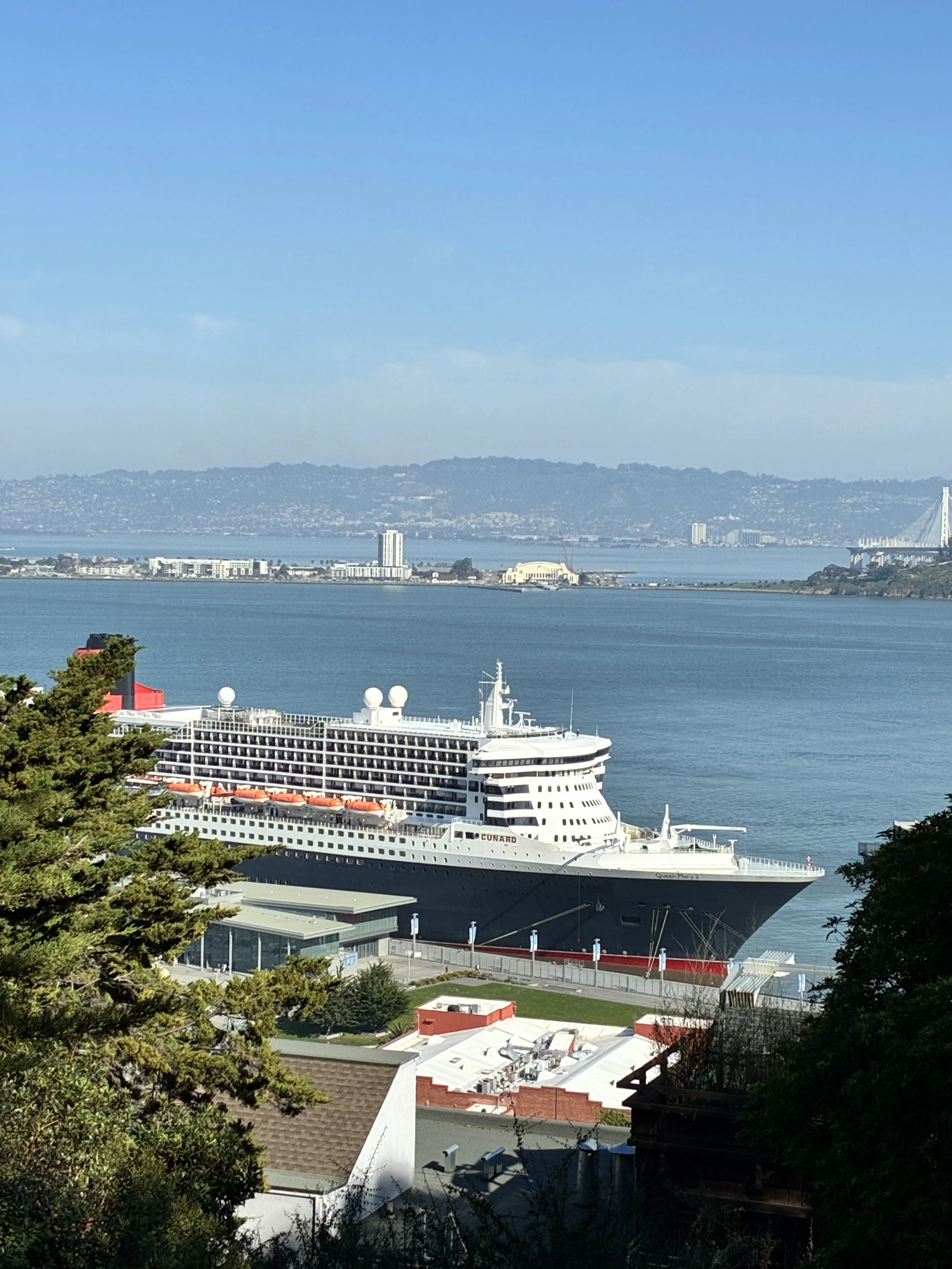
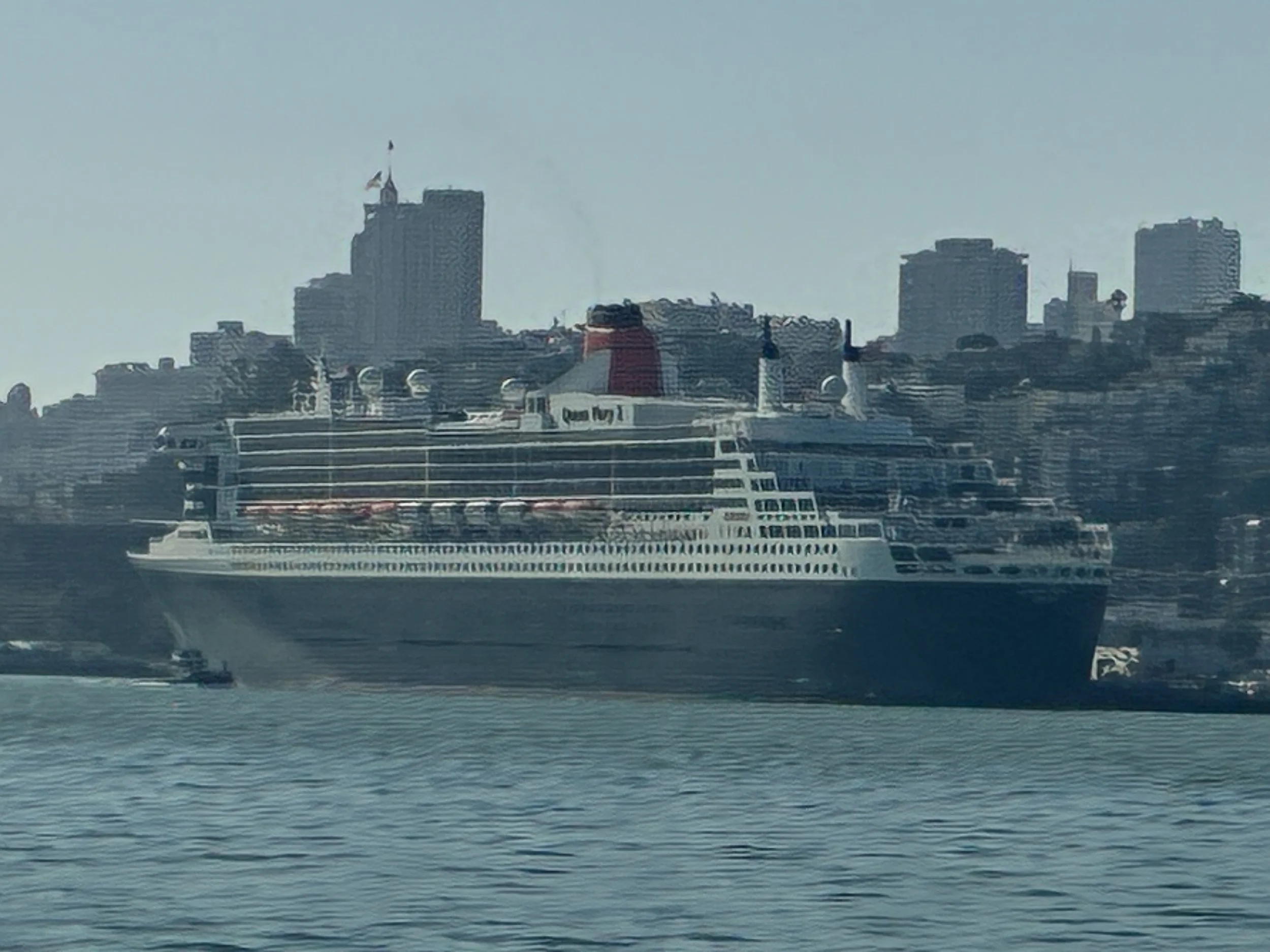
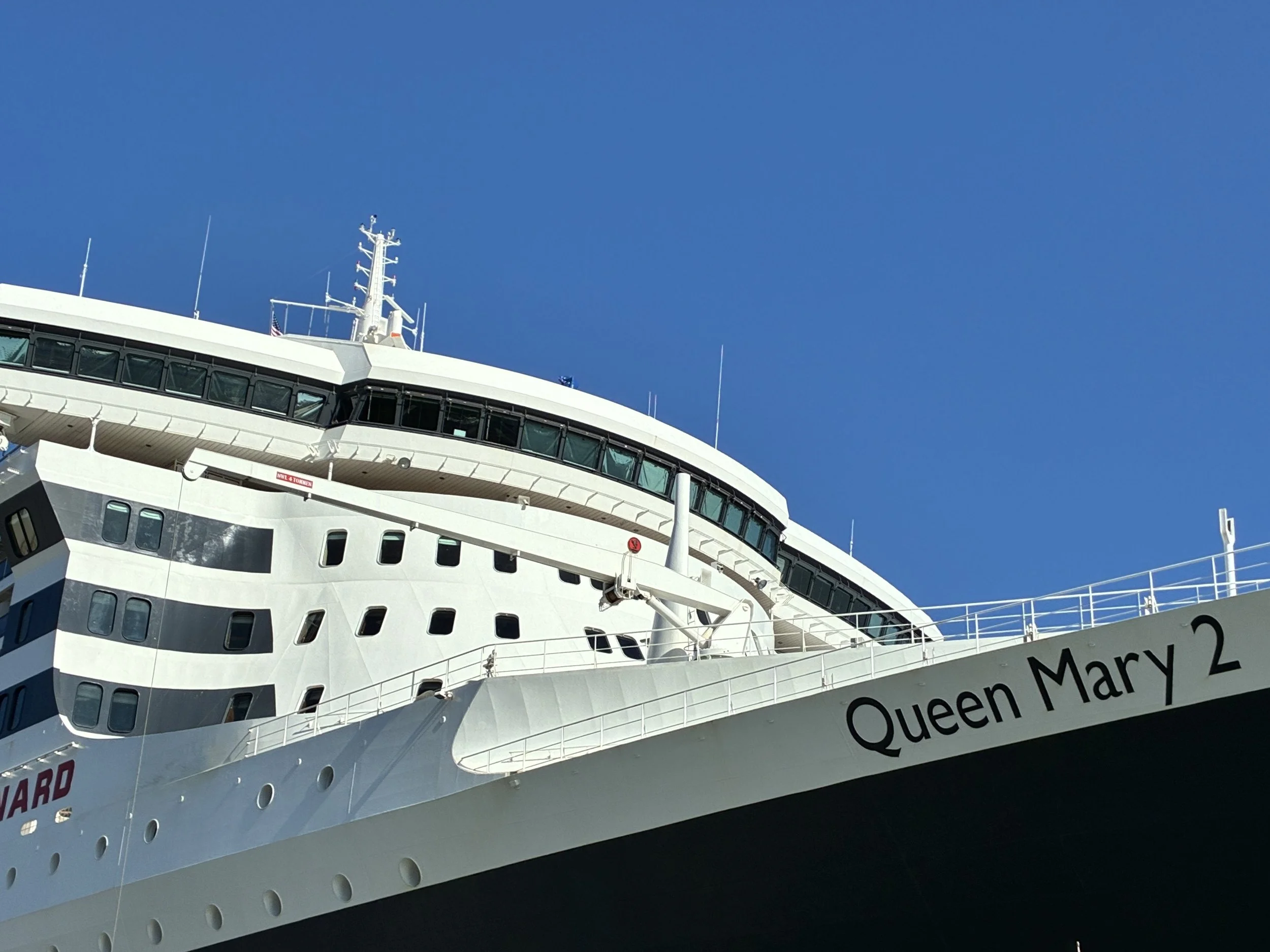
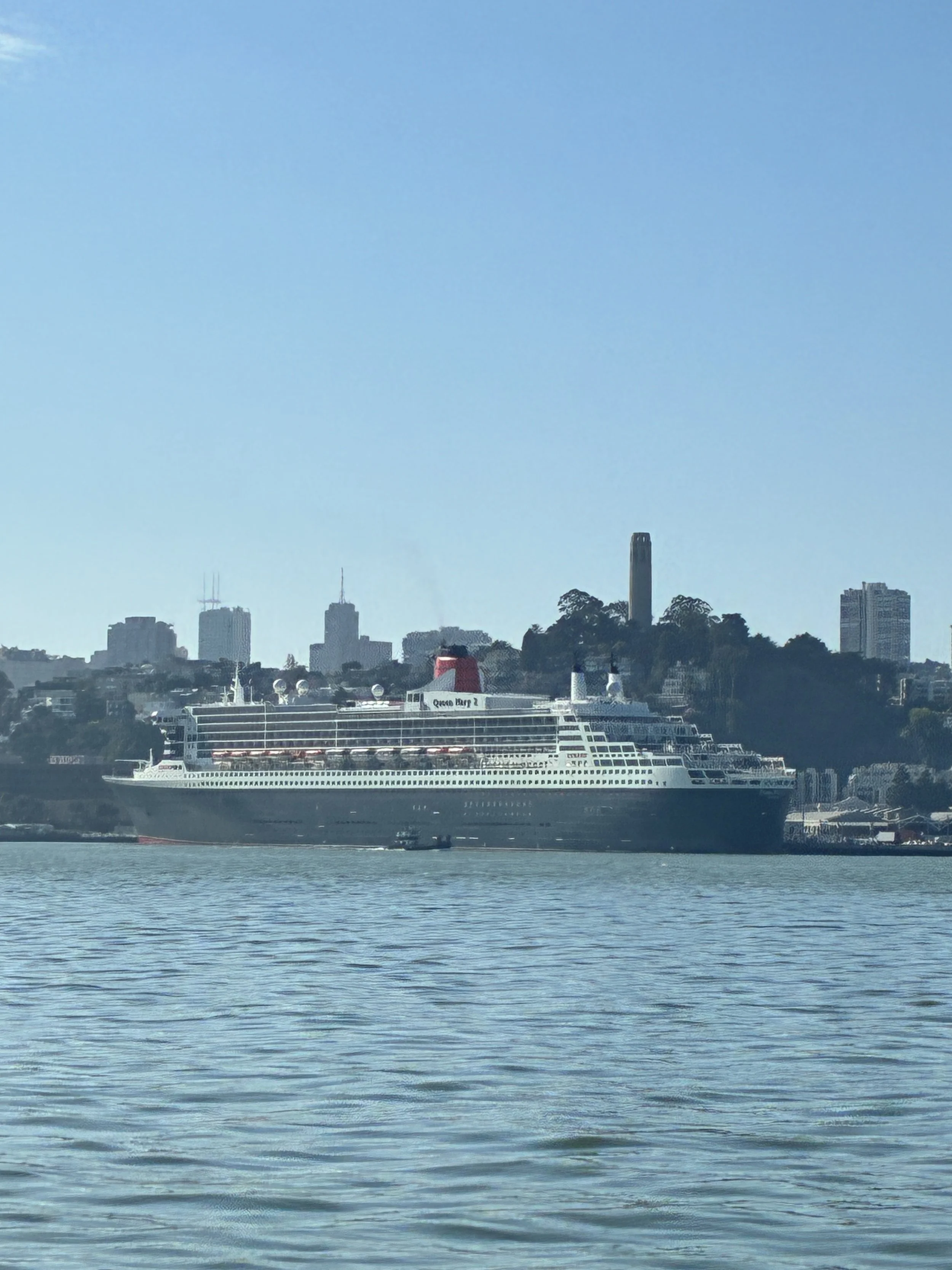
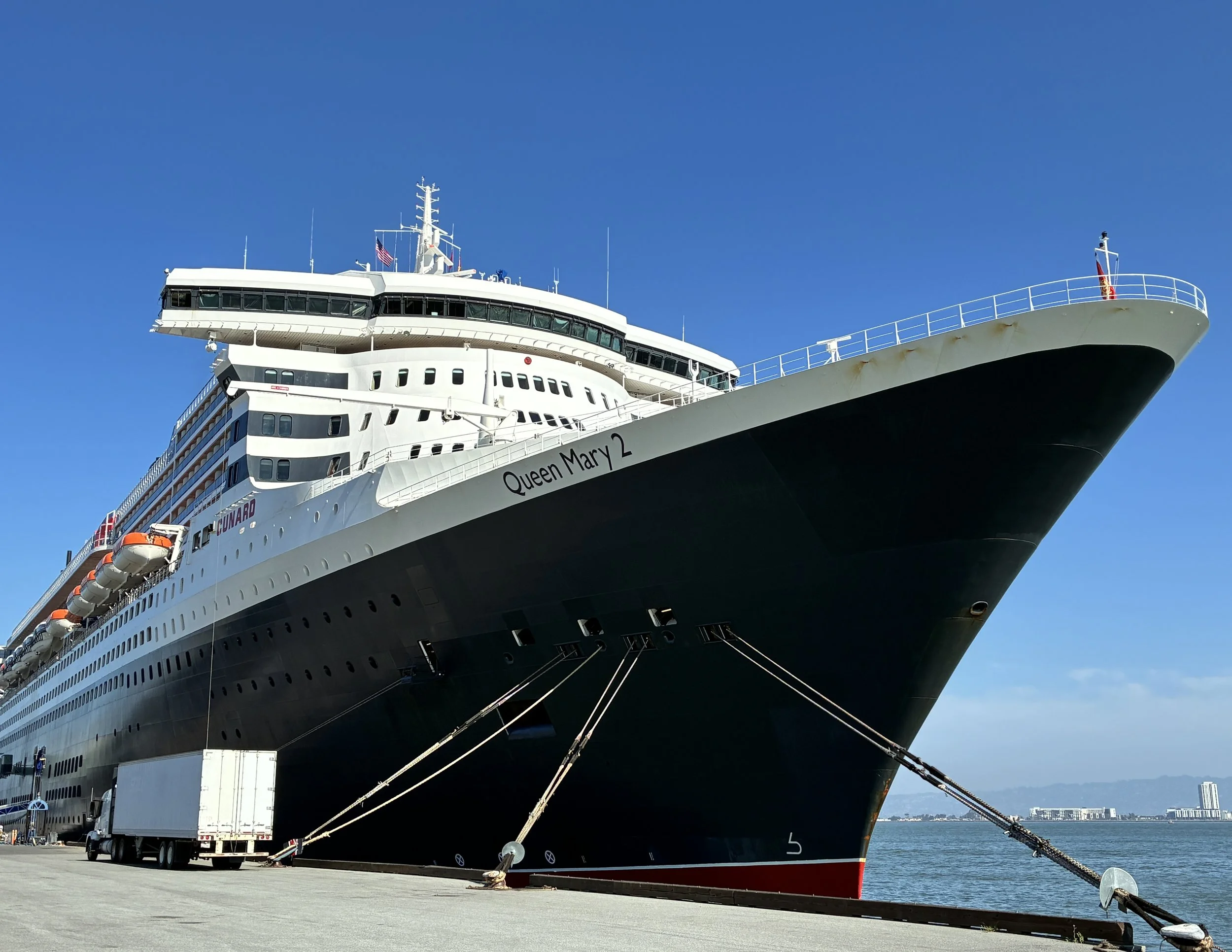
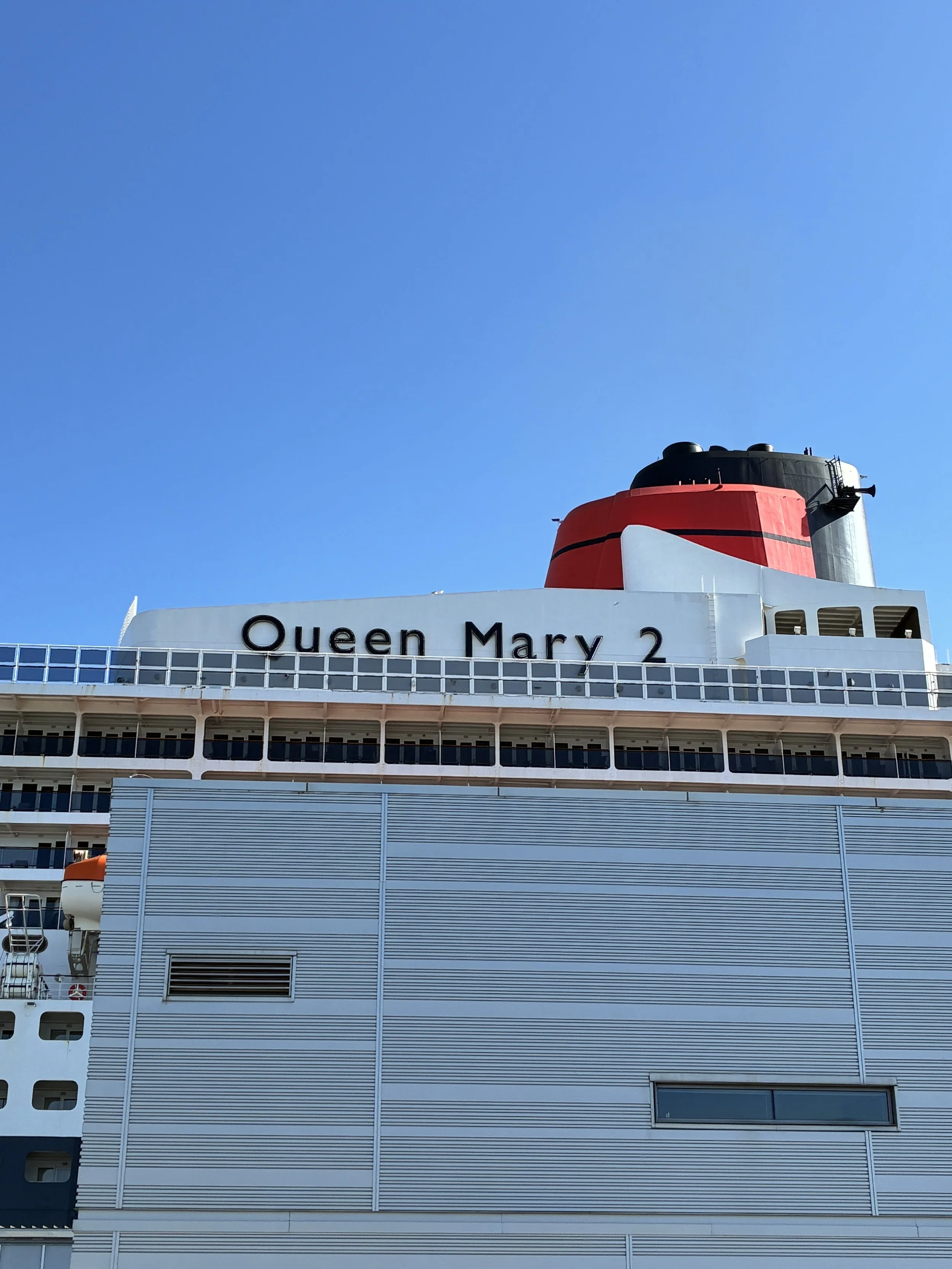
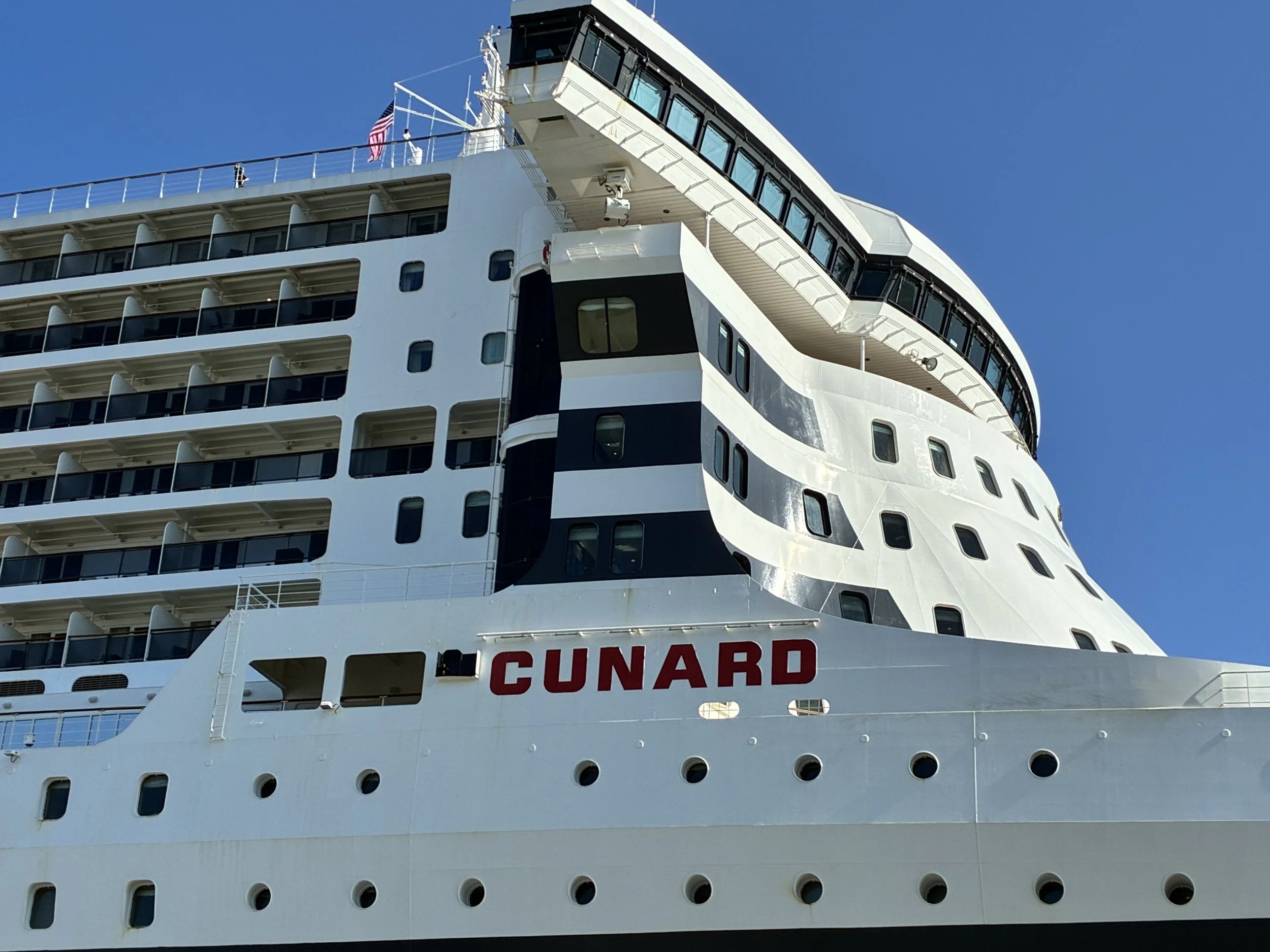
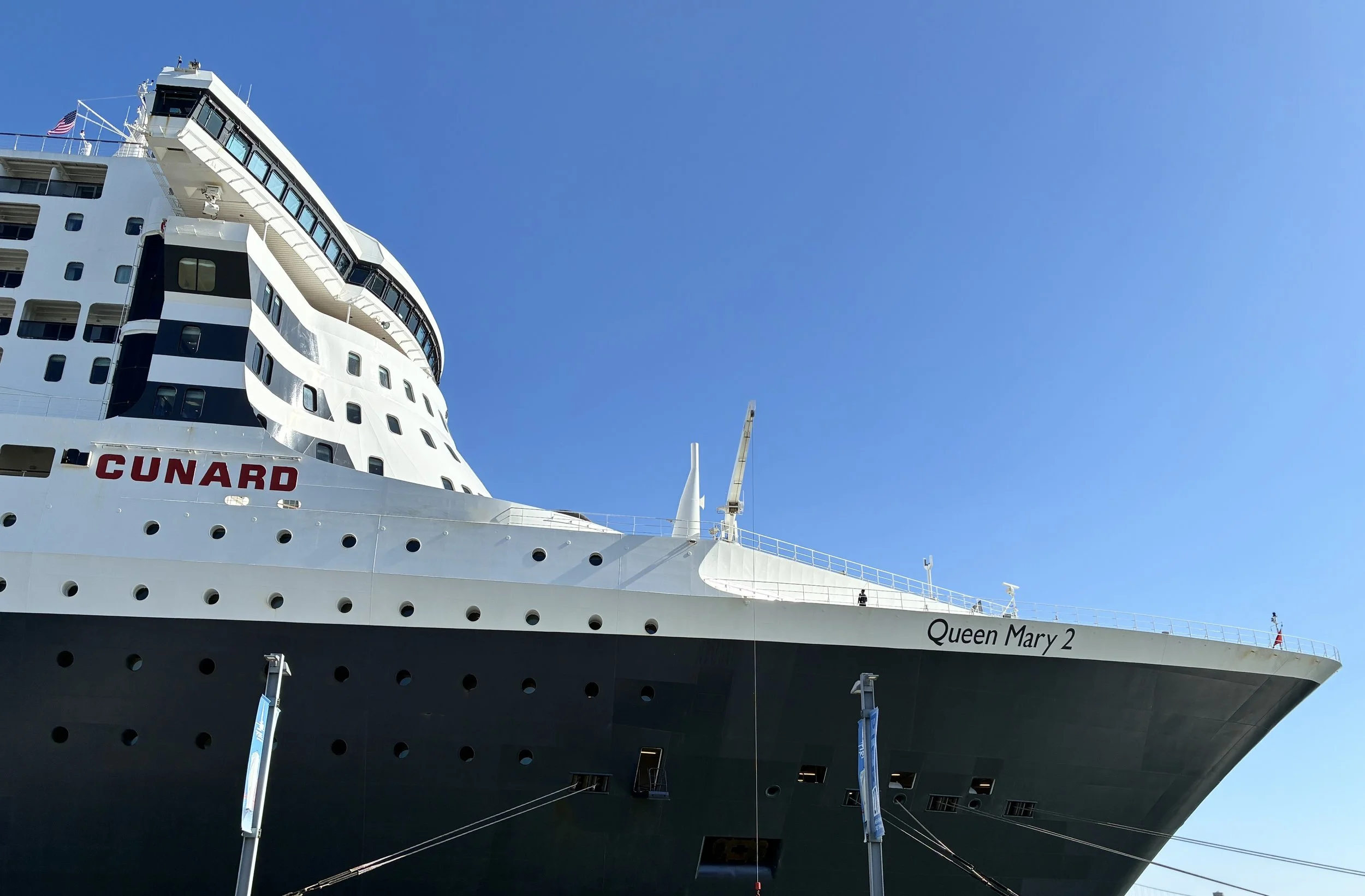
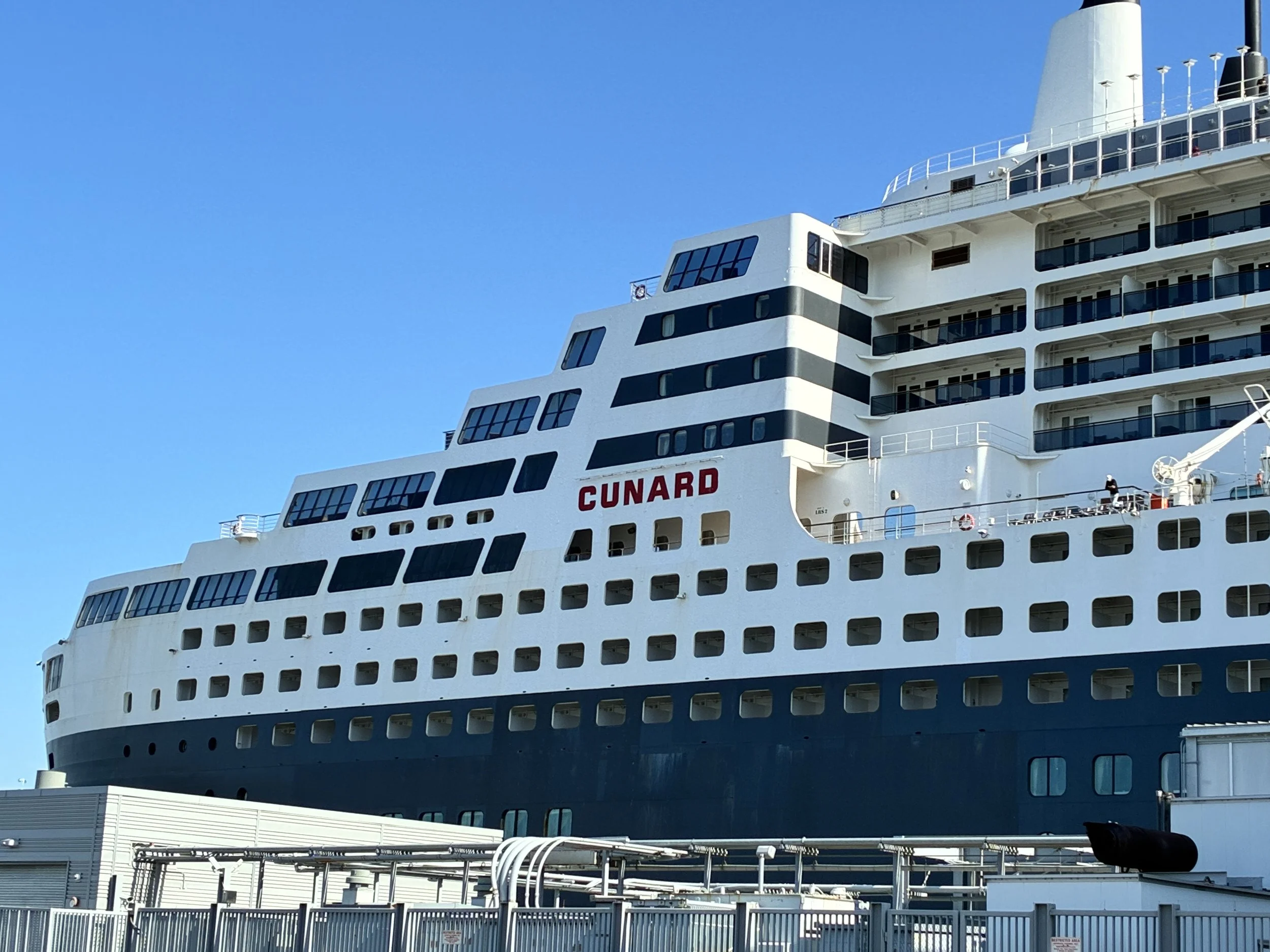
Queen Mary 2 occupies a unique place in modern passenger-ship history. Built specifically to maintain Cunard’s traditional North Atlantic liner service, she entered service in 2004 as the largest, longest, and most expensive ocean liner ever constructed. Designed by a team led by naval architect Stephen Payne and built by Chantiers de l’Atlantique at Saint-Nazaire, France, the ship combines the speed, strength, deep draft, and seakeeping qualities required for regular Atlantic crossings with the accommodations and public spaces needed for worldwide cruising. More than two decades after her introduction, Queen Mary 2 remains the world’s only ocean liner maintaining regularly scheduled transatlantic crossings between Southampton and New York, while her annual long-distance voyages continue the tradition of Cunard ships traveling far beyond the North Atlantic. Her February 2026 visit to San Francisco came during one of those journeys, at a particularly significant point in her 108-night World Voyage.
Information List
Name: Queen Mary 2
Operator: Cunard
Ship Type: Ocean liner
Builder: Chantiers de l’Atlantique, Saint-Nazaire, France
Designer: Naval architecture team led by Stephen Payne
Entered Service: 2004
Length: 1,132 feet (345 meters)
Beam: Approximately 131–135 feet (40–41 meters)
Draft: Approximately 34 feet
Gross Tonnage: Approximately 149,000 GT in current service
Guest Capacity: Approximately 2,683
Crew: Approximately 1,173
Passenger Cabins: Approximately 1,310
Service Speed: Approximately 28 knots
Country of Registry: Bermuda
IMO Number: 9241061
Major Remastering: 2016
2026 Voyage: 108-night World Voyage
San Francisco Call: February 5–6, 2026
Berth: Pier 27
Departure: Approximately 6:00 p.m., February 6
Next Major Destination: Hawaii
Also in Port: Amadea (Phoenix Reisen)
Cunard currently lists Queen Mary 2 at 1,132 feet long with approximately 2,683 guests and 1,173 crew, while her builder records a length of 345 meters, beam of 41 meters, and 1,310 passenger cabins.
History and Features
Origins and Construction:
Cunard developed Queen Mary 2 at a time when the traditional ocean liner had nearly disappeared from passenger service.
Rather than build another conventional cruise ship, the company committed to a vessel capable of continuing regular high-speed North Atlantic crossings while also operating extended cruises around the world.
Chantiers de l’Atlantique signed the construction contract in November 2000, reconnecting the Saint-Nazaire shipyard with the great French transatlantic liners Normandie and France that had preceded her.
Construction began in 2002 at Saint-Nazaire, with approximately 20,000 people contributing to the project.
Queen Elizabeth II served as the ship’s godmother and named Queen Mary 2 in January 2004.
At introduction, she was the world’s largest passenger ship and remains the largest ocean liner ever built.
Designed as an Ocean Liner:
Queen Mary 2 differs fundamentally from most modern cruise ships because she was engineered for regular North Atlantic service.
Her long bow, reinforced structure, high freeboard, deep draft, and powerful propulsion system were developed to maintain speed and stability in demanding ocean conditions.
The ship’s bridge is positioned high above the water, while lifeboats are mounted higher than on many cruise ships to protect them from heavy Atlantic seas.
Her propulsion arrangement combines diesel engines and gas turbines supplying power to electric propulsion motors.
Four podded propulsors provide propulsion and maneuverability, while the ship’s service speed allows her to maintain schedules that would be difficult for many conventional cruise vessels.
These design differences are central to why Queen Mary 2 is properly classified as an ocean liner rather than simply a large cruise ship.
Passenger Spaces and Cunard Traditions:
Although engineered as an ocean liner, Queen Mary 2 was also designed for extended passenger voyages and worldwide cruising.
Her major public spaces include the Britannia Restaurant, Queens Room ballroom, Royal Court Theatre, Golden Lion pub, Commodore Club, Grand Lobby, library, and Illuminations.
Illuminations is particularly unusual, combining a planetarium with lecture and entertainment functions.
The ship’s extensive library and formal Queens Room reflect Cunard traditions that distinguish the onboard experience from many contemporary resort-style cruise ships.
Separate Britannia, Princess Grill, and Queens Grill accommodation and dining arrangements continue a long-established Cunard approach to passenger service.
Kennels aboard the ship allow dogs and cats to travel on selected transatlantic crossings, continuing another unusual tradition associated with ocean travel.
Transatlantic Service:
Queen Mary 2 entered service in 2004 as the successor to Queen Elizabeth 2 in Cunard’s scheduled North Atlantic passenger service.
She continues to operate regular crossings between Southampton and New York, maintaining a passenger route that has been central to Cunard since the nineteenth century.
In 2024, the ship completed her 400th transatlantic crossing, twenty years after entering service.
Cunard identifies her as the world’s only ocean liner still offering regularly scheduled transatlantic crossings.
These crossings remain the defining element of her career even as the ship also undertakes cruises, World Voyages, and other long-distance itineraries.
2016 Remastering:
Queen Mary 2 underwent a major remastering in 2016.
The project modernized accommodations and public areas while retaining the character that had defined the ship since her introduction.
The aft section was substantially altered, improving the exterior profile and adding new passenger accommodations.
The Carinthia Lounge, Kings Court, Grand Lobby, and spa areas were among the spaces redesigned or extensively updated.
The project also expanded the ship’s kennel facilities in response to demand for pet transportation on transatlantic crossings.
Cunard described the work as a remastering rather than a conventional refurbishment, emphasizing the intention to preserve the liner’s identity while preparing her for continued service.
The 2026 World Voyage:
Queen Mary 2 departed Southampton on January 11, 2026, to begin a 108-night World Voyage.
The itinerary began with a transatlantic crossing to New York before continuing south through the Caribbean.
The ship then transited the Panama Canal and reached the west coast of North America.
Cunard scheduled 30 ports during the complete World Voyage, with overnight stays including Los Angeles, San Francisco, Sydney, Hong Kong, Singapore, and Cape Town.
From the U.S. West Coast, the voyage continued across the Pacific to Hawaii, French Polynesia, New Zealand, and Australia.
Later portions carried Queen Mary 2 through Asia, Africa, and back toward Europe before her scheduled return to Southampton on April 30.
The voyage demonstrated the dual nature of Queen Mary 2: a purpose-built North Atlantic liner capable of operating an extensive around-the-world itinerary.
Royal Rendezvous – Long Beach, February 2, 2026:
Four days before the San Francisco photographs, Queen Mary 2 participated in one of the most significant events of her 2026 World Voyage.
On February 2, she arrived off Long Beach and paused near the permanently preserved RMS Queen Mary.
The event was promoted as a Royal Rendezvous and marked the first meeting of the two Cunard Queens in Long Beach in 20 years.
The timing was particularly significant because 2026 marked the 90th anniversary of the original Queen Mary’s 1936 maiden voyage.
The encounter visually connected Cunard’s great prewar liner with the ship that carries the Queen Mary name into the modern era.
After the rendezvous, Queen Mary 2 continued across the harbor area to the Port of Los Angeles at San Pedro.
She departed Los Angeles on February 3 to continue the World Voyage north toward San Francisco.
Los Angeles to San Francisco:
Queen Mary 2 departed Los Angeles on February 3 for the 28-night Los Angeles-to-Sydney portion of her World Voyage.
February 4 was spent at sea as the liner traveled north along the California coast.
She arrived in San Francisco on the morning of February 5 for an overnight call.
Cunard’s itinerary lists San Francisco across Days 3 and 4 of the Los Angeles-to-Sydney segment.
The overnight visit allowed passengers considerably more time ashore than a conventional single-day cruise call.
San Francisco – February 6, 2026:
February 6 was the second and final day of Queen Mary 2’s overnight San Francisco visit.
The Port of San Francisco scheduled the ship at Pier 27, with departure at approximately 6:00 p.m.
San Francisco also served as an embarkation point for passengers joining separate segments of the World Voyage.
Cunard offered a 25-night voyage from San Francisco to Sydney beginning February 6, as well as longer sectors continuing all the way to New York.
The San Francisco-to-Sydney voyage included Hawaii, French Polynesia, New Zealand, and Australia before reaching Sydney on March 4.
The call required Queen Mary 2 to pass beneath the Golden Gate Bridge, one of the most recognizable settings encountered during the World Voyage.
The ship’s departure that evening began the long Pacific portion of the journey, with Hawaii ahead after several days at sea.
Phoenix Reisen’s much smaller Amadea was also in San Francisco on February 6, creating an unusual comparison between the approximately 29,000-gross-ton former Japanese cruise ship and Cunard’s purpose-built ocean liner.
Together, the two ships represented very different approaches to long-distance passenger travel while simultaneously undertaking major international voyages.
San Francisco to Sydney:
The February 6 departure began Cunard voyage M605, a 25-night sector from San Francisco to Sydney.
The voyage was scheduled to cross the Pacific through Hawaii and French Polynesia before continuing to New Zealand and Australia.
Cunard also sold shorter and longer portions of the World Voyage independently, allowing passengers to join Queen Mary 2 at San Francisco without completing the entire 108-night itinerary.
Sydney was scheduled for March 4, approximately four weeks after the ship left San Francisco.
The sector illustrates how Cunard combines a continuous World Voyage with individually bookable segments linking major international ports.
Our Connection to Queen Mary 2:
Queen Mary 2 holds a particularly important place within Ocean Liner Photography because we have also traveled aboard the ship.
Previous galleries document the liner during other stages of her career, including her transatlantic service.
The February 2026 San Francisco photographs add a very different setting to that record, showing Queen Mary 2 during a World Voyage rather than on her traditional North Atlantic route.
The gallery also forms part of a remarkable sequence of West Coast appearances during the 2026 voyage, including the Royal Rendezvous with RMS Queen Mary in Long Beach and the following calls at Los Angeles and San Francisco.
Legacy:
Queen Mary 2 is the defining ocean liner of the early twenty-first century.
Her construction preserved scheduled transatlantic liner service at a time when nearly every other passenger route of its kind had disappeared.
Her combination of liner engineering, worldwide cruise capability, Cunard traditions, and regular Atlantic crossings has allowed her to occupy a role unlike any other passenger ship in service.
The 2026 World Voyage demonstrated that versatility particularly well, carrying the ship from her traditional North Atlantic environment through the Panama Canal, along the U.S. West Coast, across the Pacific, through Asia and Africa, and eventually back to Europe.
Her San Francisco visit on February 5–6 followed immediately after the historic Long Beach Royal Rendezvous, making this gallery part of an especially significant chapter in Queen Mary 2’s continuing career.
OLP Social: An overnight call in San Francisco brought her to Pier 27 during a 108 night World Voyage, with Hawaii ahead after sailing beneath the Golden Gate Bridge.
OLP Social 2: Built by Chantiers de l’Atlantique in France, she entered service in 2004 to continue Cunard’s Atlantic crossings, a role she still held 22 years later.
OLP Social 3: At 1,132 feet long, she carries 2,683 guests with 1,173 crew, combining the scale of a large passenger ship with the speed of a purpose built ocean liner.
OLP Social 4: Four days before these photographs, she met Queen Mary off Long Beach, bringing the two Cunard liners together there for the first time in 20 years.