RMS QUEEN MARY
November 1, 2025 | Long Beach, California
Nearly six decades after arriving in Southern California, the RMS Queen Mary remains permanently berthed in Long Beach as a hotel, attraction, and preserved ocean liner. These views from November 1, 2025, show the historic former Cunard liner during the final weekend of the Queen Mary’s fall Dark Harbor season.
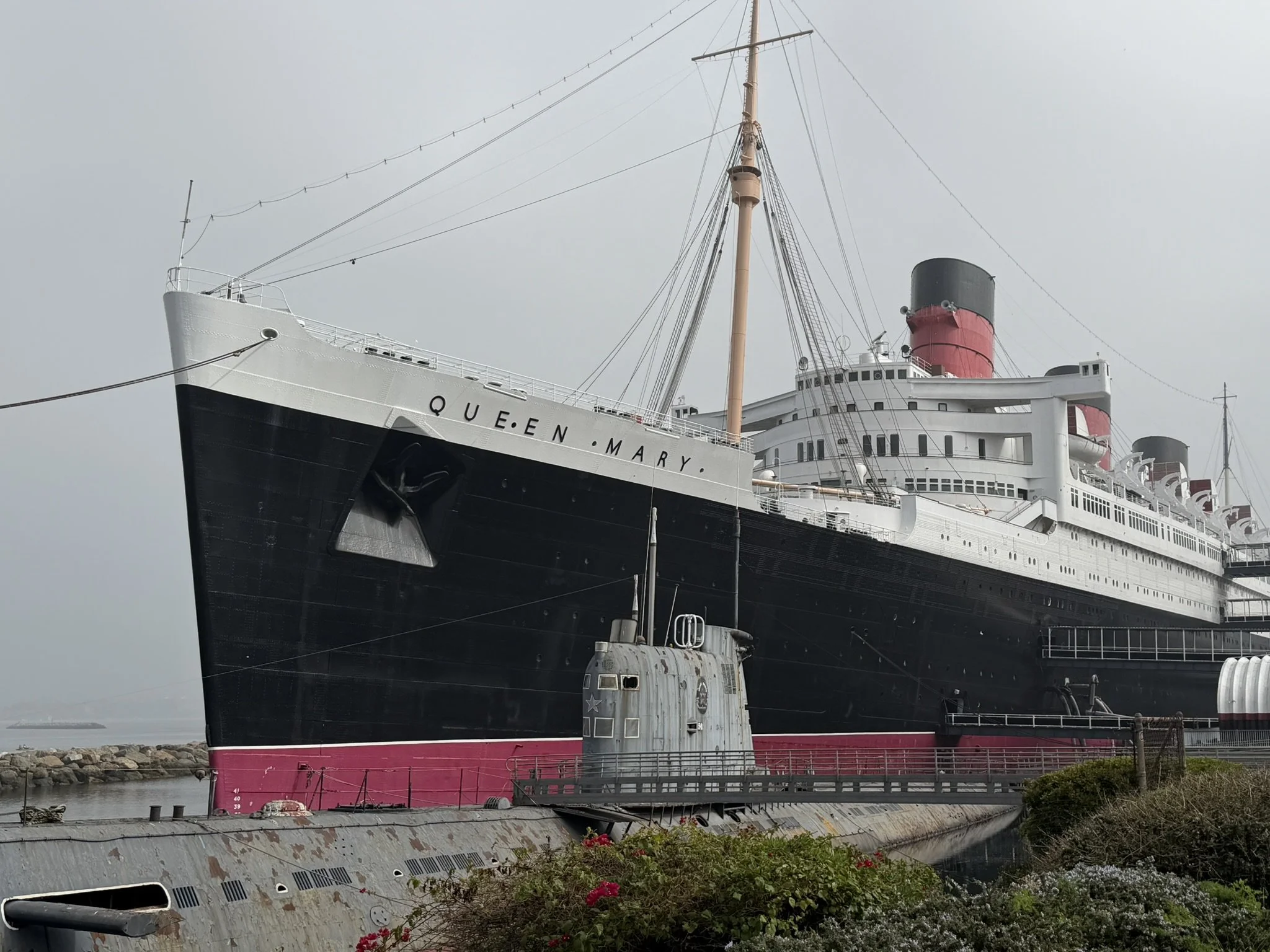
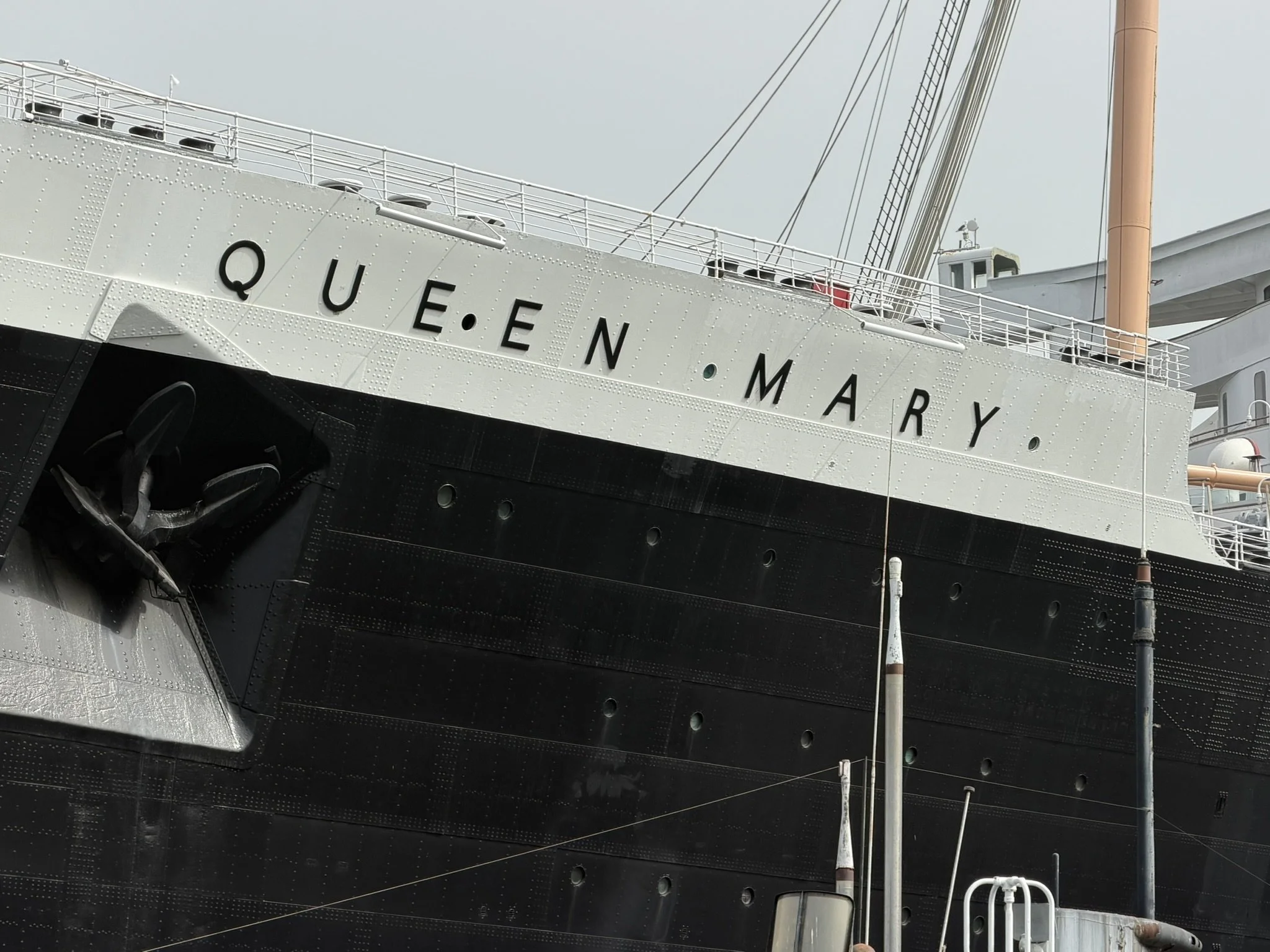
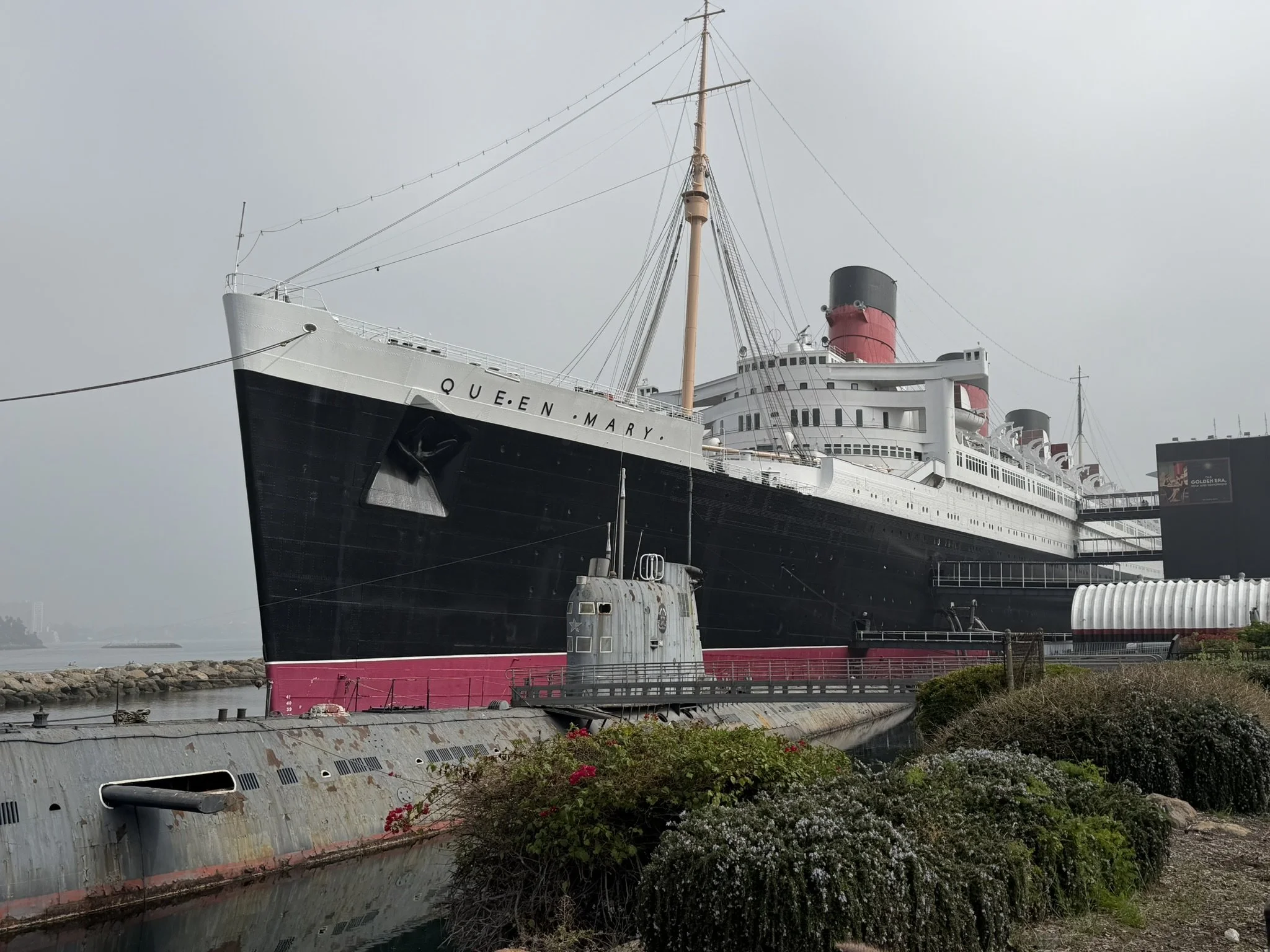
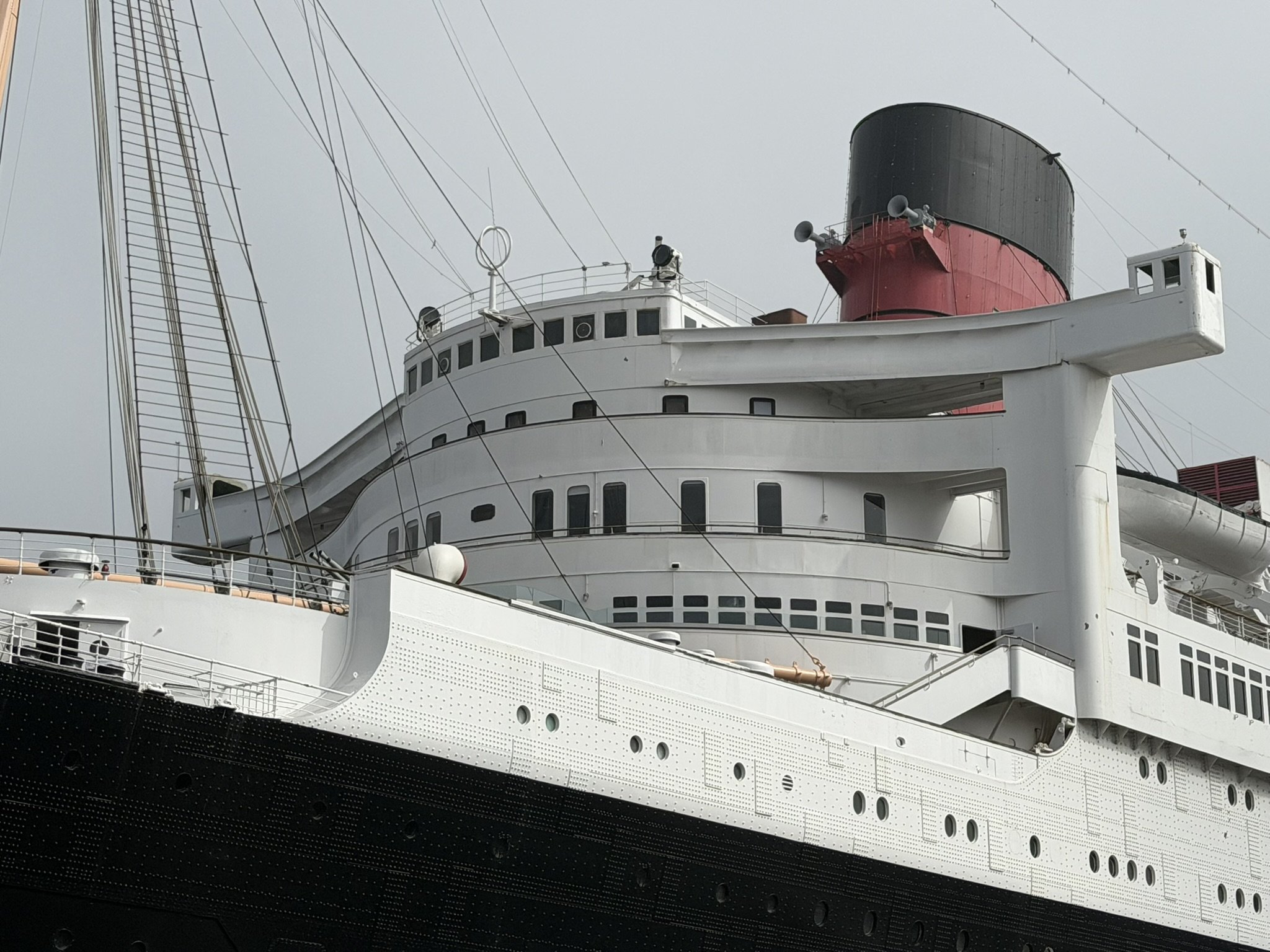
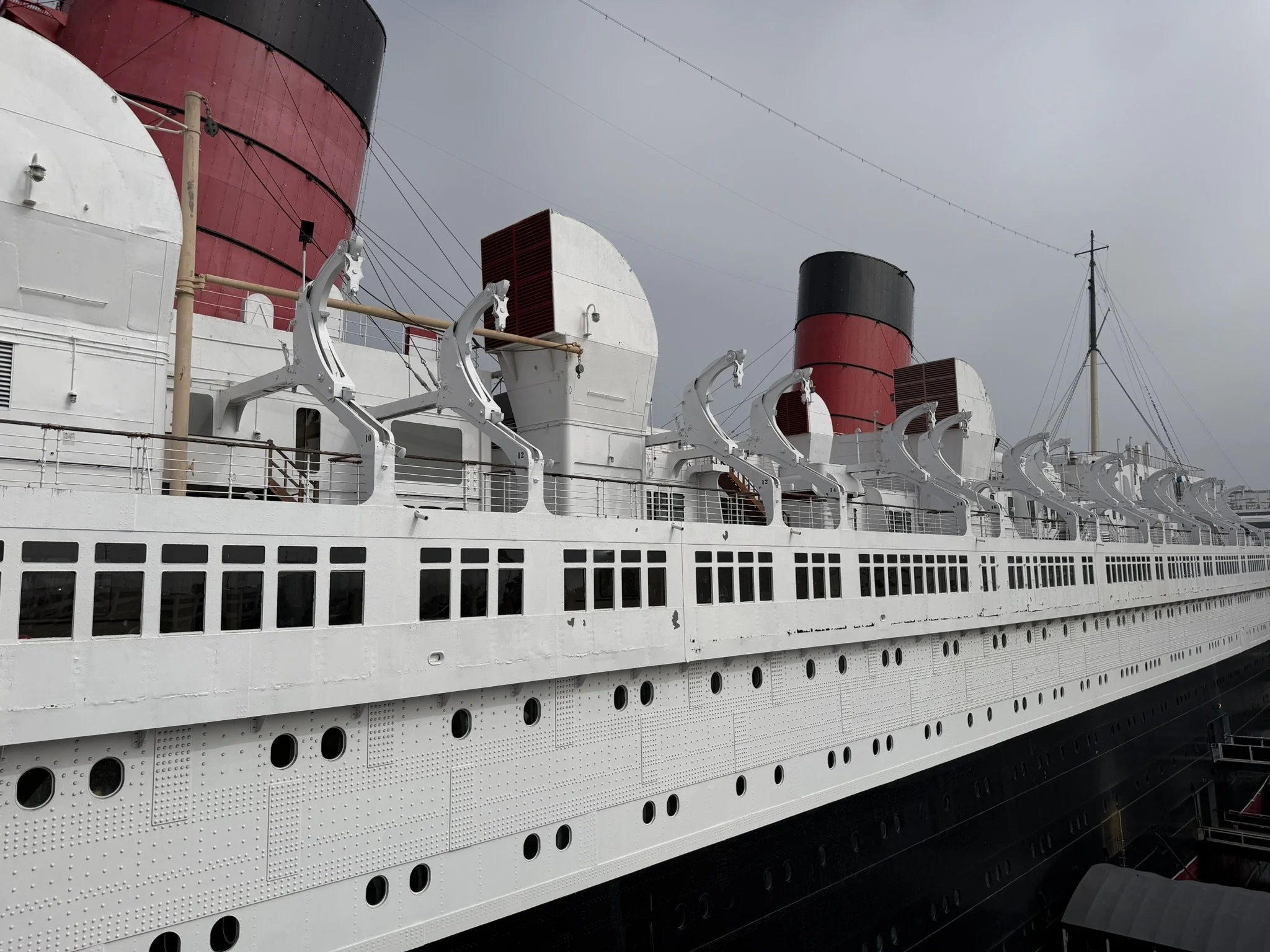
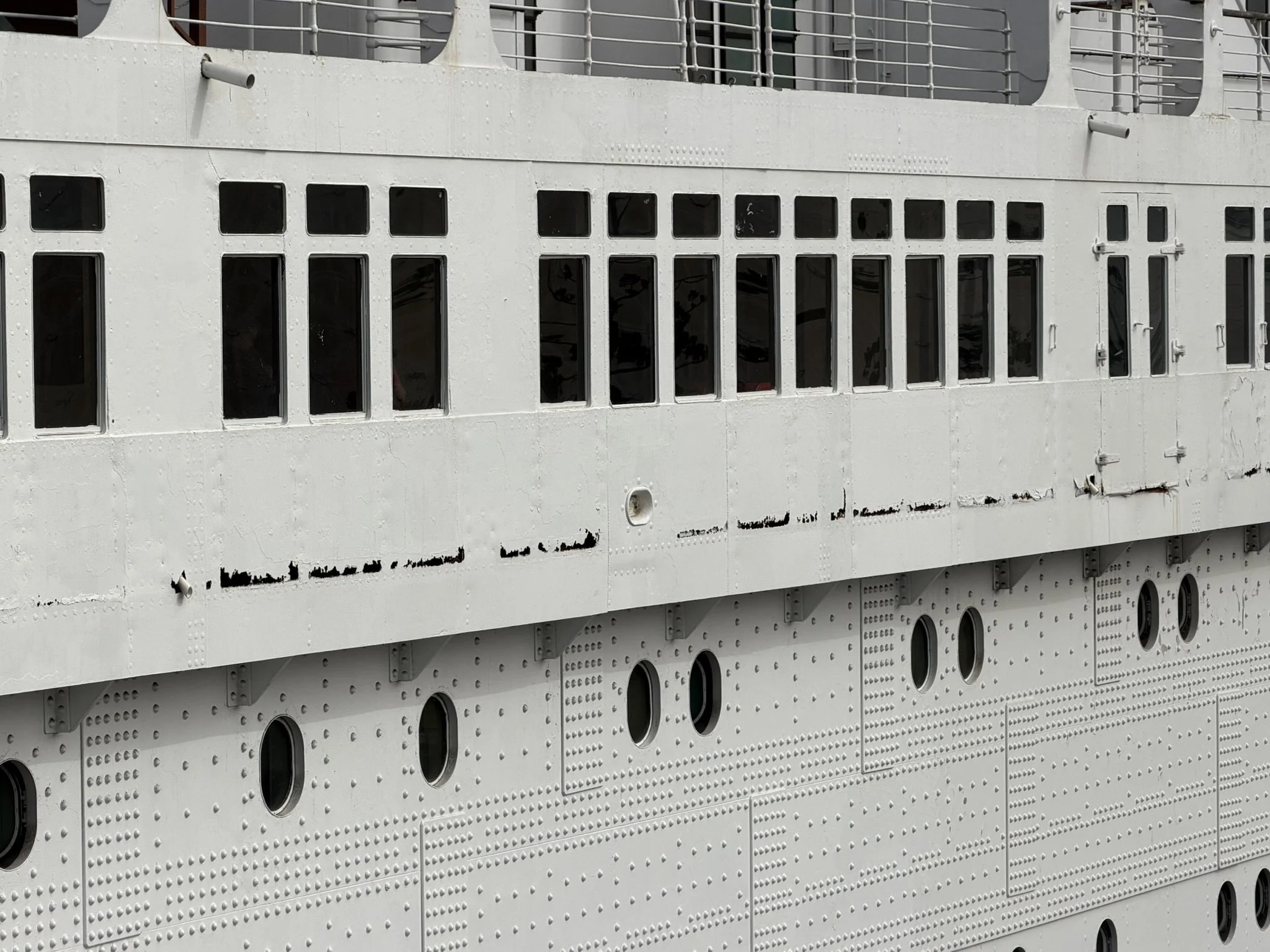
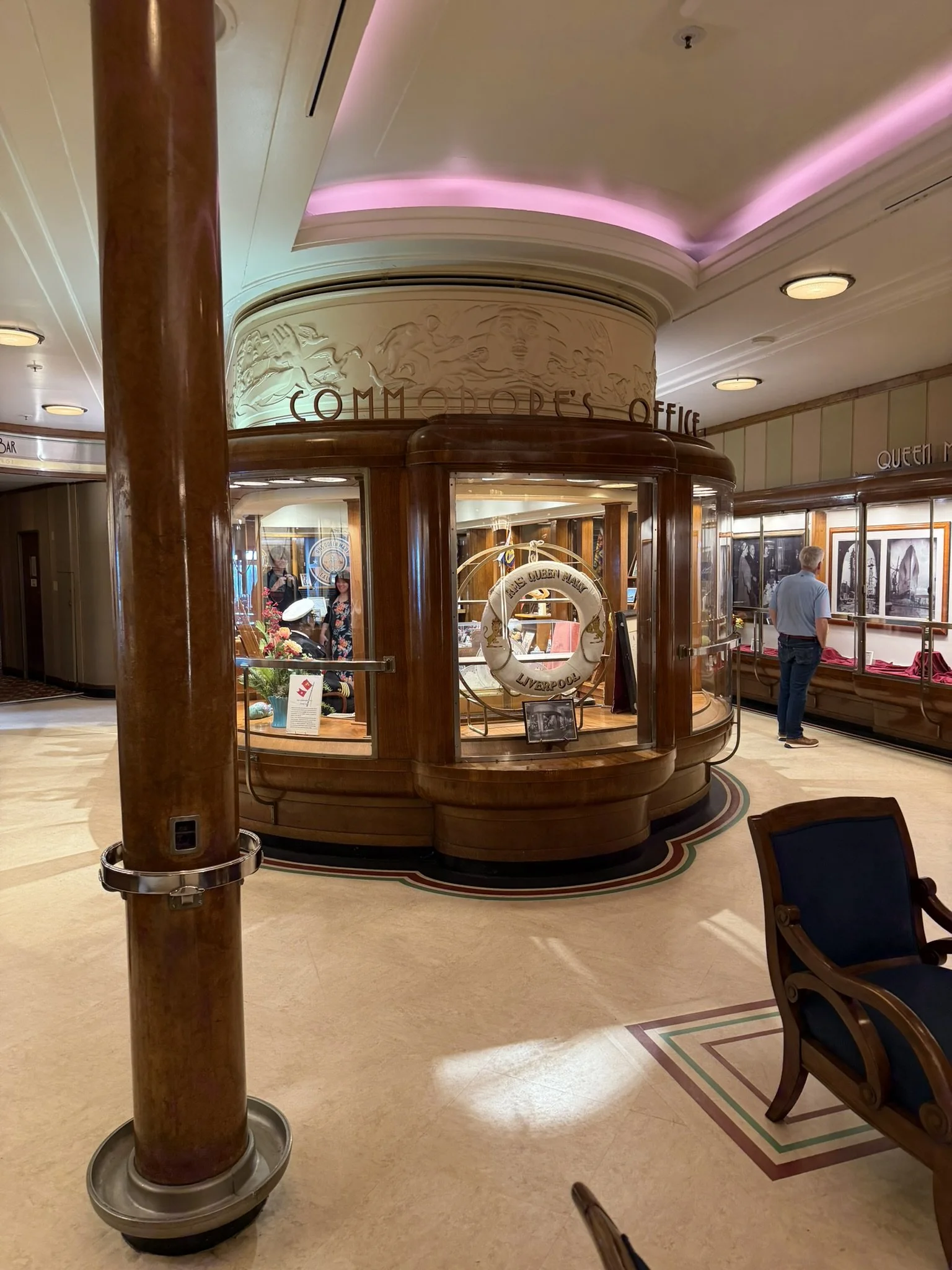
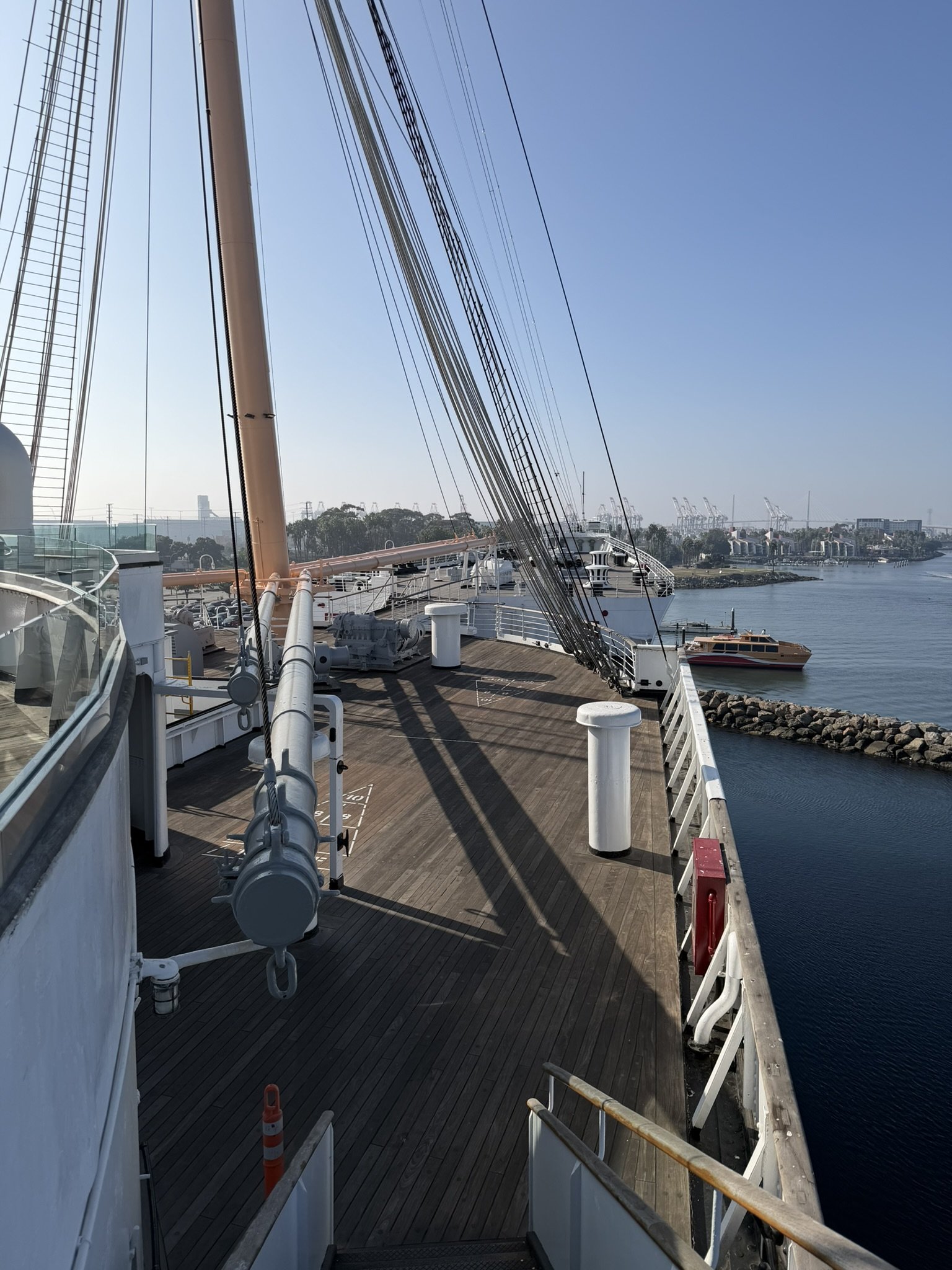
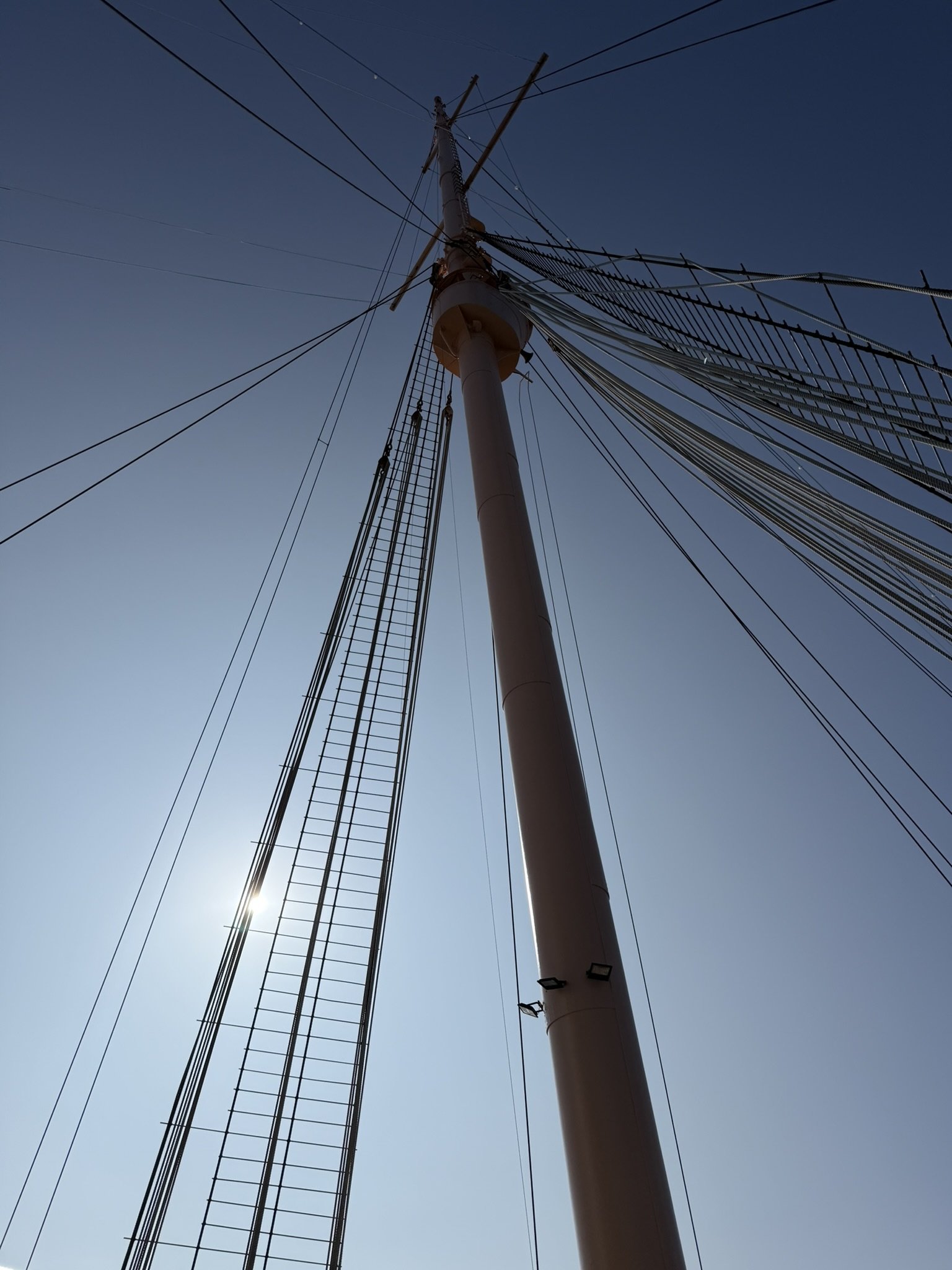
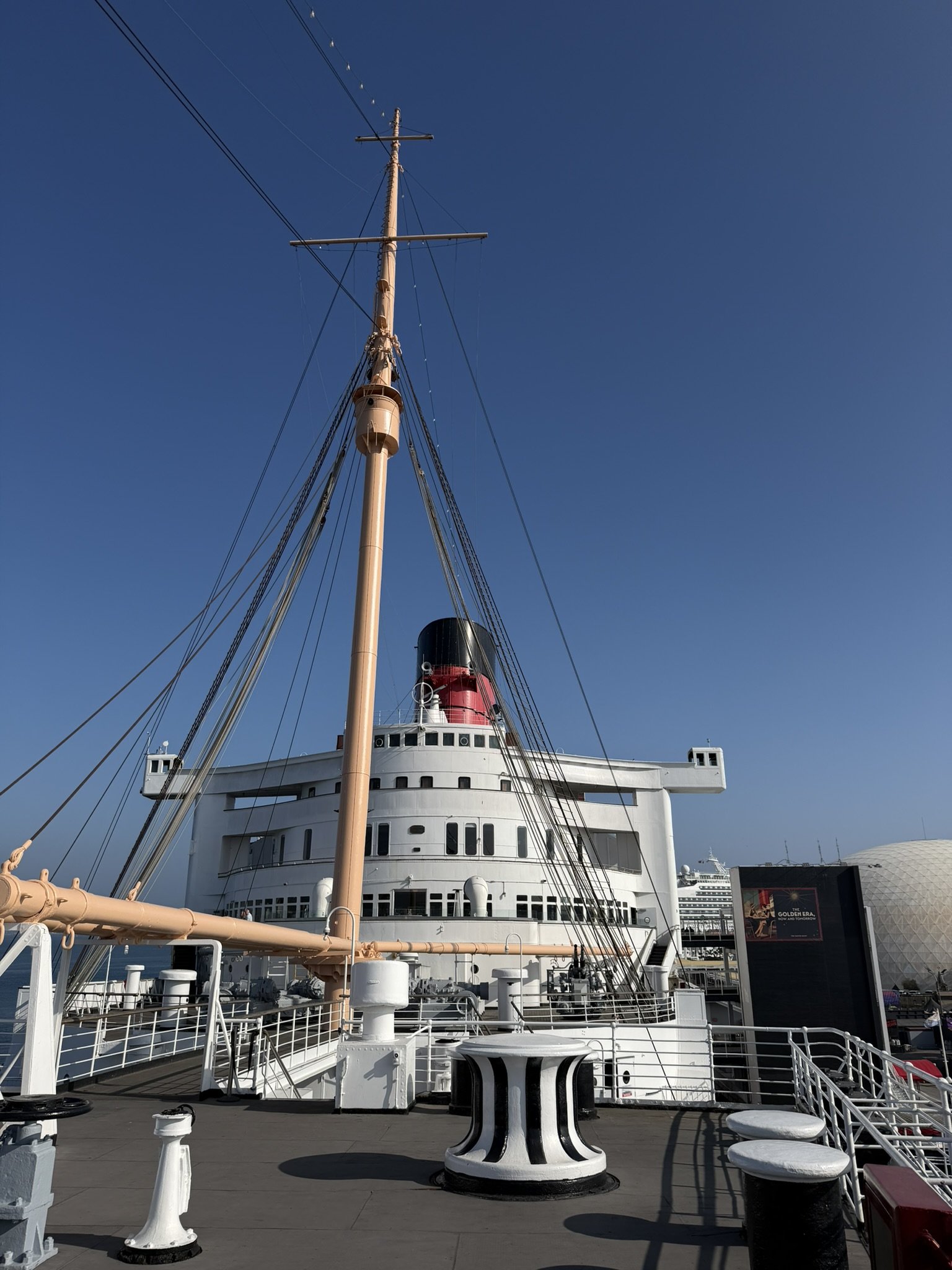
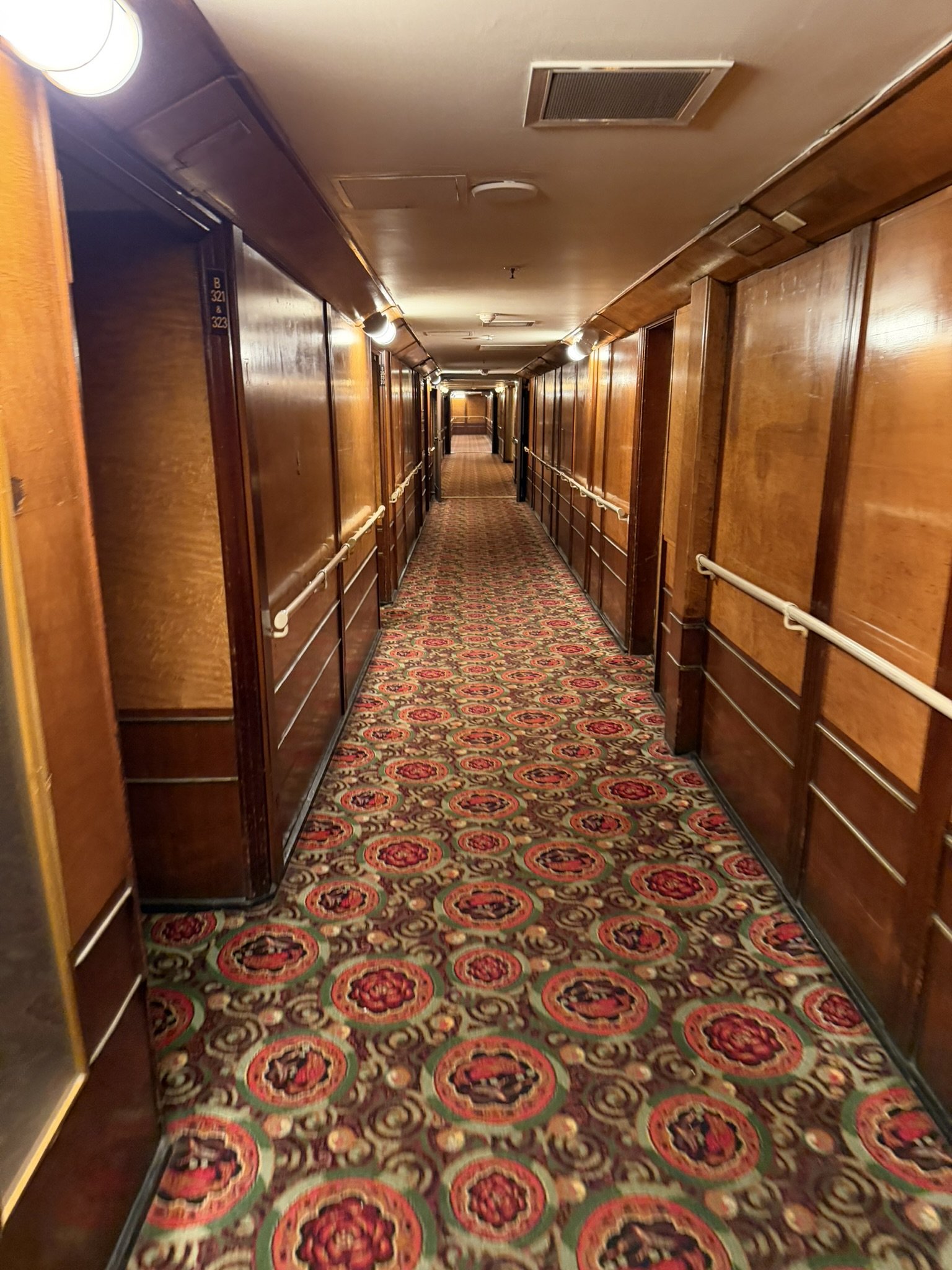
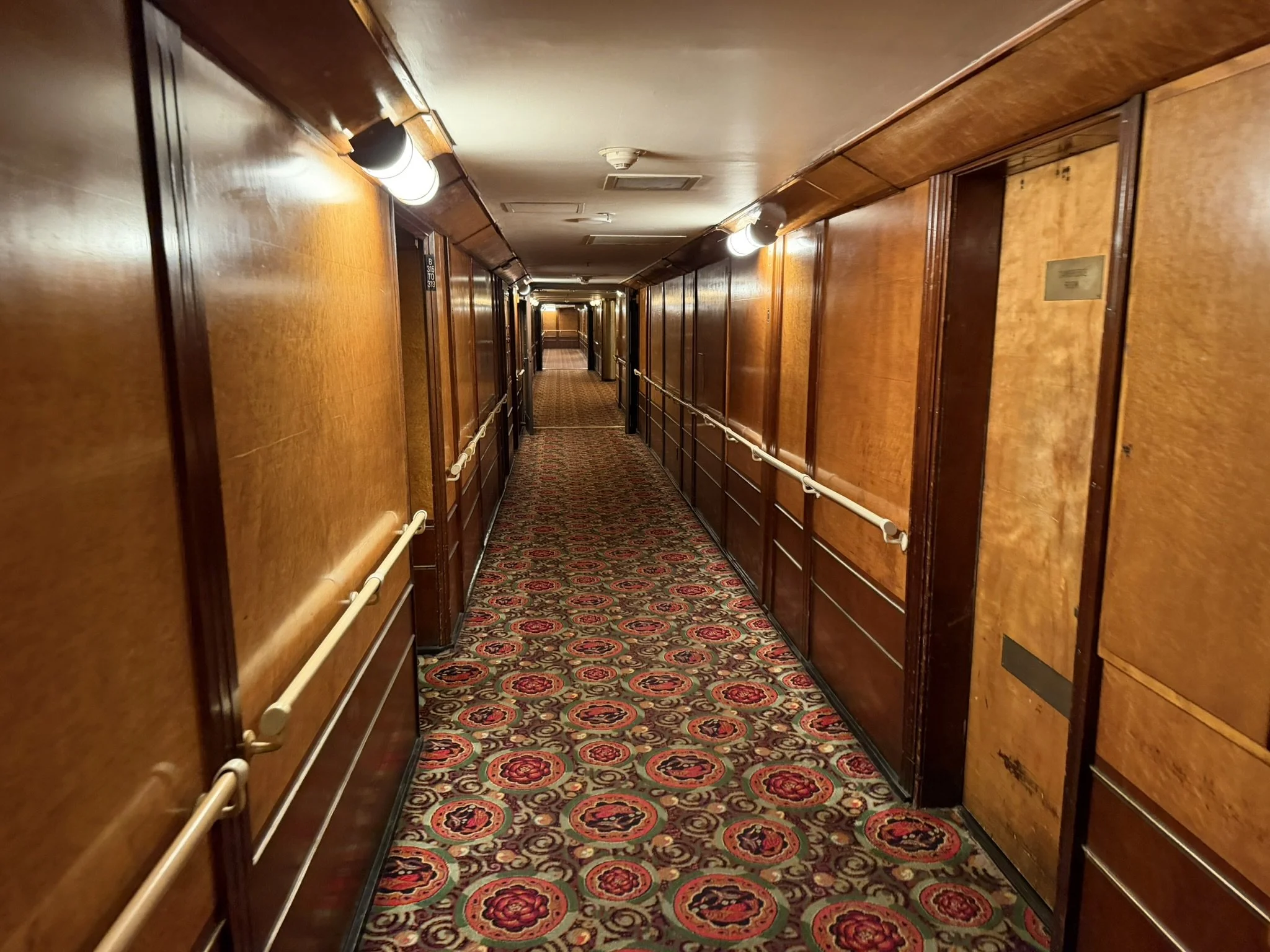
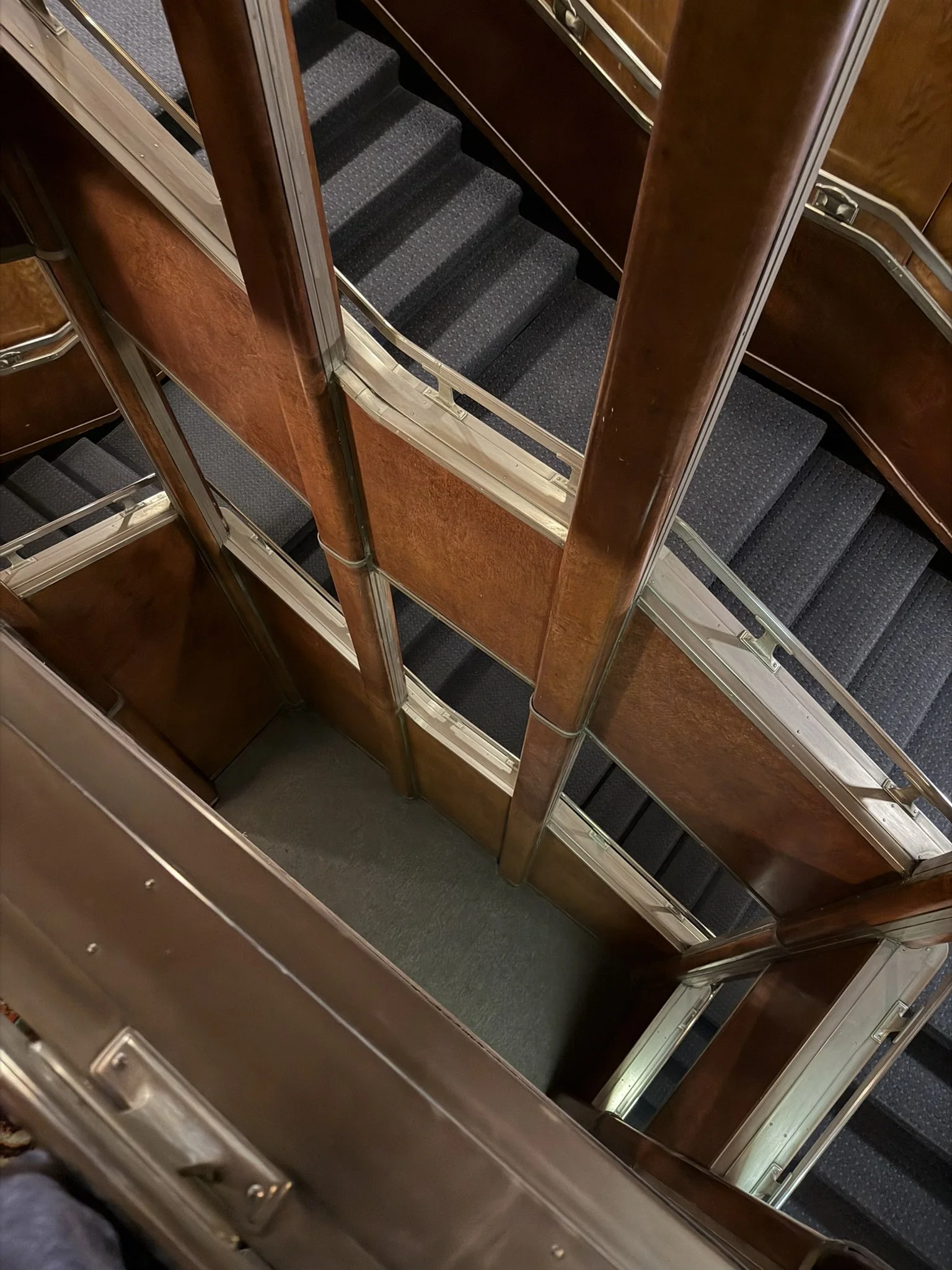
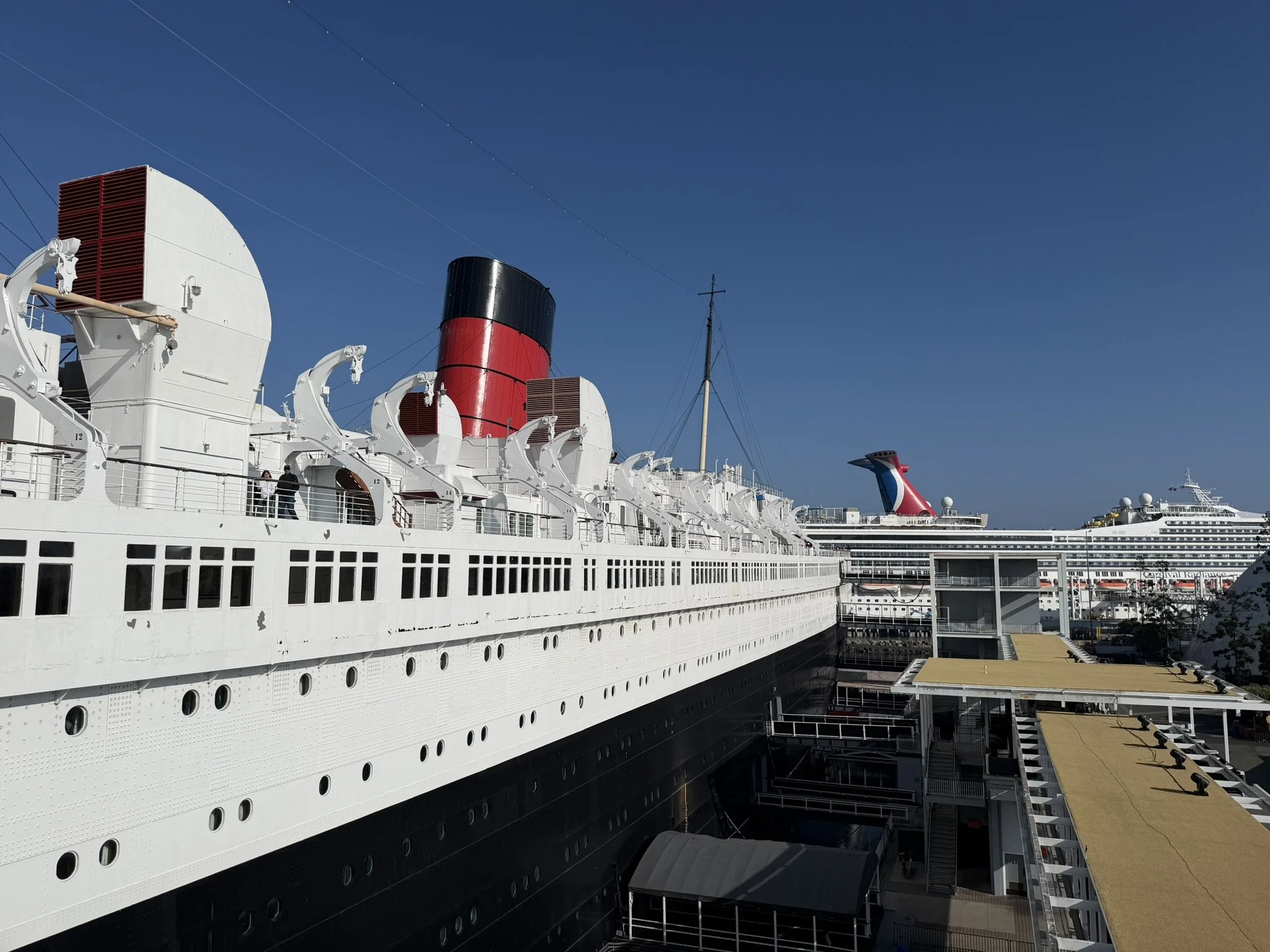
The RMS Queen Mary is one of the most significant surviving ocean liners of the twentieth century. Built for the Cunard-White Star Line, she combined speed, scale, and Art Deco design during the great era of North Atlantic passenger travel. After three decades of service, including an extraordinary wartime career, she retired to Long Beach in 1967 and has remained there ever since.
Information List
Name: RMS Queen Mary
Operator During Passenger Service: Cunard-White Star Line / Cunard Line
Current Owner: City of Long Beach
Builder: John Brown & Company, Clydebank, Scotland
Launched: September 26, 1934
Maiden Voyage: May 27, 1936
Retired: 1967
Length: 1,019 feet
Beam: 118 feet
Gross Tonnage: Approximately 81,000 GRT
Current Location: Long Beach, California
Current Use: Preserved ocean liner, hotel, attraction, museum, and event venue
History and Features
Construction and Entry Into Service:
Construction began at John Brown & Company in Clydebank, Scotland, in December 1930.
The ship was launched on September 26, 1934, and named for Queen Mary, wife of King George V.
Her maiden voyage from Southampton to New York began on May 27, 1936.
During her first year in service, Queen Mary captured the Blue Riband for the fastest average speed on a North Atlantic crossing.
Together with Queen Elizabeth, she helped Cunard maintain a regular two-ship express service between Europe and New York.
Design and Features:
Queen Mary was designed for high-speed North Atlantic service while offering the elaborate public rooms expected aboard the leading liners of the period.
Her interiors became particularly known for their Art Deco styling and extensive use of decorative woods.
Passenger amenities included swimming pools, libraries, lounges, dining rooms, a music studio, and other spaces designed for extended transatlantic voyages.
Many original spaces and architectural details survive aboard the ship today.
Wartime Service:
With the outbreak of World War II, Queen Mary was converted from a luxury liner into a troop transport.
Her hull and superstructure were painted gray, contributing to her wartime nickname, the “Grey Ghost.”
Her combination of size and speed allowed her to transport enormous numbers of Allied personnel.
On one wartime voyage she carried 16,683 people, a record number aboard a single vessel.
Service:
Following World War II, Queen Mary returned to commercial North Atlantic service.
She continued operating for Cunard as air travel increasingly replaced ocean liners as the primary means of crossing the Atlantic.
Long Beach purchased the ship in 1967 as Cunard prepared to retire her.
Her final voyage departed Southampton on October 31, 1967, bound for Southern California rather than another Atlantic crossing.
She arrived in Long Beach on December 9, 1967, beginning an entirely new chapter in her history.
Long Beach – November 1, 2025:
By November 2025, Queen Mary had been a permanent part of Long Beach for nearly 58 years.
The City of Long Beach had regained control of the ship in 2021 and undertaken significant repair, preservation, and restoration work.
The ship reopened to visitors in stages beginning in late 2022, followed by a broader reopening in 2023.
November 1 also marked the final scheduled night of the 2025 Queen Mary’s Dark Harbor season, which had begun September 18.
Beyond seasonal events, the ship continued operating as a hotel and historic attraction with tours and exhibits interpreting both her passenger and wartime careers.
Legacy:
Queen Mary survives as an exceptionally rare example of the great prewar transatlantic ocean liners.
Her career connected the golden age of Atlantic travel, World War II, the postwar passenger trade, and the preservation of historic ships.
Her permanent home in Long Beach has now lasted considerably longer than her original career at sea.
Preservation work by the City of Long Beach continues to maintain the ship as both a historic landmark and a functioning visitor attraction.
OLP Social: Nearly 58 years after arriving in Long Beach, she remains part of the waterfront as a preserved ocean liner, hotel and reminder of Cunard’s Atlantic history.
OLP Social 2: Built by John Brown & Company in Scotland, she was launched in 1934 and began her maiden voyage from Southampton to New York in May 1936 for Cunard White Star.
OLP Social 3: At 1,019 feet long and about 81,000 gross register tons, she brought new scale to Cunard’s Atlantic service and won the Blue Riband during her first year.
OLP Social 4: Her final voyage brought her to Long Beach in December 1967, beginning a new chapter in preservation that has now lasted longer than her years at sea.