AZURE SEAS
March 1990 | Los Angeles, California to Ensenada, Mexico
In March 1990, we traveled aboard Azure Seas (Admiral Cruises) from Los Angeles to Ensenada, Mexico. Originally built as the ocean liner Southern Cross, the ship later became a familiar part of the Southern California cruise scene and helped establish the popularity of short cruises from Los Angeles.
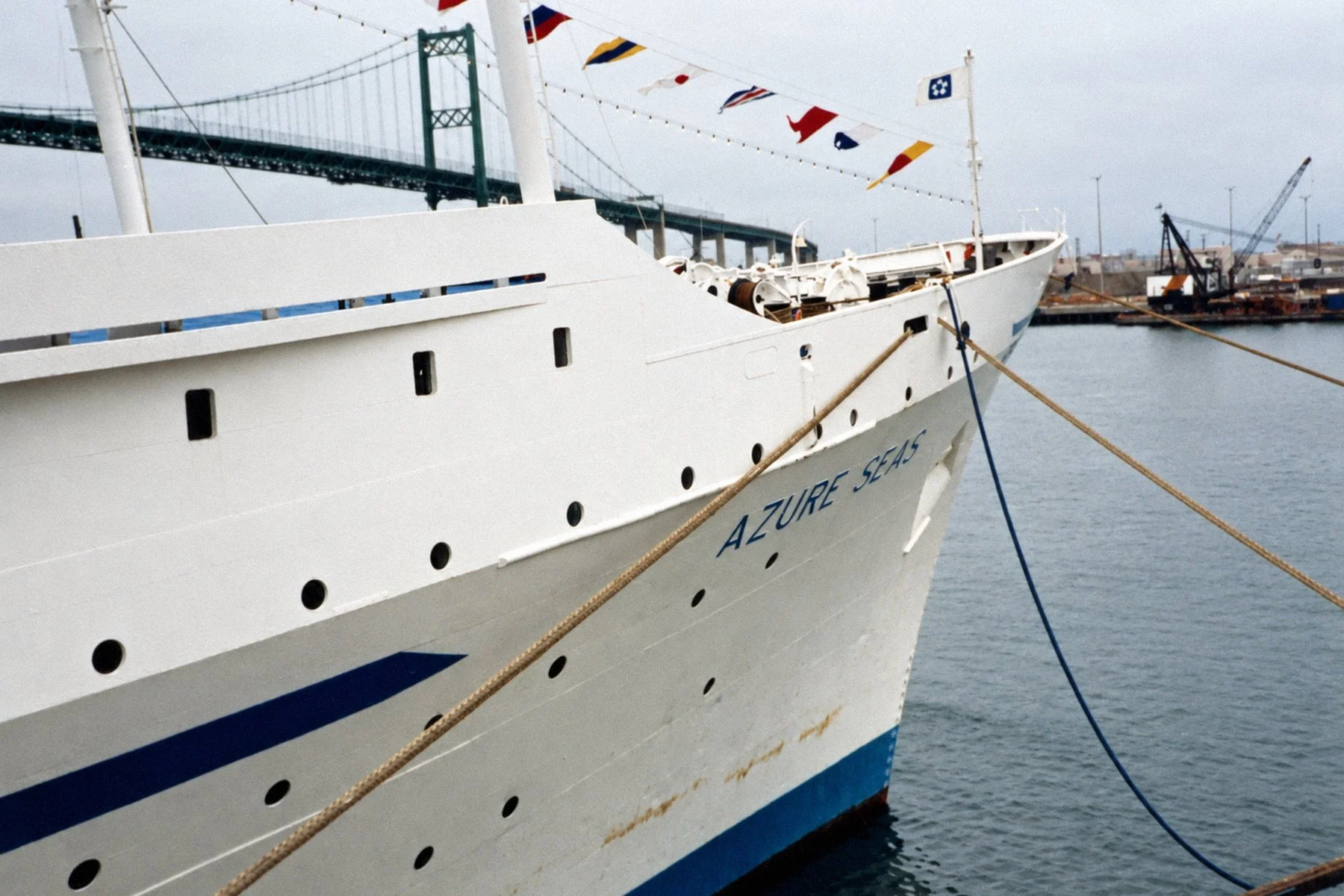
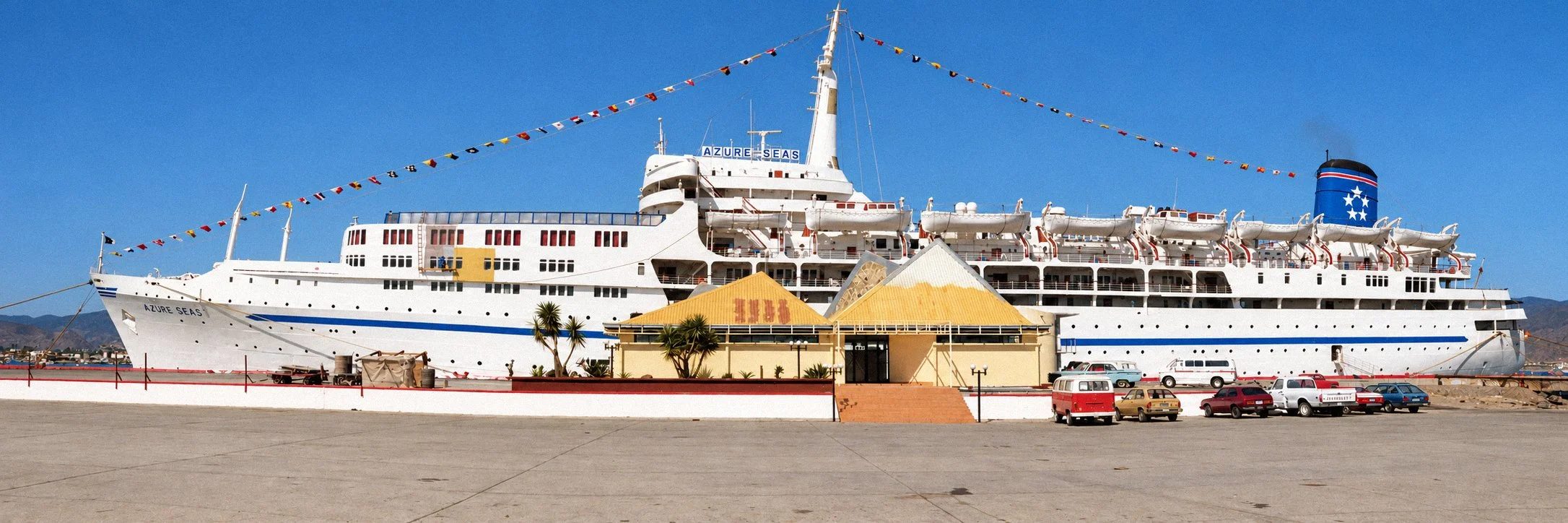
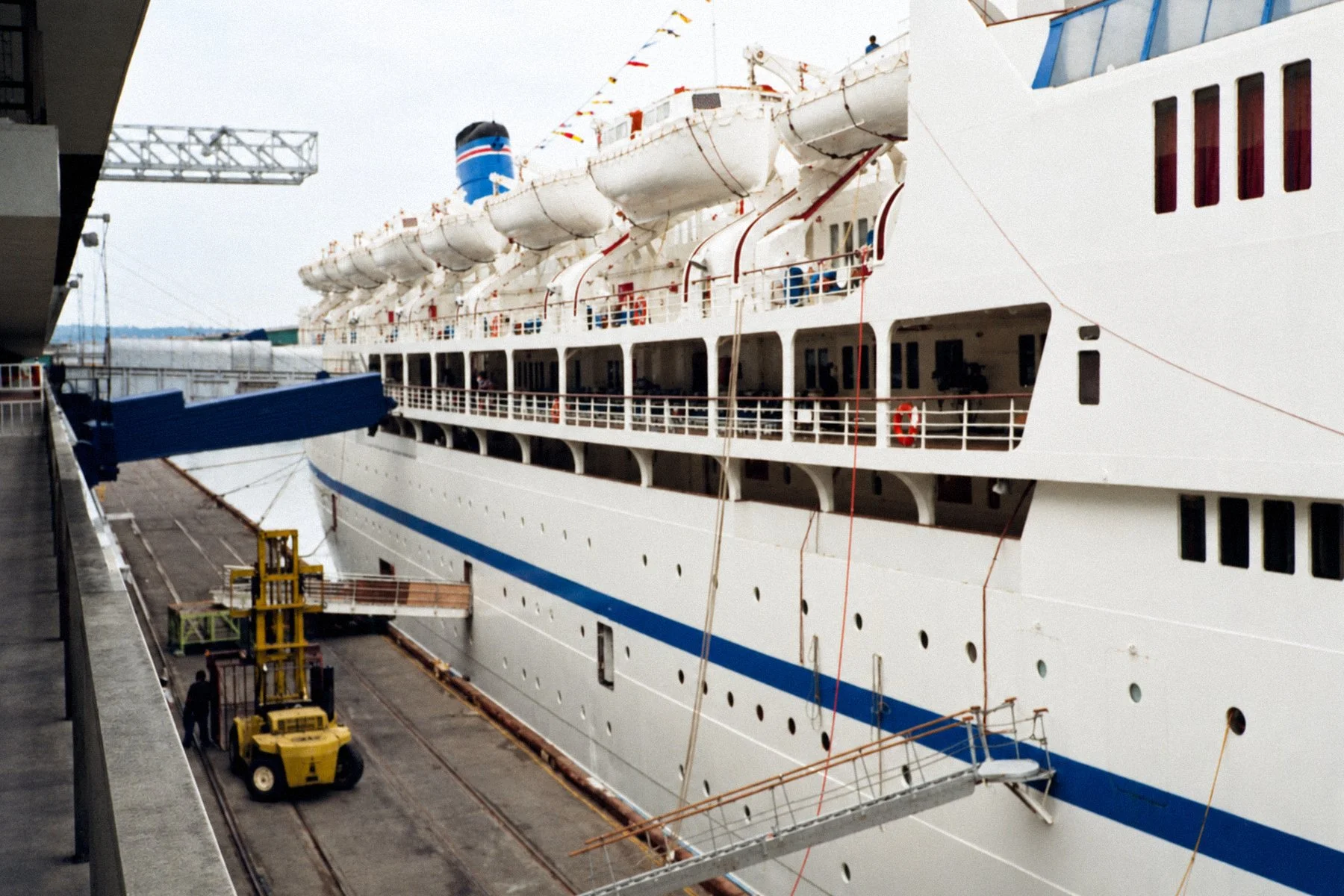
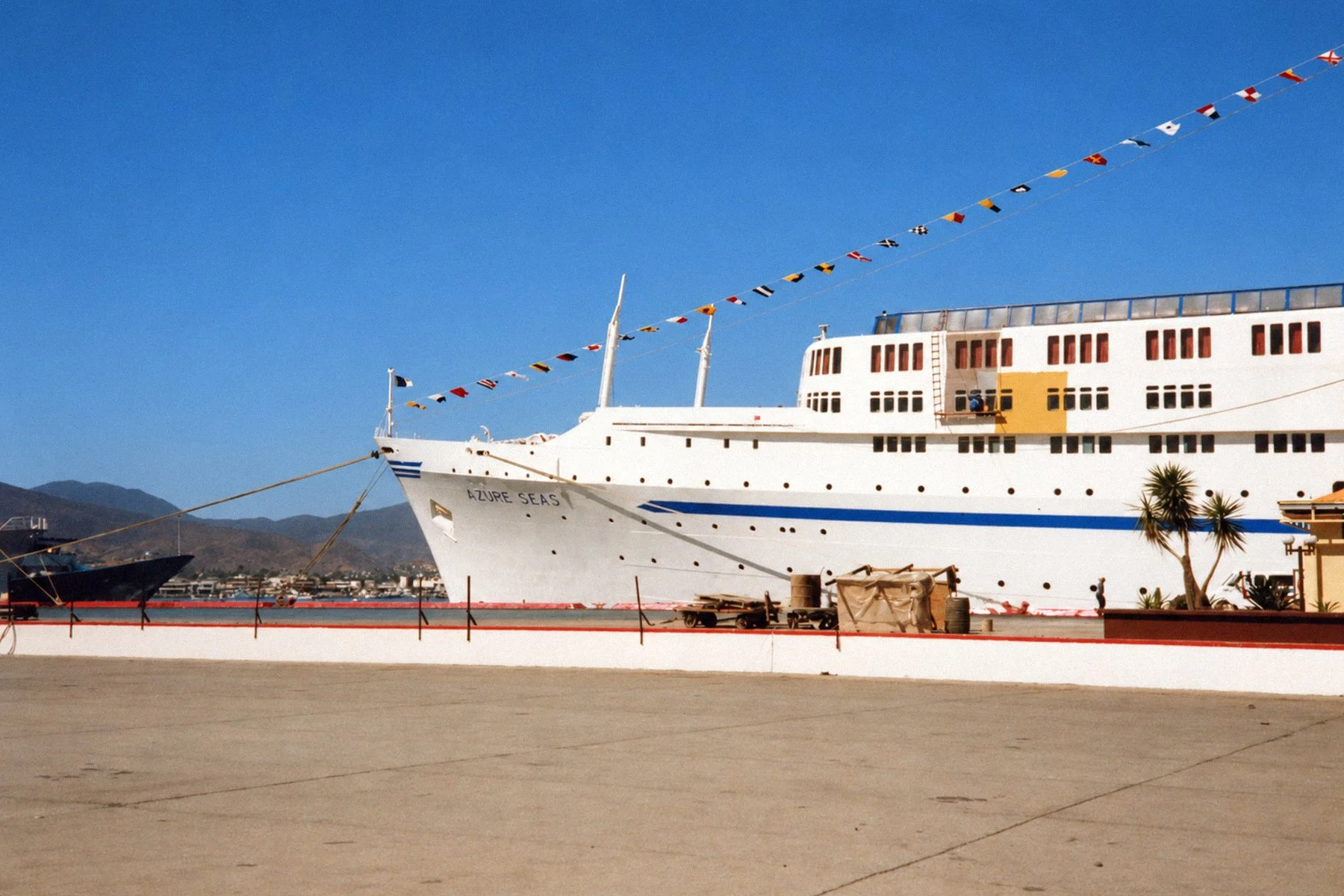
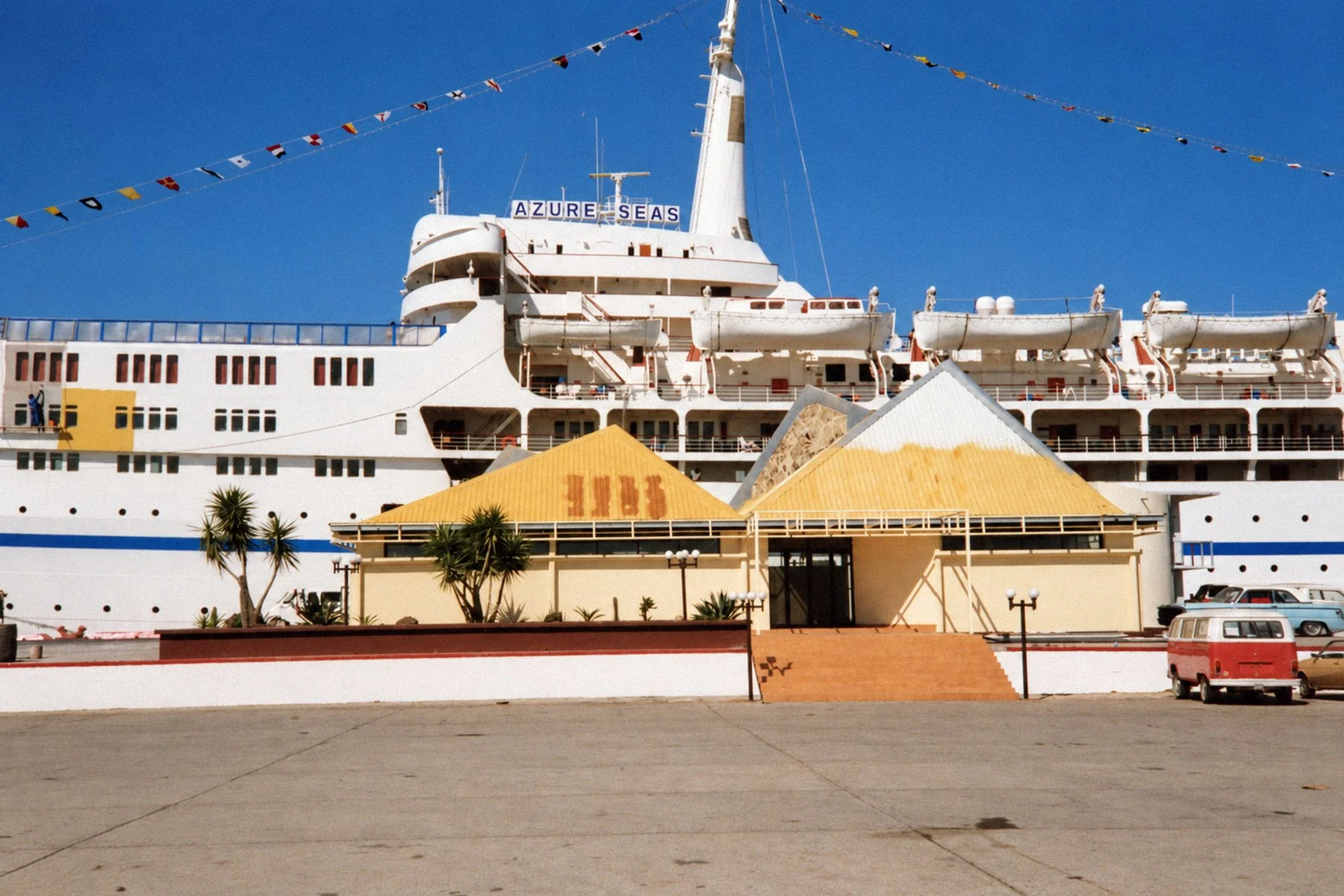
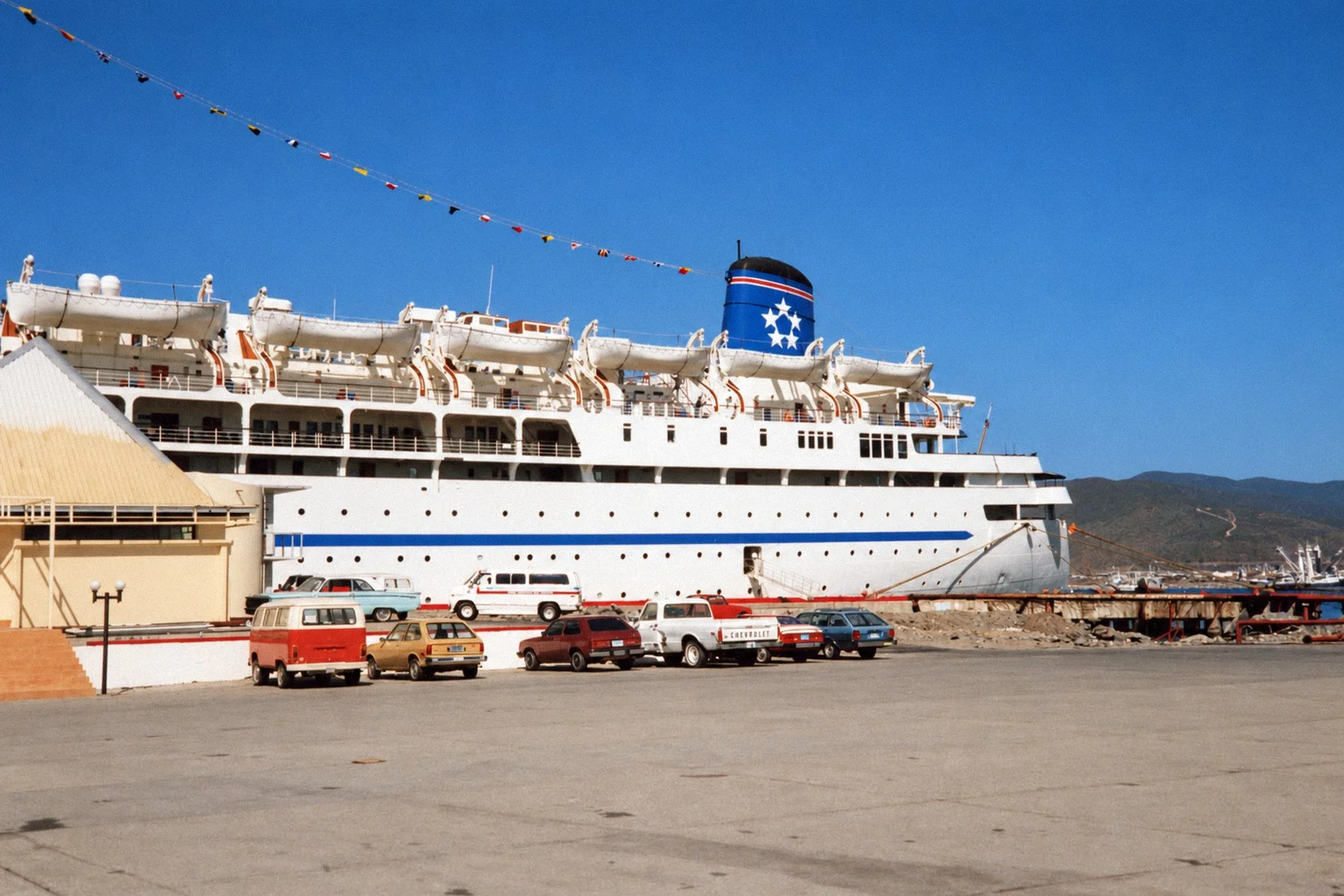
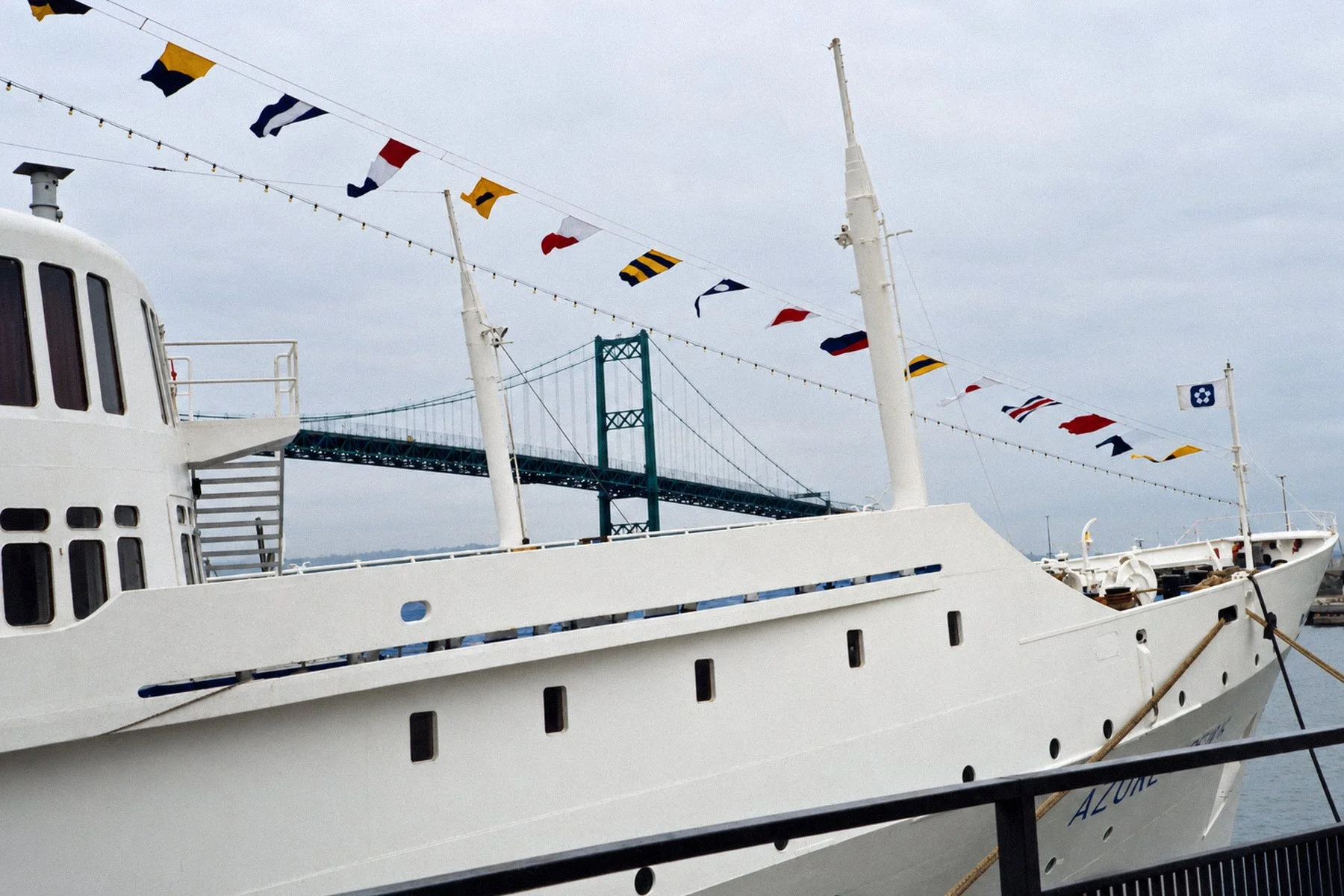
In March 1990, we traveled aboard Azure Seas on a cruise from Los Angeles to Ensenada, Mexico. Operated by Admiral Cruises, the ship was a familiar presence in Southern California during an era when short cruises were becoming increasingly popular from the Port of Los Angeles.
Our voyage aboard Azure Seas also provided an opportunity to travel on a ship with a much longer history than her role as a West Coast cruise ship might suggest. She had entered service decades earlier as Southern Cross, an innovative passenger liner built for Shaw, Savill & Albion. Her transformation into Azure Seas connected two very different periods of passenger shipping: the postwar ocean-liner era and the expanding American cruise industry of the 1980s and early 1990s.
By March 1990, Azure Seas had spent nearly a decade operating short cruises from Los Angeles. These affordable three- and four-night voyages helped introduce many Southern California travelers to cruising and made the ship one of the recognizable passenger vessels associated with the Port of Los Angeles during the period.
Information List
Name Shown: Azure Seas
Operator: Admiral Cruises
Ship Type: Ocean liner converted to cruise ship
Original Name: Southern Cross
Builder: Harland & Wolff, Belfast, Northern Ireland
Launched: 1954
Entered Service: 1955
Original Operator: Shaw, Savill & Albion
Later Names: Calypso, Calypso I, Azure Seas, OceanBreeze
Gross Tonnage: Approximately 20,200 GRT as built
Length: Approximately 659 feet / 201 meters
Beam: Approximately 82 feet / 25 meters
Cruise Operator in 1990: Admiral Cruises
Departure Port: Los Angeles, California
Destination Shown: Ensenada, Mexico
Cruise Date: March 1990
Personal Voyage: Traveled aboard Azure Seas
History and Features
Construction as Southern Cross:
Azure Seas began life as the ocean liner Southern Cross.
She was built by Harland & Wolff in Belfast for Shaw, Savill & Albion.
Launched in 1954 and entering service in 1955, Southern Cross was designed for passenger service linking Britain with Australia and New Zealand.
Her arrangement was unusual for a large passenger liner of the period, with machinery concentrated aft and passenger accommodations positioned forward.
The resulting profile, with the funnel and machinery spaces toward the stern, gave Southern Cross a distinctive appearance.
She was also designed around one-class passenger service rather than the traditional separation of passengers into multiple classes.
Southern Cross and Postwar Passenger Service:
Southern Cross was developed during a period of strong postwar demand for passenger transportation between Britain, Australia, and New Zealand.
Her service connected ports over long-distance routes that formed part of the migration and travel patterns of the era.
The ship represented a departure from many traditional ocean-liner arrangements and became an important example of changing passenger-ship design.
Increasing competition from commercial aviation eventually reduced demand for long-distance passenger voyages of this type.
Like many liners of her generation, Southern Cross eventually transitioned from transportation service toward cruising.
From Southern Cross to Calypso:
After leaving her original Shaw, Savill & Albion service, the ship entered a new stage of her career as a cruise ship.
She was renamed Calypso and underwent changes intended to adapt her for leisure cruising.
Her deployments during this period included Mediterranean and other cruise operations.
She later operated as Calypso I before another sale brought her to the American West Coast.
These changes reflected the broader transformation occurring throughout the passenger-shipping industry as traditional liners were adapted for the growing cruise market.
Becoming Azure Seas:
The ship was renamed Azure Seas after being acquired for American cruise operations in 1980.
Her interiors were updated for the short-cruise market, and additional leisure facilities were introduced.
Azure Seas began operating from Los Angeles to Mexican destinations in November 1980.
She became particularly associated with short cruises to Ensenada and Catalina Island.
Her combination of relatively affordable fares and short itineraries helped make cruising accessible to a much wider Southern California market.
Admiral Cruises:
Western Cruise Lines, Eastern Cruise Lines, and Sundance Cruises combined in 1986 to form Admiral Cruises.
Azure Seas continued her established West Coast service under the Admiral Cruises name.
By 1990, she was operating alongside a rapidly expanding selection of cruise ships based in Southern California.
Contemporary reporting described Azure Seas as a pioneer of the successful three- and four-day Los Angeles cruise market.
Her established following helped demonstrate the demand for short cruises from Southern California.
Los Angeles Cruise History:
Azure Seas played a notable role in the development of modern cruising from the Port of Los Angeles.
In April 1988, she became the first cruise ship to berth at the newly completed passenger terminal at the Port of Los Angeles World Cruise Center.
The new terminal opened during a period of substantial growth in Southern California's cruise industry.
At the time, Azure Seas was among the ships maintaining regular year-round cruise operations from Los Angeles.
Her presence helped establish the short-cruise market that would later be served by numerous other vessels and cruise lines.
Our March 1990 Cruise:
We traveled aboard Azure Seas in March 1990 from Los Angeles to Ensenada, Mexico.
The voyage took place during the final years of the ship's long-running Southern California deployment.
By then, Azure Seas had been sailing from Los Angeles for nearly a decade.
Our cruise provided the opportunity to experience a ship that combined the character of a 1950s ocean liner with the increasingly casual short-cruise experience of the late twentieth century.
This voyage establishes Azure Seas as part of the Ocean Liner Photography Ships Traveled On collection.
Ensenada:
Ensenada became one of the principal destinations for short cruises from Southern California.
Its proximity to Los Angeles made it particularly suitable for three- and four-night itineraries.
Azure Seas became closely associated with this market during her years on the West Coast.
Contemporary accounts identify Ensenada as one of the regular destinations served by the ship from Los Angeles.
Later Career:
Azure Seas eventually left her long-established Los Angeles service as newer ships entered the Southern California market.
After leaving Admiral Cruises, she was renamed OceanBreeze and continued operating cruises for other companies.
Her later career included service in the Caribbean and Bahamas.
The former Southern Cross survived into the early twenty-first century, giving her a career spanning nearly five decades and dramatically different eras of passenger shipping.
She was eventually withdrawn from service and scrapped in 2003.
From Ocean Liner to Cruise Ship:
The ship's career illustrates the major transformation of passenger shipping during the second half of the twentieth century.
As Southern Cross, she was designed for long-distance international passenger transportation.
As Azure Seas, she served a growing leisure market centered on short, accessible cruises from Southern California.
The same vessel therefore connected the postwar migration era with the development of mass-market cruising.
That dual history makes both Ocean Liners and Cruise Ships appropriate categories for this page.
Legacy:
Azure Seas holds an important place in Southern California cruise history because of her long association with Los Angeles and the development of the short-cruise market.
Her earlier career as Southern Cross gives the ship additional significance as an innovative postwar ocean liner.
The March 1990 voyage represented one of the later years of her Los Angeles service and gave us the opportunity to travel aboard a vessel whose history stretched back to the 1950s.
For the Ocean Liner Photography collection, Azure Seas connects our own early cruise travels with a much broader period of change in ocean-liner and cruise-ship history.
OLP Social: Our short cruise to Ensenada took place aboard the former ocean liner Southern Cross, a ship whose long career eventually brought her into the Southern California market under Admiral Cruises.