MARCO POLO
July 15, 2004 | Geiranger, Norway
Marco Polo (Orient Lines) is seen at Geiranger, Norway, on July 15, 2004, photographed from Queen Mary 2 during our Northern Europe cruise. Originally built as the Soviet liner Aleksandr Pushkin, the classic passenger ship shared the dramatic setting of Geirangerfjord with the new Cunard liner during QM2’s inaugural season.
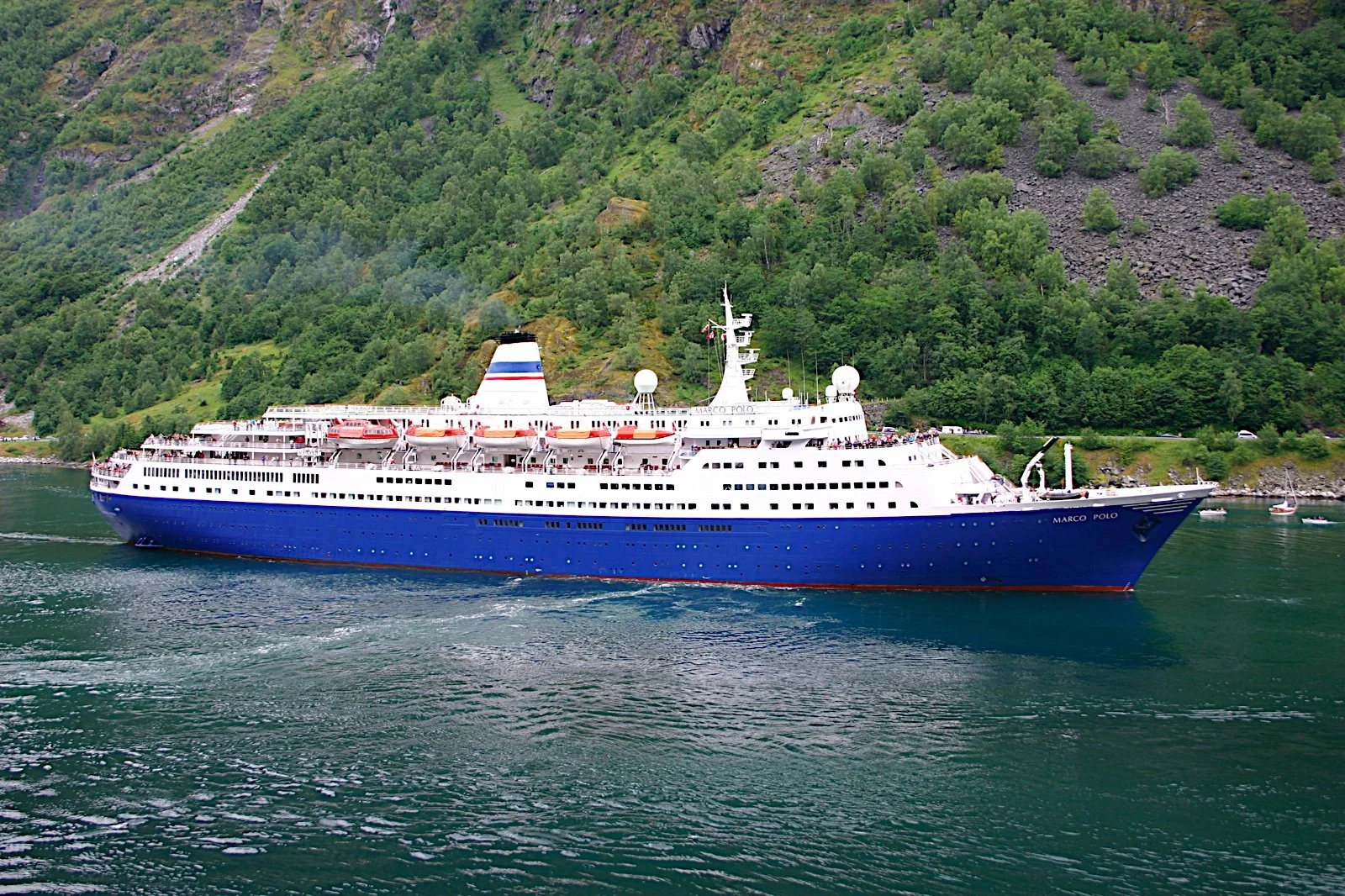
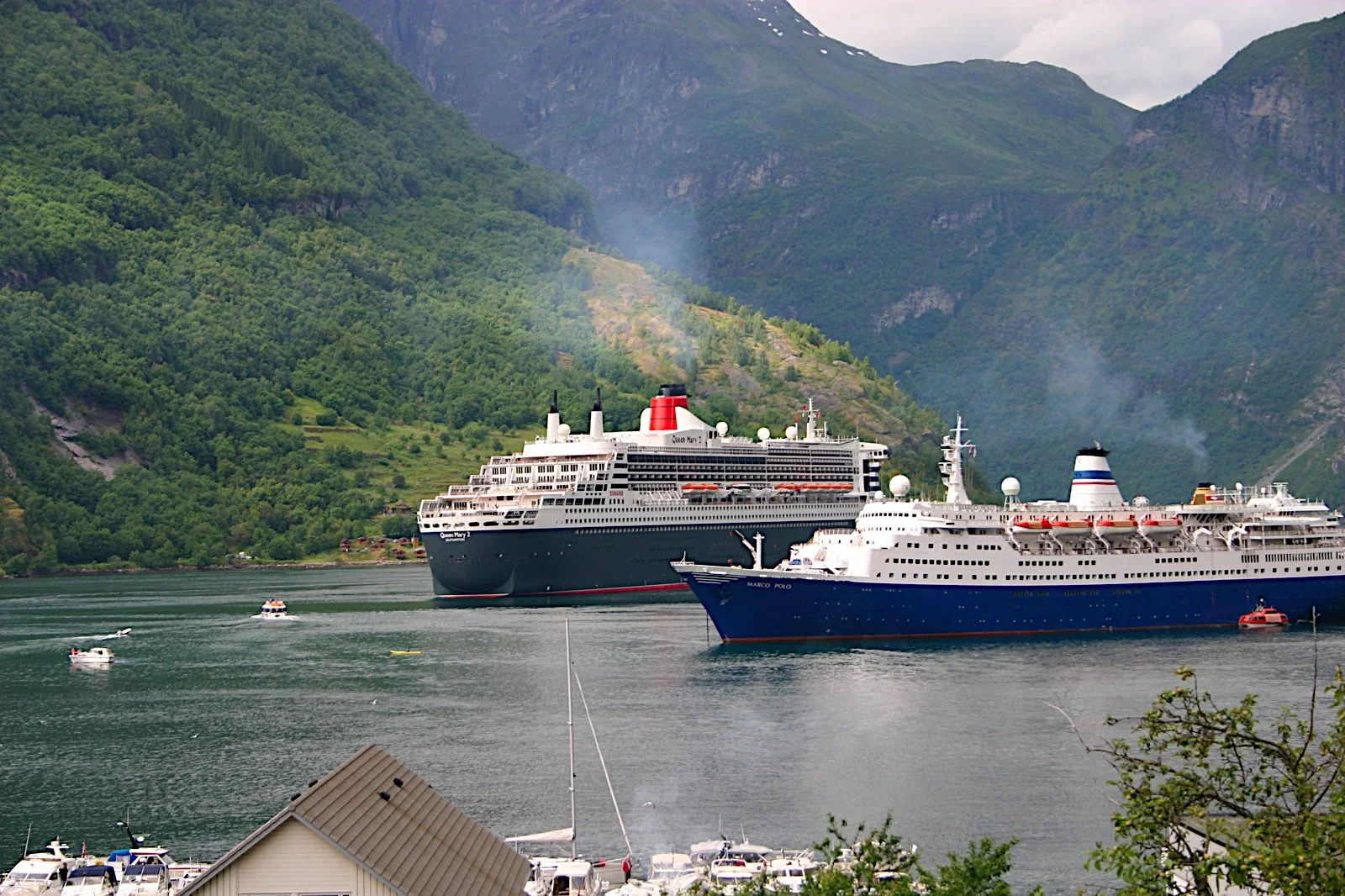
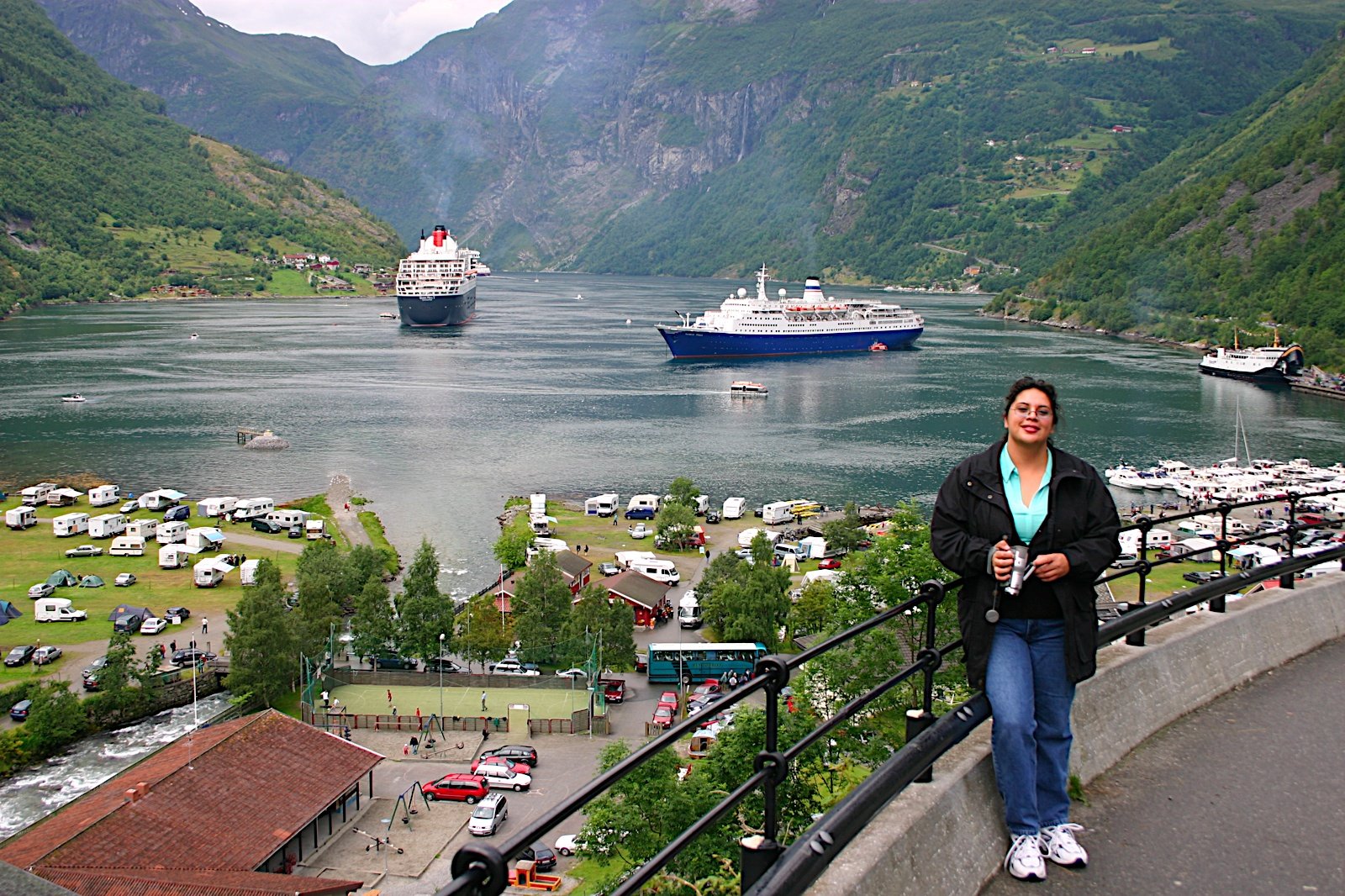
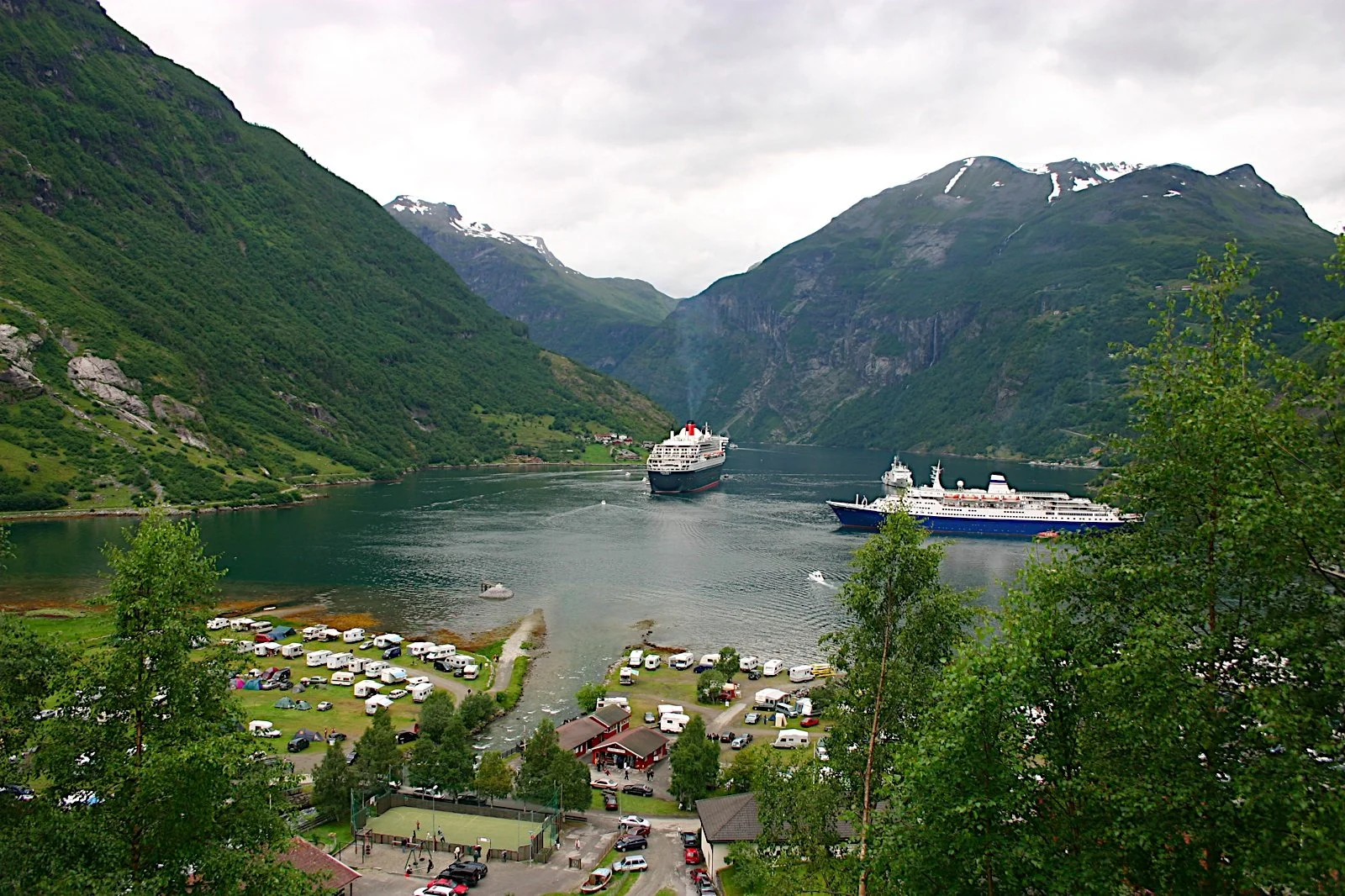
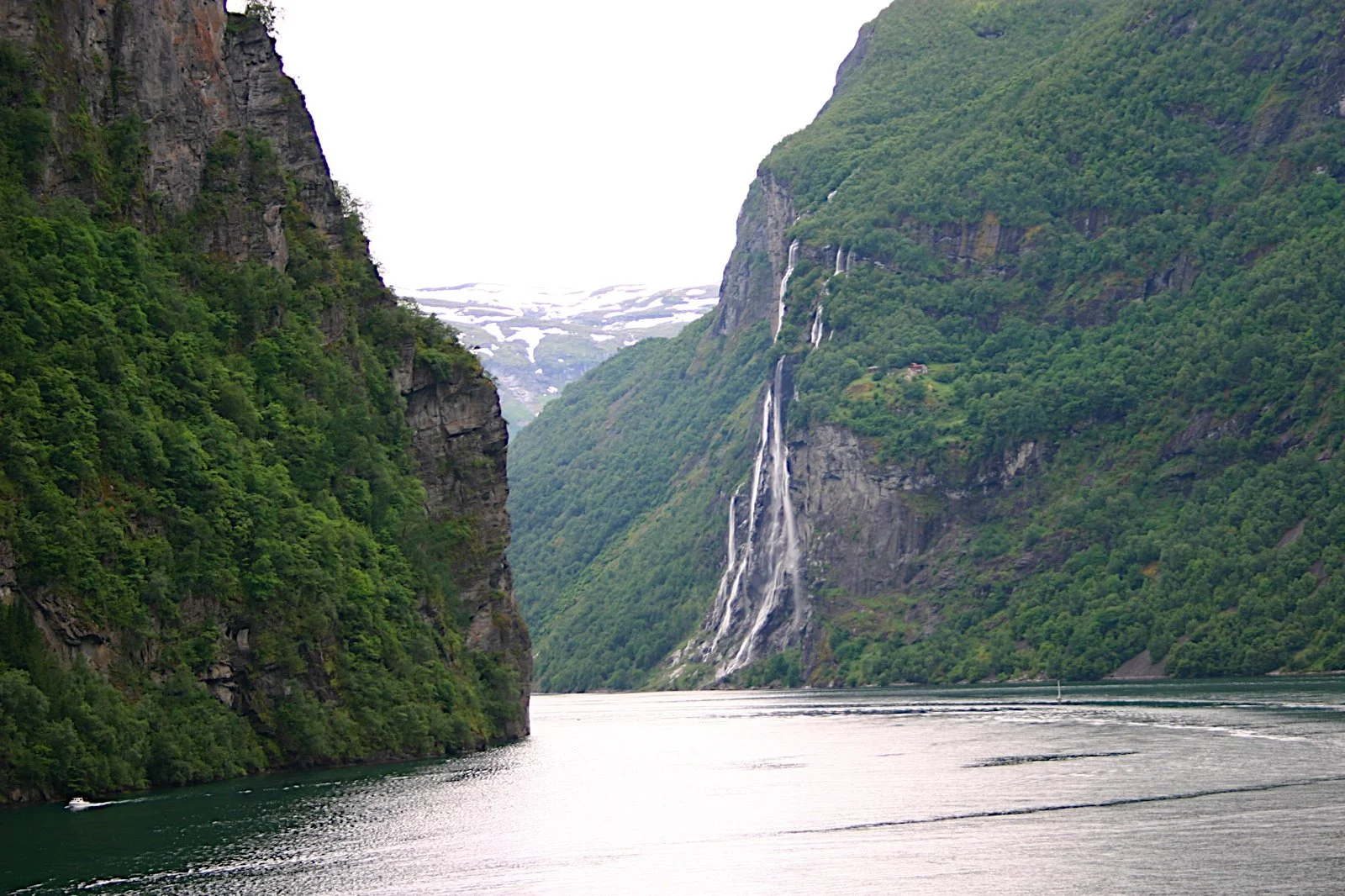
Marco Polo is seen at Geiranger, Norway, on July 15, 2004, sharing the spectacular setting of Geirangerfjord with Queen Mary 2. These photographs were taken from aboard QM2 during our Northern Europe cruise in her inaugural season, creating an encounter between two passenger ships from very different generations.
By 2004, Marco Polo was sailing for Orient Lines and had already accumulated nearly four decades of service. She began life during the Cold War as the Soviet passenger liner Aleksandr Pushkin, built in East Germany for the Baltic Shipping Company. Her strong hull, traditional proportions and long-distance passenger-service origins helped distinguish her from the increasingly large purpose-built cruise ships entering service around the turn of the twenty-first century.
The contrast at Geiranger was particularly notable. Marco Polo represented passenger-ship design originating in the 1960s, while Queen Mary 2, completed in 2003, represented a new generation of ocean liner. Surrounded by the steep mountains and waterfalls of Geirangerfjord, their meeting connected two very different periods of passenger shipping history.
Information List
Name: Marco Polo
Original Name: Aleksandr Pushkin
Operator in 2004: Orient Lines
Original Operator: Baltic Shipping Company
Class: Ivan Franko class
Builder: Mathias-Thesen-Werft, Wismar, East Germany
Launched: April 26, 1964
Delivered: August 14, 1965
Entered Service: 1965
Renamed Marco Polo: 1991
Gross Tonnage: Approximately 22,080 GT after conversion
Length: Approximately 578 feet / 176 meters
Beam: Approximately 77 feet / 23.6 meters
Speed: Approximately 20 knots
Original Role: Ocean liner and cruise ship
Operator Later in Career: Cruise & Maritime Voyages
Final Year of Passenger Service: 2020
Fate: Scrapped at Alang, India, in 2021
Gallery Date: July 15, 2004
Gallery Location: Geirangerfjord, Geiranger, Norway
History and Features
Aleksandr Pushkin:
The ship was constructed at Mathias-Thesen-Werft in Wismar, East Germany, for the Soviet Union’s Baltic Shipping Company.
She was launched on April 26, 1964 and delivered in August 1965.
Named Aleksandr Pushkin, she was one of five Ivan Franko-class passenger ships built for Soviet operators.
The class was designed for long-distance passenger service and incorporated ice-strengthening suitable for operations in northern waters.
Her sisters were Ivan Franko, Shota Rustaveli, Taras Shevchenko and Mikhail Lermontov.
Transatlantic Service:
Aleksandr Pushkin became associated with passenger service linking Leningrad with ports in Western Europe and Canada.
Her transatlantic operations included service to Montreal, giving the Soviet Union a regular passenger connection with North America.
The ship also operated cruises when not assigned to scheduled passenger service.
This combination of liner voyages and cruising reflected a transitional period when traditional passenger ships were increasingly being adapted to the growing leisure-cruise market.
Conversion to Marco Polo:
After the end of her Soviet career, the ship was acquired by Orient Lines and renamed Marco Polo in 1991.
She underwent an extensive reconstruction before entering service in her new role.
Much of the vessel was rebuilt internally while her original machinery and ice-strengthened hull remained important elements of the ship.
Exterior alterations included redesigned passenger areas and terraced decks toward the stern.
The reconstruction transformed a Soviet-era passenger liner into a ship aimed at the international cruise market while retaining much of her traditional hull form.
Orient Lines Service:
Marco Polo became closely identified with Orient Lines during the 1990s and 2000s.
Her comparatively small size allowed her to operate itineraries and visit destinations that were less practical for increasingly large contemporary cruise ships.
Her ice-strengthened construction also made her well suited to adventurous and destination-focused cruising.
By the time of the July 2004 photographs, she had been operating under the Marco Polo name for more than a decade.
Her traditional profile and long passenger-ship history made her increasingly unusual among the newer vessels entering cruise service.
July 15, 2004 – Geiranger:
Marco Polo visited Geirangerfjord on July 15, 2004, while Queen Mary 2 was also at Geiranger during her inaugural-season Northern Europe cruise.
These photographs were taken from aboard QM2.
The meeting placed a passenger ship originating in the 1960s alongside one of the newest and largest passenger ships in the world at the time.
Geirangerfjord’s steep mountainsides and waterfalls provided a dramatic setting for both vessels.
The Seven Sisters and other waterfalls along the fjord are among the landscape features for which Geiranger has become internationally known.
The encounter is also documented from the opposite perspective in the Ocean Liner Photography Queen Mary 2 Geiranger collection.
Two Generations of Passenger Ships:
The presence of Marco Polo and Queen Mary 2 in the same fjord created a particularly interesting comparison in passenger-ship development.
Marco Polo originated as an ice-strengthened Soviet liner designed during the early 1960s.
QM2 was designed approximately four decades later as a modern ocean liner capable of maintaining scheduled North Atlantic service while also operating cruises.
Their profiles reflected different eras, operating requirements and approaches to passenger accommodation.
Both ships nevertheless retained characteristics associated with long-distance ocean-going passenger vessels.
Later Service:
Marco Polo continued operating after her Orient Lines career.
She eventually became associated with Cruise & Maritime Voyages, remaining one of the oldest major passenger ships in active cruise service.
Continued refurbishments allowed the ship to remain operational decades beyond the normal service life of many contemporary cruise vessels.
Her longevity made her an increasingly rare survivor of 1960s passenger-ship construction.
End of Career:
Cruise & Maritime Voyages entered administration in 2020 during the disruption to the cruise industry caused by the COVID-19 pandemic.
Marco Polo did not return to regular passenger service.
After approximately 55 years of operation under her two principal identities, the ship was sold out of the cruise fleet.
She was taken to Alang, India, where she was dismantled in 2021.
Her loss removed one of the last surviving passenger ships of her generation.
Legacy:
Marco Polo had an unusually long career spanning Soviet liner service, international cruising and the transformation of the modern cruise industry.
Her origins as Aleksandr Pushkin connected her with an era when scheduled passenger services still linked Europe and North America by sea.
Her later success as Marco Polo demonstrated the adaptability of traditional passenger-ship construction to a very different cruise market.
The July 15, 2004 encounter at Geiranger is particularly significant within the Ocean Liner Photography collection because it places this veteran 1960s passenger ship alongside Queen Mary 2 during the Cunard liner’s first year of service.
OLP Social: From aboard Queen Mary 2 during our Northern Europe cruise, we encountered the former Soviet liner Aleksandr Pushkin, whose traditional profile contrasted with Cunard’s new flagship among the fjord’s mountains and waterfalls.