QUEEN ELIZABETH 2
April 14–20, 1999 | 30th Anniversary Transatlantic Crossing – Southampton to New York
Queen Elizabeth 2 (Cunard Line) crossed the North Atlantic from Southampton to New York on Voyage 1160, April 14–20, 1999. The crossing formed the final leg of QE2’s 1999 World Cruise and was also our honeymoon, making this voyage both an important part of the Ocean Liner Photography archive and a personal record of travel aboard one of the most celebrated ocean liners of the twentieth century.


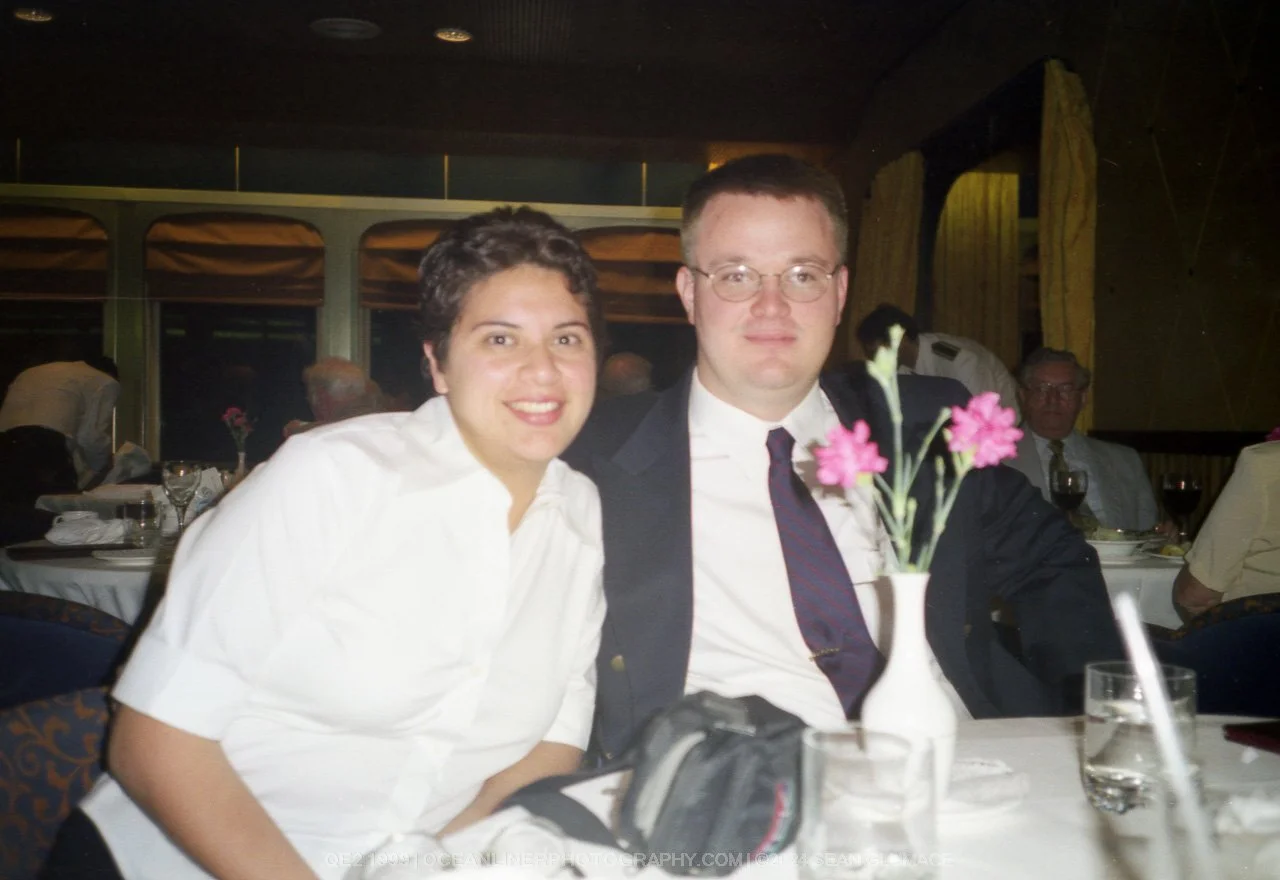


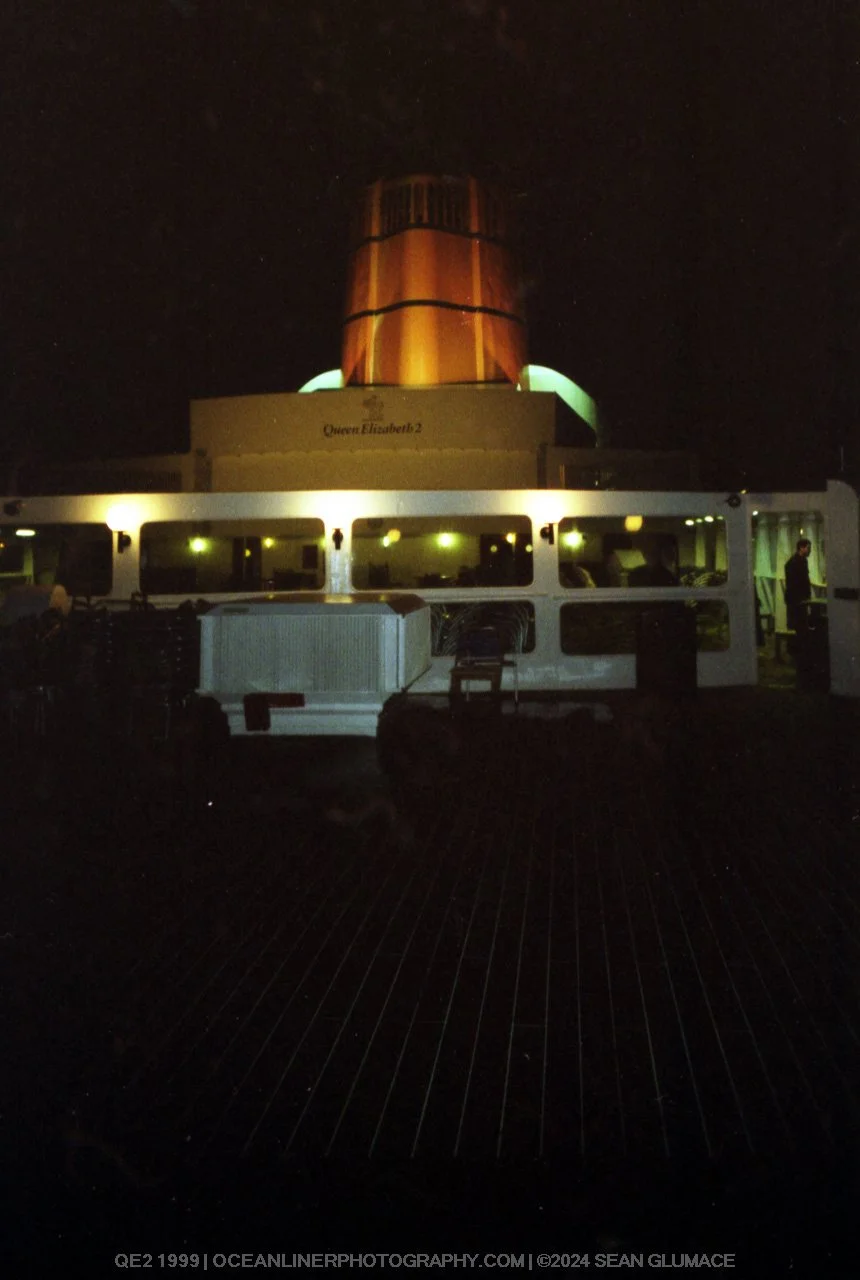


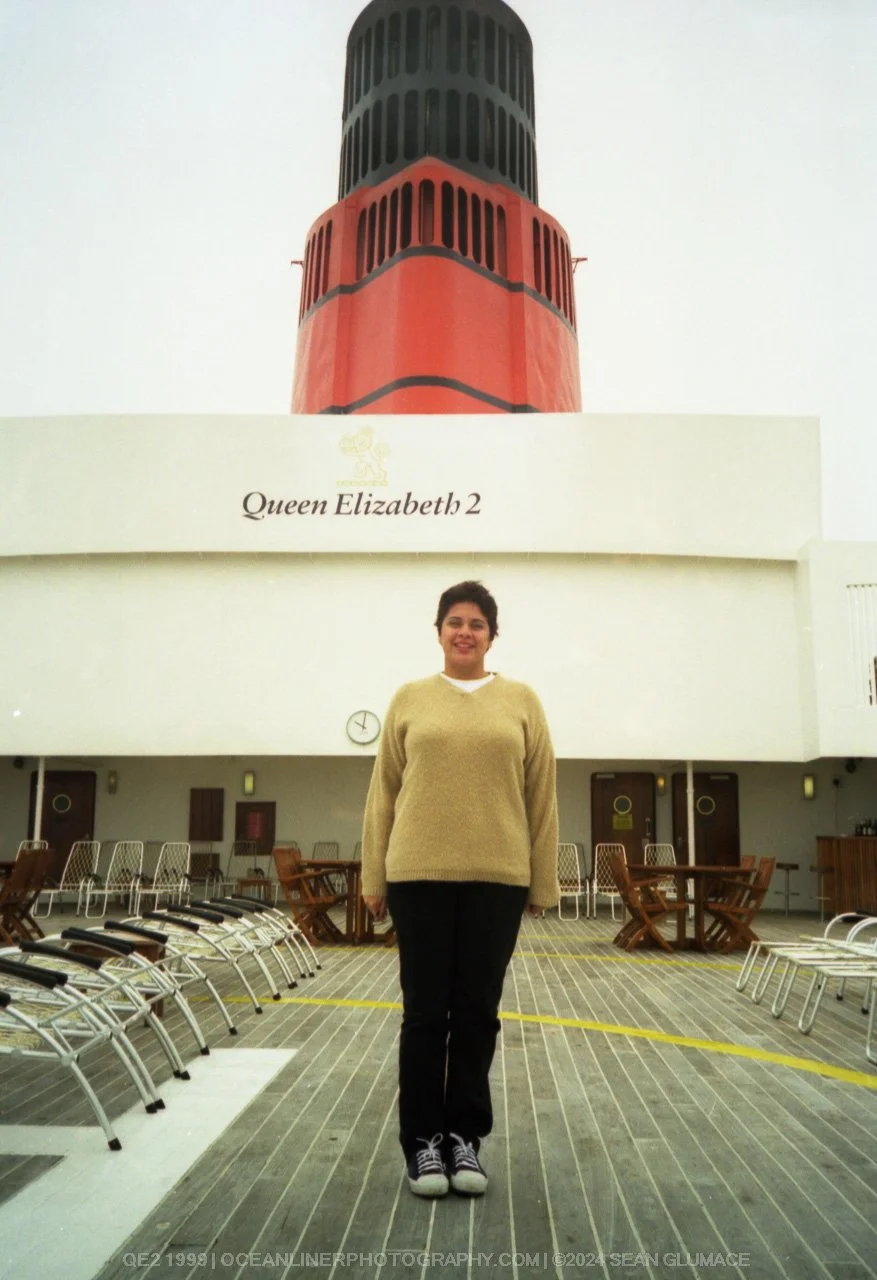


Queen Elizabeth 2 crossed the North Atlantic from Southampton to New York on Voyage 1160, departing Southampton on April 14 and arriving in New York on April 20, 1999. The six-night crossing formed the final leg of QE2’s 1999 World Cruise and took place during the year marking three decades since she entered Cunard service.
Built by John Brown & Company at Clydebank, Scotland, and entering service in 1969, QE2 became one of the most famous passenger ships of the twentieth century. She maintained Cunard's transatlantic tradition through a period when most competing ocean liners disappeared, while also developing a successful career in cruising and annual world voyages.
This particular crossing also has an important personal connection to Ocean Liner Photography. We traveled aboard QE2 from Southampton to New York for our honeymoon, staying in cabin 4142. Experiencing a westbound North Atlantic crossing aboard a ship designed for the route made Voyage 1160 one of the most personally significant journeys represented in the OLP archive.
Information List
Ship: Queen Elizabeth 2
Common Name: QE2
Operator: Cunard Line
Builder: John Brown & Company, Clydebank, Scotland
Yard Number: 736
Keel Laid: July 5, 1965
Launched: September 20, 1967
Named By: Queen Elizabeth II
Entered Service: 1969
Maiden Voyage: May 2, 1969
Ship Type: Ocean liner and cruise ship
Length: Approximately 963 feet / 293.5 meters
Beam: Approximately 105 feet / 32 meters
Gross Tonnage: Approximately 70,000 GT following later modifications
Passenger Capacity: Approximately 1,700 passengers
Original Propulsion: Steam turbines
Later Propulsion: Diesel-electric following the 1986–1987 conversion
Service Speed: Approximately 28.5 knots
Registry: Southampton, United Kingdom during this period
1999 Milestone: 30th anniversary of entering service
Voyage: Voyage 1160 – final leg of the 1999 World Cruise
Cruise Dates: April 14–20, 1999
Route: Southampton to New York
Personal Voyage: Honeymoon aboard QE2
Cabin: 4142
IMO: 6725418
Retired from Cunard Service: 2008
Current Location: Dubai, United Arab Emirates
History and Features
Construction and Entry Into Service:
Cunard developed Queen Elizabeth 2 during a period of dramatic change in transatlantic transportation as jet aircraft increasingly replaced ocean liners for routine travel between Europe and North America.
Construction began at John Brown & Company in Clydebank, Scotland, the shipyard responsible for earlier Cunard liners including Queen Mary and Queen Elizabeth.
Her keel was laid on July 5, 1965, as Yard Number 736.
Queen Elizabeth II launched the ship on September 20, 1967, and officially named her Queen Elizabeth 2.
Technical problems delayed her entry into service, but QE2 eventually departed Southampton on her maiden voyage to New York on May 2, 1969.
She entered service at a time when many traditional passenger liners were being withdrawn, making her eventual longevity particularly significant.
A New Generation of Cunard Liner:
QE2 was designed to operate both scheduled transatlantic crossings and cruises, giving Cunard greater flexibility than its earlier express liners.
Her design reflected the changing passenger market of the late 1960s while retaining the speed and seagoing characteristics required for North Atlantic service.
At approximately 963 feet long, QE2 was smaller than Queen Mary and Queen Elizabeth but was designed to operate with substantially greater efficiency.
Her long bow, relatively low superstructure and single funnel created one of the most recognizable passenger-ship profiles of the late twentieth century.
The ship became Cunard's flagship and increasingly carried responsibility for maintaining the company's historic transatlantic service.
Early Career and World Cruising:
QE2 quickly developed a dual career combining North Atlantic crossings with cruising.
She completed her first World Cruise in 1975.
World voyages became an important part of her annual schedule and took the ship to ports far beyond the traditional Cunard transatlantic route.
Her ability to operate both long-distance cruises and high-speed Atlantic crossings contributed greatly to her longevity.
Over the following decades, QE2 became one of the world's most widely traveled passenger ships.
1971 Rescue of Antilles Passengers:
In January 1971, QE2 participated in the rescue of passengers from the French liner Antilles after that ship struck a submerged reef and caught fire in the Caribbean.
QE2 diverted to assist during the emergency.
The incident became one of several occasions during her career in which the liner was involved in maritime assistance or rescue operations.
Falklands War Service:
In 1982, the British government requisitioned QE2 for service during the Falklands War.
The liner was rapidly converted to transport thousands of troops to the South Atlantic.
Helicopter landing areas were created, sensitive interior surfaces were protected and additional equipment was installed for military operations.
QE2 transported members of the 5th Infantry Brigade toward the conflict zone.
Her wartime role connected her history with that of earlier Cunard liners, particularly Queen Mary and Queen Elizabeth, which had served extensively as troopships during World War II.
Following the conflict, QE2 was returned to Cunard and restored to passenger service.
1986–1987 Diesel-Electric Conversion:
By the mid-1980s, QE2's original steam turbine machinery had become increasingly expensive and difficult to operate economically.
Cunard undertook one of the most extensive machinery conversions ever performed on a major passenger ship.
During a major 1986–1987 refit at Lloyd Werft in Bremerhaven, West Germany, the original steam plant was removed.
It was replaced with a diesel-electric propulsion system using MAN diesel engines.
The conversion improved fuel efficiency and extended QE2's viable operating life by more than two decades.
The refit also resulted in changes to the ship's appearance and passenger facilities while allowing her to retain the speed necessary for transatlantic service.
QE2 in the 1990s:
By the 1990s, QE2 had become a unique survivor in international passenger shipping.
Most of the classic ocean liners that had once competed across the North Atlantic had disappeared from active service.
QE2 continued to make scheduled Atlantic crossings while spending substantial portions of each year cruising.
Her annual World Cruises became particularly prominent and reinforced her reputation as one of the world's most traveled passenger ships.
Cunard increasingly marketed QE2 not simply as transportation, but as a historic travel experience in her own right.
30th Anniversary – 1999:
The year 1999 marked 30 years since QE2 entered service in May 1969.
By this point, she had survived dramatic changes in the passenger-shipping industry and remained Cunard's flagship.
Her continued operation was particularly remarkable because she had entered service when the traditional transatlantic liner business was already declining.
Three decades later, QE2 was still crossing the same North Atlantic route for which she had originally been designed.
Voyage 1160 took place only weeks before the 30th anniversary of her May 2, 1969 maiden voyage.
The 1999 World Cruise:
QE2's 1999 World Cruise carried the ship through an extensive series of international ports before she returned to Southampton on April 14.
Voyage 1160 then departed Southampton for New York, forming the final leg of the World Cruise.
The westbound crossing included five consecutive days at sea before QE2 arrived in New York on April 20.
Finishing the World Cruise with a North Atlantic crossing connected QE2's extensive cruising career directly with the transatlantic role for which she had originally been designed.
The crossing came during the year celebrating three decades of QE2 service.
Our April 1999 Transatlantic Crossing:
We traveled aboard QE2 from Southampton to New York on Voyage 1160, April 14–20, 1999.
The voyage was our honeymoon and became one of the most personally significant passenger-ship journeys represented in the Ocean Liner Photography archive.
We stayed in cabin 4142 and retained paperwork and memorabilia from the crossing that are now preserved separately in the OLP collection.
Sailing westbound across the North Atlantic provided the opportunity to experience a genuine transatlantic crossing aboard a ship specifically designed for the route.
The voyage occurred during a particularly interesting point in QE2's career, when she had already accumulated 30 years of history but still had nearly another decade of Cunard service ahead of her.
These photographs preserve QE2 as she appeared during that period, several years before the arrival of Queen Mary 2 would introduce a new generation of Cunard transatlantic liner.
Queen Mary 2 and the Later Cunard Era:
During the period represented by this gallery, QE2 remained Cunard's principal ocean liner.
That began to change with the development of Queen Mary 2, which entered service in 2004 as Cunard's new flagship and purpose-built transatlantic liner.
QE2 and Queen Mary 2 subsequently operated together and participated in several memorable meetings and tandem voyages.
Rather than immediately replacing QE2, the arrival of Queen Mary 2 created a period in which two generations of Cunard ocean liners operated together.
QE2 remained in Cunard service until 2008.
Retirement and Preservation in Dubai:
QE2 completed her final Cunard voyage in 2008 after nearly 40 years of service.
She was sold to interests in Dubai, United Arab Emirates, where plans for her future changed several times.
After years of uncertainty, QE2 eventually reopened as a permanently moored hotel in Dubai in 2018.
Her preservation allows one of the most important surviving passenger ships of the late twentieth century to remain accessible decades after her transatlantic career ended.
OLP Social: Completing the final leg of her 1999 World Cruise, Voyage 1160 crossed westbound from Southampton to New York just weeks before the 30th anniversary of QE2’s maiden voyage.