November 7, 2026 | Torrance, California
An original anchor, heavy chain and the bow letters Q and E from RMS Queen Elizabeth are preserved outside a former bank building in Torrance, California. Photographed on November 7, 2026, this gallery explores these surviving pieces of maritime history, connecting the great Cunard liner’s Atlantic career with C. Y. Tung’s plans to give her a new purpose as a floating university.
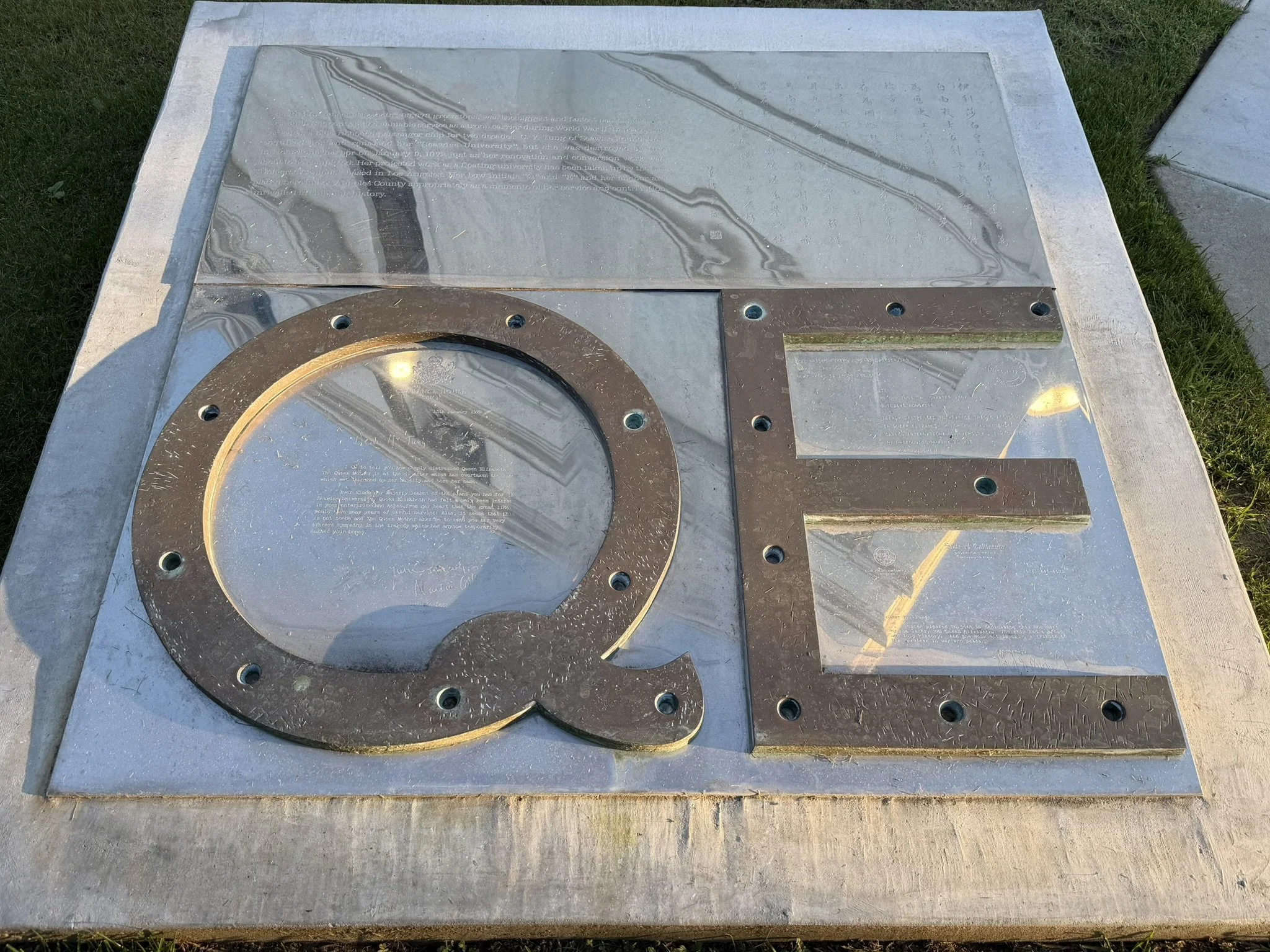
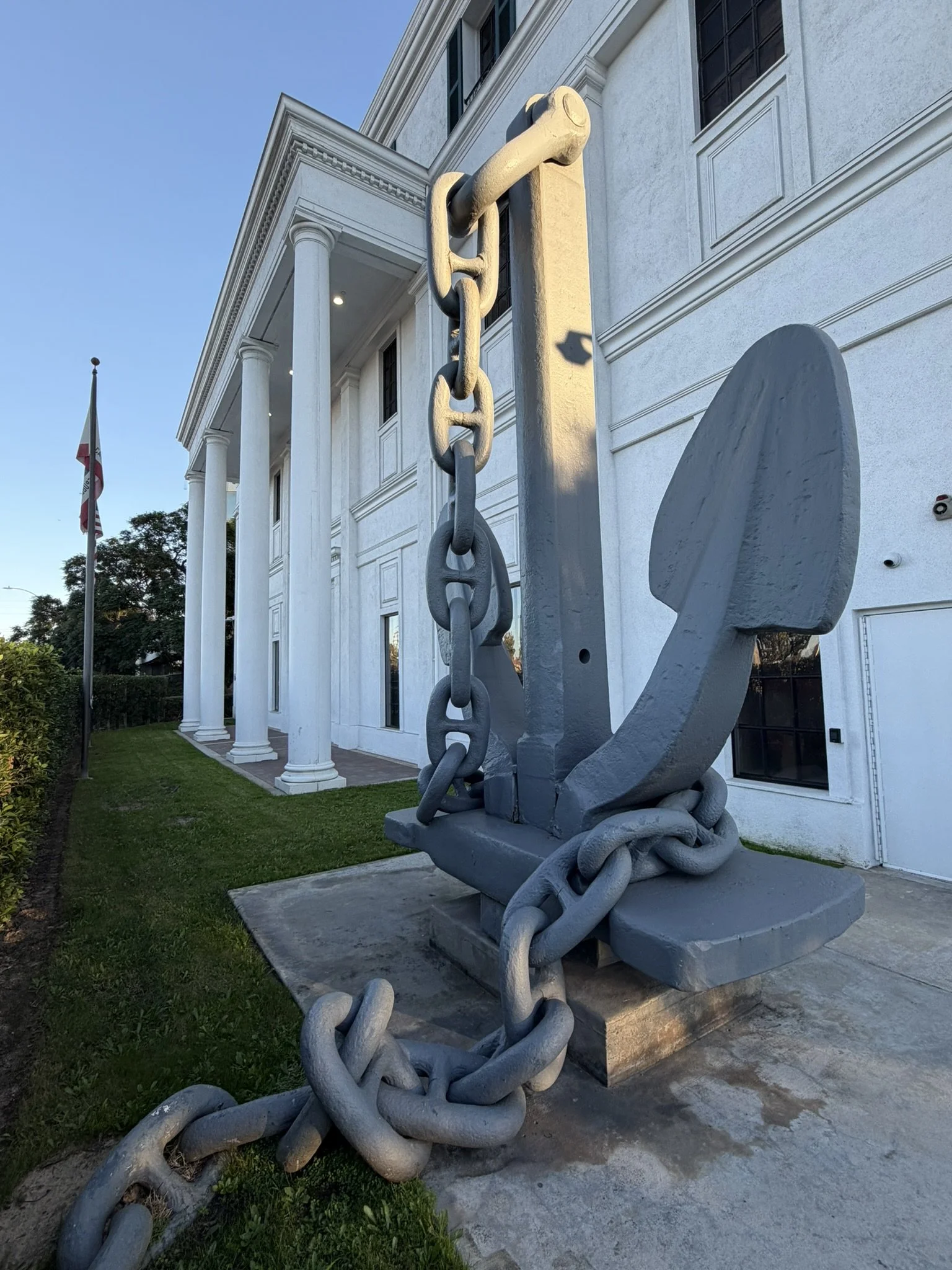
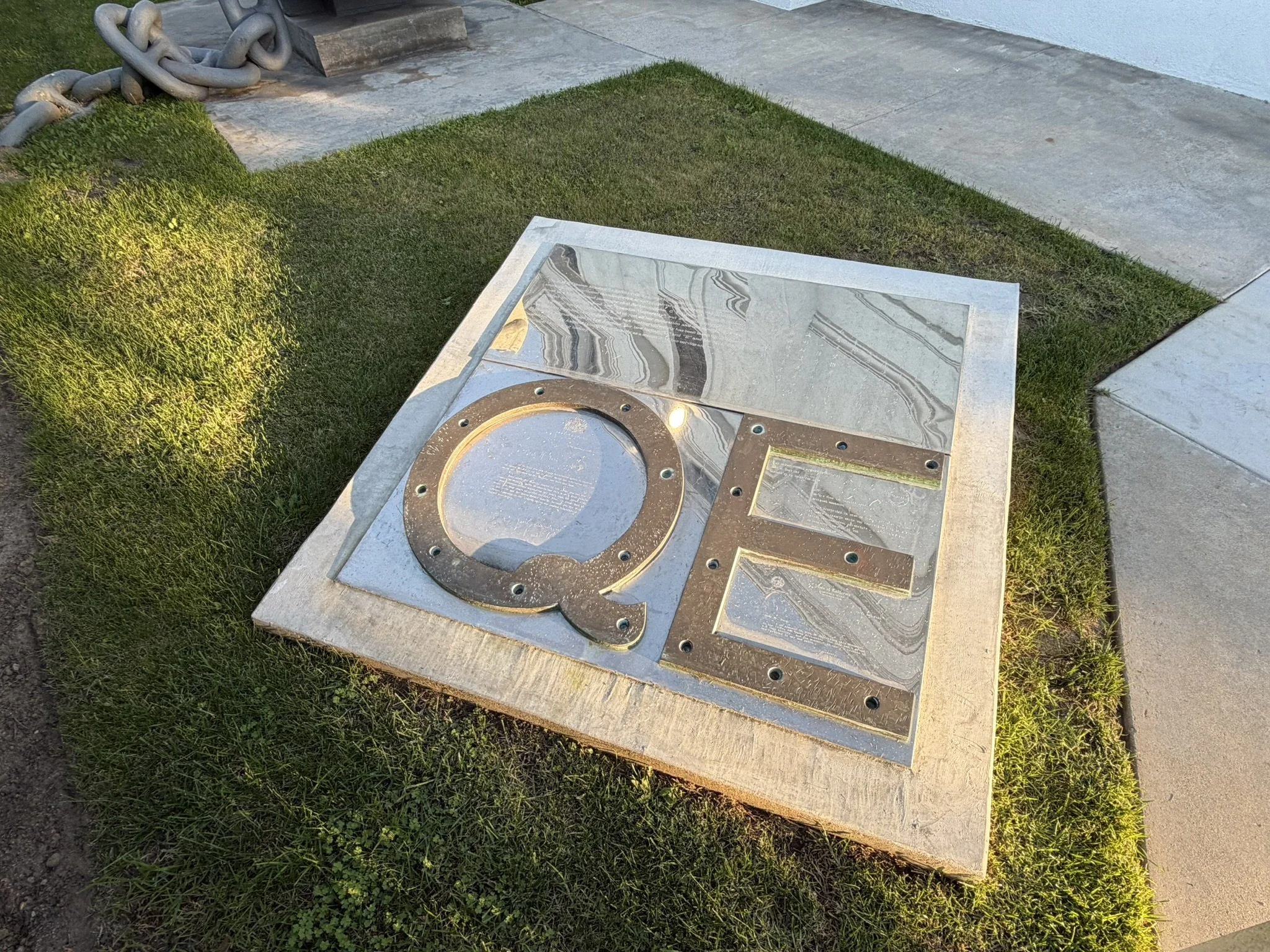
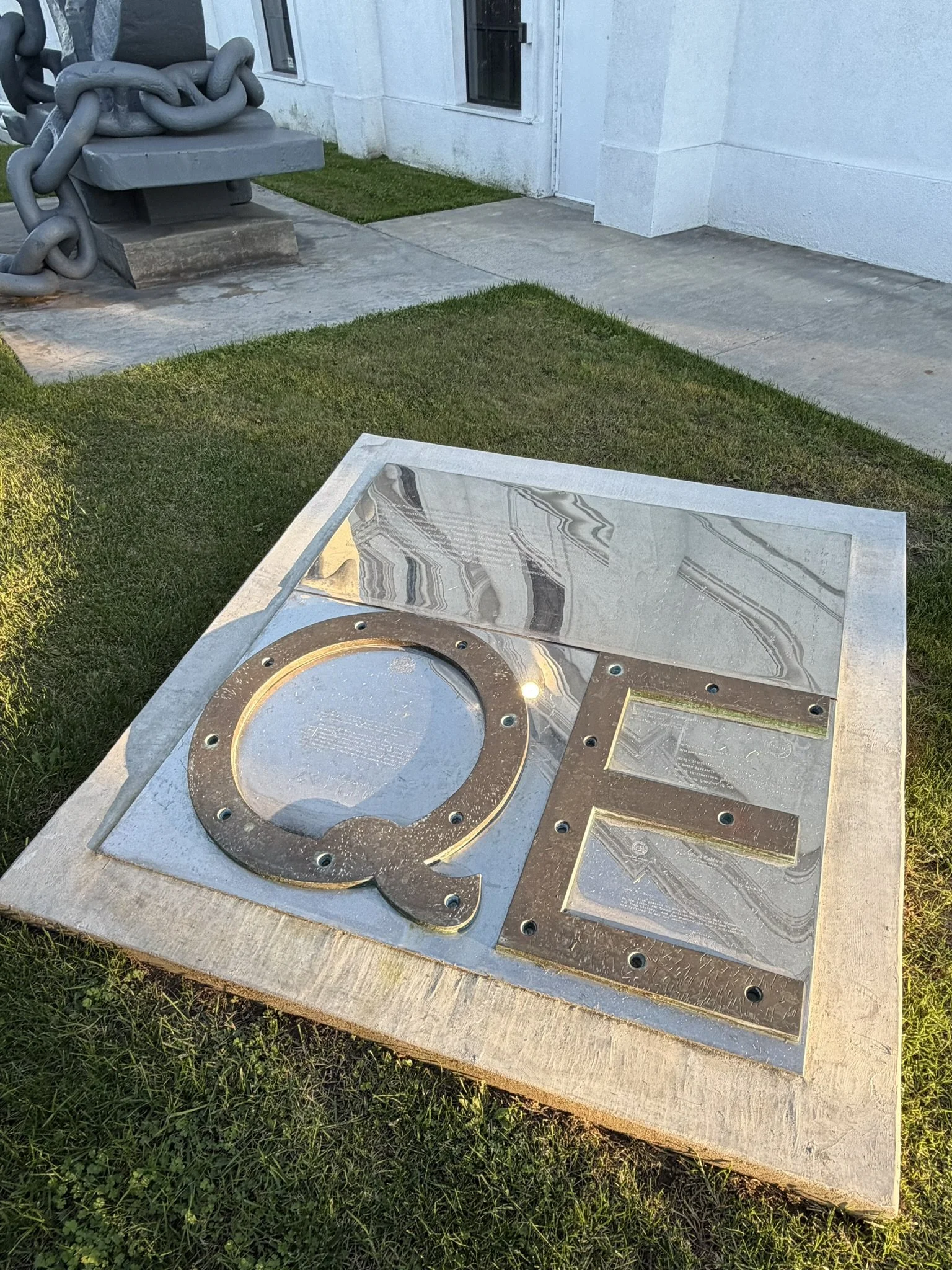
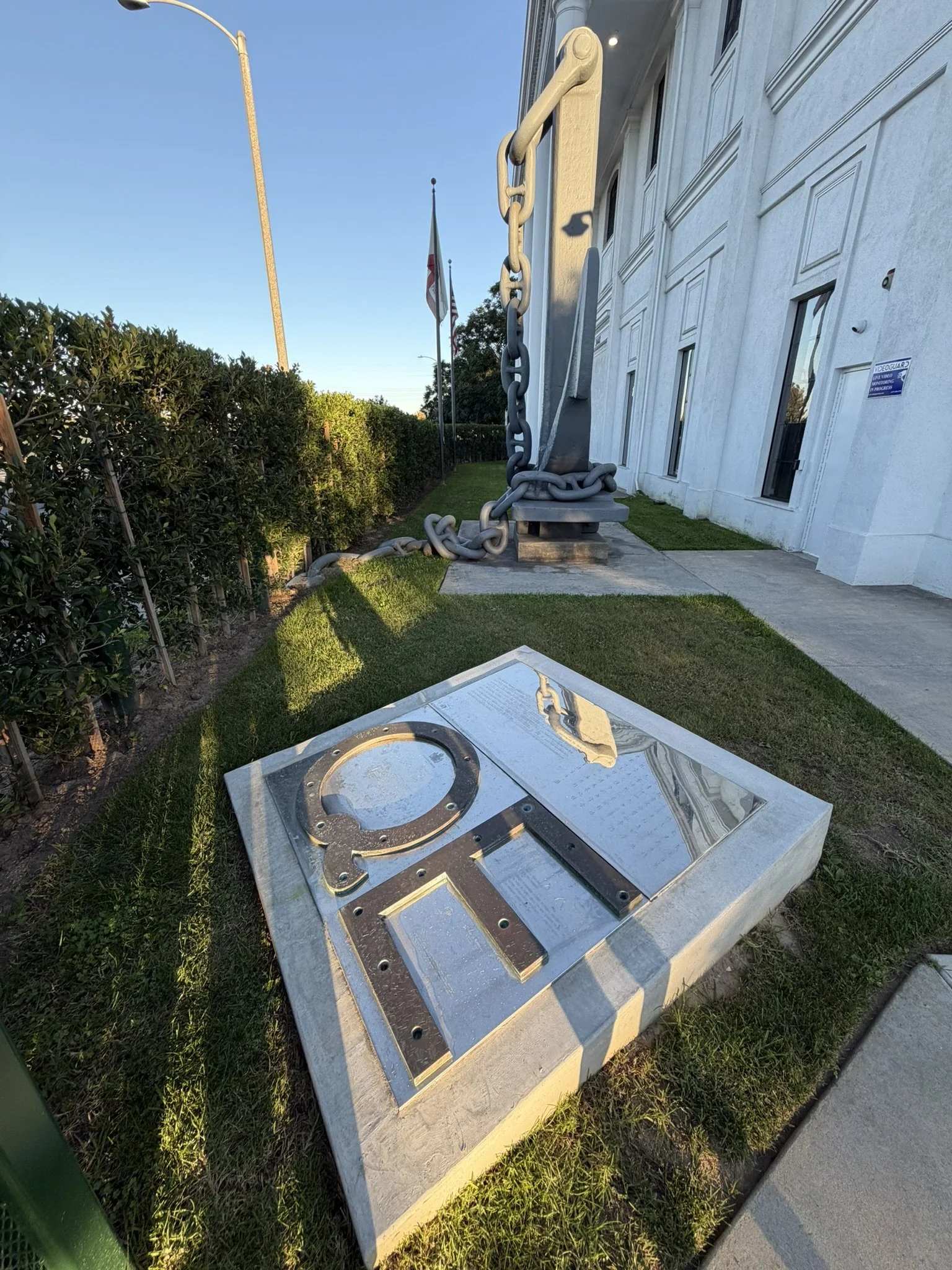
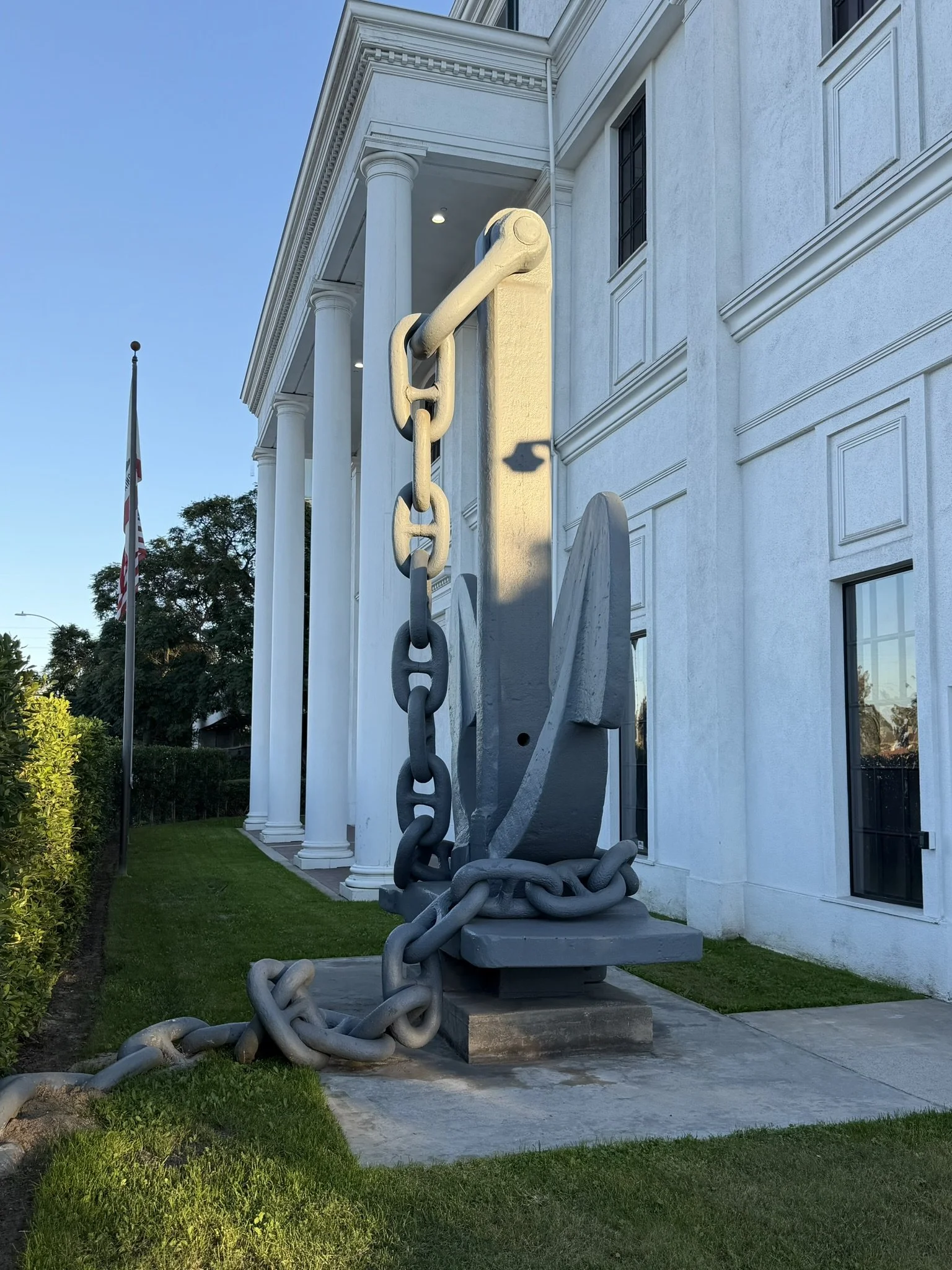
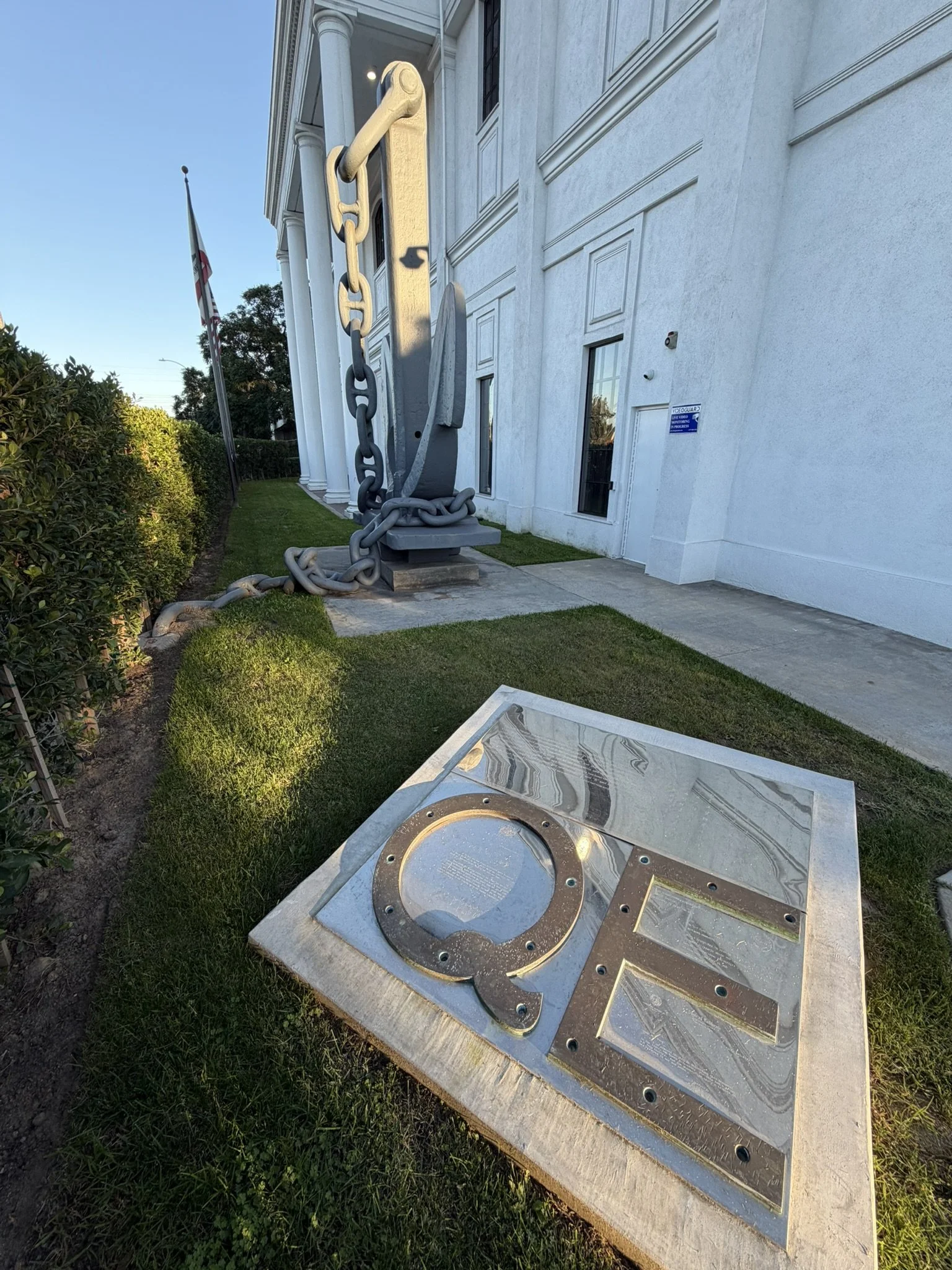
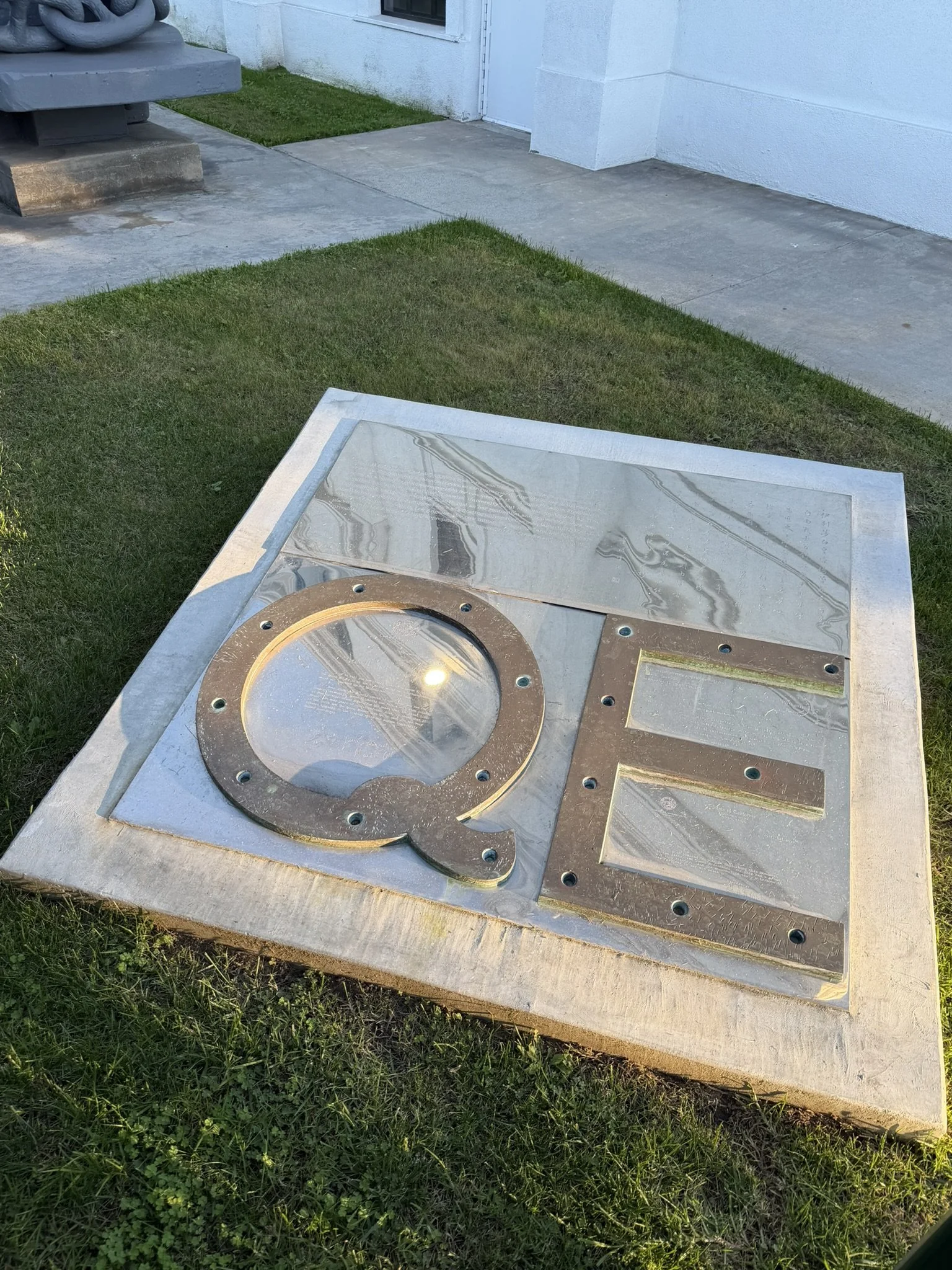
An original anchor and the bow letters Q and E from RMS Queen Elizabeth stand outside a former bank building at 3440 West Carson Street in Torrance, California. Photographed on November 7, 2026, these surviving pieces offer a direct connection to the original Cunard liner, whose career encompassed wartime troop transport and passenger crossings between Europe and North America.
Near Del Amo Fashion Center, the memorial brings ocean liner history into an unexpected Southern California setting. The anchor and its heavy chain convey something of the equipment required aboard the enormous vessel, while the letters preserve recognizable elements of the name once carried on her bow.
These artifacts connect the ship’s Atlantic career with shipping owner C. Y. Tung’s plans to transform her into Seawise University. Preserved after the fire that destroyed the vessel in Hong Kong, they commemorate both her years at sea and the educational purpose envisioned for her after retirement.
The MEMORIAL
The Original Anchor
The anchor is reported to stand 18 feet tall and weigh 16 tons. Its substantial proportions offer a different understanding of the liner’s scale from photographs of the complete ship. Preserved ashore, it can be appreciated as a piece of working maritime equipment as well as a memorial object.
The Anchor Chain
Individual chain links are reported to measure about 2 feet long and weigh close to 225 pounds each. These are published figures rather than measurements taken for this gallery, but they help convey the size of the equipment associated with the anchor.
The Bow Letters Q and E
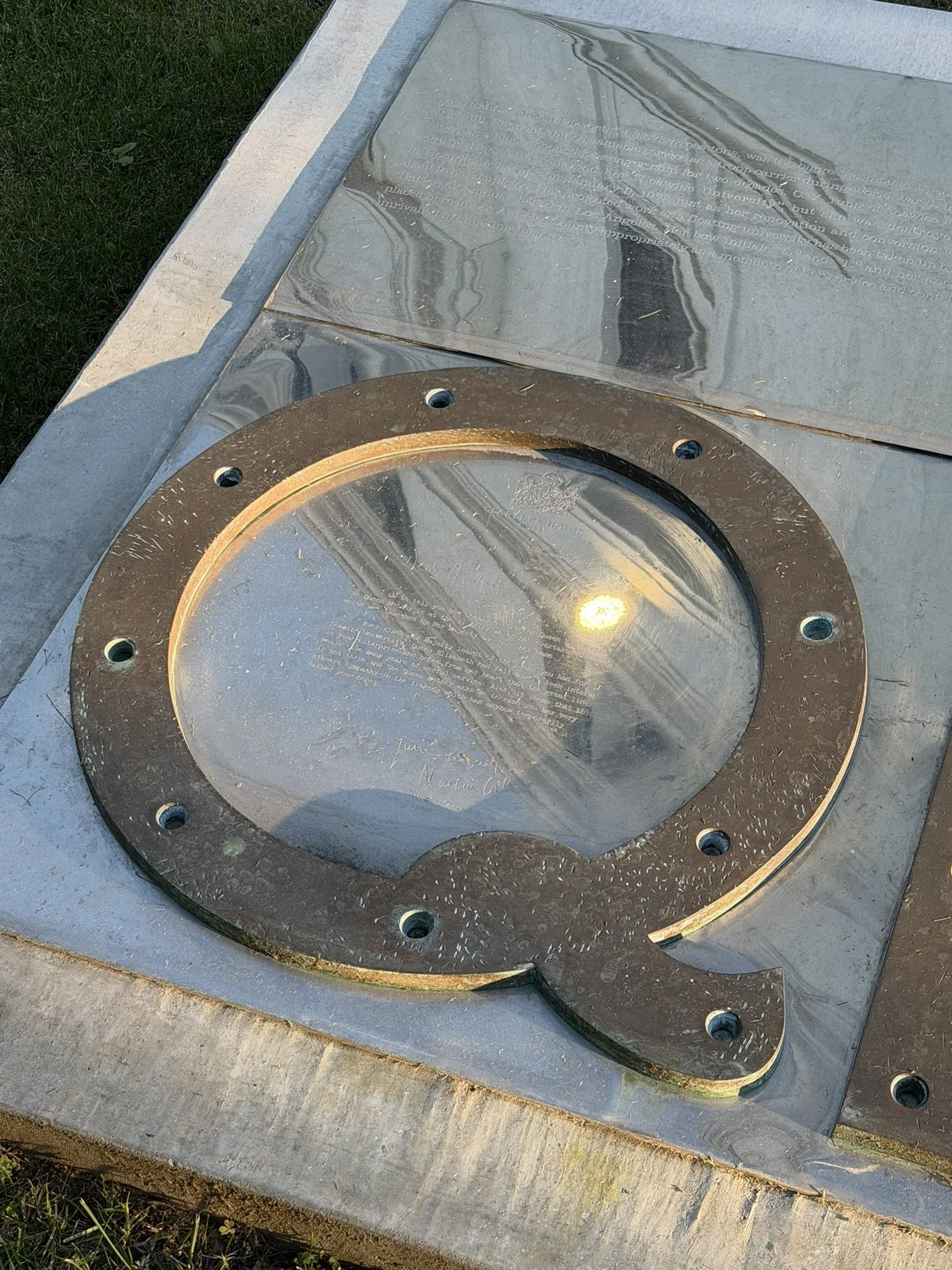
The two letters came from the ship’s bow name. Once part of the lettering identifying Queen Elizabeth along the waterfront, they now serve as recognizable reminders of the vessel herself. Their preservation gives the display a personal connection to the ship’s identity alongside the anchor’s more imposing physical presence.
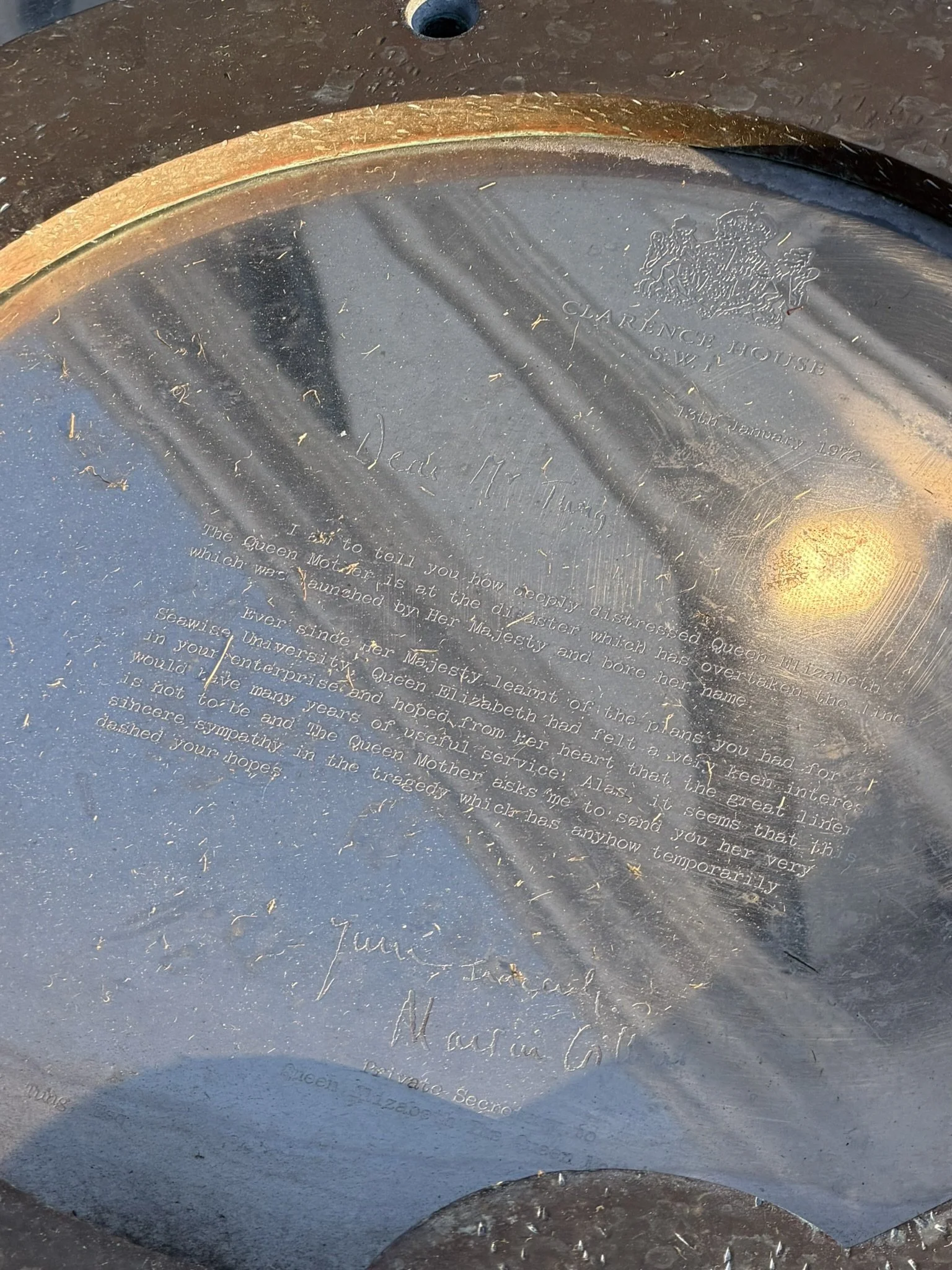
The Commemorative Inscription
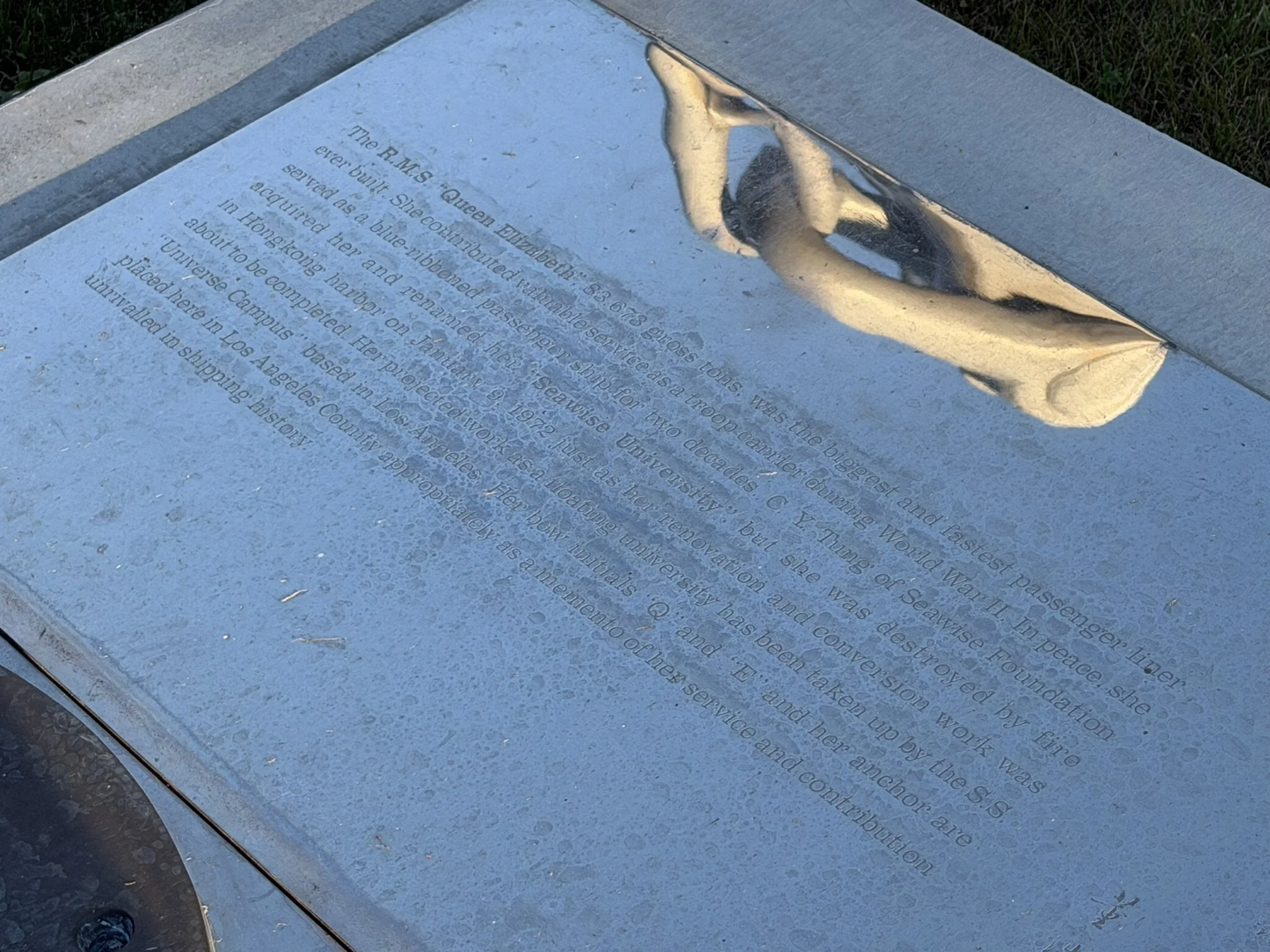
An accompanying inscription explains the relationship between the surviving objects, the liner’s career and C. Y. Tung’s educational plans. It provides historical context for these artifacts and their preservation in Southern California.
The Building and Its Torrance Setting
3440 West Carson Street
The display stands outside the building at 3440 West Carson Street, near Del Amo Fashion Center. The City of Torrance lists the anchor among its public art and sculpture entries, identifying the location and publishing the accompanying inscription.
The Building’s Banking History
California banking records document a March 2006 notification for Fremont Investment & Loan to relocate to this address. A photographic account from December 2010 identifies the building as CapitalSource Bank. Later commercial property advertising describes the premises as a former bank with a vault.
The Connection to C. Y. Tung
Historical accounts associate the memorial’s placement with C. Y. Tung’s offices in Torrance. This connection helps explain why substantial pieces of a British ocean liner came to be preserved in this particular Southern California setting.
The Original Queen Elizabeth
Construction and Launch
Built by John Brown & Company in Scotland, Queen Elizabeth was launched on September 27, 1938, by Queen Elizabeth, later known as the Queen Mother. Developed for Cunard’s express North Atlantic service, she belonged to the same generation of large British liners as Queen Mary.
A Career That Began in Wartime
The outbreak of the Second World War changed the beginning of her career. Her first Atlantic passage brought her to New York in March 1940, before she had entered her intended passenger service. Wartime troop transport became her first major role.
The Peacetime Maiden Voyage
Her peacetime maiden voyage began on October 16, 1946. Alongside Queen Mary, she became a central part of Cunard’s postwar transatlantic operation, carrying passengers between Southampton and New York during the final decades of regular express liner travel.
The World’s Largest Passenger Liner
At 83,673 gross tons, Queen Elizabeth was the world’s largest passenger liner of her era. The anchor and chain displayed in Torrance provide a tangible connection to the engineering behind that distinction.
The Fire in Hong Kong
Conversion to Seawise University
After her retirement from Cunard service and a period as a visitor attraction in Florida, Queen Elizabeth was purchased by C. Y. Tung in 1970. Renamed Seawise University, she arrived in Hong Kong in July 1971 for conversion into a floating university. By January 1972, the work was nearing completion.
January 9, 1972
On January 9, 1972, a major fire broke out aboard the ship in Hong Kong’s Victoria Harbour. Flames spread through the vessel while firefighters worked to contain the blaze. Her fire protection system was not yet complete, complicating efforts to save the former liner during the final stages of conversion.
Capsizing and Destruction
Large quantities of water were pumped aboard during the firefighting effort, contributing to a loss of stability. On January 10, the ship capsized onto her starboard side. Fires continued burning until January 13, leaving the vessel a gutted wreck and ending the plans for her educational service.
The Wreck and Surviving Artifacts
Much of the wreck was subsequently salvaged and scrapped, while portions embedded in the harbor mud remained. Those remains were later incorporated beneath reclamation associated with Hong Kong’s Container Terminal 9. Objects preserved elsewhere, including the anchor and bow letters displayed in Torrance, provide surviving physical connections to the original liner.
The Memorial Inscription
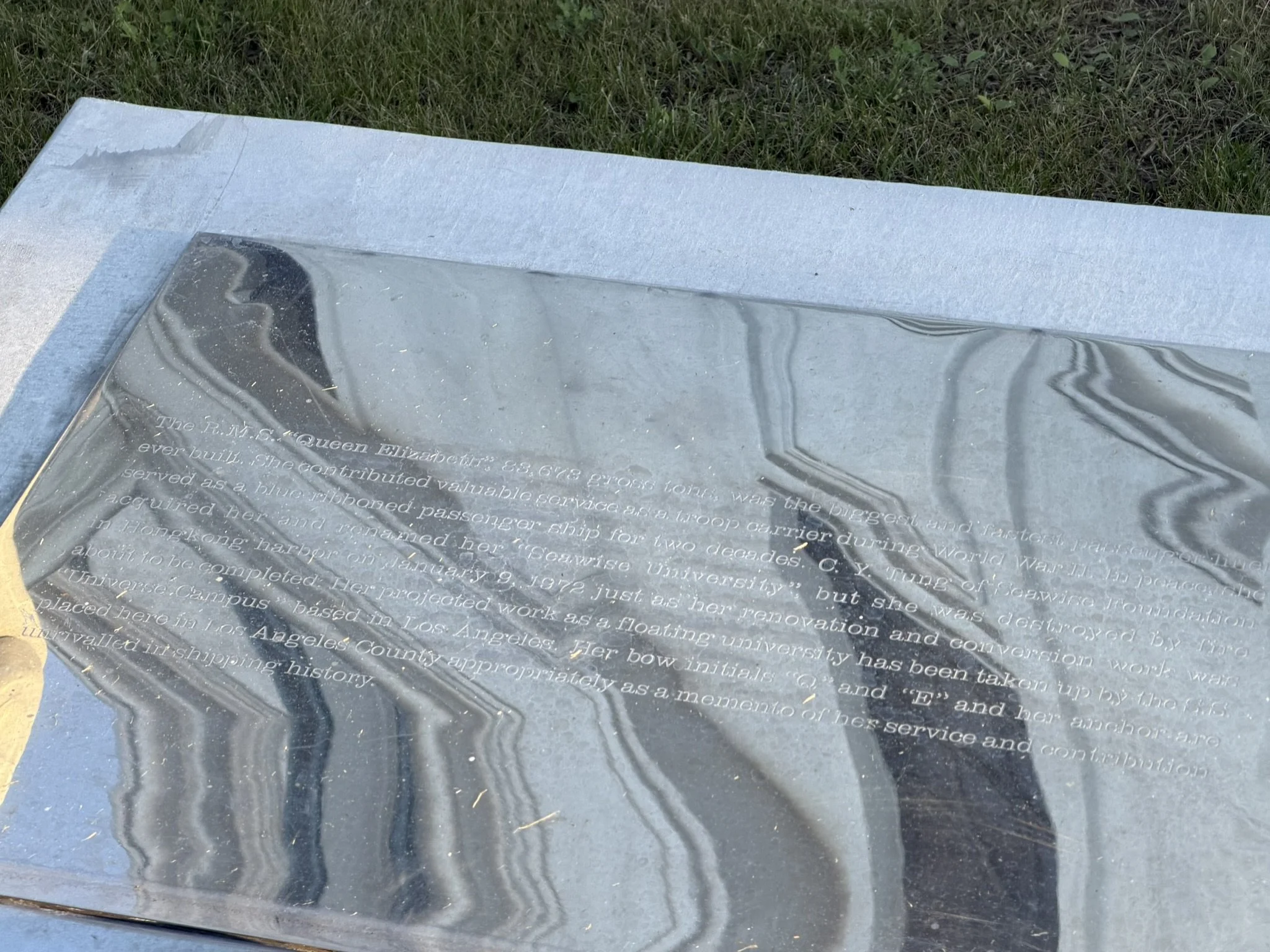
The inscription accompanying the display traces the liner’s wartime and passenger service before explaining C. Y. Tung’s plans for Seawise University. It also identifies Universe Campus, based in Los Angeles, as the vessel that continued the intended educational work.
Its closing passage explains why the anchor and bow initials were preserved in Los Angeles County: to commemorate the ship’s service and contribution to maritime history.
Full Plaque Transcription
The R.M.S. "Queen Elizabeth", 83,673 gross tons, was the biggest and fastest passenger liner ever built. She contributed valuable services as a troop carrier during World War II. in peace, she served as a blue-ribbon passenger ship for two decades. C.Y. Tung of Seawise Foundation acquired her and renamed her "Seawise University" but she was destroyed by fire in Hong Kong Harbor on January 9, 1972, just as her renovation and conversion work was about to be completed. Her projected work as a floating university has been taken up by the S.S. "Universe Campus" based in Los Angeles. Her bow initials, "Q" and "E" and her anchor are placed in Los Angeles County appropriately as a memento of her service and contribution unrivaled in shipping history.
A Historical Clarification
The transcription preserves the inscription’s original wording. Although Queen Elizabeth was the largest passenger liner of her era, she never held the Blue Riband for the fastest Atlantic crossing. The inscription’s language about speed should therefore be understood as part of its commemorative tribute.
Preserving Ocean Liner History
Tickets, daily programs and other printed material preserve the experience of traveling aboard an ocean liner. The Torrance display preserves something different: substantial pieces of the ship itself.
The anchor, chain and bow letters give physical form to a history more often encountered through photographs and documents. Their setting also reflects the way maritime artifacts can become part of a community far from the routes on which their ships once sailed.
Photographed for Ocean Liner Photography on November 7, 2026, this gallery brings the memorial into the site’s historical collections alongside its ocean liner tickets, programs and other ephemera.
OLP Social: An original anchor and the bow letters Q and E bring a piece of Cunard history to Torrance, outside a former bank building near Del Amo Fashion Center.
OLP Social 2: Built by John Brown & Company in Scotland, she was launched in September 1938, beginning a story that would span wartime service and Atlantic crossings.
OLP Social 3: At 83,673 gross tons, this Cunard liner was the largest passenger ship of her era. The surviving anchor offers a close look at the scale behind that title.
OLP Social 4: A peacetime maiden voyage in October 1946 began two decades of Atlantic passenger service, sailing alongside Queen Mary on Cunard’s Southampton to New York route.