QUEEN MARY 2
July 11–22, 2004 | Northern Europe Cruise – Roundtrip Southampton
In July 2004, we traveled aboard Queen Mary 2 (Cunard Line) on an 11-night Northern Europe cruise from Southampton during the ocean liner’s inaugural year. Beginning with embarkation on July 11 as Day 1, the voyage visited South Queensferry for Edinburgh, the Norwegian fjords, Ålesund, Bergen, Hamburg and Rotterdam before returning to Southampton on July 22. This master gallery brings together our photographs from the voyage, with individual port galleries documenting each stage of the cruise in greater detail.


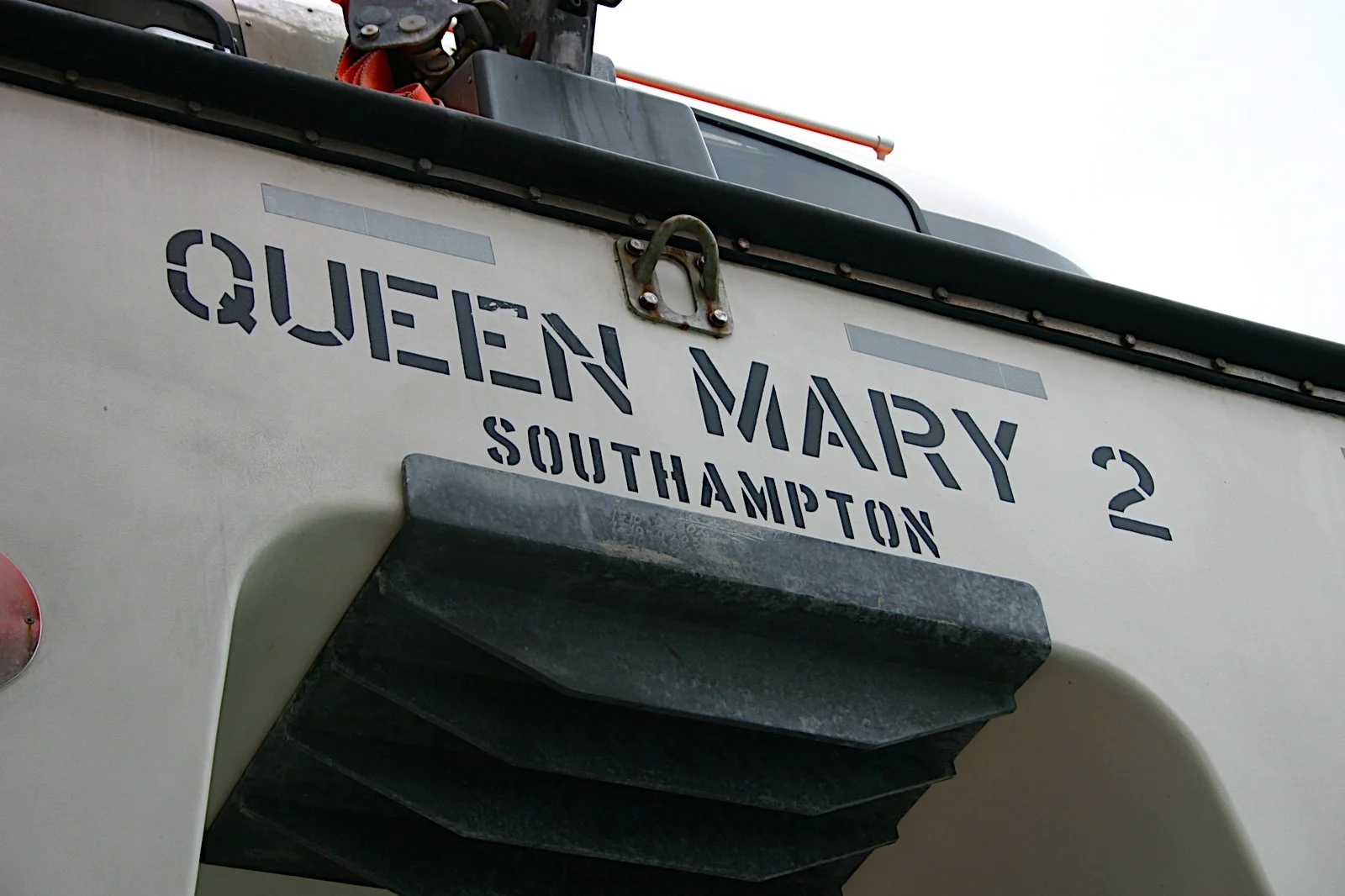


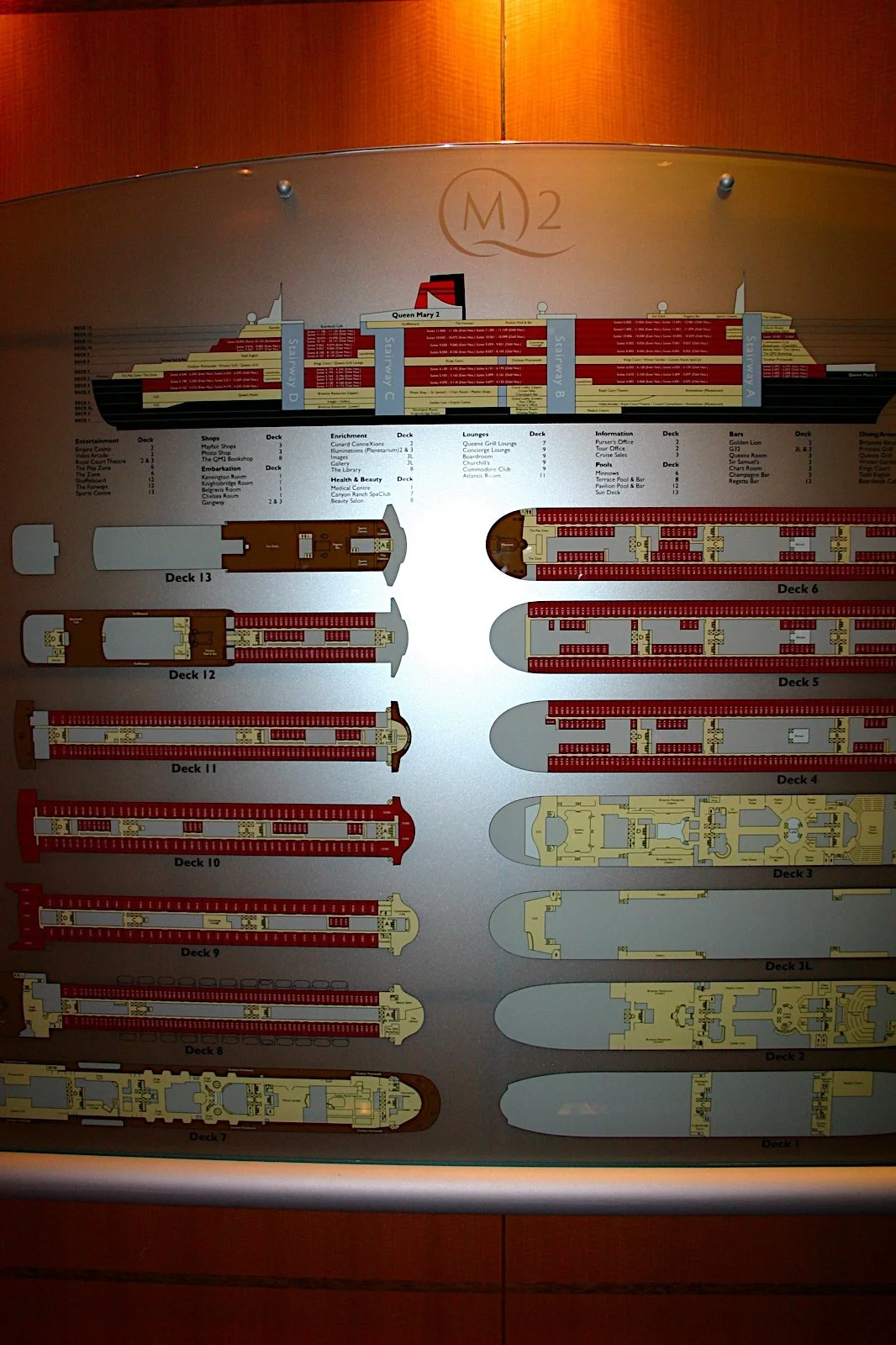


Queen Mary 2 sailed Northern Europe in July 2004 during one of the most important periods of her career: her inaugural year. Built by Chantiers de l'Atlantique in Saint-Nazaire, France, and entering service for Cunard in January 2004, the new flagship had been designed to succeed Queen Elizabeth 2 in the company's historic transatlantic liner service while also operating cruises throughout the world. Only months after her maiden voyage, we traveled aboard Queen Mary 2 from Southampton on a Northern Europe itinerary visiting Scotland, the Norwegian fjords, Germany and the Netherlands. Several destinations were experiencing their first visits from the enormous new liner, making this voyage an early photographic record of a ship that would go on to define Cunard's twenty-first-century ocean-liner service.
Information List
Name: Queen Mary 2
Operator: Cunard Line
Builder: Chantiers de l'Atlantique, Saint-Nazaire, France
Yard Number: G32
Keel Laid: July 4, 2002
Launched: March 21, 2003
Delivered: December 26, 2003
Named: January 8, 2004
Godmother: Queen Elizabeth II
Maiden Voyage: January 12, 2004
Ship Type: Ocean liner
Length: Approximately 1,132 feet / 345 meters
Beam: Approximately 131 feet / 40 meters at the waterline
Draft: Approximately 34 feet / 10.3 meters
Gross Tonnage: Approximately 148,500 GT when delivered
Passenger Capacity: Approximately 2,620 passengers at double occupancy
Crew: Approximately 1,250
Service Speed: Approximately 28 knots
Maximum Speed: Approximately 30 knots
Propulsion: Integrated electric propulsion with four podded propulsors
Original Registry: Southampton, United Kingdom
IMO: 9241061
Voyage: Northern Europe Cruise
Voyage Year: 2004 inaugural season
Departure Port: Southampton, England
Regions Visited: Scotland, Norway, Germany and the Netherlands
Personal Voyage: Traveled aboard Queen Mary 2
History and Features
Construction and Entry Into Service:
Cunard developed Queen Mary 2 as the successor to Queen Elizabeth 2 and as a purpose-built ocean liner capable of maintaining the company's historic scheduled transatlantic service.
The ship was designed by naval architect Stephen Payne and constructed by Chantiers de l'Atlantique at Saint-Nazaire, France.
Her keel was laid on July 4, 2002, and she was launched on March 21, 2003.
Cunard took delivery of Queen Mary 2 on December 26, 2003.
Queen Elizabeth II officially named the new liner at Southampton on January 8, 2004.
Queen Mary 2 departed Southampton on her maiden voyage to Fort Lauderdale on January 12, 2004.
At the time of her completion, she was the largest passenger ship ever built and the largest ocean liner in history.
Designed as an Ocean Liner:
Queen Mary 2 was designed specifically for repeated high-speed crossings of the North Atlantic rather than as a conventional cruise ship.
Her long bow, high freeboard, deep draft and heavily reinforced structure were developed for demanding open-ocean conditions.
Lifeboats were positioned unusually high above the water to protect them from heavy North Atlantic seas.
Her power plant combined diesel engines and gas turbines generating electricity for four podded propulsors.
The propulsion system allowed a service speed of approximately 28 knots with a maximum speed around 30 knots.
These characteristics distinguished Queen Mary 2 from the increasingly large cruise ships entering service during the same period.
A New Cunard Flagship:
Queen Mary 2 entered service at a pivotal point in Cunard history.
Queen Elizabeth 2 had carried responsibility for the company's ocean-liner tradition since entering service in 1969.
Rather than simply building another cruise ship, Cunard commissioned a vessel capable of continuing scheduled transatlantic crossings between Southampton and New York.
The Queen Mary name directly connected the new ship with RMS Queen Mary, Cunard's celebrated 1936 express liner.
Queen Mary 2 quickly became one of the most recognizable passenger ships in the world.
The Inaugural Year – 2004:
The July 2004 Northern Europe cruise took place only about six months after Queen Mary 2 entered passenger service.
During her inaugural year, ports around the world welcomed the new Cunard flagship for the first time.
These inaugural calls regularly attracted spectators because of the ship's unprecedented size and her status as the newest Cunard ocean liner.
The Northern Europe voyage combined traditional cruising with visits to ports that had rarely, if ever, handled a passenger ship of her dimensions.
The cruise therefore documents an early stage of Queen Mary 2's career before she became a familiar presence on the North Atlantic and around the world.
Our July 2004 Northern Europe Cruise:
We traveled aboard Queen Mary 2 from July 11 to July 22, 2004, on an 11-night roundtrip voyage from Southampton during the liner’s inaugural year.
Day 1 – July 11: Southampton, England – Embarkation.
Day 2 – July 12: At sea.
Day 3 – July 13: South Queensferry for Edinburgh, Scotland.
Day 4 – July 14: At sea.
Day 5 – July 15: Hellesylt and Geiranger, Norway, including scenic cruising through the Norwegian fjords.
Day 6 – July 16: Ålesund, Norway.
Day 7 – July 17: Bergen, Norway.
Day 8 – July 18: At sea.
Day 9 – July 19: Hamburg, Germany – Arrival for an overnight visit.
Day 10 – July 20: Hamburg, Germany – Completion of the overnight call before departure.
Day 11 – July 21: Rotterdam, Netherlands – Our final port call. Thousands of spectators gathered to watch the liner depart, with the crowds visible in our photographs.
Day 12 – July 22: Southampton, England – Return and disembarkation.
Individual port galleries document the destinations and ship encounters from this voyage, while this master gallery brings together the complete Northern Europe cruise.
Scotland:
The voyage included a call at South Queensferry for Edinburgh.
Because of Queen Mary 2's size and local harbor conditions, the ship remained offshore while passengers traveled ashore by tender.
The setting provided distinctive views of the new ocean liner against the Scottish coastline.
The Edinburgh call is documented in a separate Ocean Liner Photography gallery and will form part of this 2004 voyage series.
The Norwegian Fjords:
Norway formed a major part of the Northern Europe itinerary.
Calls included destinations associated with the dramatic fjord landscape for which western Norway is known.
Queen Mary 2 visited Hellesylt and Geiranger, placing the enormous new liner within narrow fjords surrounded by steep mountains.
The voyage also included Ålesund, one of Norway's best-known coastal ports.
These calls demonstrated that the ship's inaugural deployment extended well beyond her primary transatlantic role.
Geiranger and Hellesylt:
Geiranger provided one of the most dramatic settings of the voyage.
The Geirangerfjord is surrounded by steep mountains, waterfalls and small communities along the shoreline.
Queen Mary 2's size created a striking contrast with the narrow fjord environment.
Hellesylt was also included in the Norwegian portion of the itinerary.
The photographs from this part of the voyage document the liner during one of the earliest seasons of her long association with Norwegian cruising.
Ålesund:
Queen Mary 2 visited Ålesund during the Norwegian portion of the cruise.
The coastal city is known for its Art Nouveau architecture and island setting.
The call occurred during the ship's inaugural year and is documented in a separate Ocean Liner Photography gallery.
That gallery will be maintained as part of this larger Northern Europe cruise series.
Hamburg:
Hamburg became one of the European ports most closely associated with Queen Mary 2 during the early years of her career.
Visits by the new Cunard flagship attracted enormous public interest in Germany.
Large crowds gathered along the Elbe to watch the liner arrive and depart.
The enthusiasm surrounding Queen Mary 2 helped establish a particularly strong relationship between Cunard and the German passenger market.
The July 2004 voyage was part of this early period in the ship's relationship with Hamburg.
Rotterdam and the Netherlands:
The Northern Europe itinerary also included the Netherlands.
Rotterdam has a particularly important place in passenger-shipping history as the home of Holland America Line and one of Europe's major maritime ports.
Visiting Rotterdam placed Cunard's new flagship within a port long associated with North Atlantic passenger service.
The call formed part of the voyage's return toward Southampton.
Life Aboard Queen Mary 2 in 2004:
Traveling aboard Queen Mary 2 during her inaugural year provided an opportunity to experience the ship close to her original configuration.
The liner combined Cunard traditions with facilities expected aboard a major twenty-first-century passenger ship.
The Queens Room continued Cunard's tradition of large formal ballrooms at sea.
The Britannia Restaurant served as the principal dining room for most passengers.
The ship also included the Princess Grill and Queens Grill for passengers traveling in the corresponding accommodation categories.
The Royal Court Theatre, Illuminations planetarium and cinema, extensive library, promenade areas and broad exterior decks distinguished the ship from conventional cruise vessels.
Her interior design deliberately incorporated references to Cunard history and earlier liners.
Relationship With Queen Elizabeth 2:
During 2004, Queen Elizabeth 2 was still an active member of the Cunard fleet.
The two ships represented different generations of the company's ocean-liner tradition.
QE2 had maintained Cunard's transatlantic service for more than three decades before the arrival of her successor.
Queen Mary 2 assumed the primary transatlantic role while QE2 increasingly concentrated on cruising and special voyages.
Their years of overlapping service created numerous opportunities for the two liners to sail and appear together before QE2's retirement in 2008.
Later Career:
Following her inaugural year, Queen Mary 2 settled into a schedule combining regular transatlantic crossings with cruises and extended world voyages.
She became the only passenger ship maintaining a regular scheduled ocean-liner service between Europe and North America.
Major refurbishments have updated her interiors and passenger facilities while retaining her fundamental ocean-liner design.
In 2024, Queen Mary 2 completed her 400th transatlantic crossing during the year marking the 20th anniversary of her entry into service.
More than two decades after the July 2004 voyage, she continues to perform the role for which she was originally designed.
Ocean Liner Photography Voyage Series:
The July 2004 voyage represents one of the earliest major personal cruise collections in the Ocean Liner Photography archive involving Queen Mary 2.
Individual galleries from the voyage document the ship at several Northern European destinations.
As those galleries are converted to the current OLP format, they will retain their individual port histories while connecting back to this master voyage page.
Together, the galleries provide a photographic record of Queen Mary 2 during her inaugural year rather than simply isolated photographs of individual port calls.
Legacy:
Queen Mary 2 revived the concept of a purpose-built transatlantic ocean liner for the twenty-first century.
Her 2004 inaugural season represented the beginning of a career that has now extended for more than two decades.
The Northern Europe cruise occurred when the ship was still new to both passengers and many of the ports she visited.
Her combination of liner design, high-speed Atlantic capability and worldwide cruising has allowed her to maintain a role unlike any other passenger ship currently in service.
The July 2004 Ocean Liner Photography collection preserves an early chapter of that career and provides a personal record of traveling aboard Cunard's new flagship during her inaugural year.
OLP Social: Our 11-night Northern Europe cruise took place just six months after the new Cunard flagship entered service, visiting Scotland, the Norwegian fjords, Hamburg and Rotterdam during a year when her arrivals attracted enormous public interest.