SEVEN SEAS NAVIGATOR
August 29, 2026 | Civitavecchia (Rome), Italy
On August 29, 2026, the Seven Seas Navigator (Regent Seven Seas Cruises) was in Civitavecchia, Italy, during a nine-night Mediterranean cruise from Barcelona. Entering service in 1999, the intimate luxury ship was photographed during her final season with Regent after more than 25 years with the cruise line.
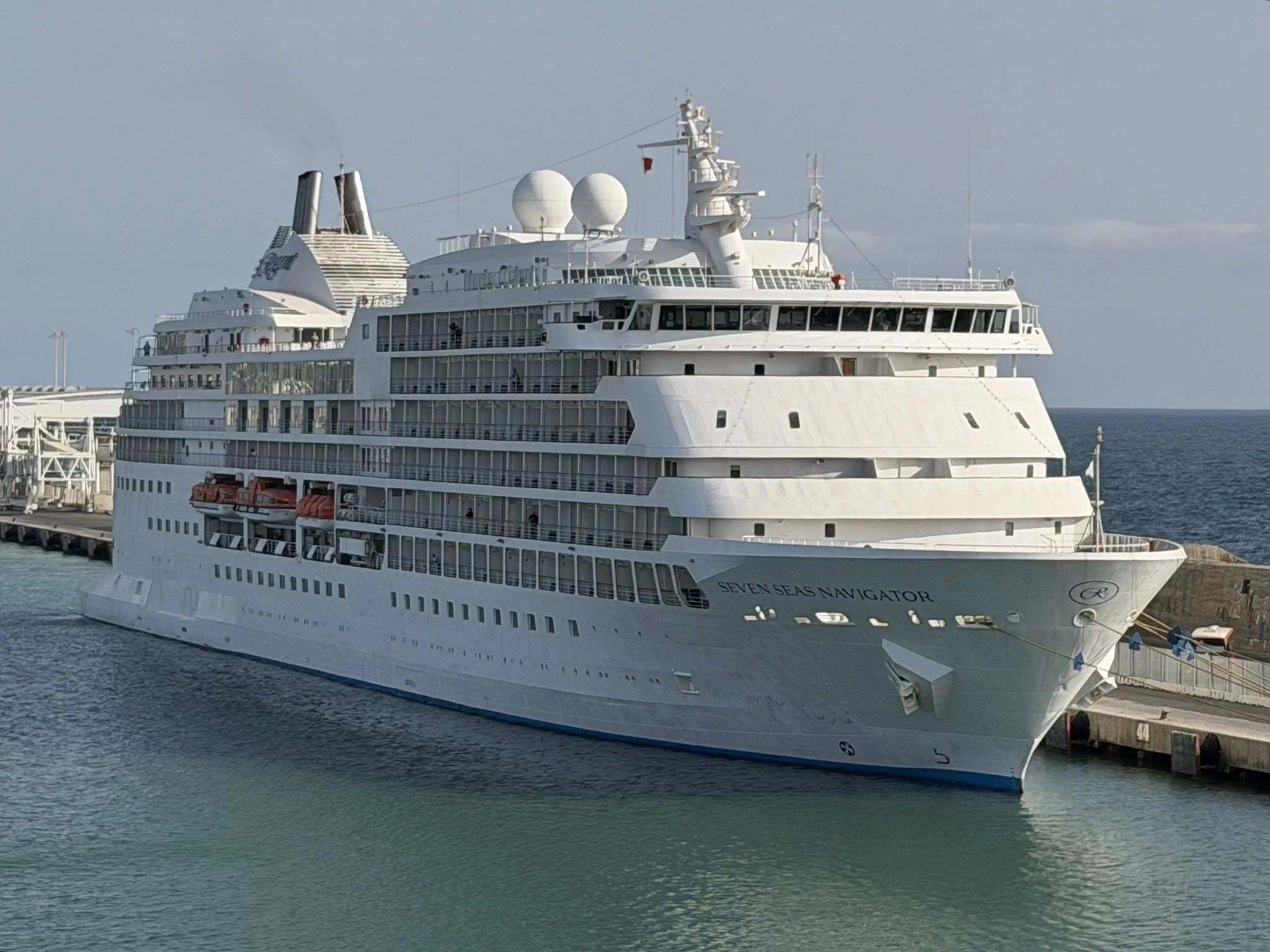
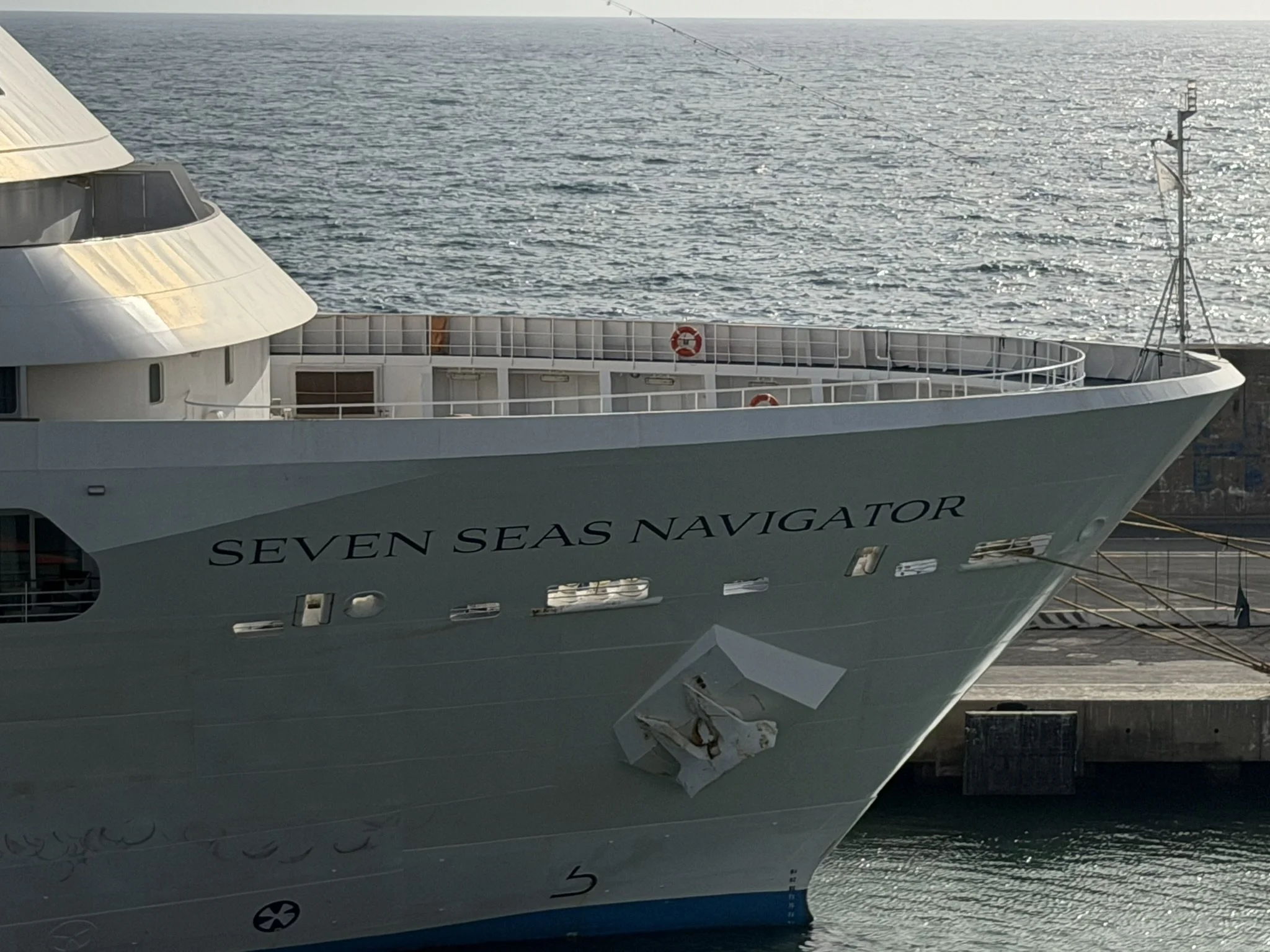
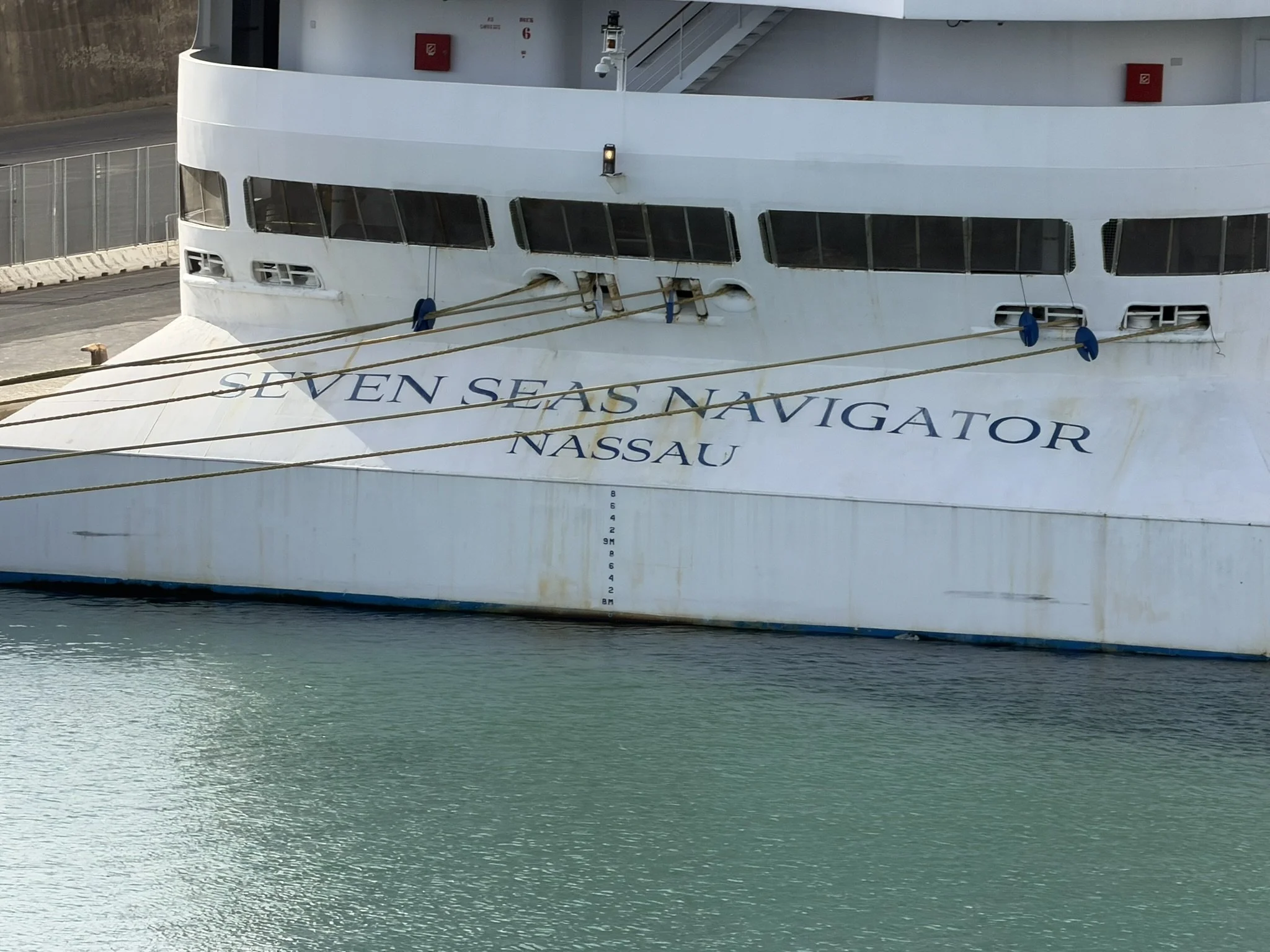
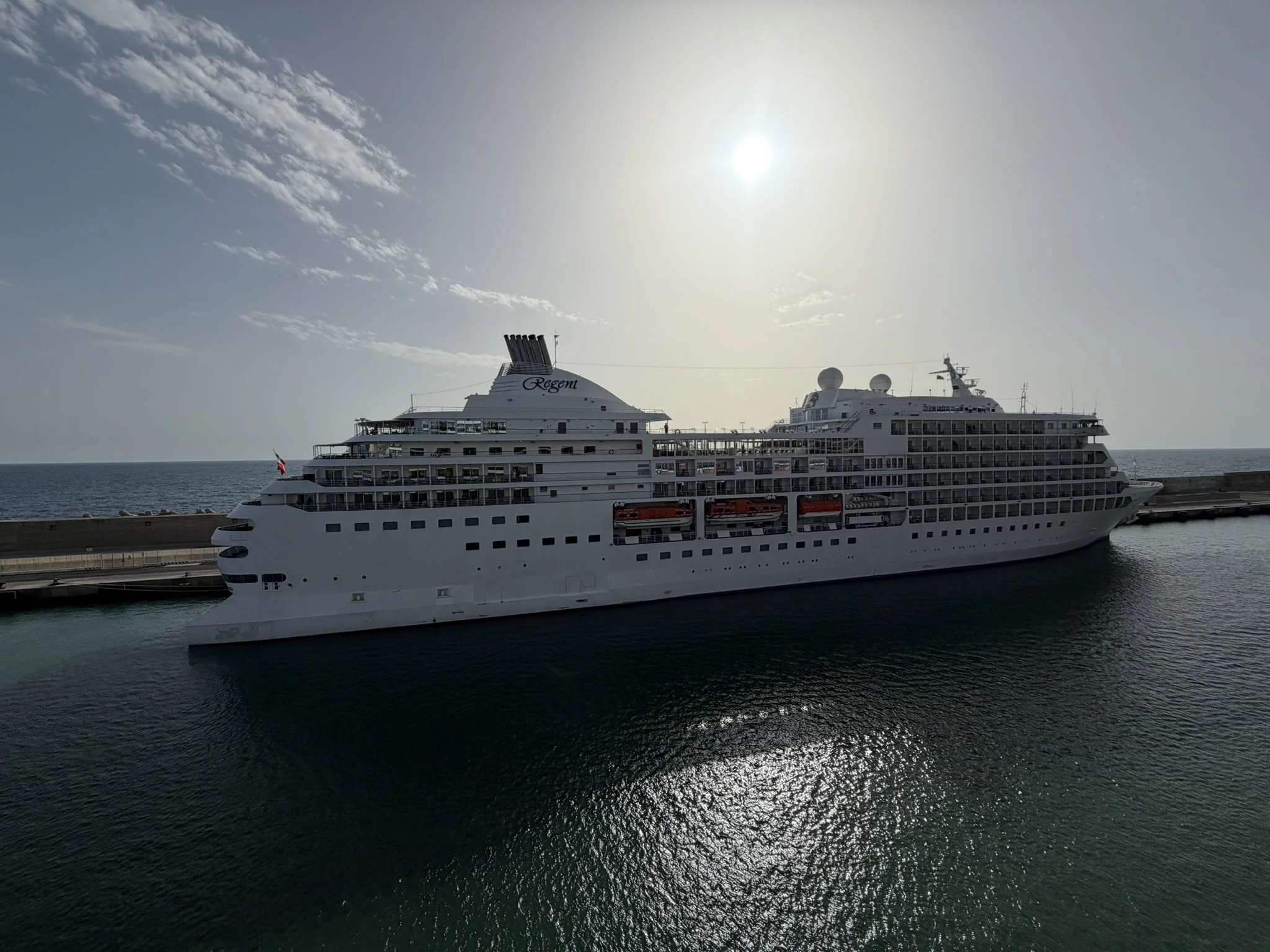
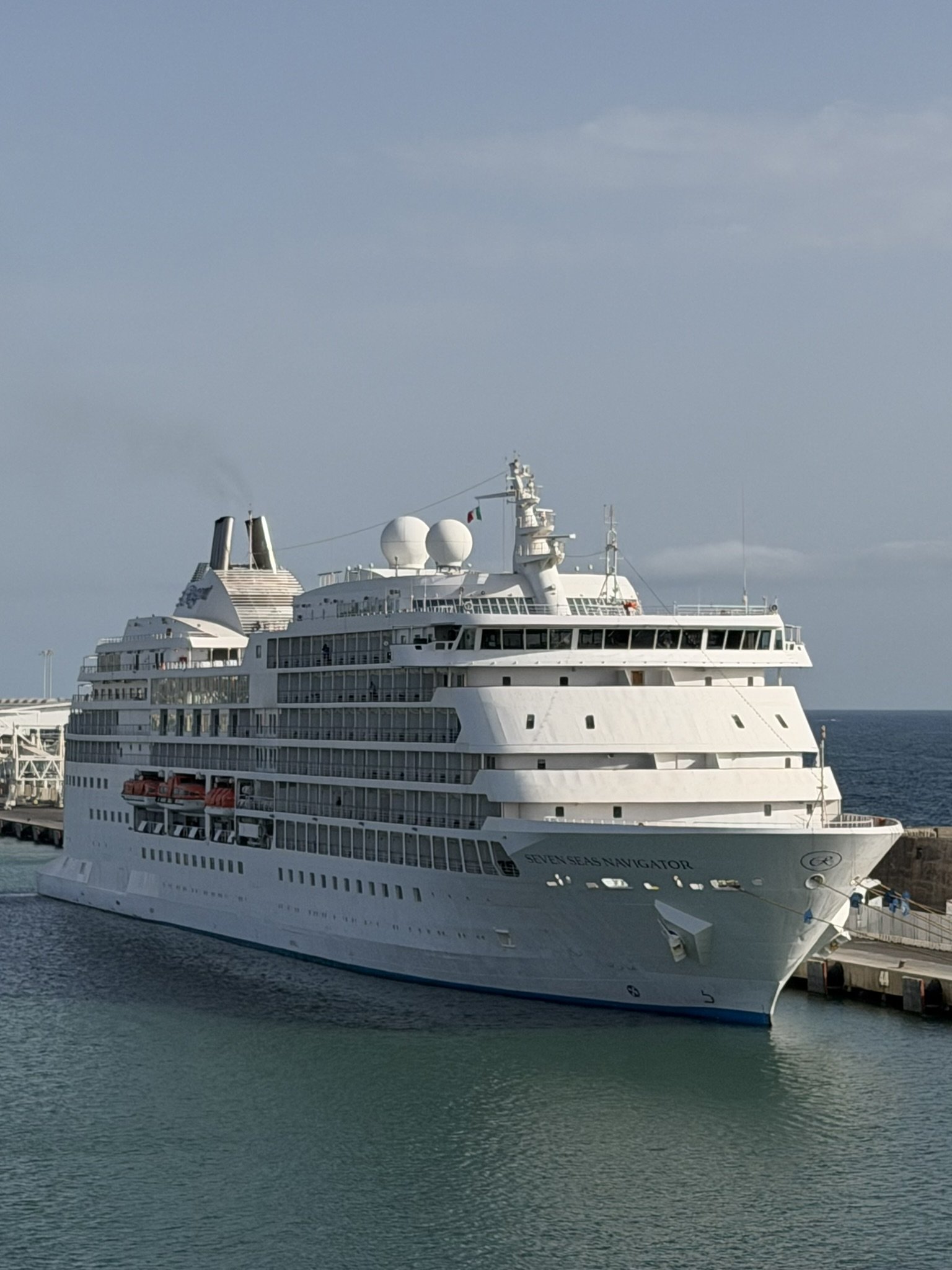
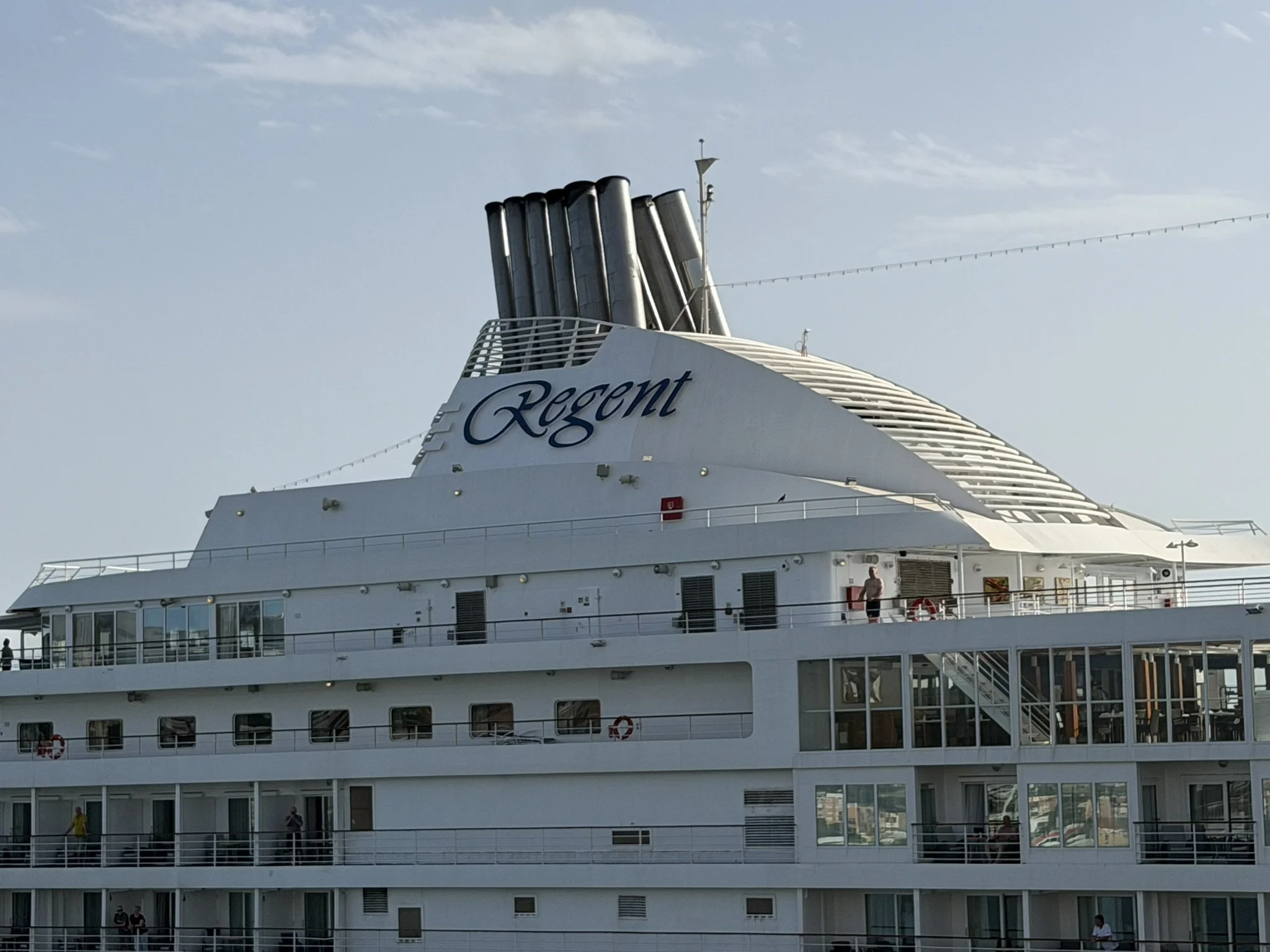
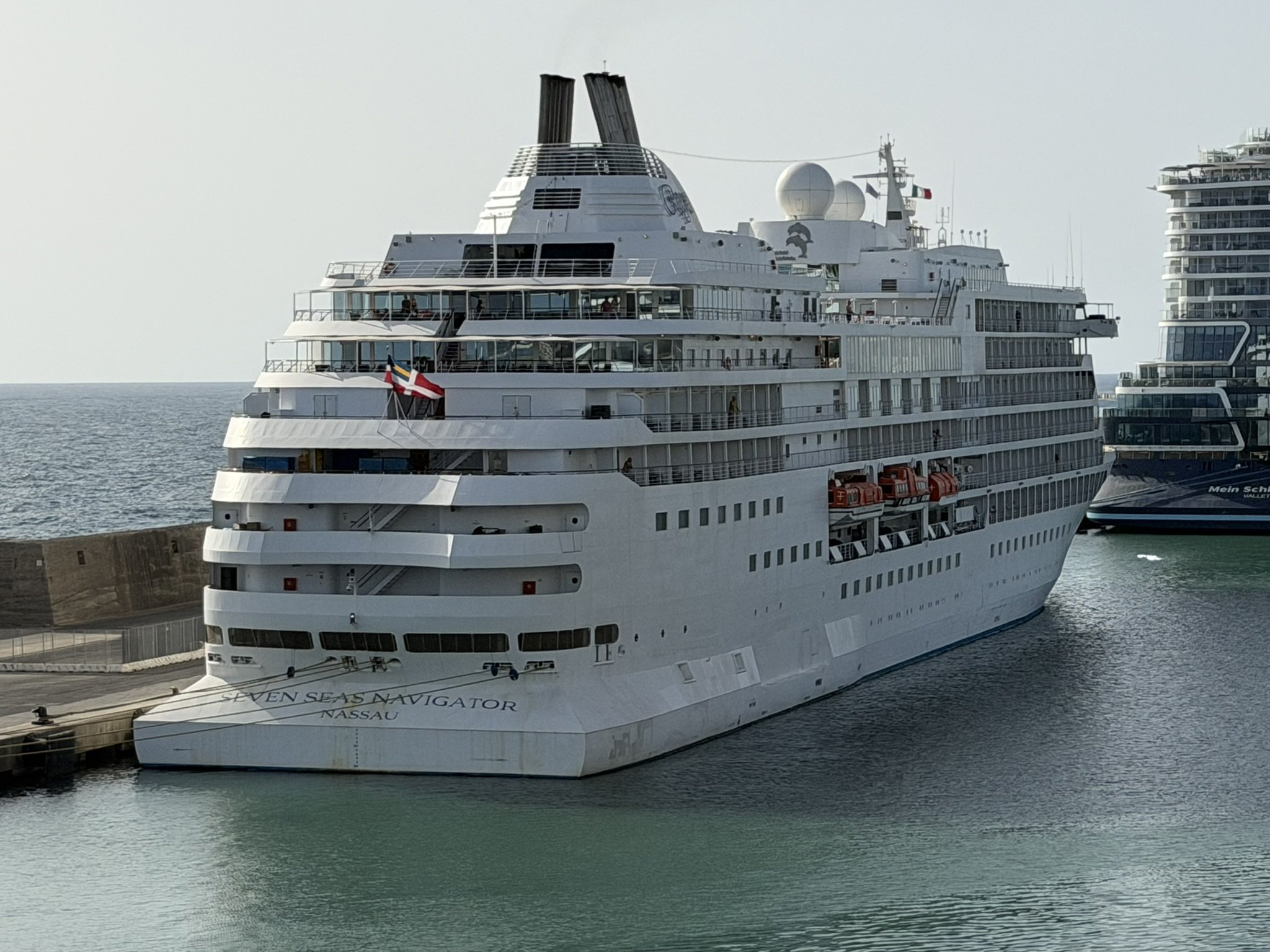
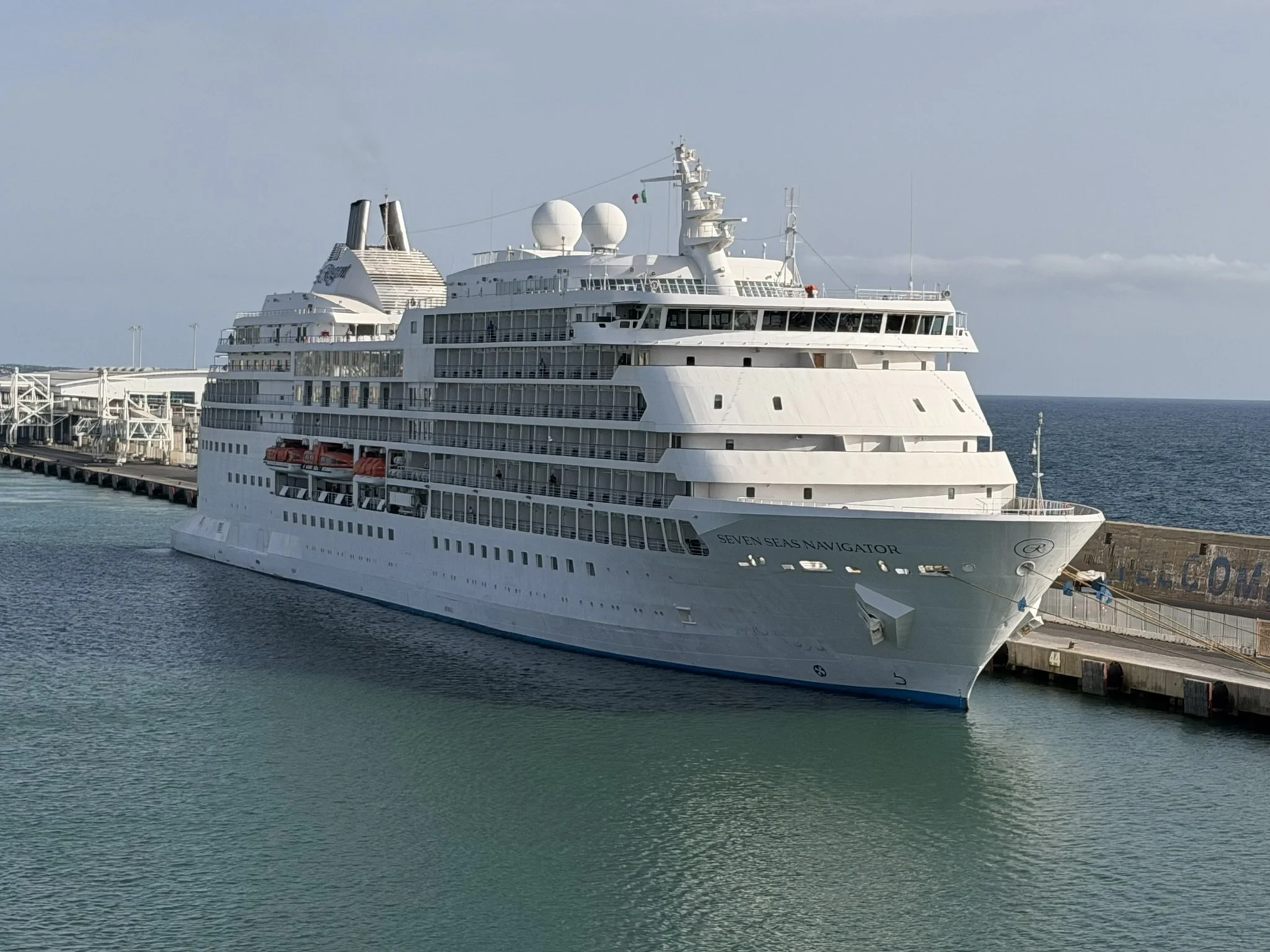
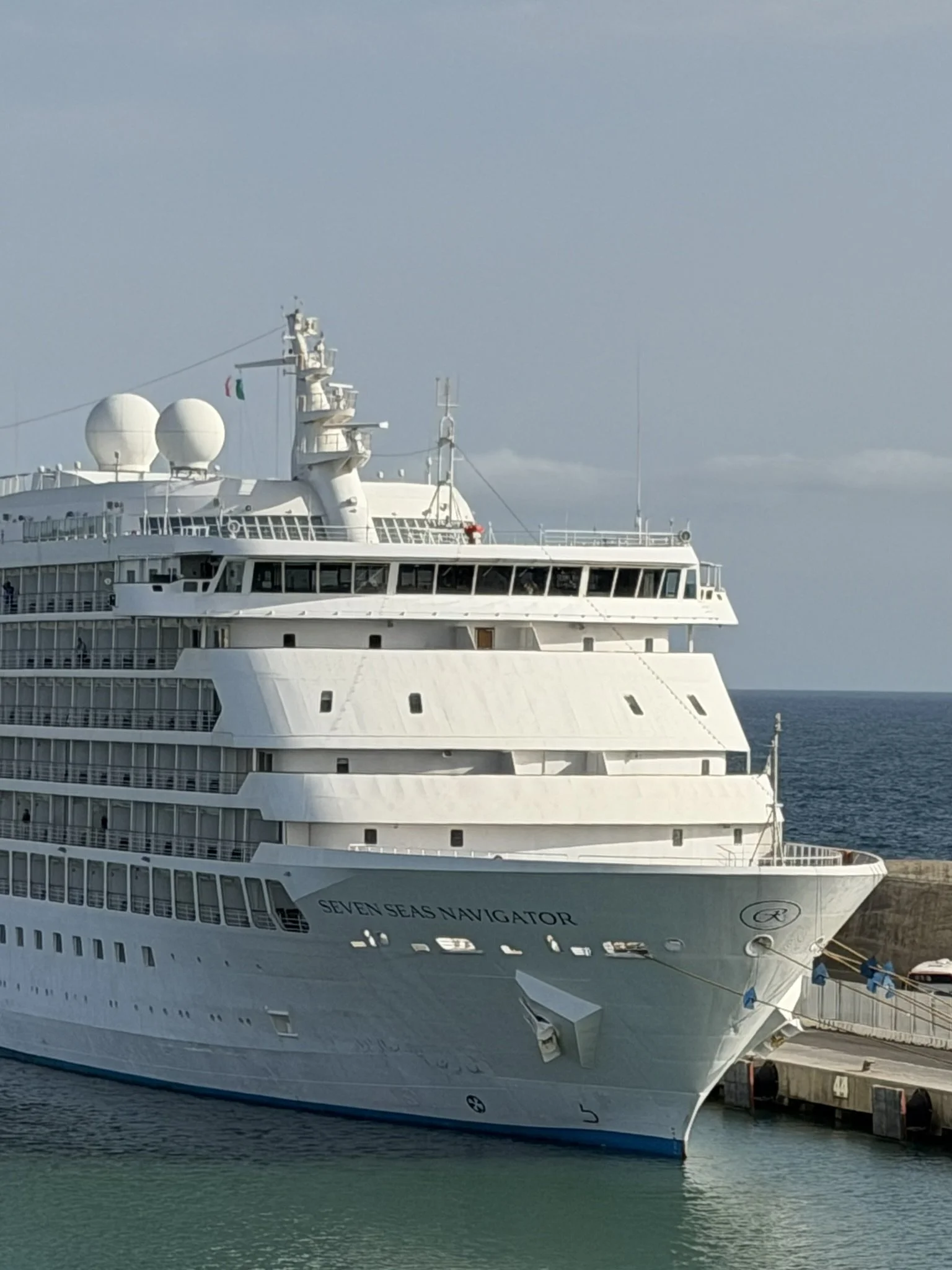
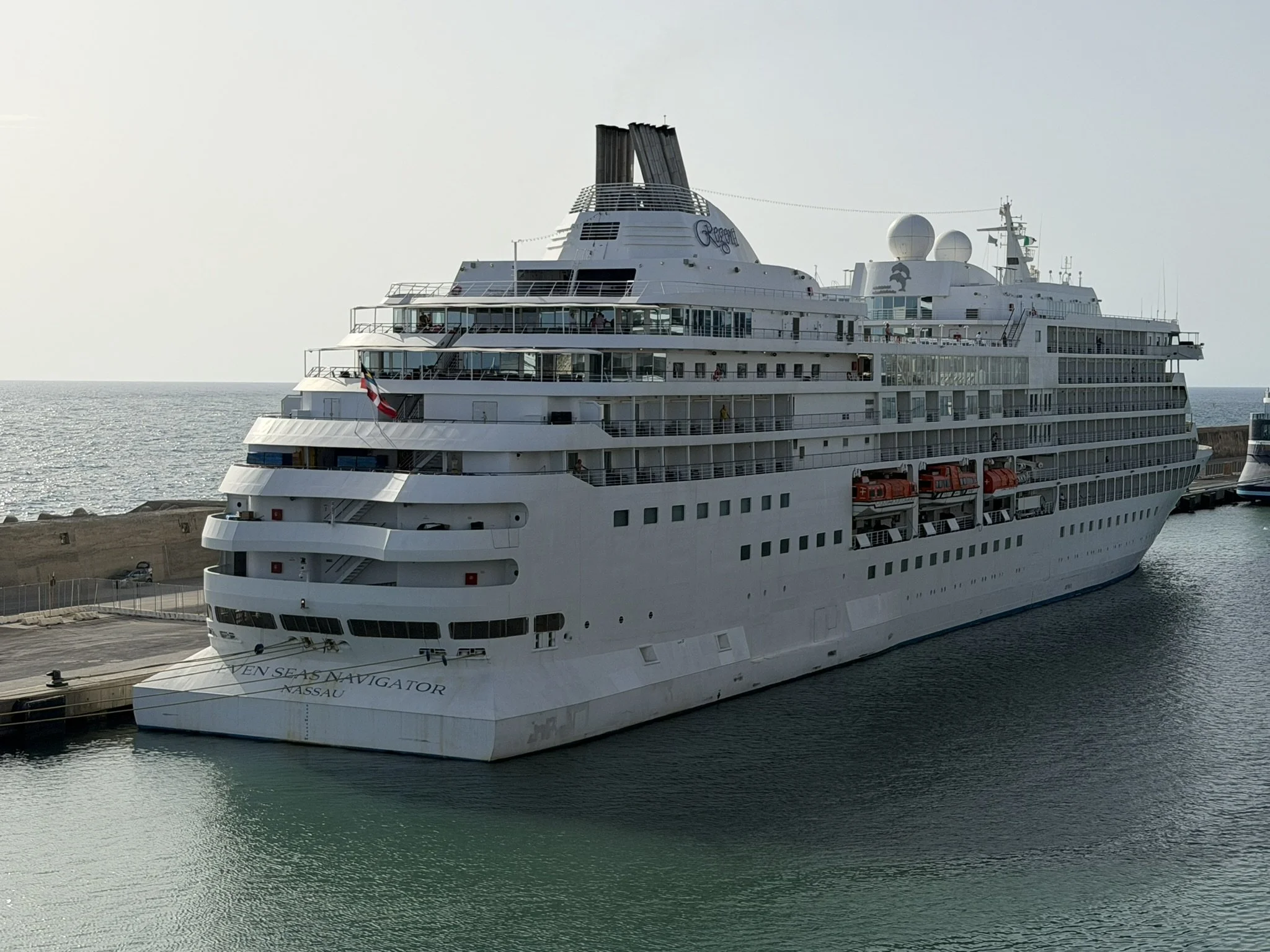
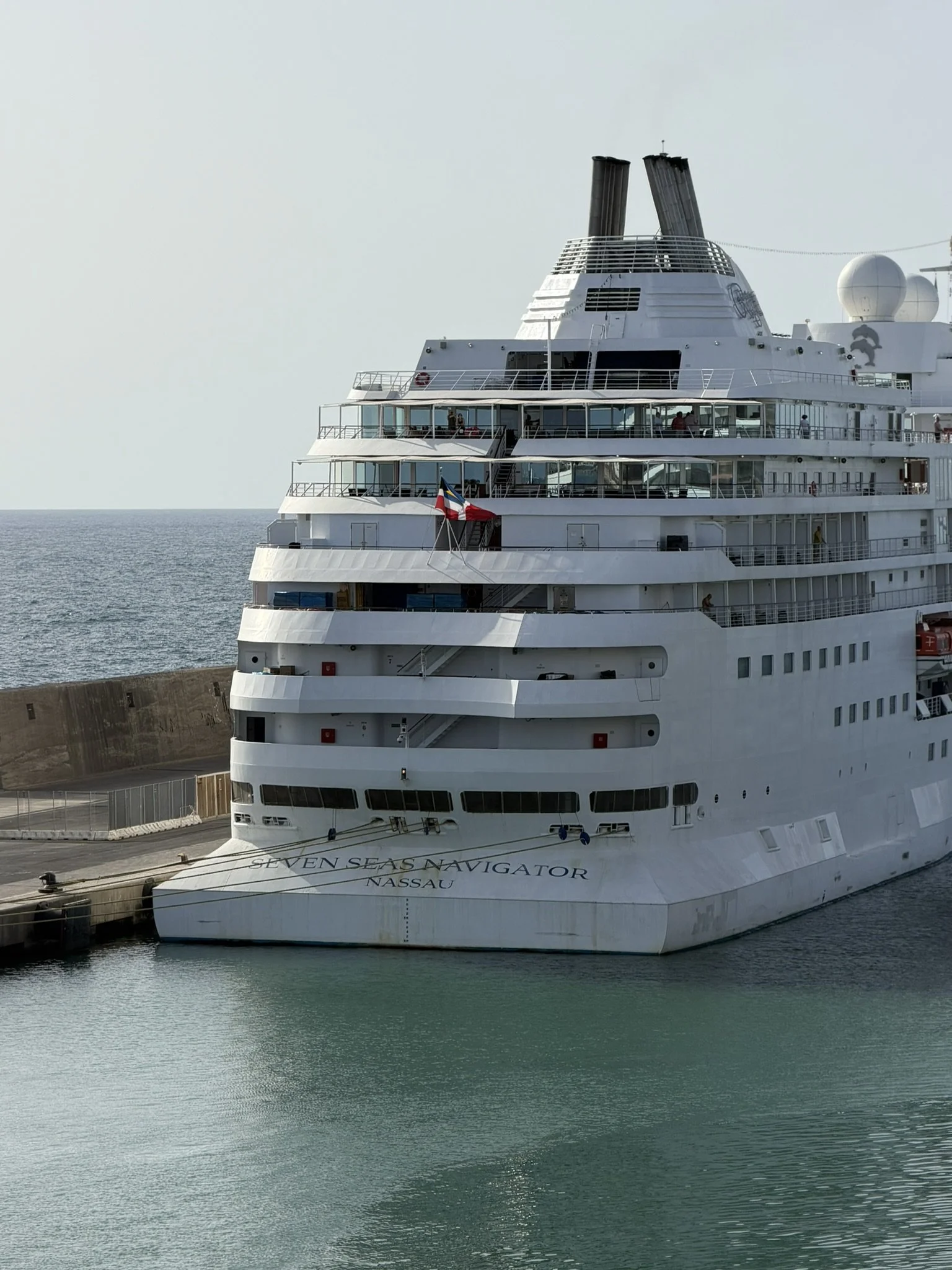
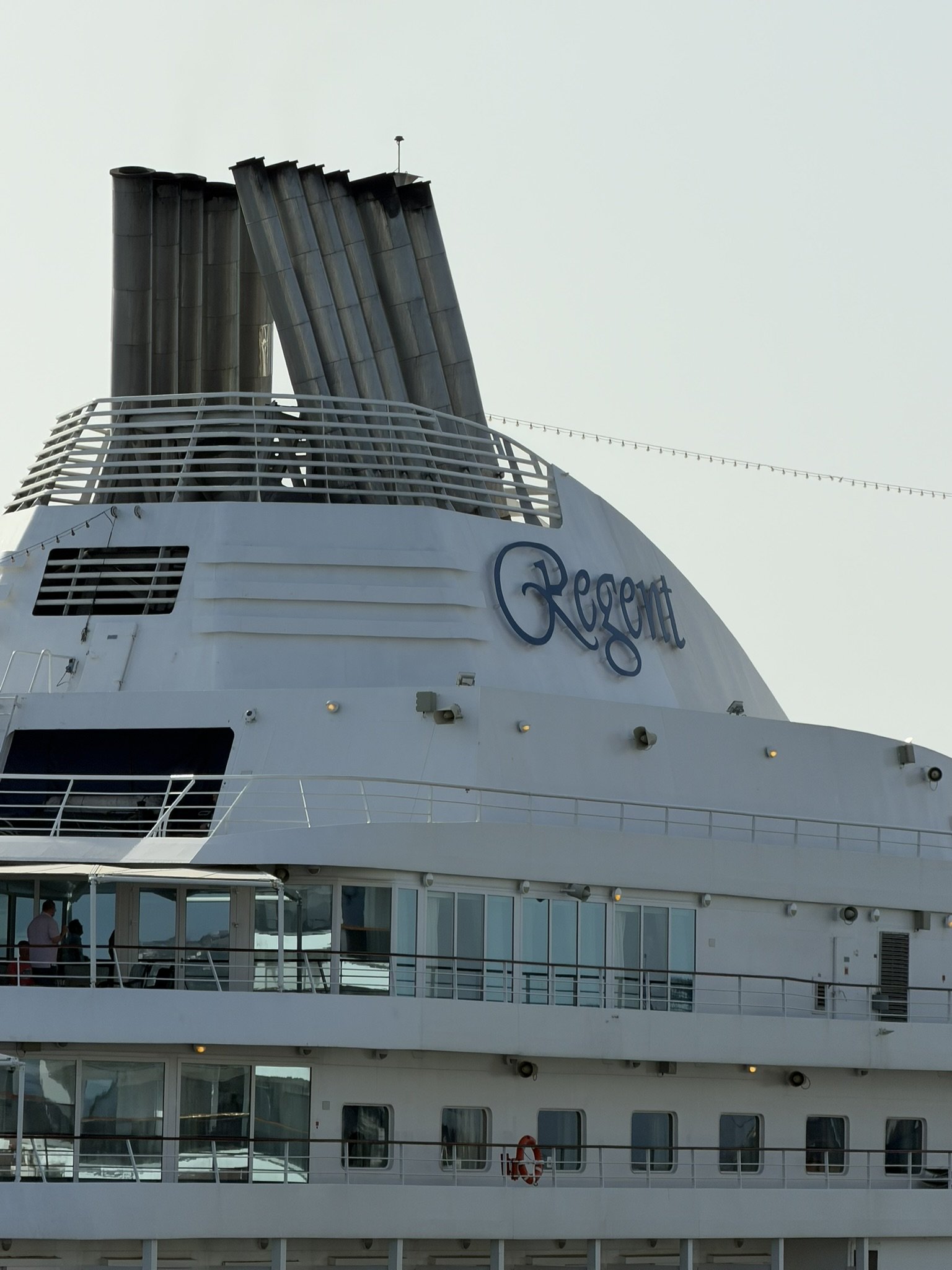
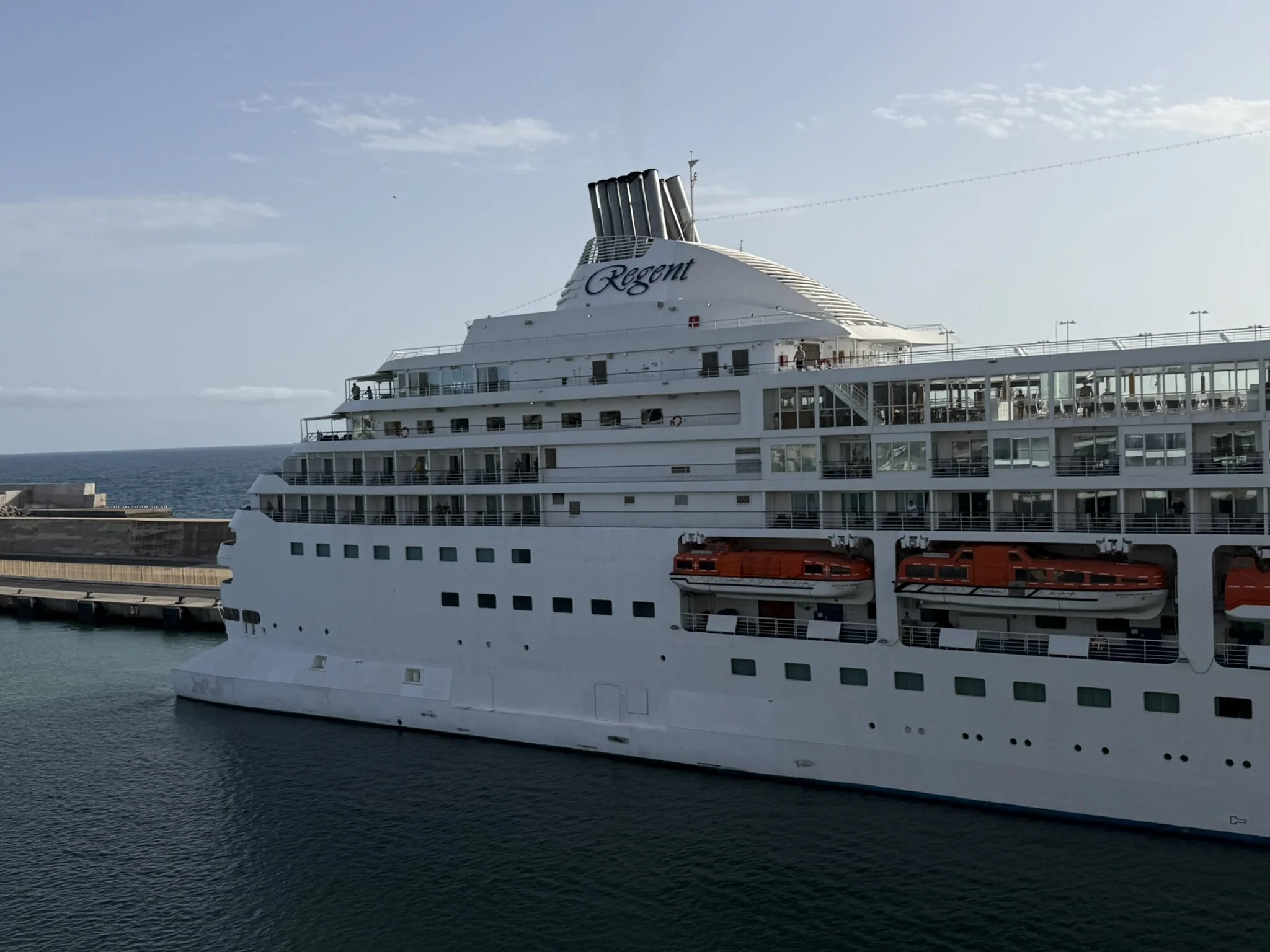
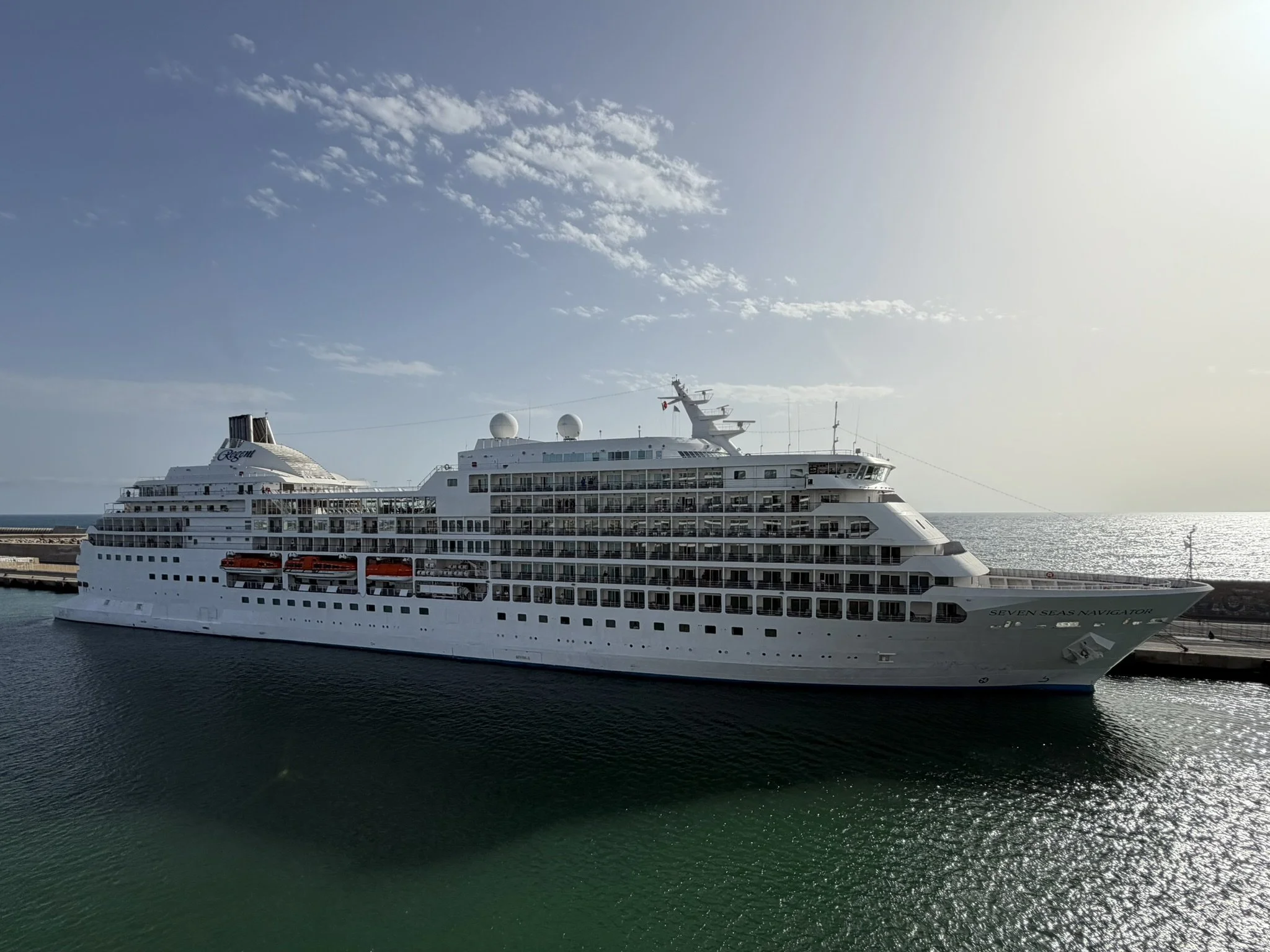
On August 29, 2026, the Seven Seas Navigator (Regent Seven Seas Cruises) was in Civitavecchia, Italy, during a nine-night Mediterranean cruise from Barcelona. Entering service in 1999, the intimate luxury ship was photographed during her final season with Regent after more than 25 years with the cruise line.
At just 28,803 gross tons and carrying fewer than 500 passengers, Seven Seas Navigator is considerably smaller than most modern cruise ships. Her unusual history began with a partially constructed Soviet research vessel hull before the ship was completed in Italy as a luxury cruise ship. She subsequently became one of the longest-serving vessels in the Regent Seven Seas Cruises fleet.
Information List
Name: Seven Seas Navigator
Operator: Regent Seven Seas Cruises
Year Entered Service: 1999
Shipyard: T. Mariotti, Genoa, Italy
Length: 566 feet (172.5 meters)
Beam: 81 feet (24.6 meters)
Draft: 24 feet (7.3 meters)
Tonnage: 28,803 GT
Passenger Capacity: 496
Crew: Approximately 365
Suites: 244
Guest Decks: 8
Cruising Speed: Approximately 20 knots
Flag: Bahamas
Last Major Refurbishment: 2019
Facilities Include: Compass Rose restaurant, Prime 7 steakhouse, La Veranda, Sette Mari at La Veranda, Galileo’s Lounge, Navigator Lounge, Stars Lounge, Connoisseur Club, casino, swimming pool, fitness center, spa, library, boutiques, mini golf, and outdoor recreation areas
History and Features
Origins and Construction:
The history of Seven Seas Navigator differs considerably from that of a conventional purpose-built cruise ship.
Her hull was originally constructed in the Soviet Union during the late 1980s as part of a project to build a satellite tracking and research vessel.
The unfinished vessel was originally intended to become Akademik Nikolay Pilyugin.
Political and economic changes surrounding the collapse of the Soviet Union brought the original project to an end before the ship could be completed.
The unfinished hull was eventually acquired for conversion into a luxury cruise ship.
The hull was taken to Italy, where the T. Mariotti shipyard in Genoa undertook the extensive work required to transform it into a passenger vessel.
New passenger decks, accommodations, public spaces, machinery, and cruise ship facilities were incorporated into the existing hull.
The resulting vessel bears little resemblance to the research ship originally planned for the hull.
The unusual origins help explain some of the ship’s distinctive proportions, including her relatively broad beam compared with her overall length.
Entry Into Service:
The completed ship entered service in 1999 as Seven Seas Navigator.
She initially sailed for Radisson Seven Seas Cruises.
The cruise line had been formed through the combination of Radisson Cruises and Seven Seas Cruises.
Seven Seas Navigator joined a fleet focused on smaller ships, spacious accommodations, luxury service, and destination-oriented itineraries.
Her relatively small passenger capacity allowed her to visit destinations that could not easily accommodate larger cruise ships.
The ship quickly became an important part of the company’s luxury cruise fleet.
Radisson Seven Seas Cruises was renamed Regent Seven Seas Cruises in 2006.
Seven Seas Navigator retained her name through the change and continued operating for the company.
Service:
During more than a quarter century of service, Seven Seas Navigator has operated cruises throughout much of the world.
Her itineraries have included the Mediterranean, Northern Europe, Caribbean, Alaska, South America, Asia, Australia, Africa, and transoceanic crossings.
Her smaller size has allowed Regent to use the vessel on itineraries combining major cruise ports with smaller destinations.
The ship has also operated extended voyages linking multiple regions of the world.
Following the worldwide suspension of cruise operations during the COVID-19 pandemic, Seven Seas Navigator eventually returned to passenger service and resumed Regent’s international itineraries.
On August 24, 2026, she departed Barcelona on a special nine-night roundtrip Mediterranean Reunion Cruise during her final season with Regent.
The itinerary included Sète, Toulon, Portofino, Livorno, Civitavecchia, Sorrento/Capri, and Palma de Mallorca.
On August 29, the date of these photographs, Seven Seas Navigator was scheduled in Civitavecchia from 7:00 a.m. until 7:00 p.m.
As of September 2026, the ship remains in active service with Regent Seven Seas Cruises.
Regent has designated the 2026–2027 period as the ship’s final season with the cruise line, bringing her exceptionally long Regent career toward its conclusion.
Refits and Upgrades:
Seven Seas Navigator has received numerous refurbishments throughout her career to keep the relatively small 1999-built ship competitive in the luxury cruise market.
Passenger accommodations, restaurants, lounges, public areas, and technical systems have been periodically renovated.
A major refurbishment in 2016 formed part of Regent Seven Seas Cruises’ fleetwide investment in updating its existing ships.
Suites received new furnishings, décor, carpeting, lighting, and other improvements.
Public spaces were also redesigned and refreshed.
The ship underwent another significant refurbishment in 2019.
That work further updated suites and public spaces while maintaining the intimate layout that had become one of the vessel’s defining characteristics.
Regent currently identifies 2019 as the ship’s most recent major refurbishment.
Design and Features:
Seven Seas Navigator is approximately 566 feet long and 81 feet wide, making her exceptionally compact compared with contemporary cruise ships.
At 28,803 gross tons, she is only a fraction of the size of the largest ships now operating.
The vessel accommodates fewer than 500 passengers.
Her relatively high crew-to-passenger ratio has been an important part of Regent’s luxury service model.
The ship contains approximately 244 suites.
Passenger accommodations are unusually spacious for a vessel of her size.
Most accommodations include private balconies, while a smaller number of suites have windows instead.
The ship’s compact dimensions result in relatively short distances between accommodations, restaurants, lounges, and outdoor areas.
Her broad hull and substantial superstructure give the vessel a distinctive appearance that reflects her unconventional origins.
Dining and Public Spaces:
Compass Rose serves as the ship’s primary restaurant.
Prime 7 offers a steakhouse-style specialty dining experience.
La Veranda provides casual dining during the day.
In the evening, part of La Veranda becomes Sette Mari, offering Italian-inspired cuisine.
Galileo’s Lounge occupies a prominent position high on the ship and provides panoramic views.
Additional gathering spaces include the Navigator Lounge and Stars Lounge.
The ship also contains a theater, casino, library, boutiques, spa, fitness center, swimming pool, and outdoor recreation areas.
The comparatively small number of passengers gives the public spaces a more intimate scale than those aboard contemporary large cruise ships.
Luxury Cruise Concept:
Seven Seas Navigator was developed around an all-suite luxury cruise concept rather than the high-capacity resort model used by many larger vessels.
Regent’s service model emphasizes a high ratio of crew members to passengers.
The ship’s small size allows for personalized service and a quieter onboard environment.
Regent also developed the vessel around an increasingly inclusive cruise fare that incorporates dining, beverages, gratuities, and many shore excursions.
The combination of relatively large suites and fewer than 500 passengers has remained central to the ship’s identity throughout her Regent career.
Final Regent Season:
Regent Seven Seas Cruises has announced that Seven Seas Navigator is in her final period of service with the company.
Regent created a special collection of voyages called Navigate the Seasons to commemorate the ship’s final chapter with the fleet.
The program includes cruises through the Mediterranean, Asia, Australia, the South Pacific, and Africa.
Several commemorative voyages were scheduled during 2026, including special culinary, reunion, and President’s cruises.
The August 24, 2026 sailing from Barcelona was promoted as A Reunion to Remember and brought together past passengers and Regent crew for special events during the voyage.
The Civitavecchia call on August 29 occurred during this Reunion Cruise.
The final-season program recognizes the ship’s long association with Regent and its predecessor, Radisson Seven Seas Cruises.
By the time she leaves the fleet, Seven Seas Navigator will have spent more than a quarter century carrying passengers for the same luxury cruise operation.
Legacy:
Seven Seas Navigator occupies an unusual place in modern cruise ship history because her hull was never originally intended for the cruise industry.
Her transformation from an unfinished Soviet research vessel into a luxury passenger ship is one of the more unusual conversion stories among modern cruise vessels.
She became closely associated with Radisson Seven Seas Cruises and later Regent Seven Seas Cruises, remaining with the operation for more than 25 years.
Her relatively small size increasingly distinguished her as cruise ships grew dramatically larger during the first decades of the 21st century.
Rather than relying on large-scale attractions, the ship remained focused on spacious accommodations, destination-oriented cruising, dining, and personalized service.
Her longevity with Regent made her one of the most recognizable ships in the company’s history.
Her departure from the Regent fleet will close a significant chapter that began when Seven Seas Navigator entered service in 1999.