TS GOLDEN BEAR
May 11, 2025 | San Diego, California
TS Golden Bear (Cal Maritime) was photographed in San Diego, California, during a family visit beginning May 11, 2025. We met up with our son, who was aboard for his second training cruise, and had an opportunity to tour the ship. This collection combines daytime views from the waterfront, photographs after dark and details from aboard the academy’s floating classroom.
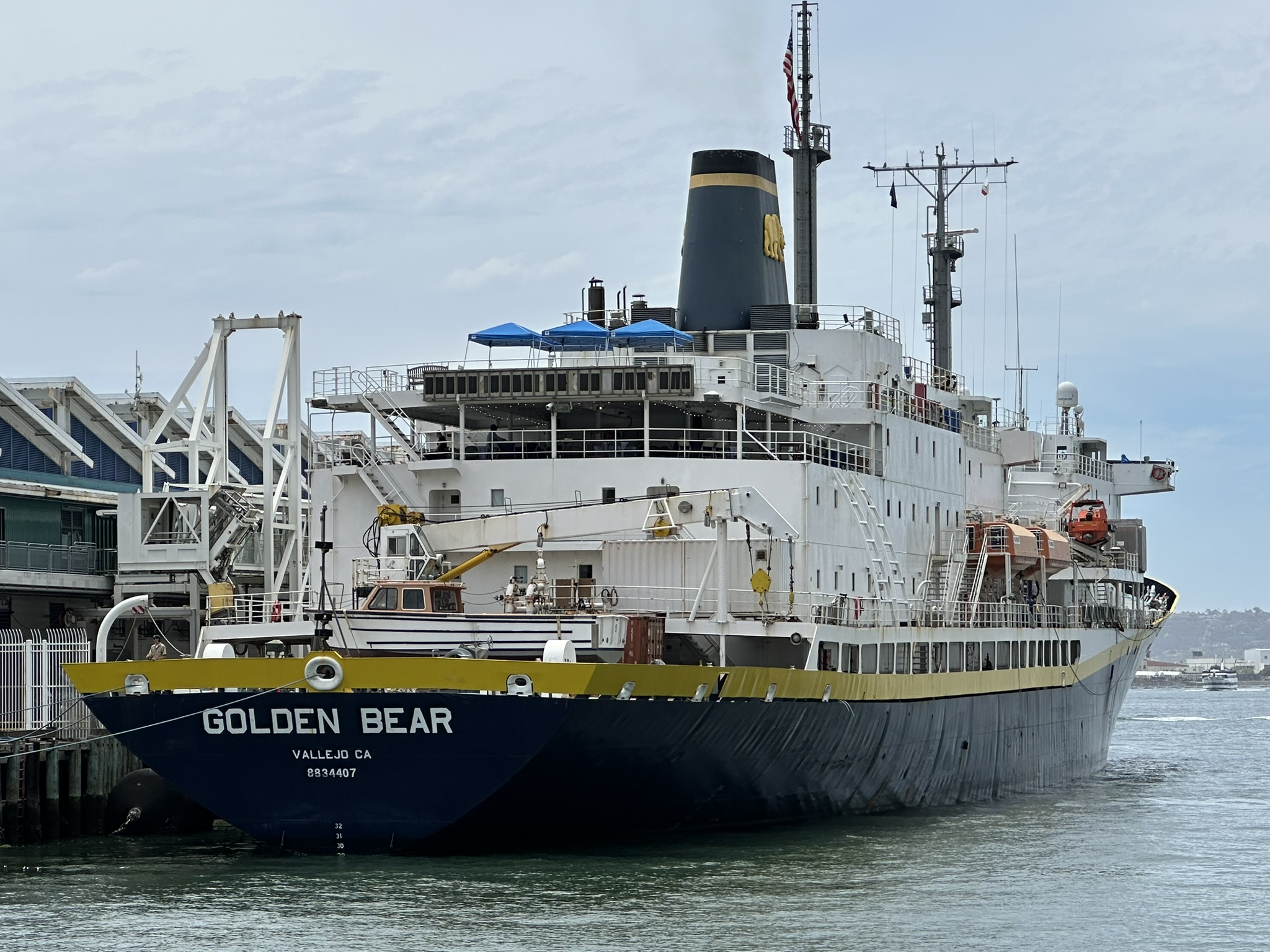
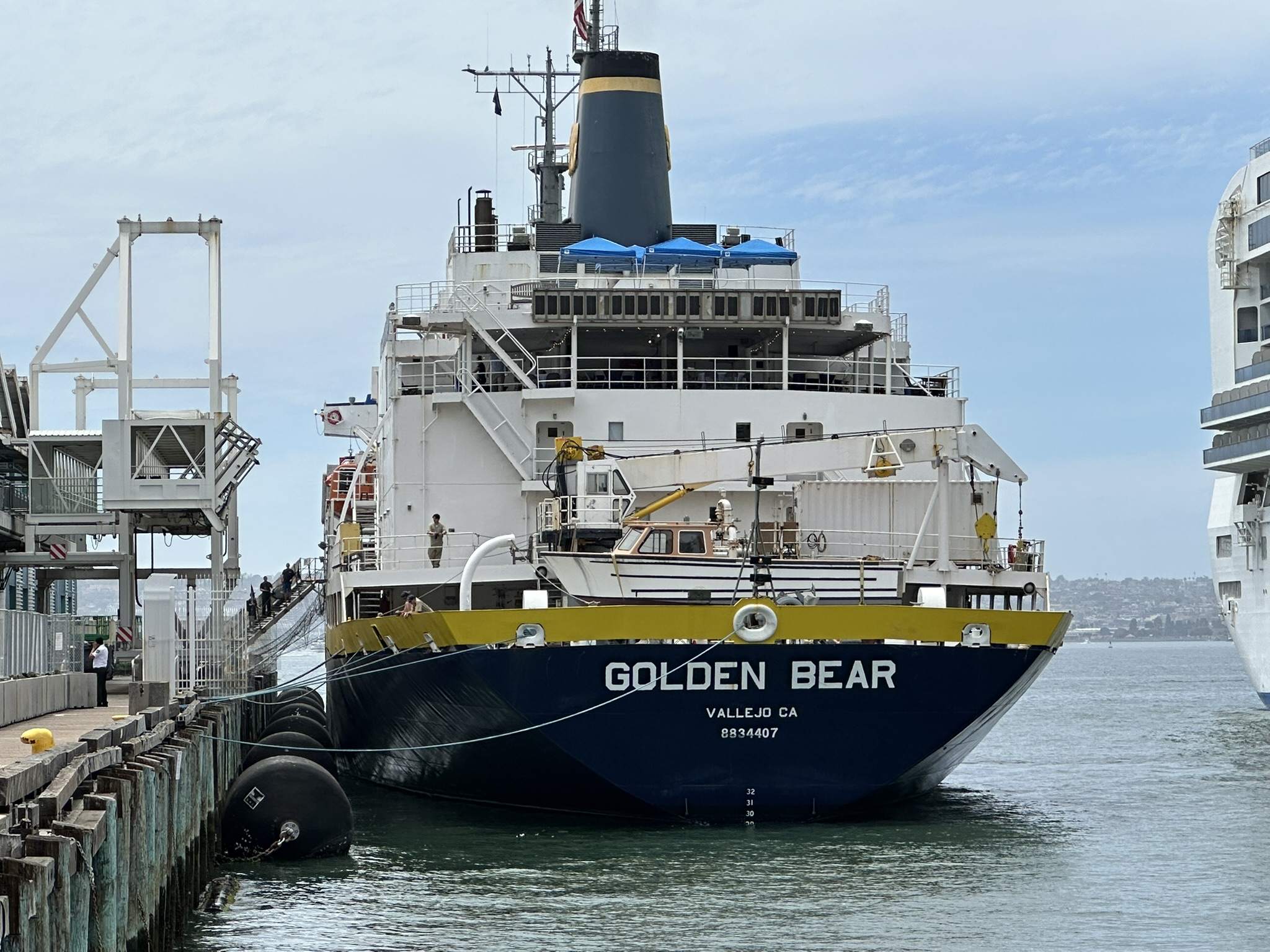
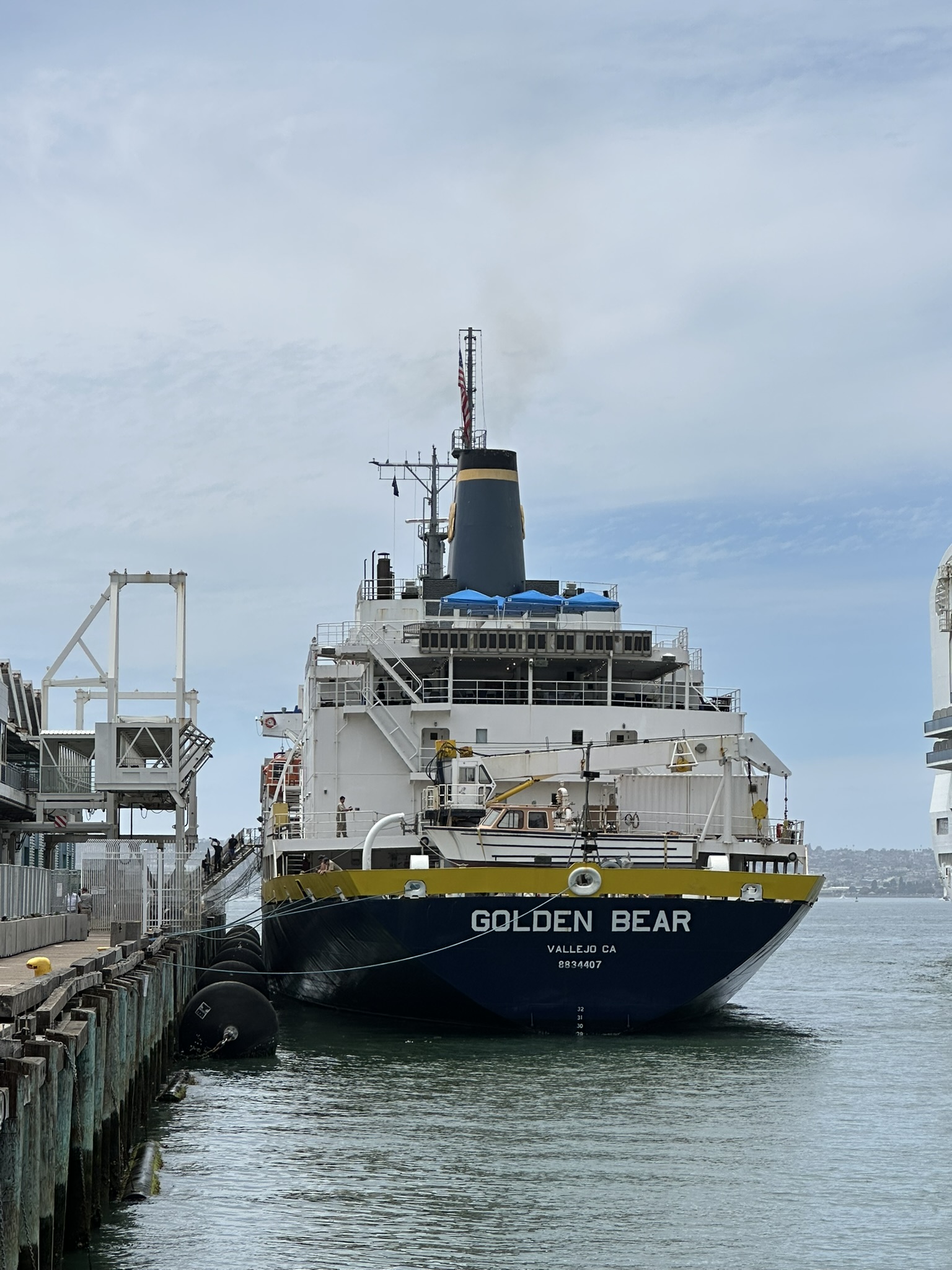
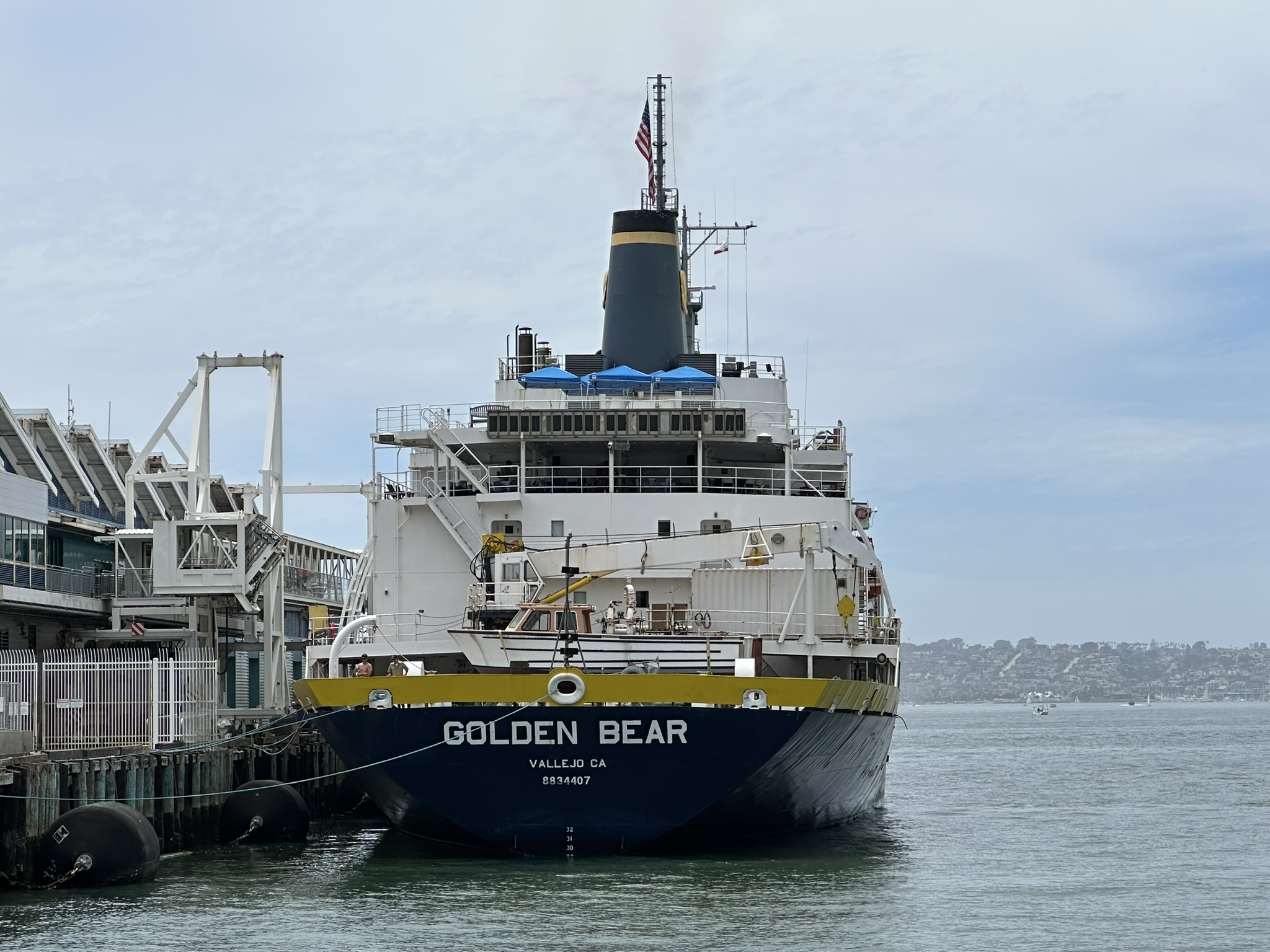
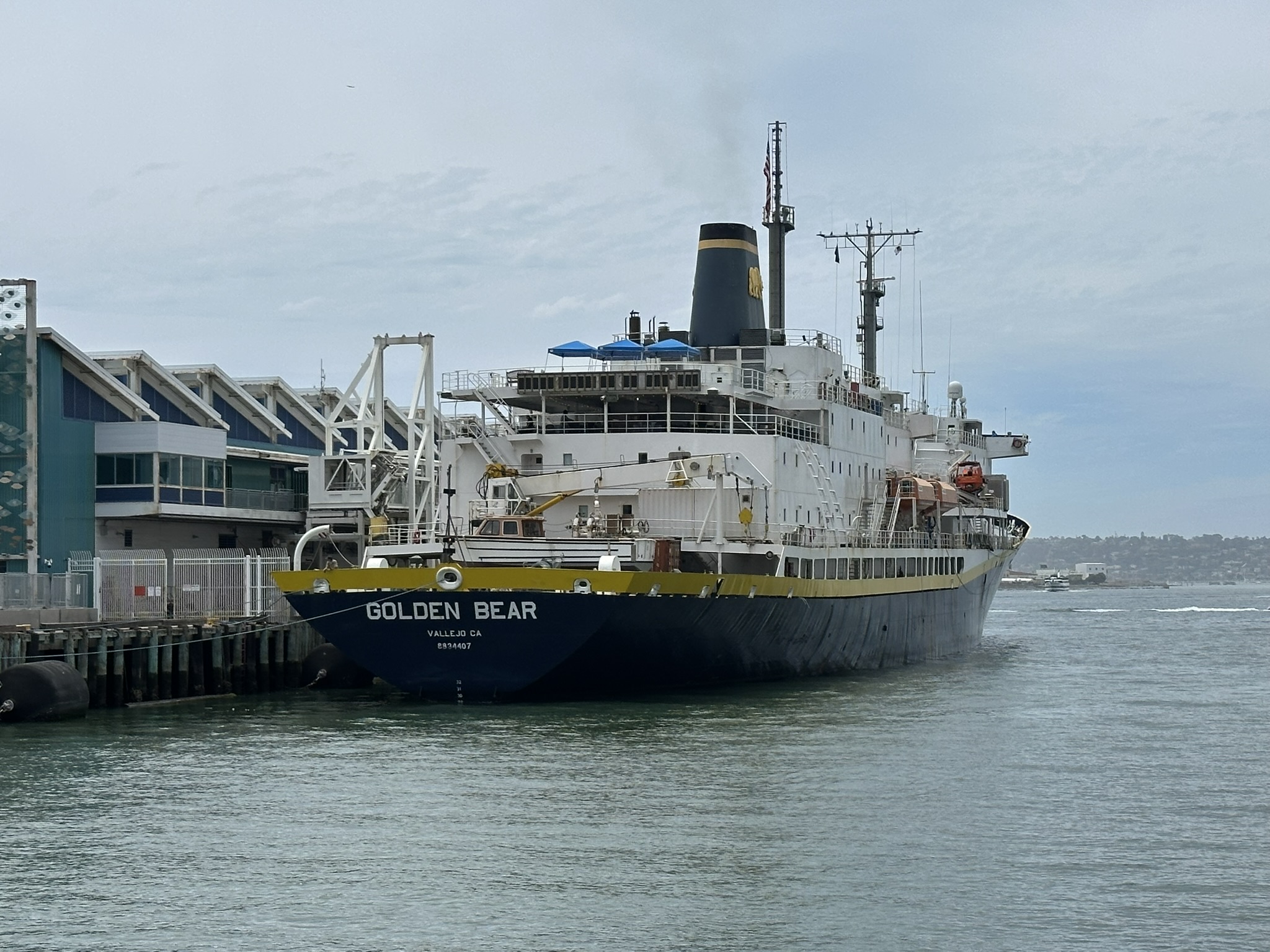
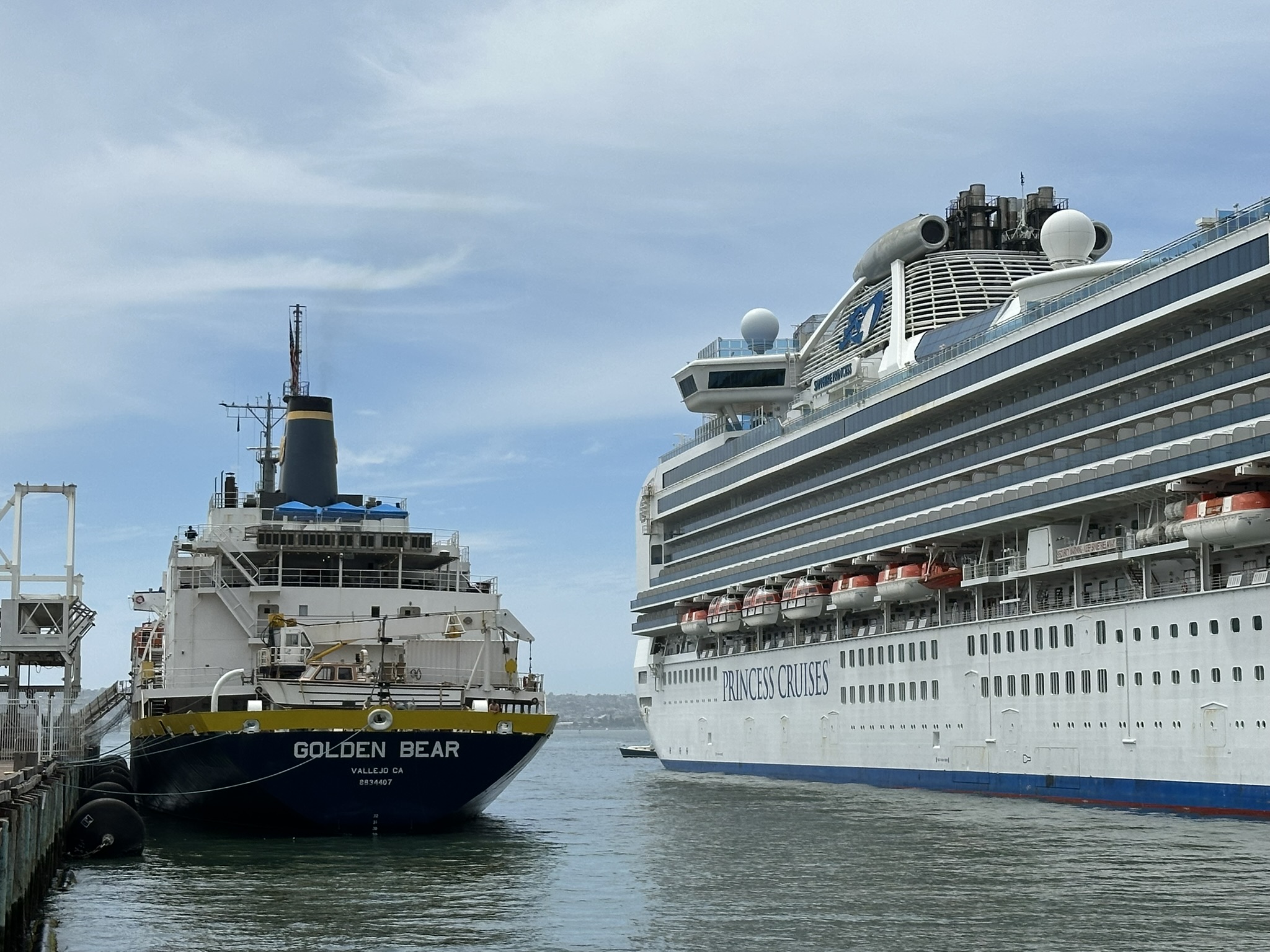
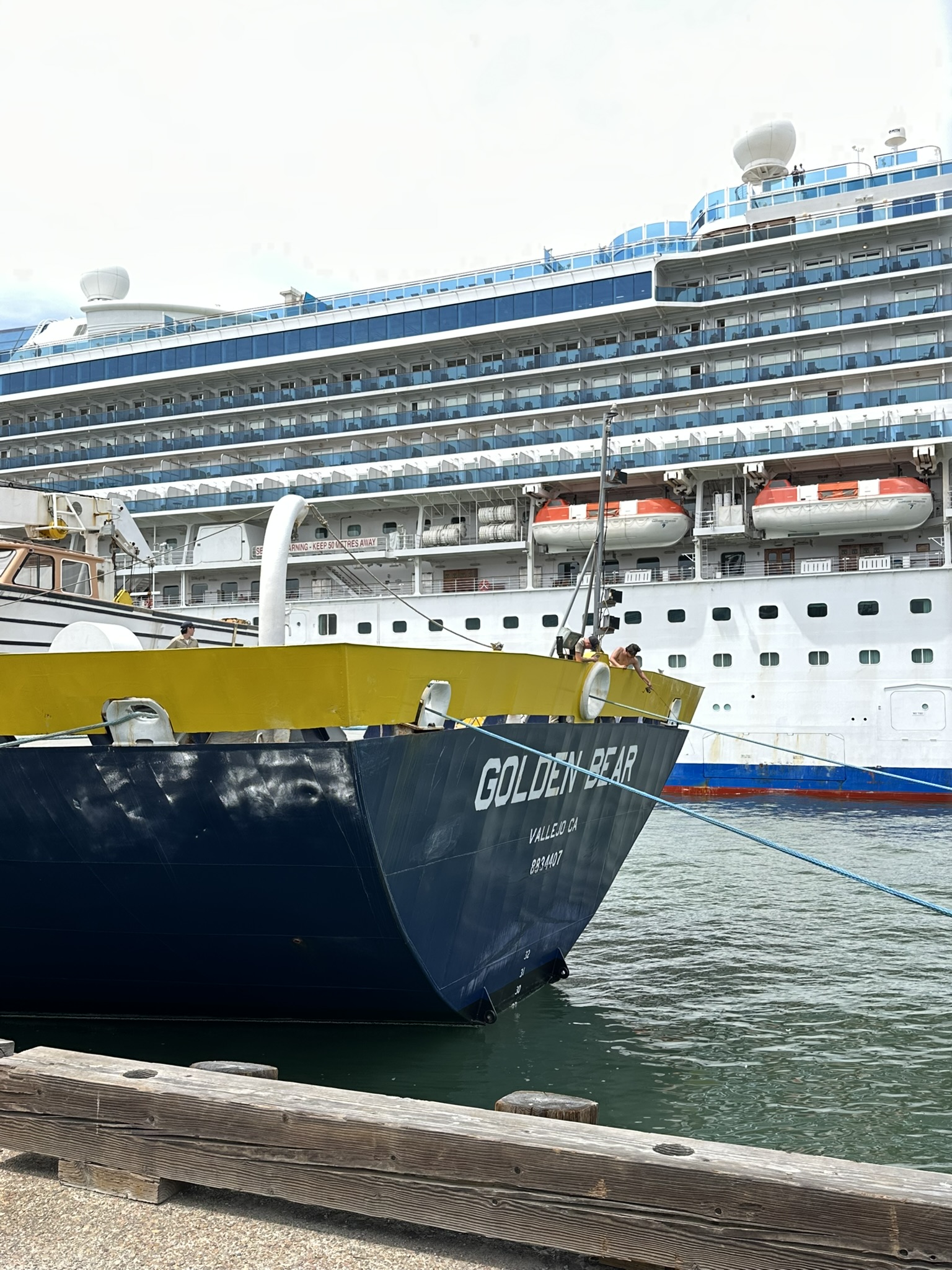
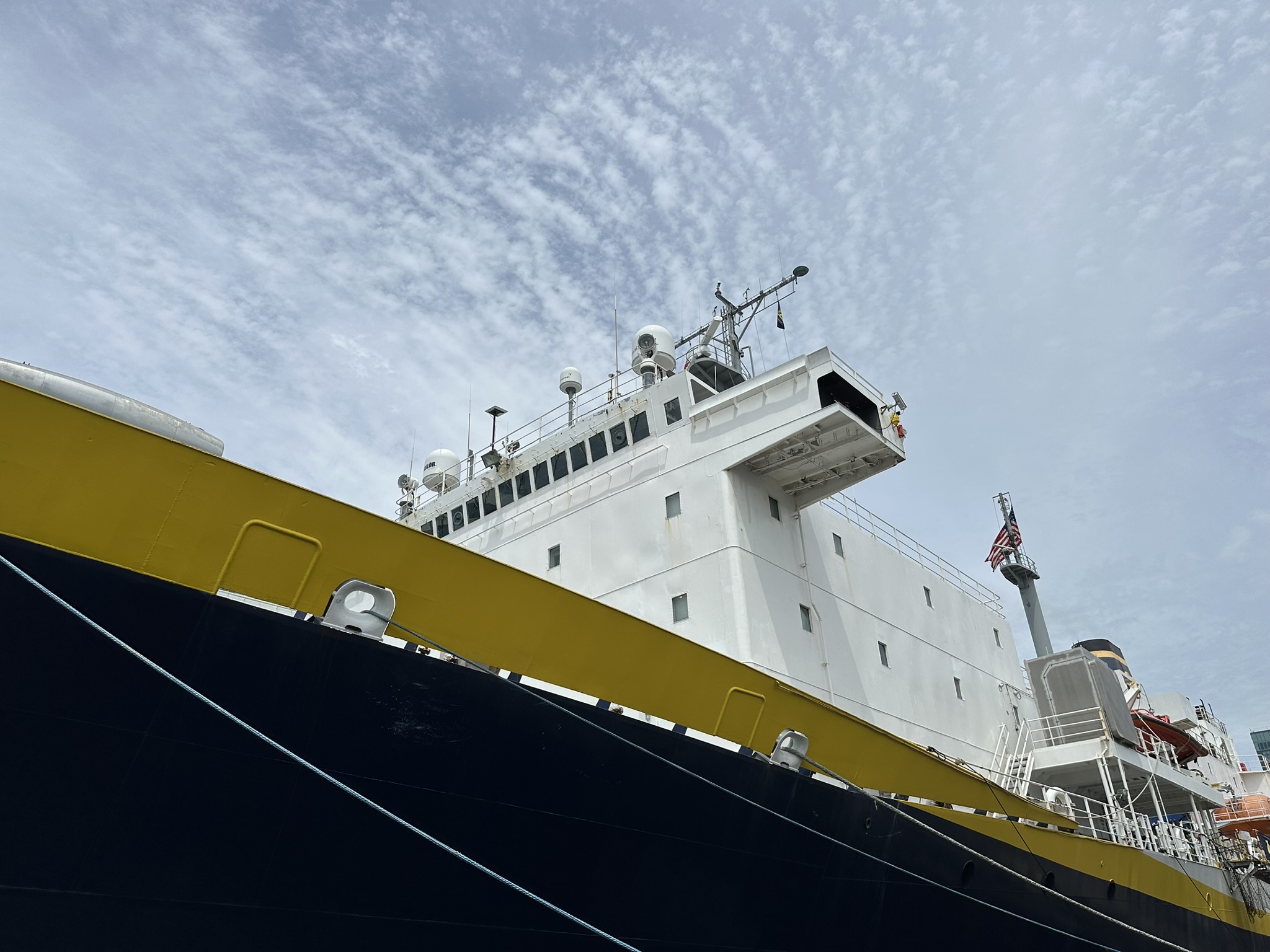
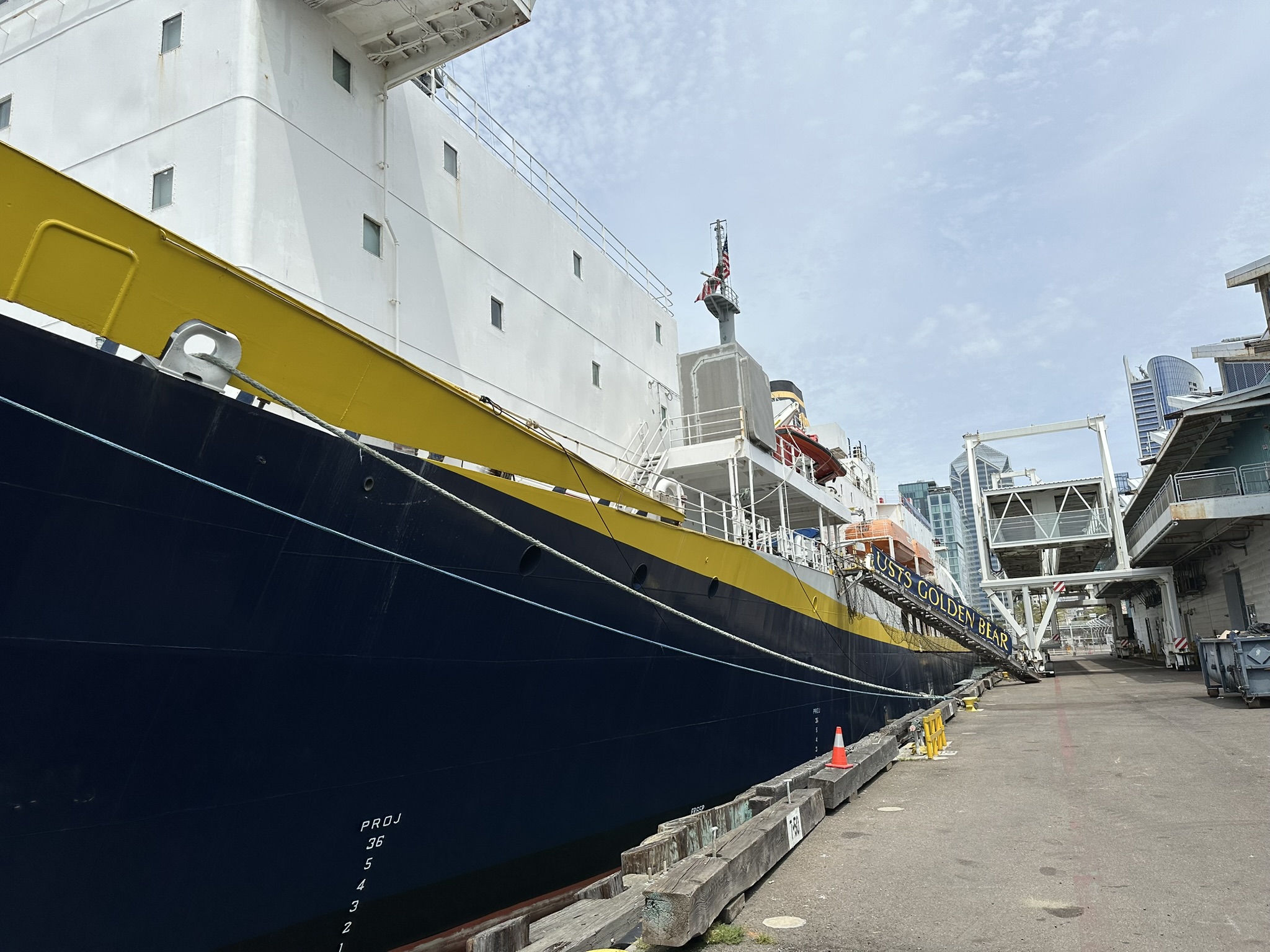
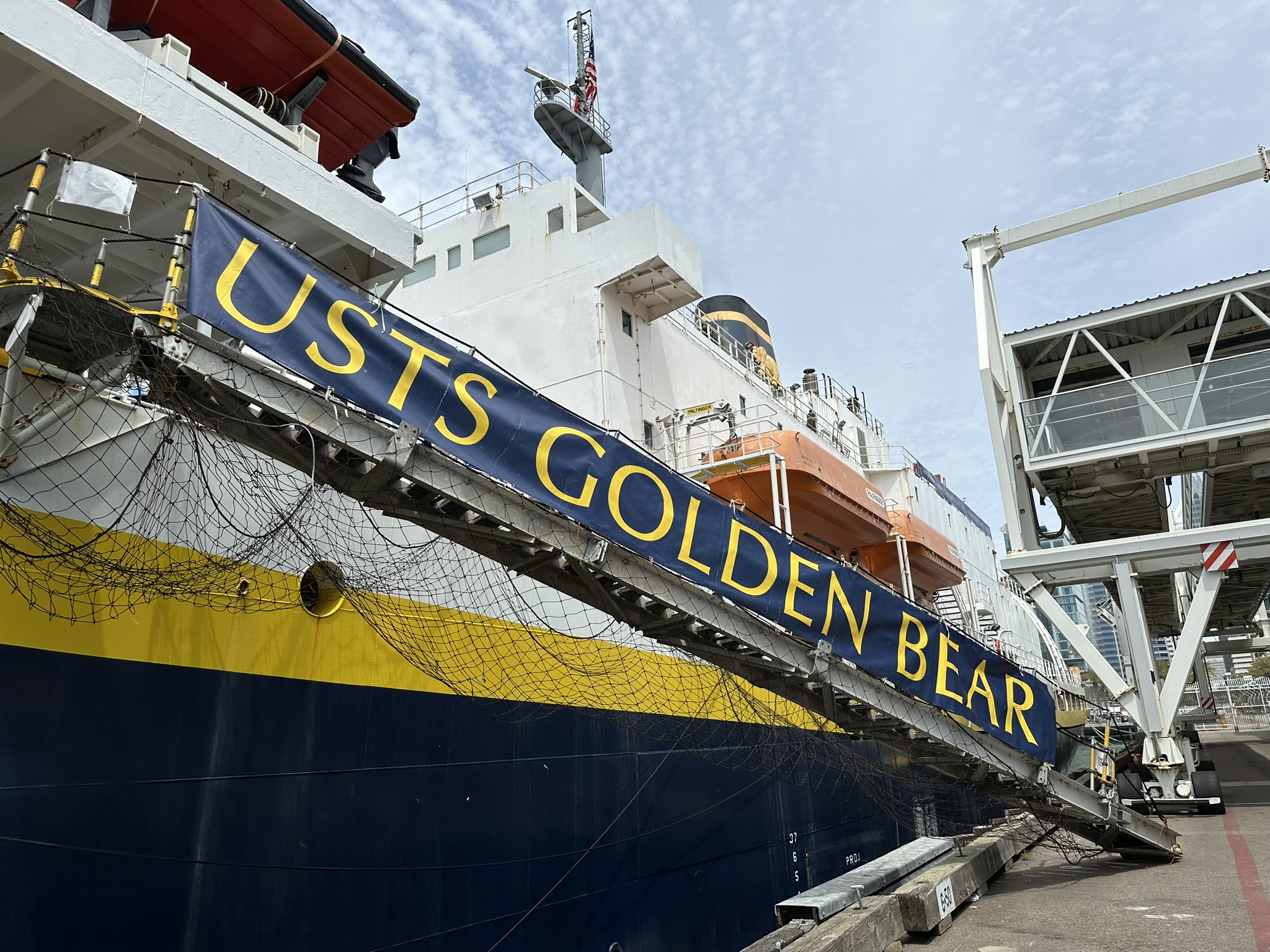
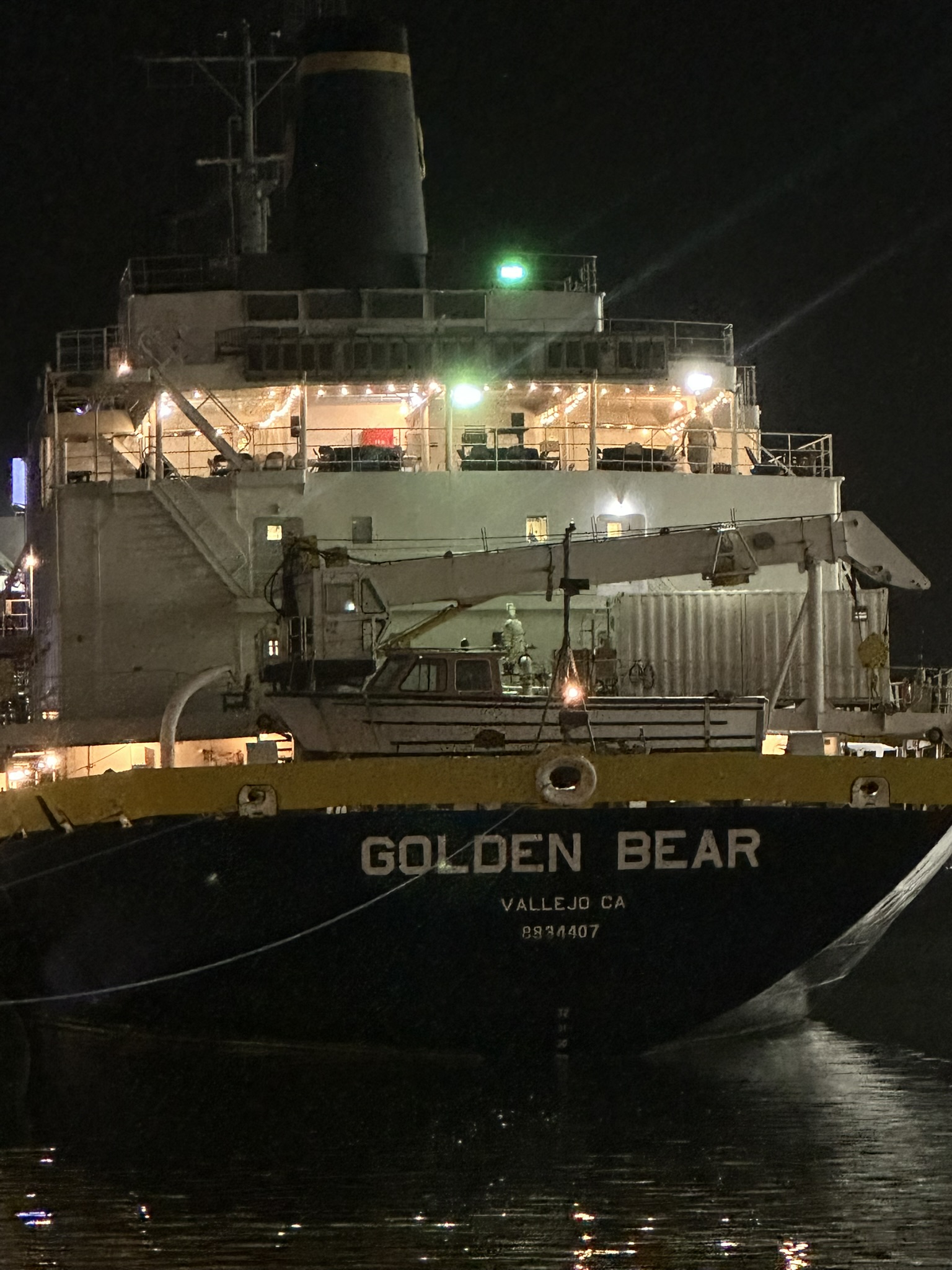
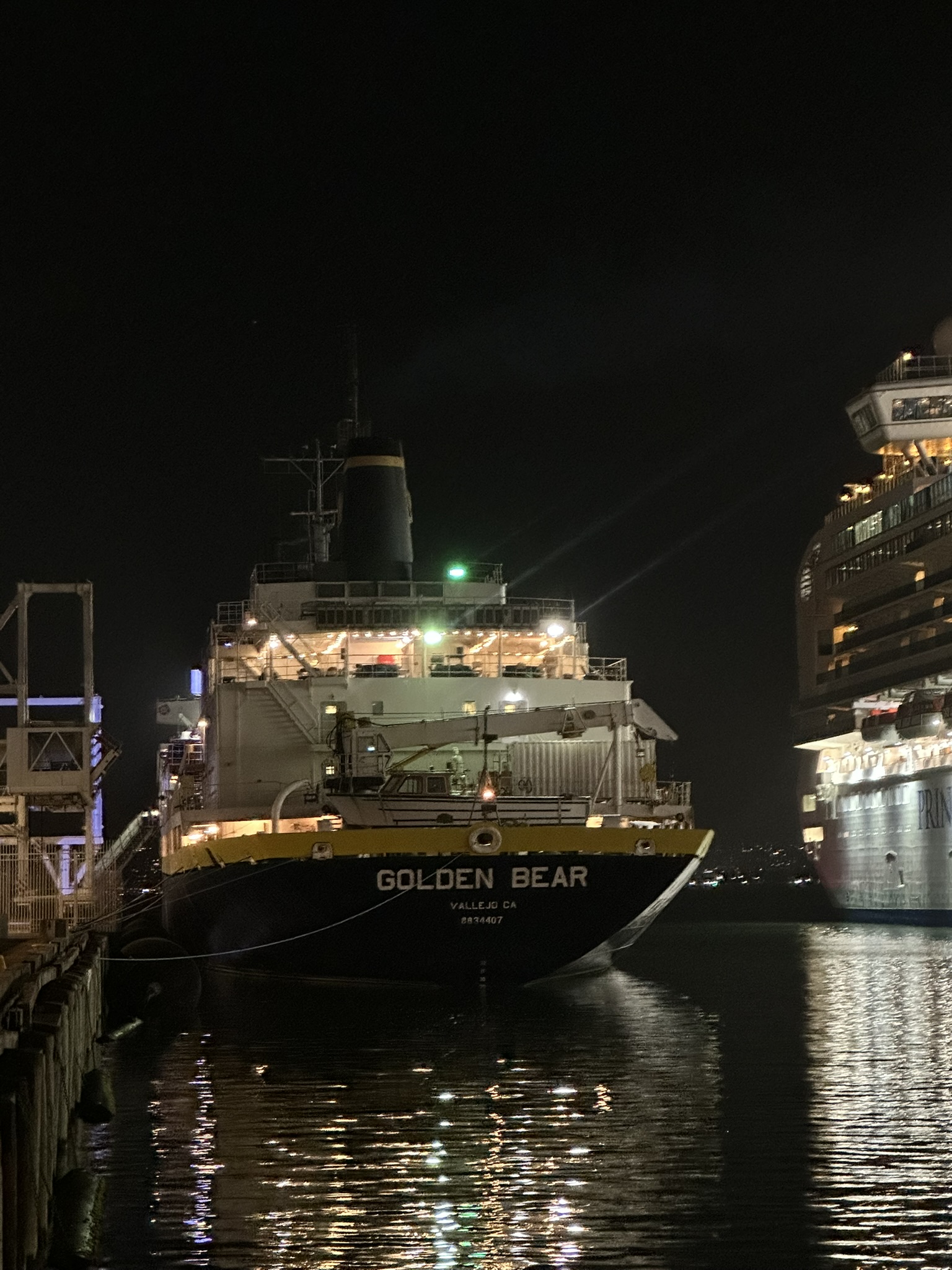
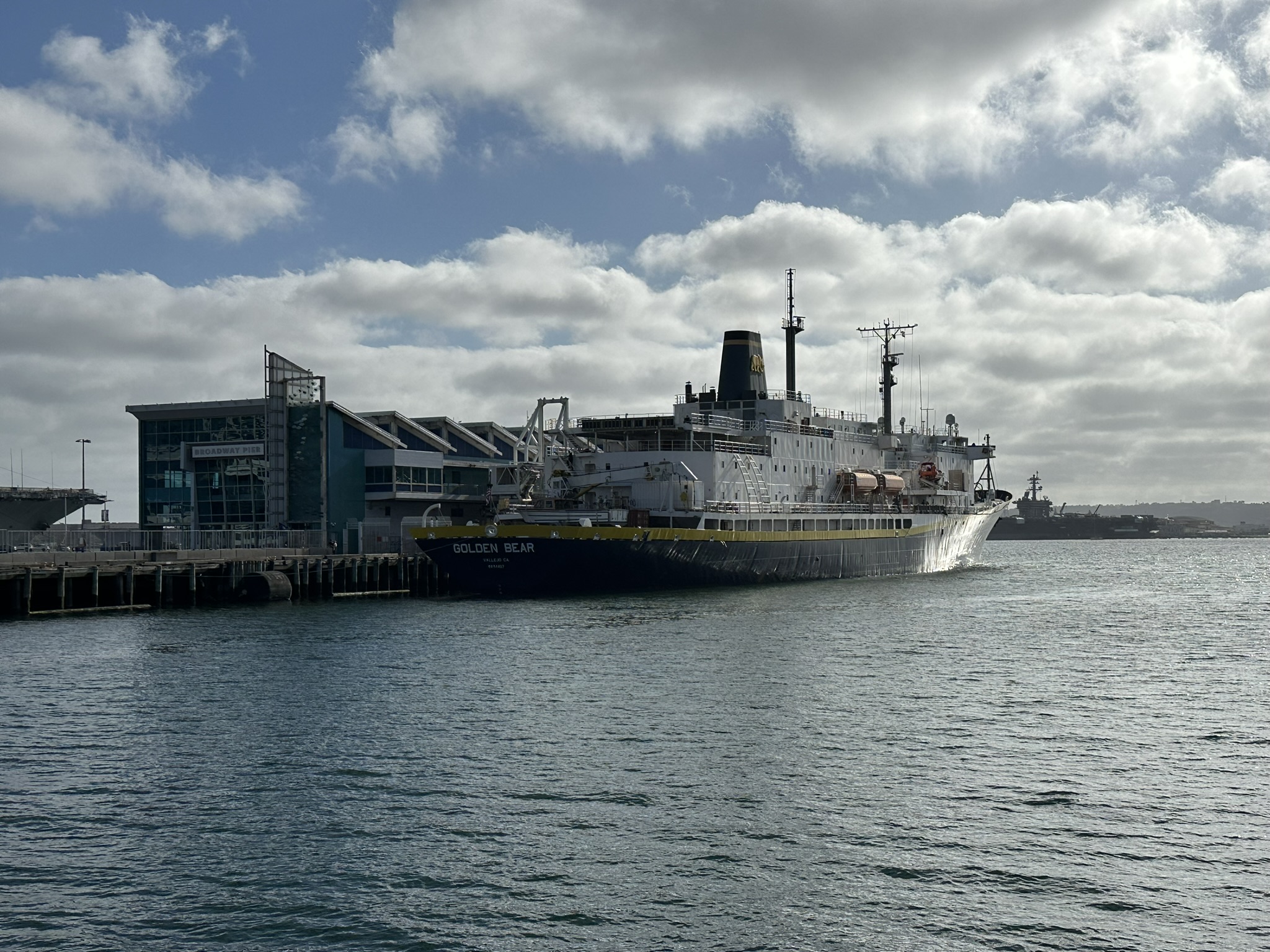
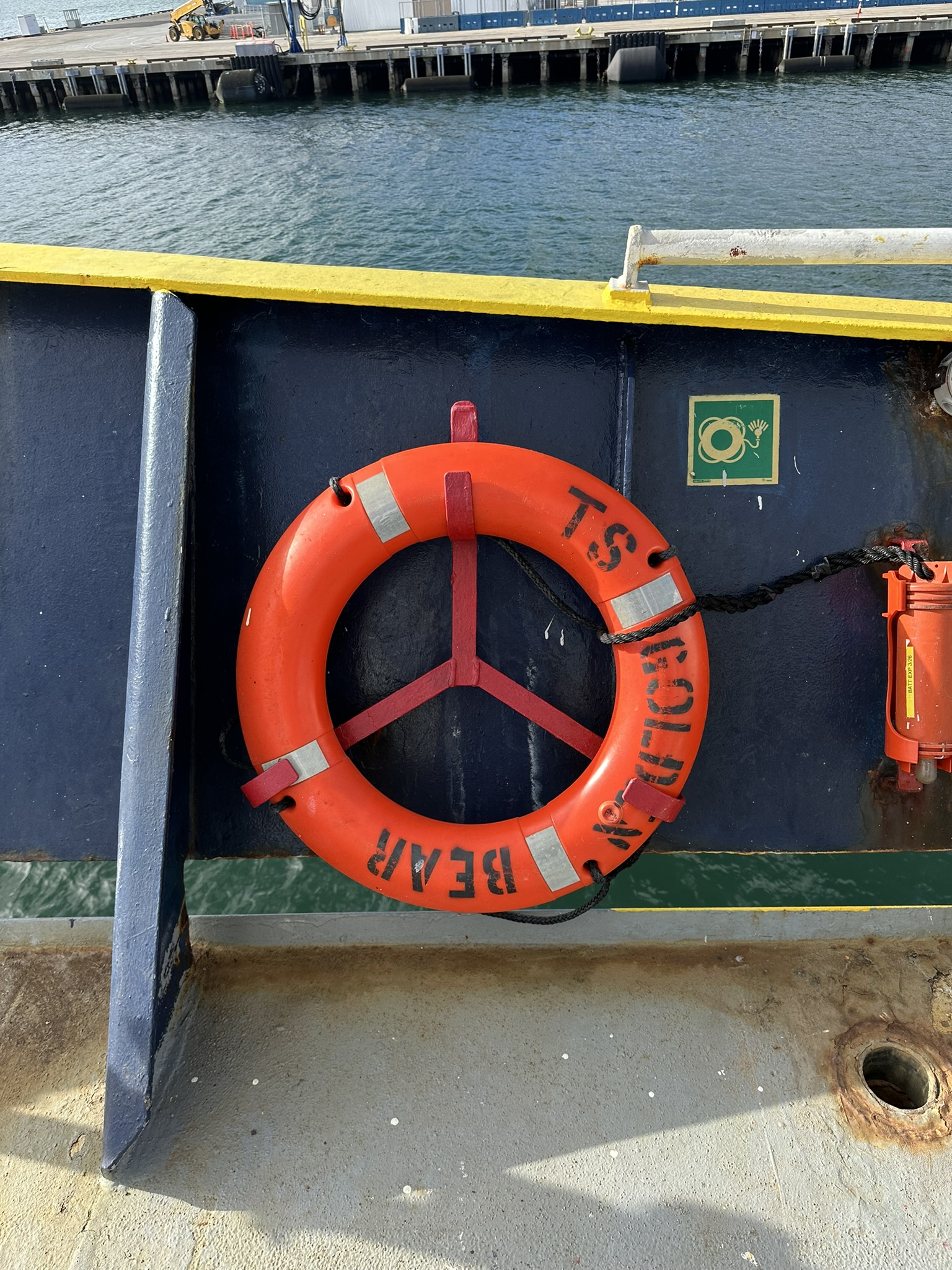
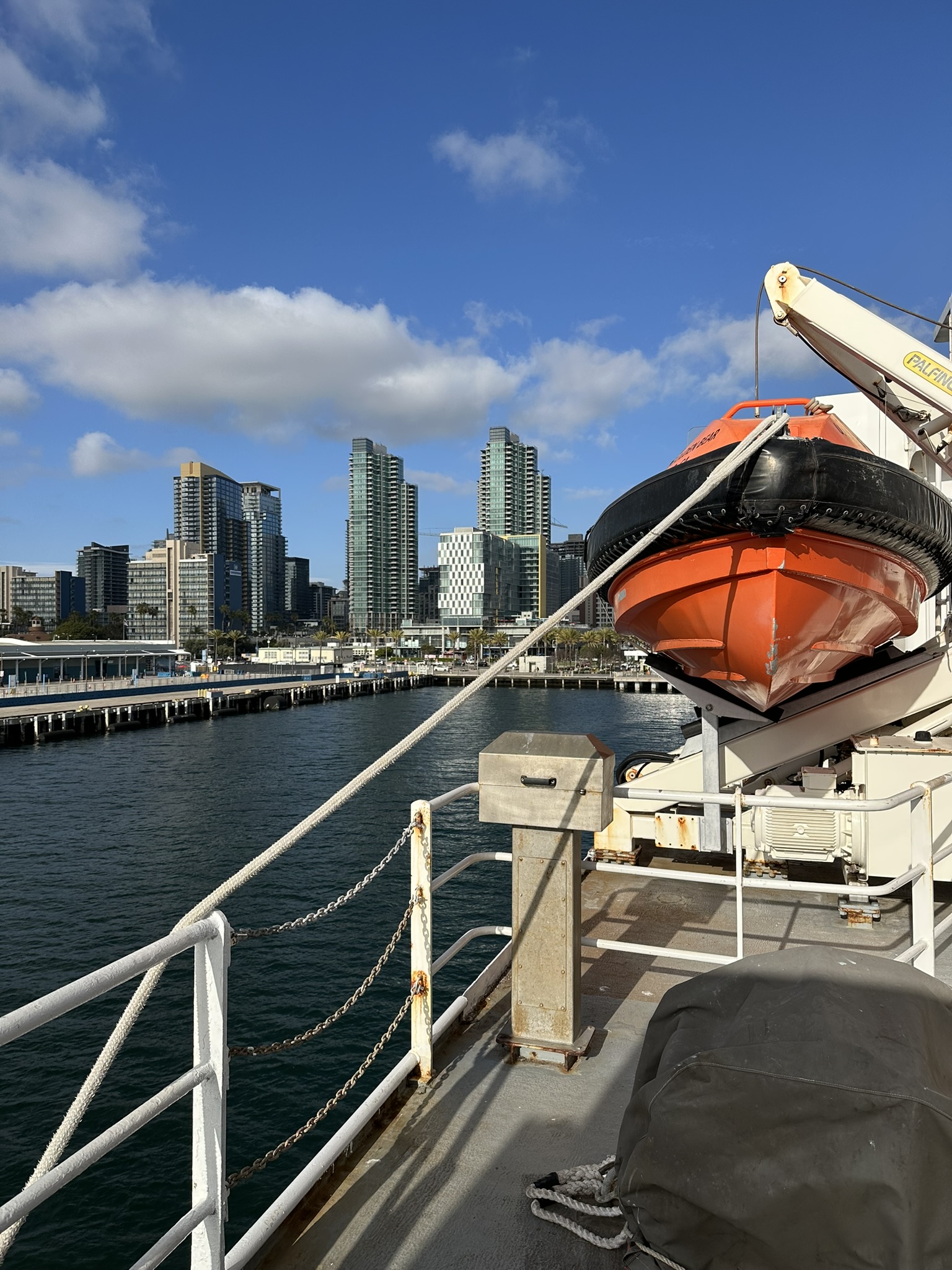
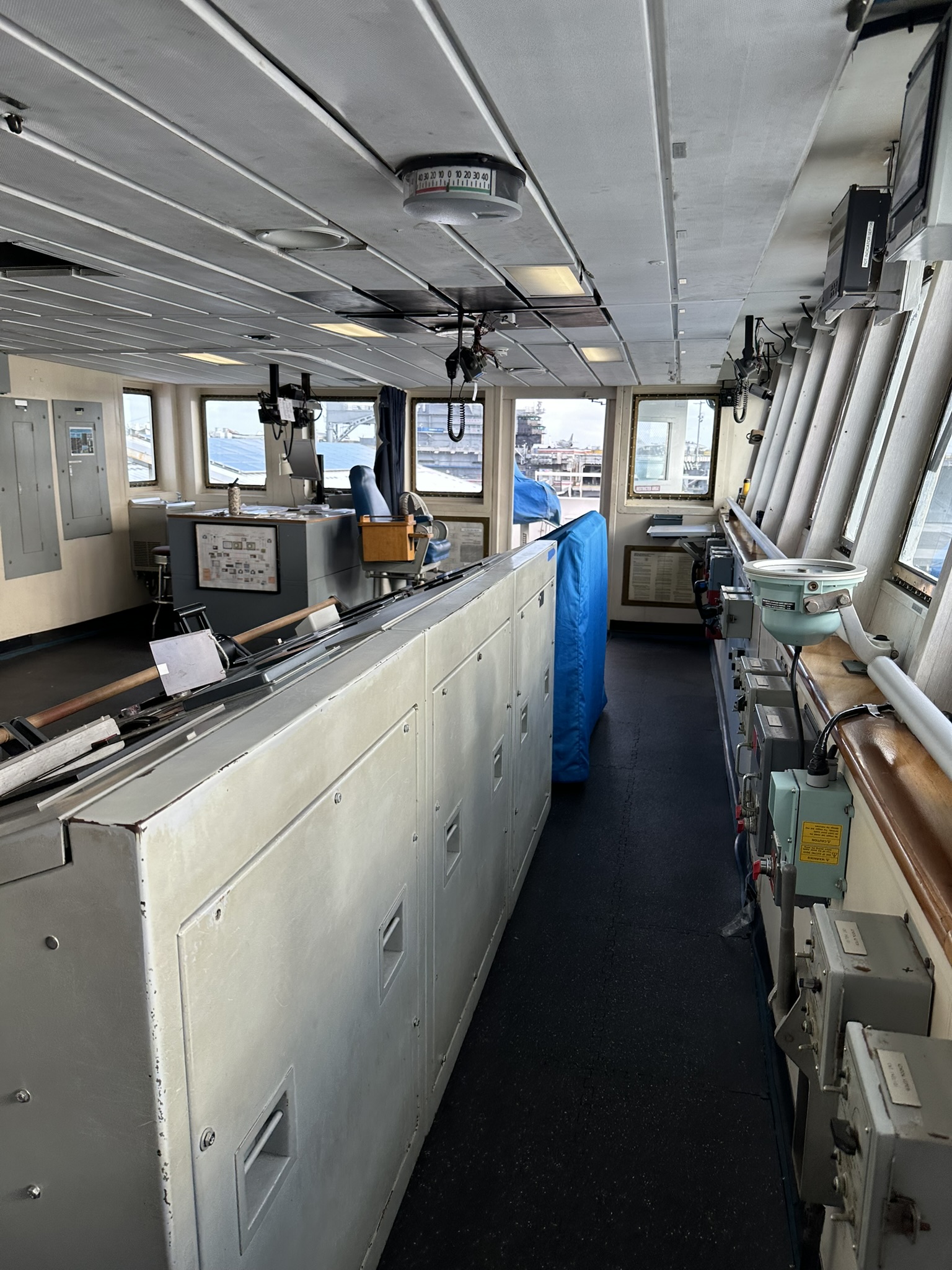
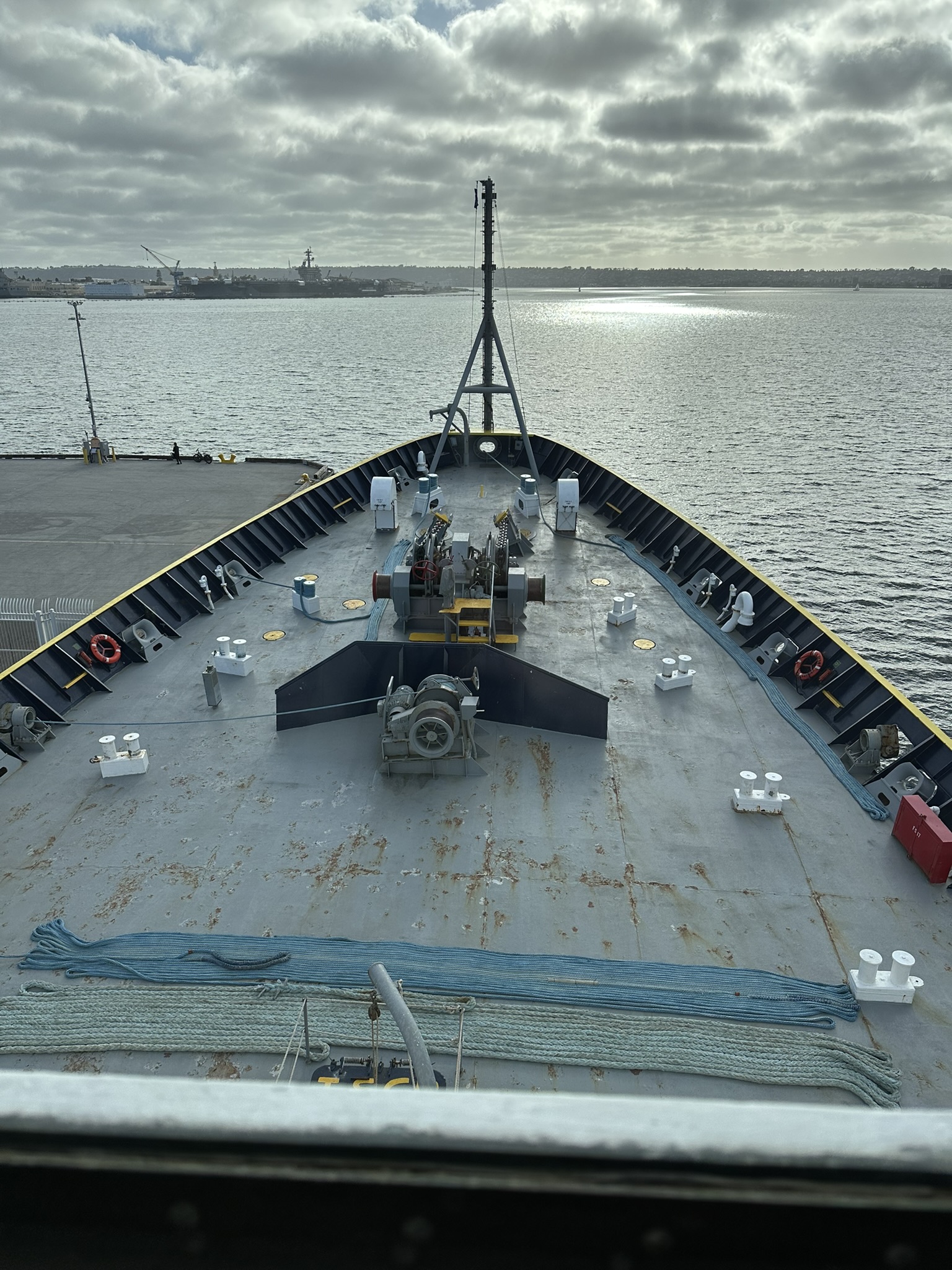
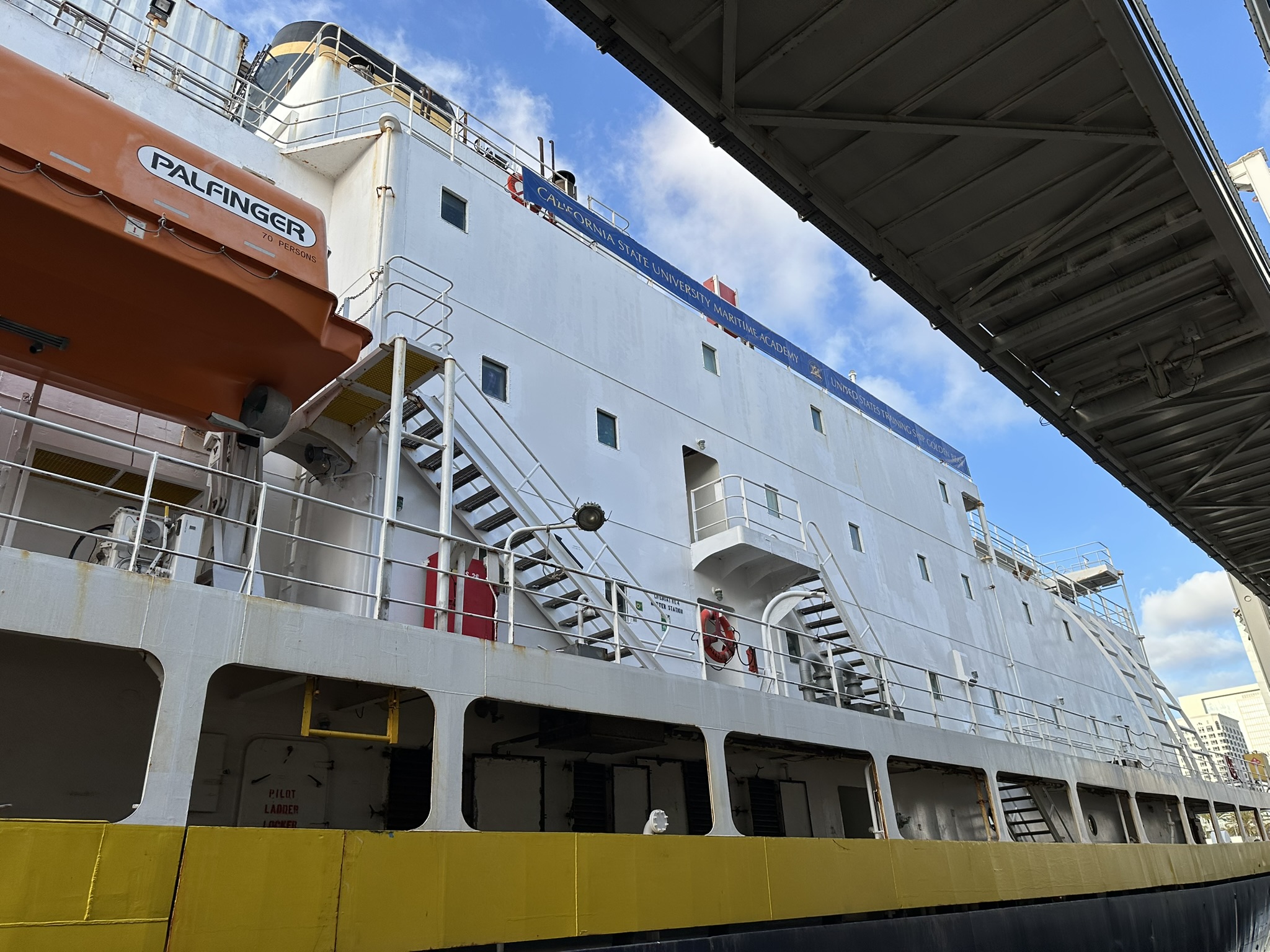
TS Golden Bear was photographed in San Diego, California, during our visit on May 11 and 12, 2025, near the beginning of Cal Maritime’s Summer Sea Term. We met up with our son, who was aboard for his second training cruise, and had an opportunity to tour the ship. Our earlier Vallejo gallery followed his return from his first cruise on July 7, 2023. This time, the photographs belong to a visit during the cruise itself, with the ship alongside in San Diego before the longer Pacific passages ahead.
The vessel had already led two distinct careers by the time of this visit. Built by Bethlehem Steel at Sparrows Point, Maryland, in the United States, she entered Navy service in 1989 as the hydrographic survey ship USNS Maury. Conversion for Cal Maritime brought a new purpose in 1996, carrying the academy’s training into a working seagoing environment. By May 2025, nearly three decades of cadets had known this particular Golden Bear, the third vessel to carry the name and the fourth training ship in the academy’s history.
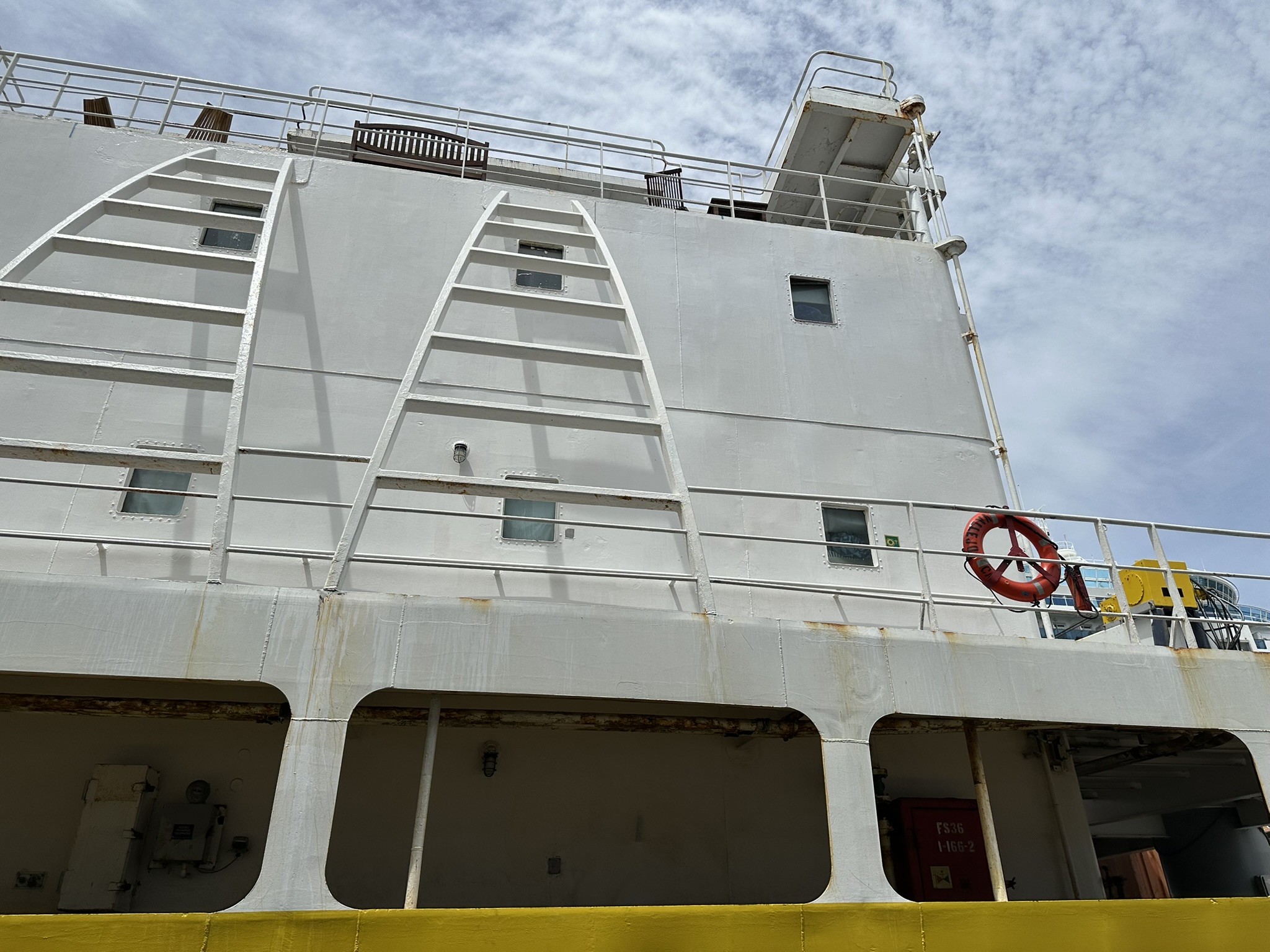
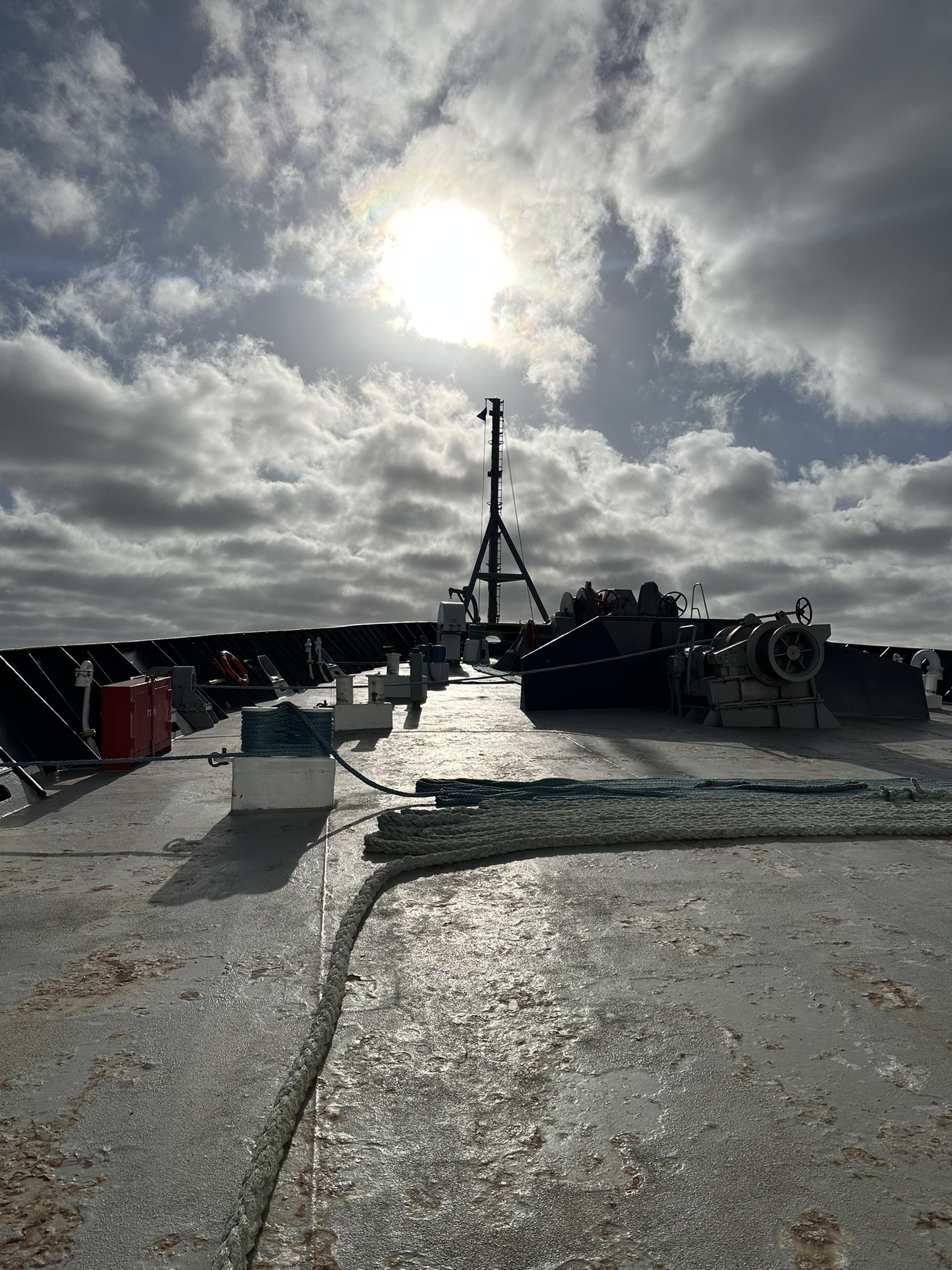
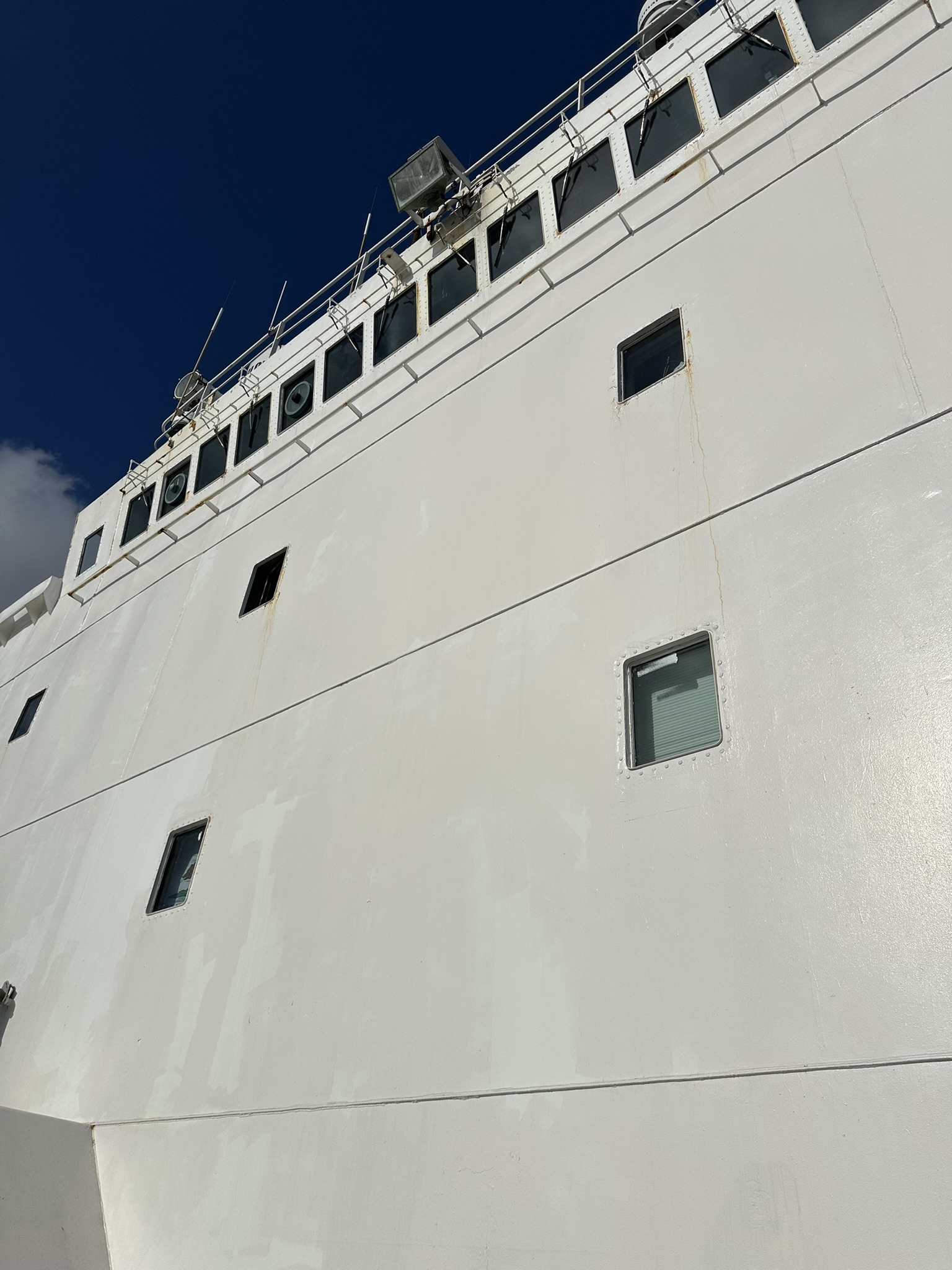
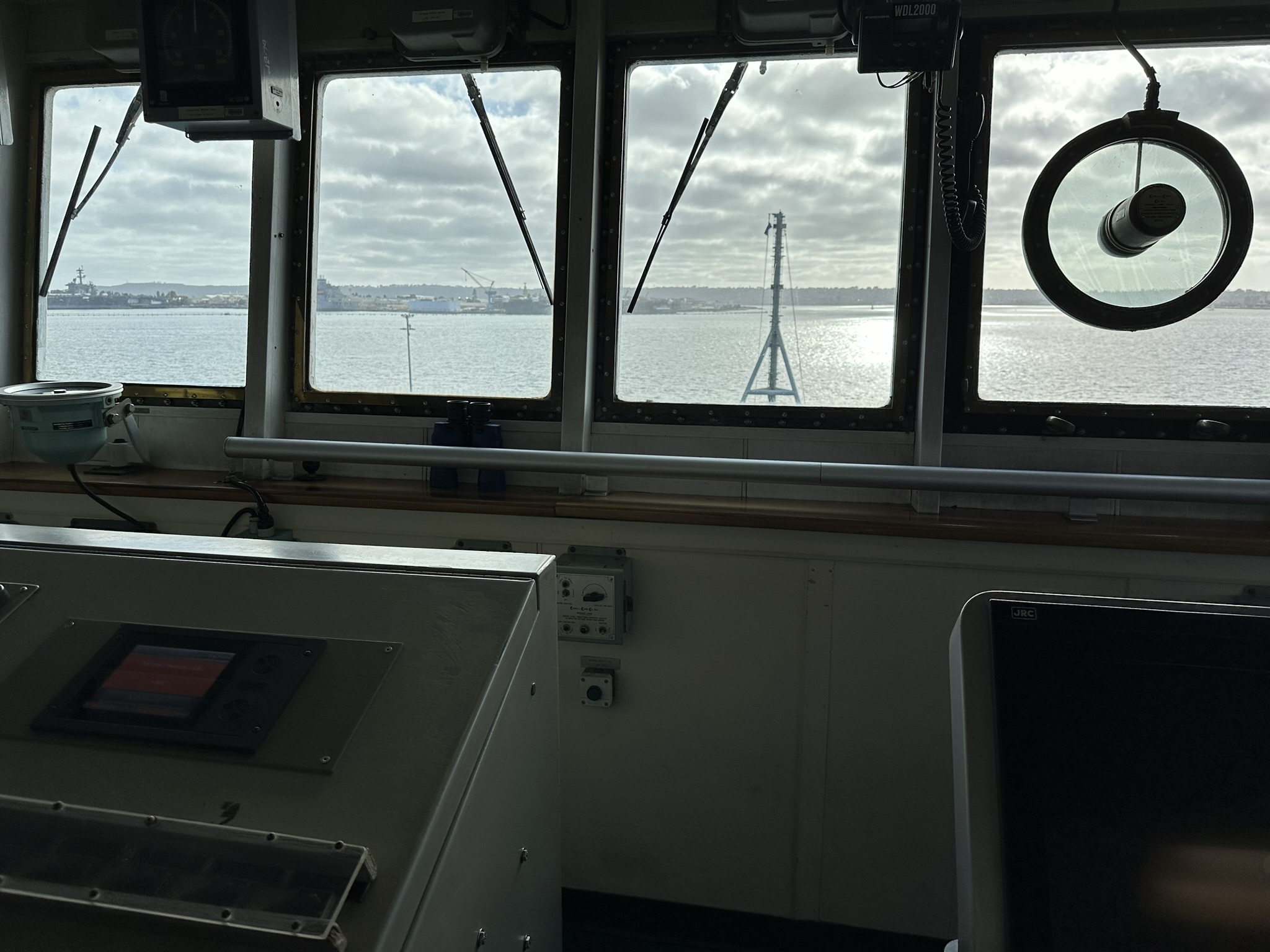
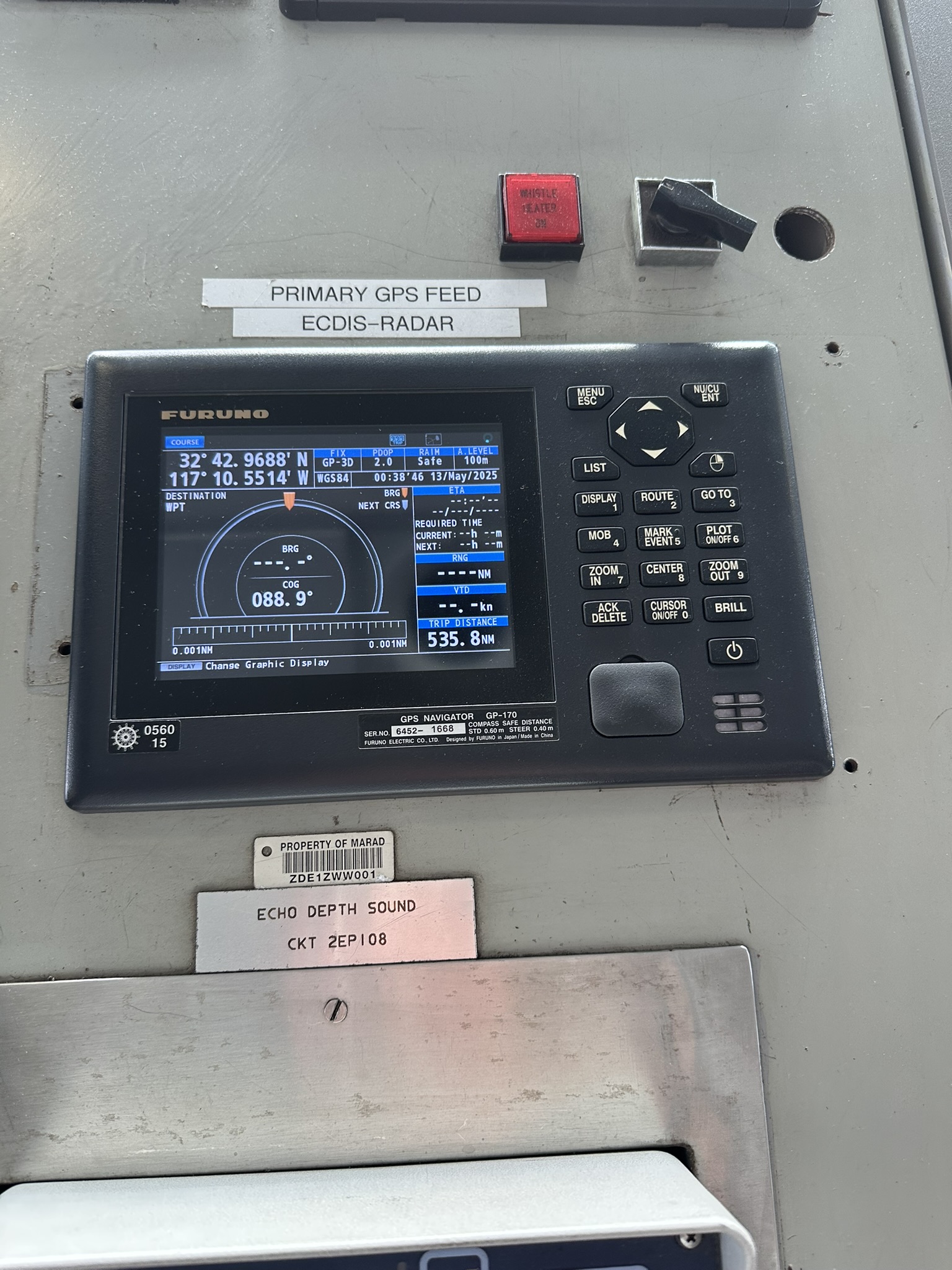
Going aboard gave us a closer connection with the ship we had previously photographed from the waterfront. The bridge, navigation equipment, decks and shipboard details in this collection show parts of the setting in which our son was living and training. Daytime and evening views from ashore place those details within the larger vessel, from her blue hull and yellow stripe to her tall white superstructure. Together, the photographs connect a family visit with the ship’s continuing role in preparing cadets for work at sea.
INFORMATION LIST
- Name: TS Golden Bear
- Operator at the time of this visit: California State University Maritime Academy, known as Cal Maritime
- Type: Maritime training ship; former Navy hydrographic survey vessel
- Former name: USNS Maury (T-AGS-39)
- Builder: Bethlehem Steel, Sparrows Point, Maryland, United States
- Keel laid: July 29, 1986
- Launched: September 4, 1987
- Entered Navy service: March 31, 1989
- Transferred to Cal Maritime: May 4, 1996
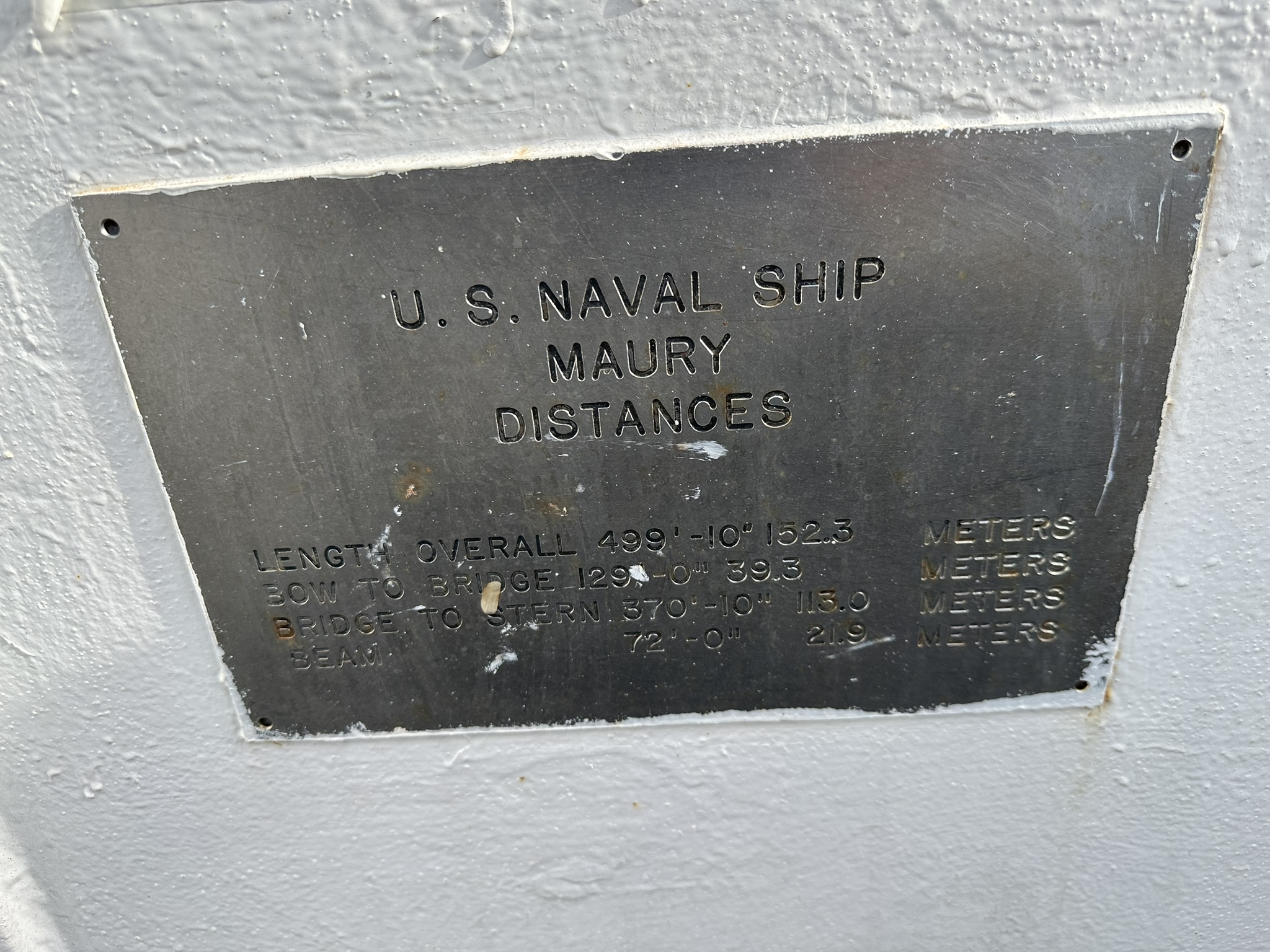
- Length overall: About 500 feet / 152 meters
- Beam: 72 feet / 22 meters
- Gross tonnage published by Cal Maritime: 12,517 GT
- Propulsion: Twin diesel engines driving a single propeller
- Homeport: Vallejo, California
- Cruise: 2025 Summer Sea Term
- Students aboard for the 2025 term: 273
- Gallery date: May 11, 2025
- Family visit: May 11–12, 2025
- Location: San Diego, California
- Propulsion arrangement: Diesel engines, geared drive, single propeller
- Published maximum speed: 20 knots
- Published range: 42,000 nautical miles at 15 knots
- Training ship sequence: Fourth academy training ship; third named Golden Bear
- Earlier OLP gallery: Vallejo, July 7, 2023, following our son’s first training cruise
HISTORY AND FEATURES
Construction at Sparrows Point:
- Bethlehem Steel built the ship at Sparrows Point, Maryland, in the United States, with her keel laid on July 29, 1986, and launch on September 4, 1987.
- Delivery and entry into Navy service followed on March 31, 1989, under the name USNS Maury and designation T-AGS-39.
- Her original work was hydrographic surveying, including mapping the deep ocean floor. The ship’s later classroom role followed a separate conversion rather than being her original purpose.
From Navy Survey Vessel to Cal Maritime:
- Maury left Navy service in September 1994 and entered the reserve fleet at Suisun Bay. Transfer to the Maritime Administration followed that October.
- Conversion of the accommodation prepared the vessel for cadets, with transfer to Cal Maritime on May 4, 1996.
- Her sister, USNS Tanner, also became an academy training vessel, joining Maine Maritime Academy.
- The change gave an existing ocean-going ship a new educational career while preserving the machinery and operating environment needed for practical maritime instruction.
The Golden Bear Name and Earlier Training Ships:
- The academy’s first Golden Bear had been the Navy attack cargo ship USS Mellena. Built by Walsh-Kaiser in Providence, Rhode Island, in the United States, she served in the Pacific before beginning her academy career in 1946.
- That first Golden Bear remained the academy’s training ship until 1971, carrying the name through 25 years of maritime education.
- The next vessel had begun as Del Orleans, a passenger and cargo ship built by Bethlehem Steel at Sparrows Point, Maryland, in the United States, before wartime service as USS Crescent City.
- The academy’s history places her training service from 1971 to 1995. The former Maury continued the name from 1996, giving successive generations of cadets a shared shipboard identity despite the different vessels involved.
Dimensions, Machinery and Working Character:
- At nearly 500 feet long and 72 feet wide, Golden Bear provided the scale of an ocean-going ship alongside the academy’s waterfront campus and during extended training cruises.
- Twin diesel engines drove a single propeller through geared machinery. MARAD’s vessel particulars list a maximum speed of 20 knots and a range of 42,000 nautical miles at 15 knots.
- These machinery and endurance figures belong to the vessel’s published specifications, rather than a statement about her speed or distance traveled during our visit.
- Her working purpose is evident in the photographs of the bridge, navigation displays, lifesaving equipment and accessible deck areas. The tour offered a closer view of that environment without being a cruise aboard the ship.
A Floating Classroom Throughout the Academic Year:
- Golden Bear supported instruction while alongside in Vallejo as well as during Summer Sea Term. The academy described her as its primary platform for putting classroom study and practical skills to work aboard a ship.
- Summer Sea Term brought first- and third-year cadets to sea with licensed faculty instructors and watch officers for about two months.
- Training combined technical study with leadership and shared responsibilities. Cadets worked within a shipboard organization in which their assignments contributed to the operation of the vessel.
- International port calls added another part of the education, placing maritime work within the ports, communities and cultures connected by shipping.
Engineering Systems and Practical Instruction:
- The academy’s engineering curriculum used the training ship to connect the arrangement of actual machinery with the systems studied in class.
- Published laboratory topics included fuel storage and supply, lubricating oil, cooling water, starting air, gears and clutches, and the production of fresh water.
- System-tracing assignments required students to follow how equipment connected and functioned aboard the vessel, rather than learning the components only from diagrams.
- Familiarization also covered watch routines, safety equipment and basic shipboard firefighting. Those subjects provided a foundation for later practical work at sea.
Watchkeeping, Boat Handling and the 2025 Training Programme:
- The academy’s account of the 2025 cruise describes cadets balancing watchkeeping, classroom rotations and daywork projects as the voyage continued.
- Later in the term, after departure from Guam on June 8, the ship conducted underway training between the Guam and Saipan calls.
- Exercises included docking practice using a buoy and Fast Rescue Boat certification, with deck and engineering cadets working together. Engineering classroom projects included dismantling a purifier.
- These later activities explain the wider training purpose of the cruise. They were not events we attended or photographed during the San Diego visit, and they are separate from our son’s first cruise in 2023.
Marine Research and Environmental Technology:
- The ship also served as a working platform for the Golden Bear Research Center, established in 2010 with assistance from the Maritime Administration.
- The center used the vessel for testing ballast water management technologies intended to limit the movement of aquatic organisms between ports.
- Its work brought scientists, engineers and cadets together around equipment operating at shipboard scale, connecting maritime education with research and evaluation.
- MARAD’s fiscal year 2025 account also described the vessel’s involvement in diesel exhaust emissions research. That work adds another dimension to the ship’s history beyond her survey and training careers.
San Diego at the Beginning of Summer Sea Term:
- The published 2025 schedule placed departure from Vallejo on May 9, followed by San Diego from May 11 to 13.
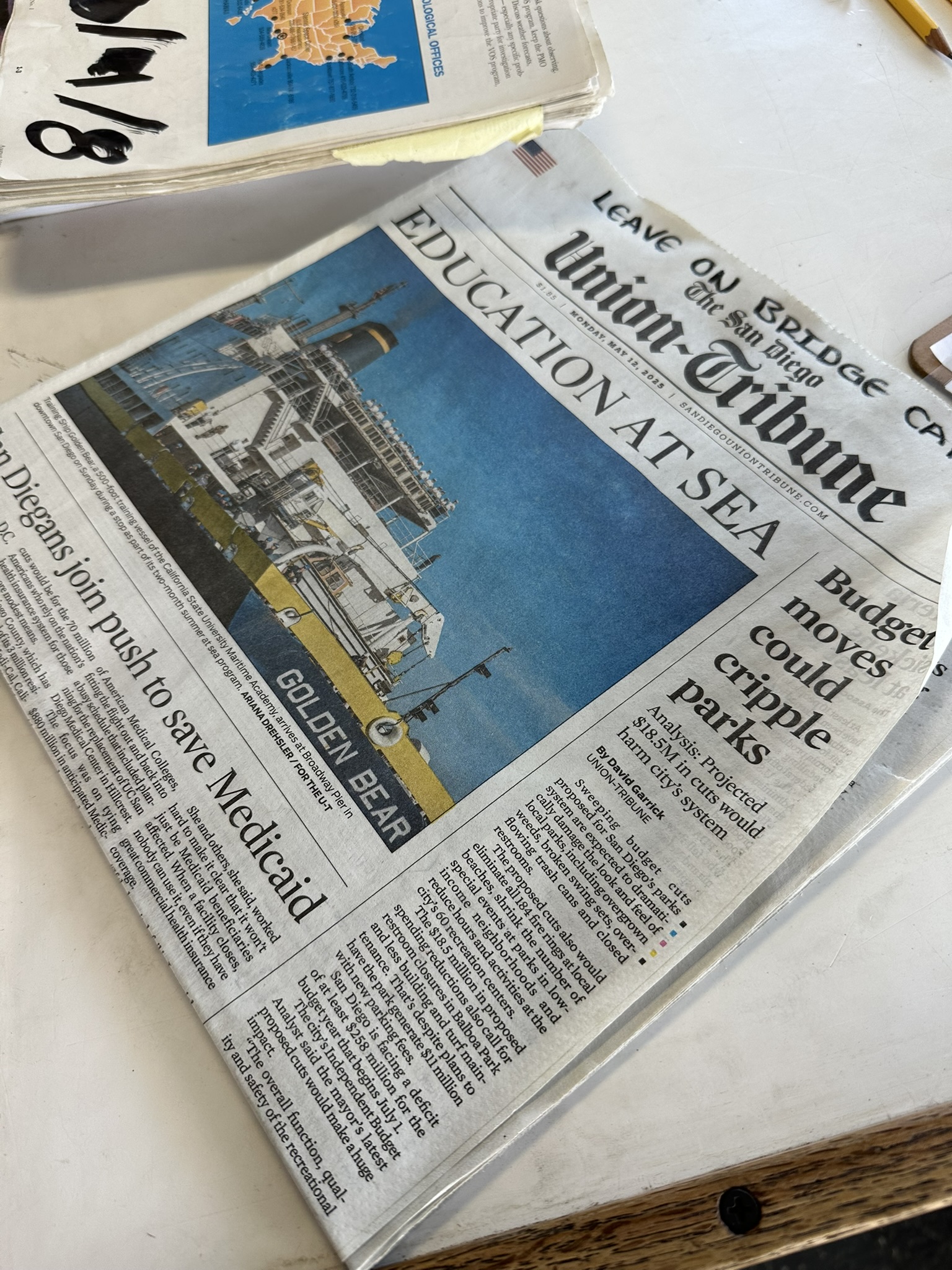
- The academy’s contemporary voyage account confirms arrival on Sunday morning, May 11. It described a busy port stay with a vessel audit, receptions, recruitment tours and other visits.
- San Diego was therefore both an early training-cruise port and an opportunity for family connections. For us, the call made it possible to meet our son and see more of the ship during his second Cal Maritime cruise.
- Our visit covered May 11 and 12. The gallery’s displayed date remains May 11, while the full collection includes the photographs from both days.
The Published Pacific Itinerary:
- After San Diego, the published schedule listed Kauai for May 24–27, Guam for June 6–8 and Saipan in the Northern Mariana Islands for June 12–15.
- Seattle was listed for June 28–July 1, with a return to Vallejo planned for July 6 and the conclusion of Summer Sea Term on July 8.
- Those dates describe the published plan associated with the cruise. They do not suggest that this gallery covers those later ports or that every scheduled movement occurred exactly as originally listed.
- The San Diego photographs capture the early part of that larger journey, before the Pacific passages and later training activities described in the academy’s voyage reports.
A Continuing Family Connection:
- Our July 7, 2023 Vallejo photographs followed the end of our son’s first training cruise. The May 2025 collection records a different stage, meeting him during his second cruise and taking a tour aboard.
- The two galleries remain separate records of those visits, connected by the same ship and our family’s association with Cal Maritime.
- This collection includes the exterior, evening and onboard photographs from both days. It preserves the small details of the visit alongside the broader views of the ship that had become his home and classroom at sea.
- OLP Social: Photographed in San Diego on May 11, 2025, during a family visit to meet our son, who was aboard for his second Cal Maritime training cruise.
- OLP Social 2: San Diego was the first port after Vallejo on the 2025 Summer Sea Term, with the published route continuing to Kauai, Guam, Saipan and Seattle.
- OLP Social 3: Built by Bethlehem Steel at Sparrows Point in the United States, she entered Navy service in 1989 before beginning a new role at Cal Maritime in 1996.
- OLP Social 4: At nearly 500 feet long, the ship combines practical maritime training with life aboard a working vessel, helping cadets prepare for careers at sea.