QUEEN MARY 2
December 19, 2025 | At Sea
On December 19, 2025, Queen Mary 2 (Cunard Line) was at sea on Day 5 of a seven-night westbound transatlantic crossing from Southampton to New York. The liner continued through a westerly swell on the fourth of six consecutive sea days, with spells of sunshine along the covered promenade. New York was scheduled for December 22, three days before Christmas.
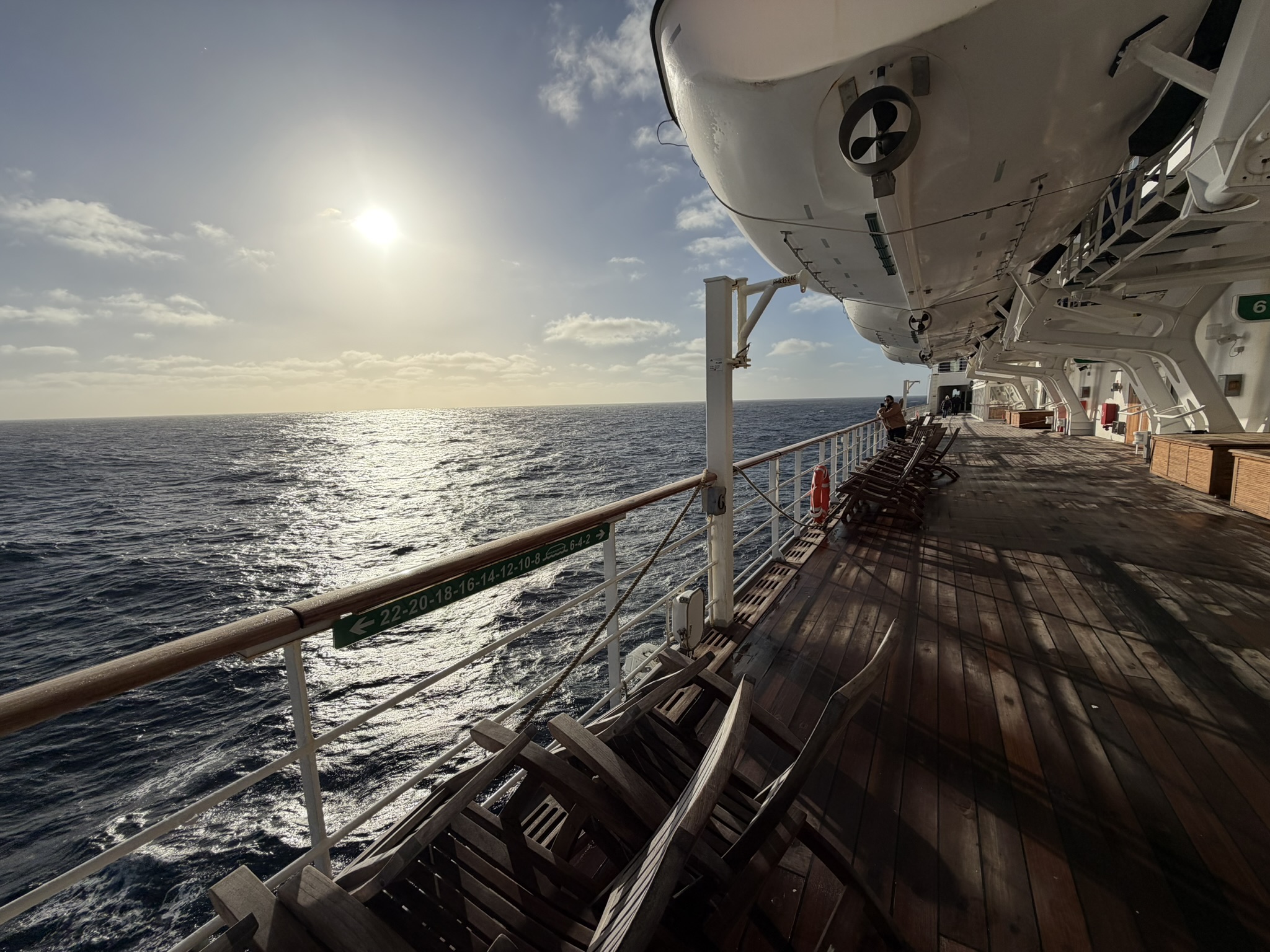
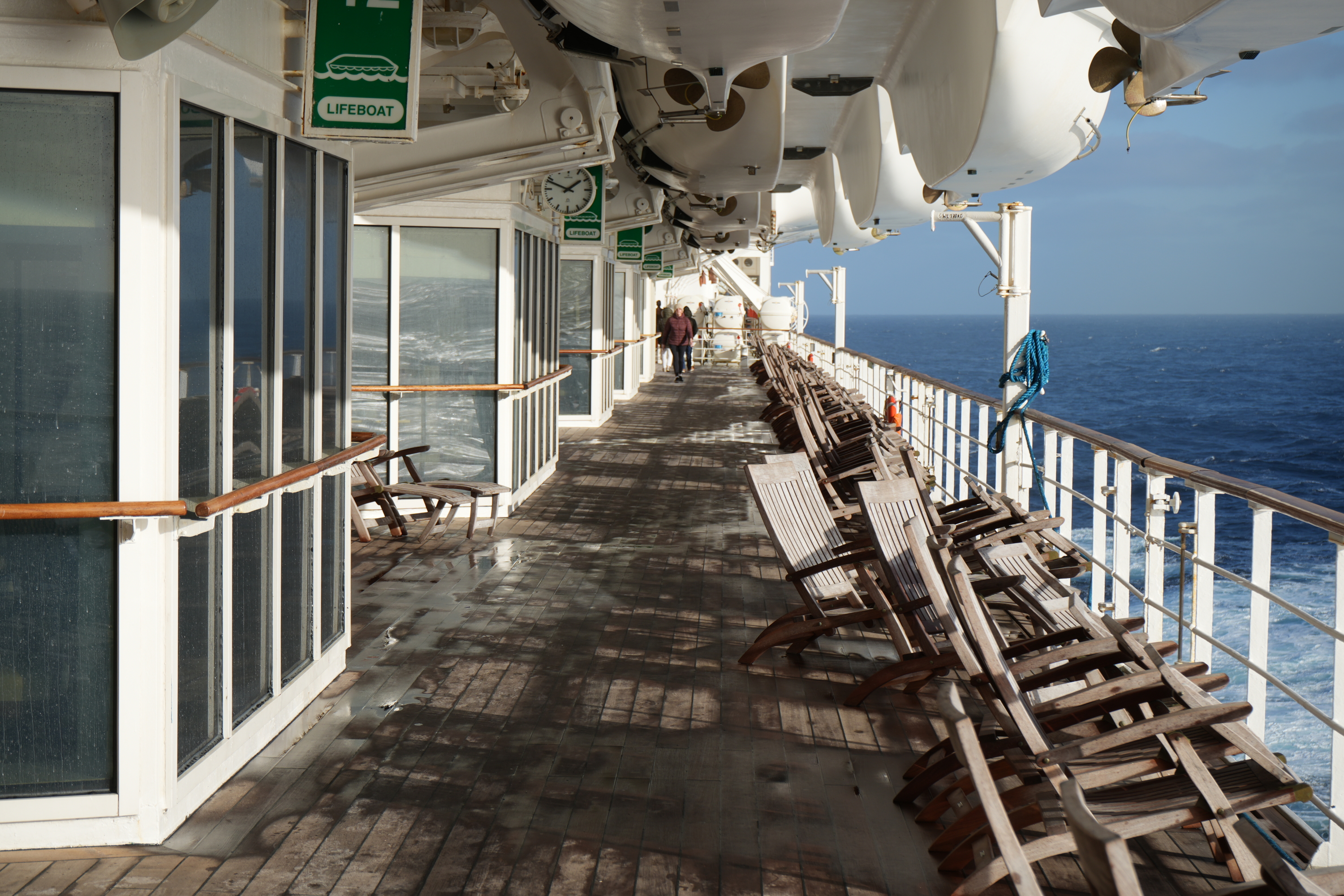
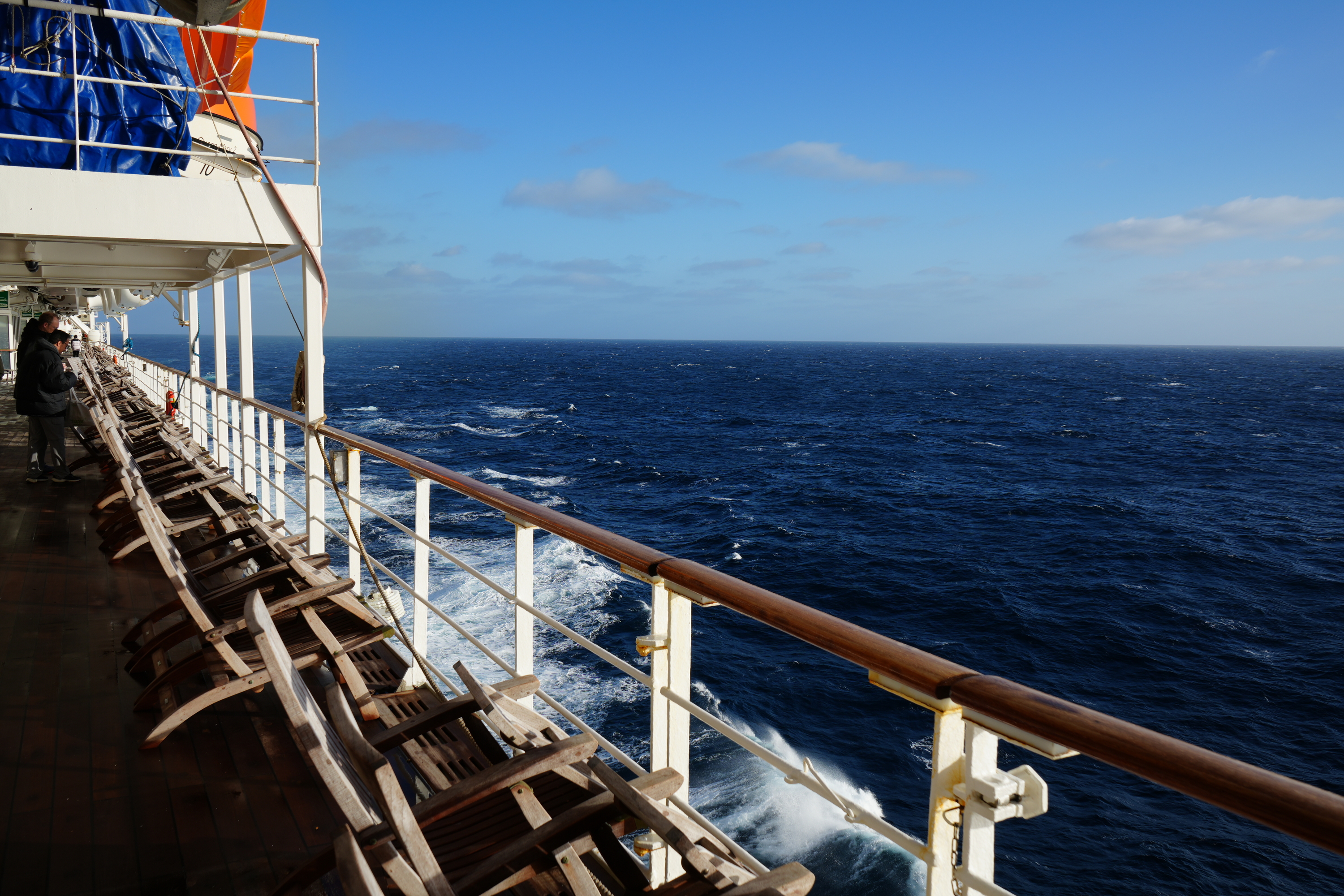
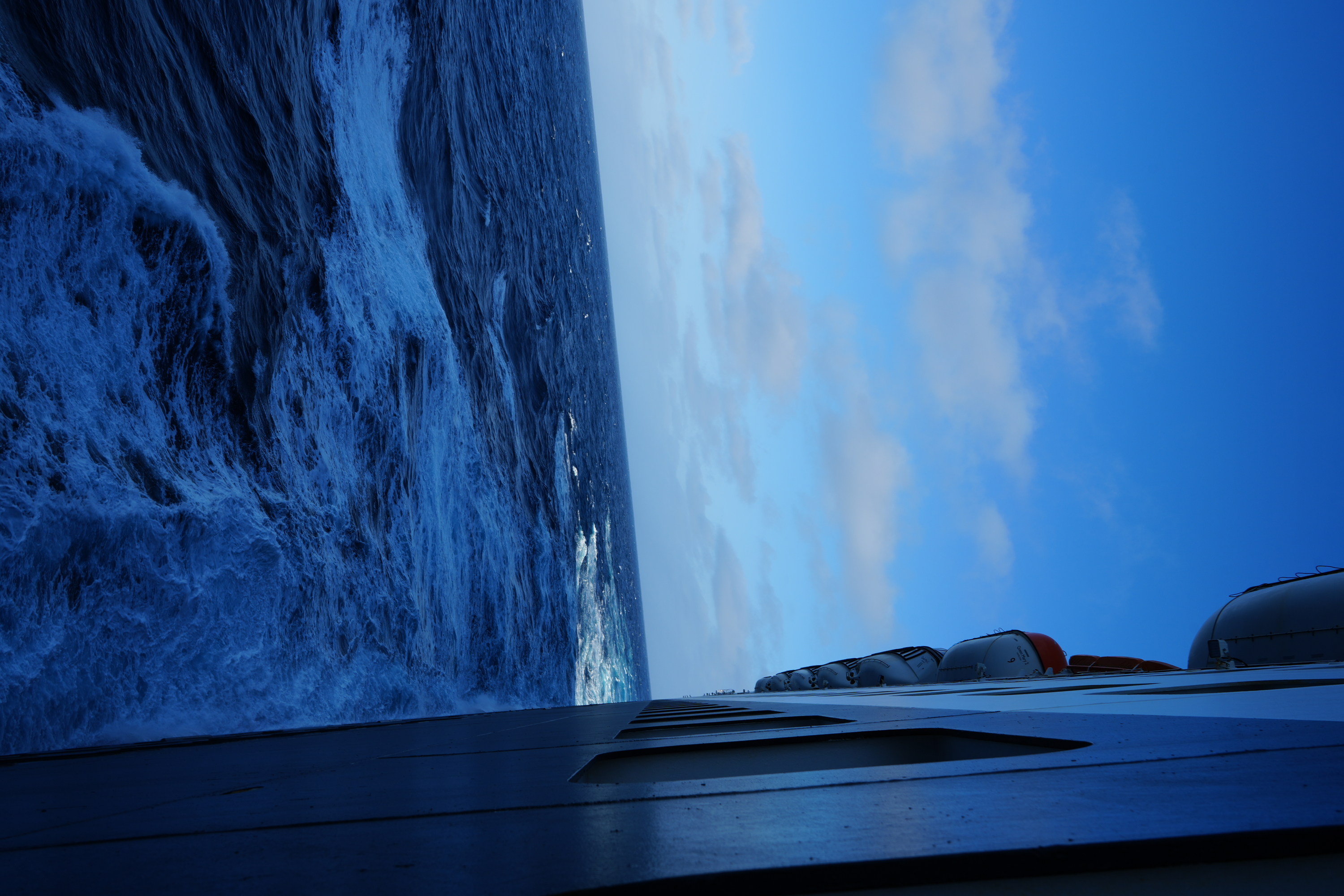
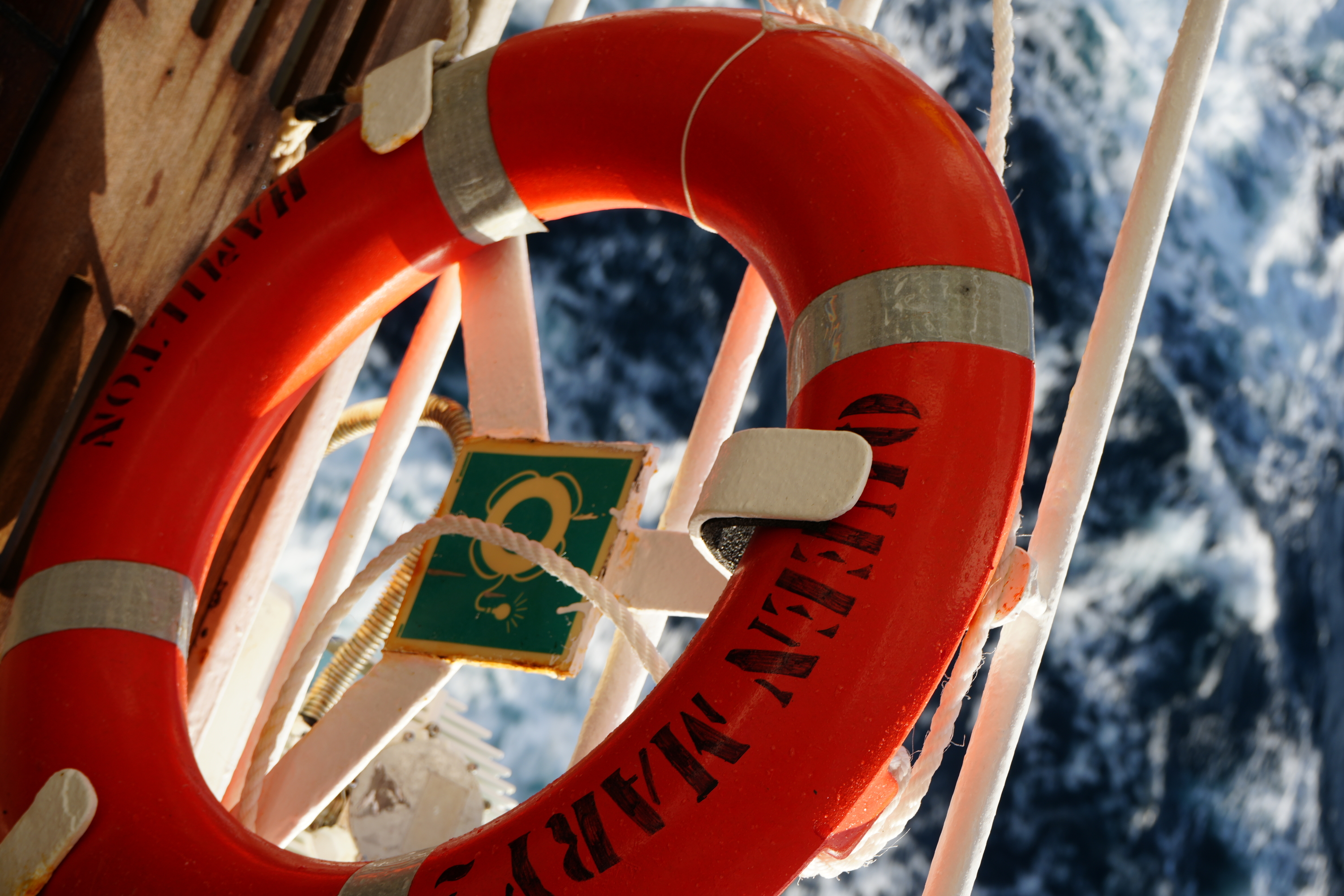
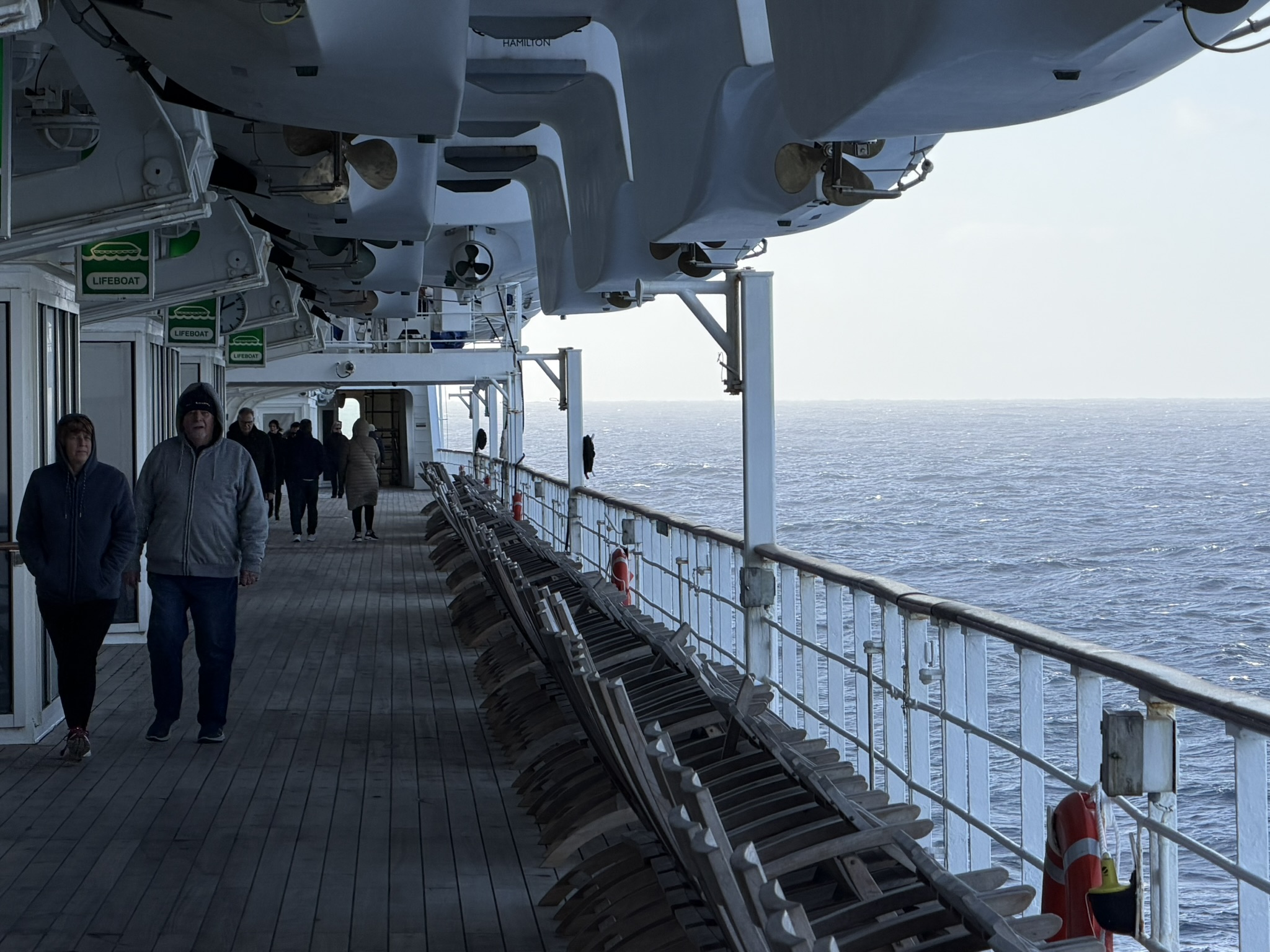
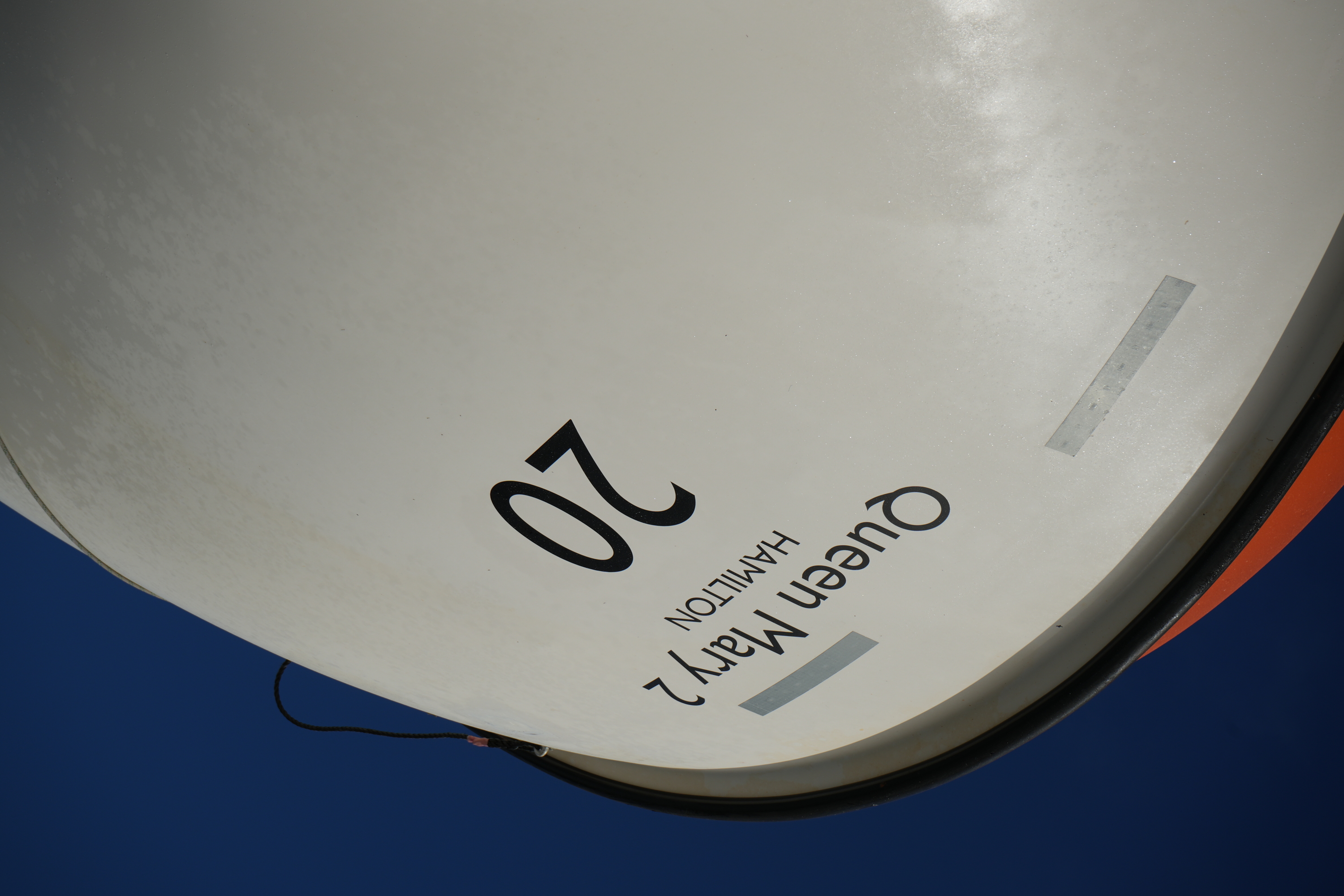
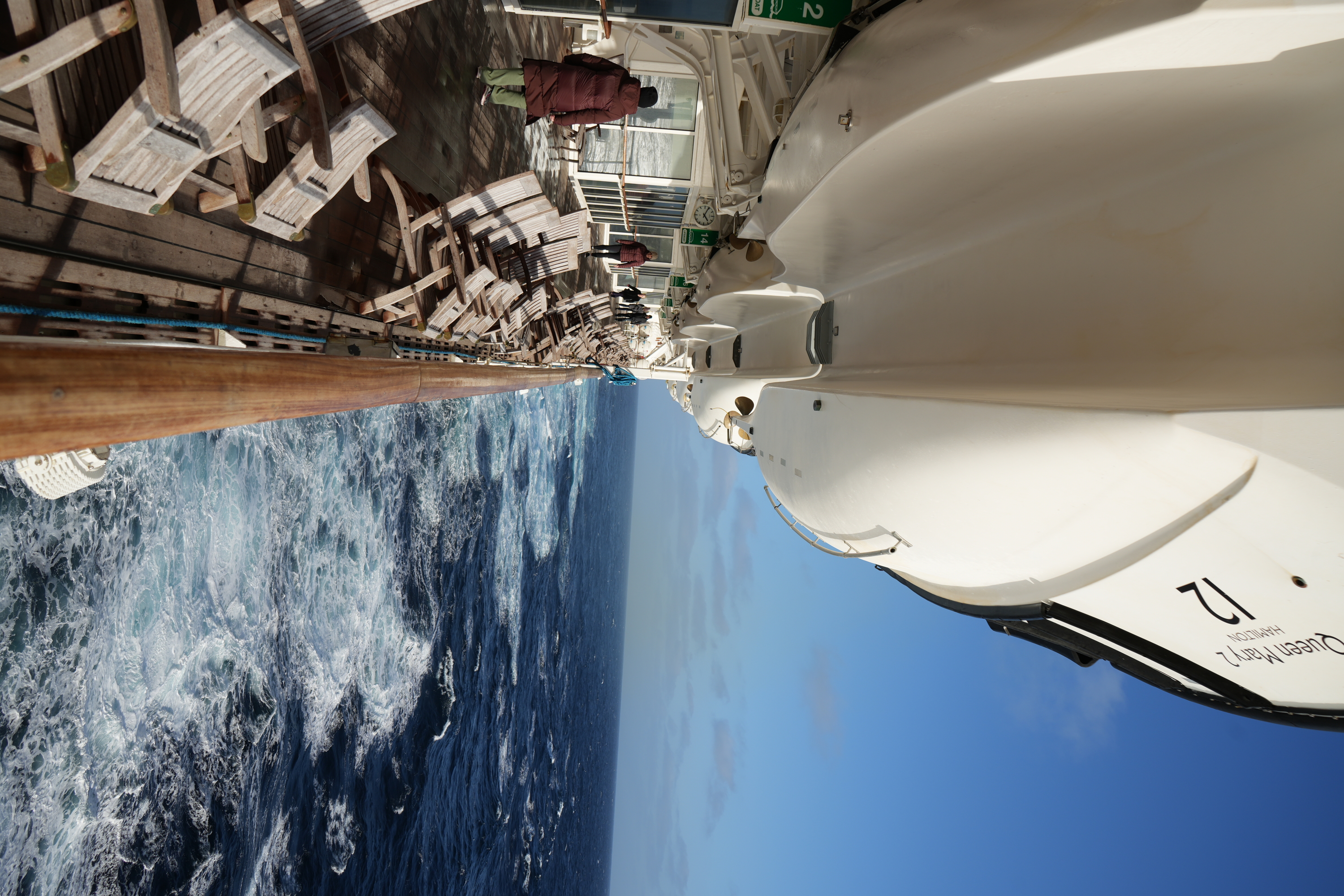
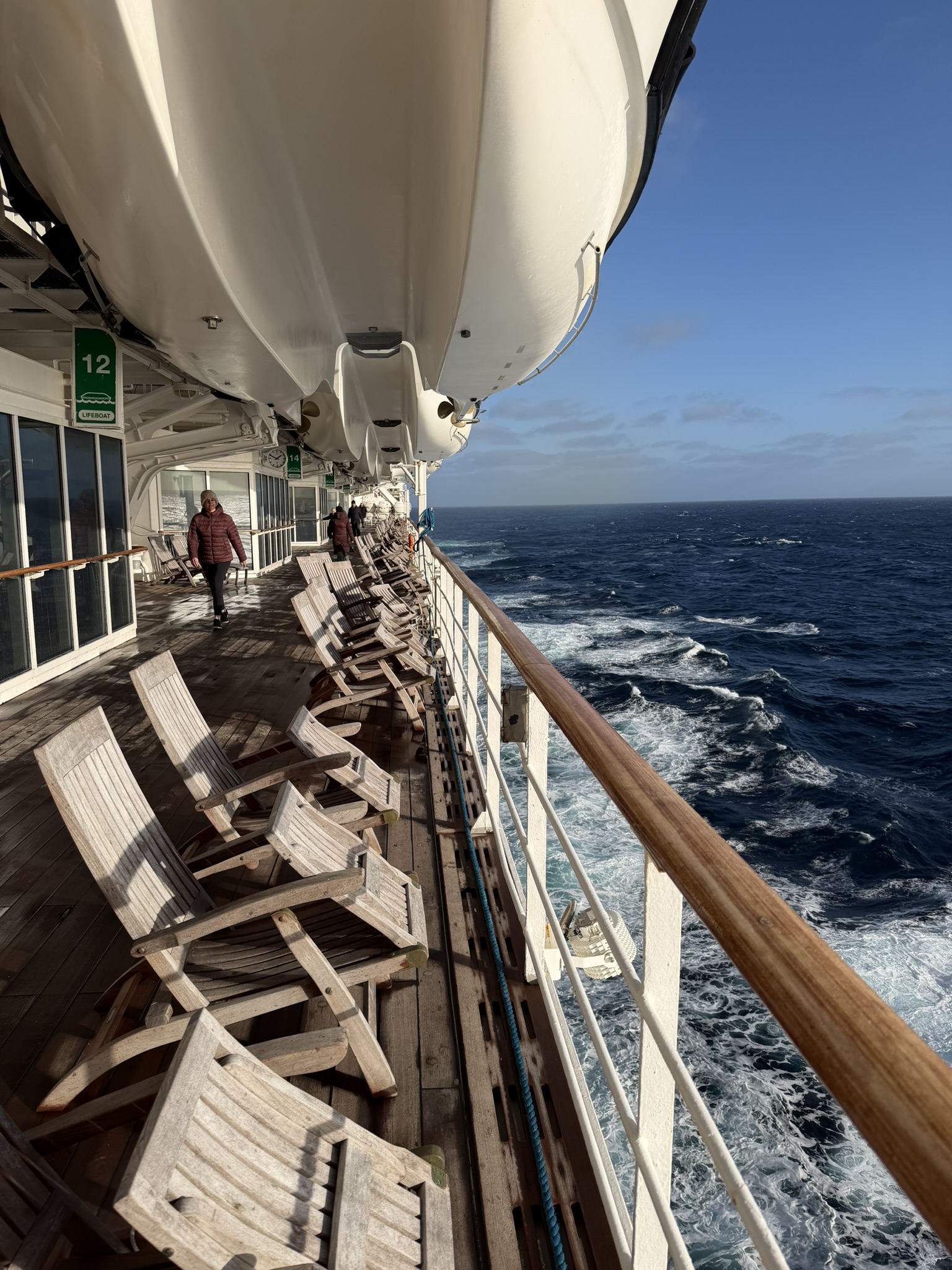
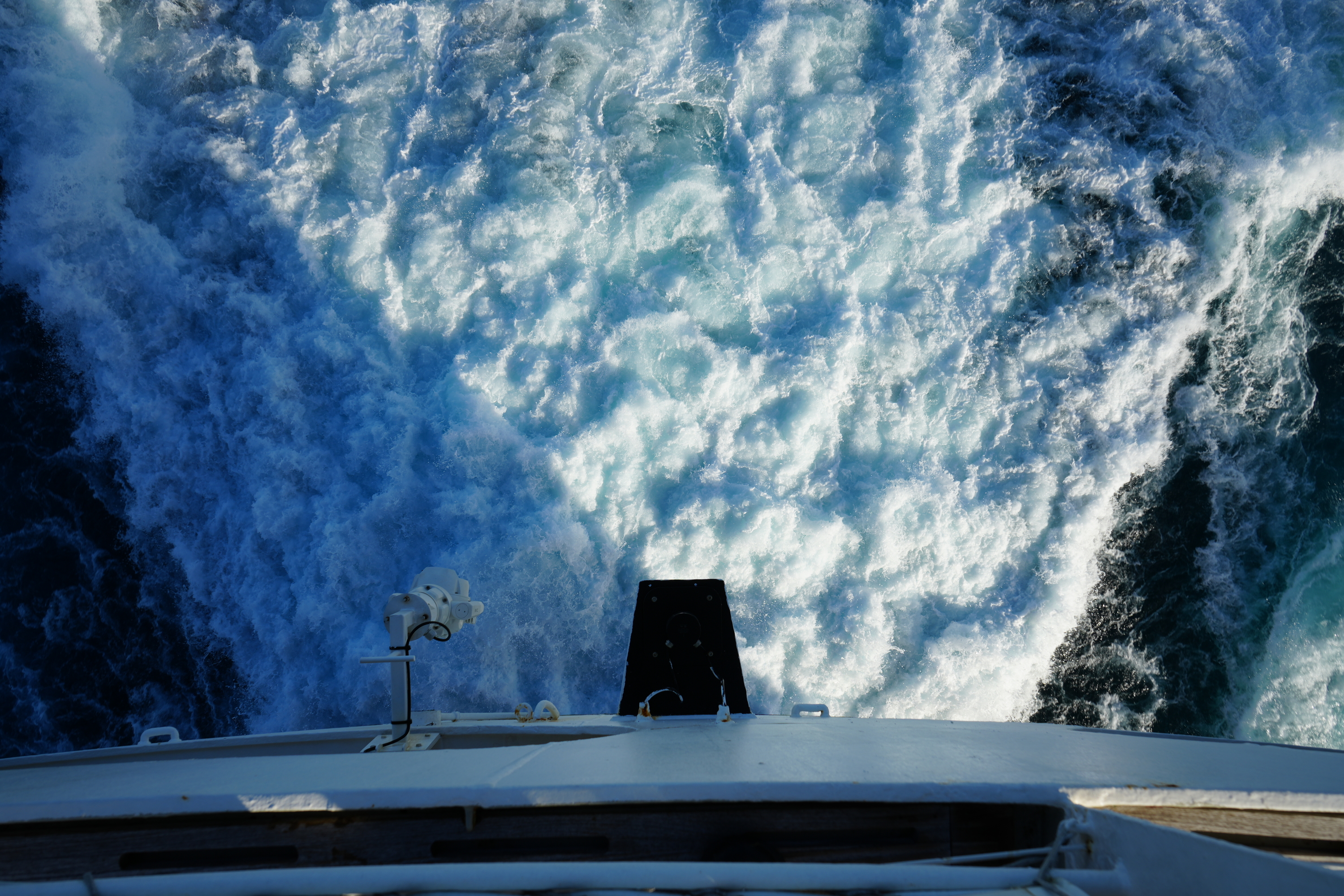
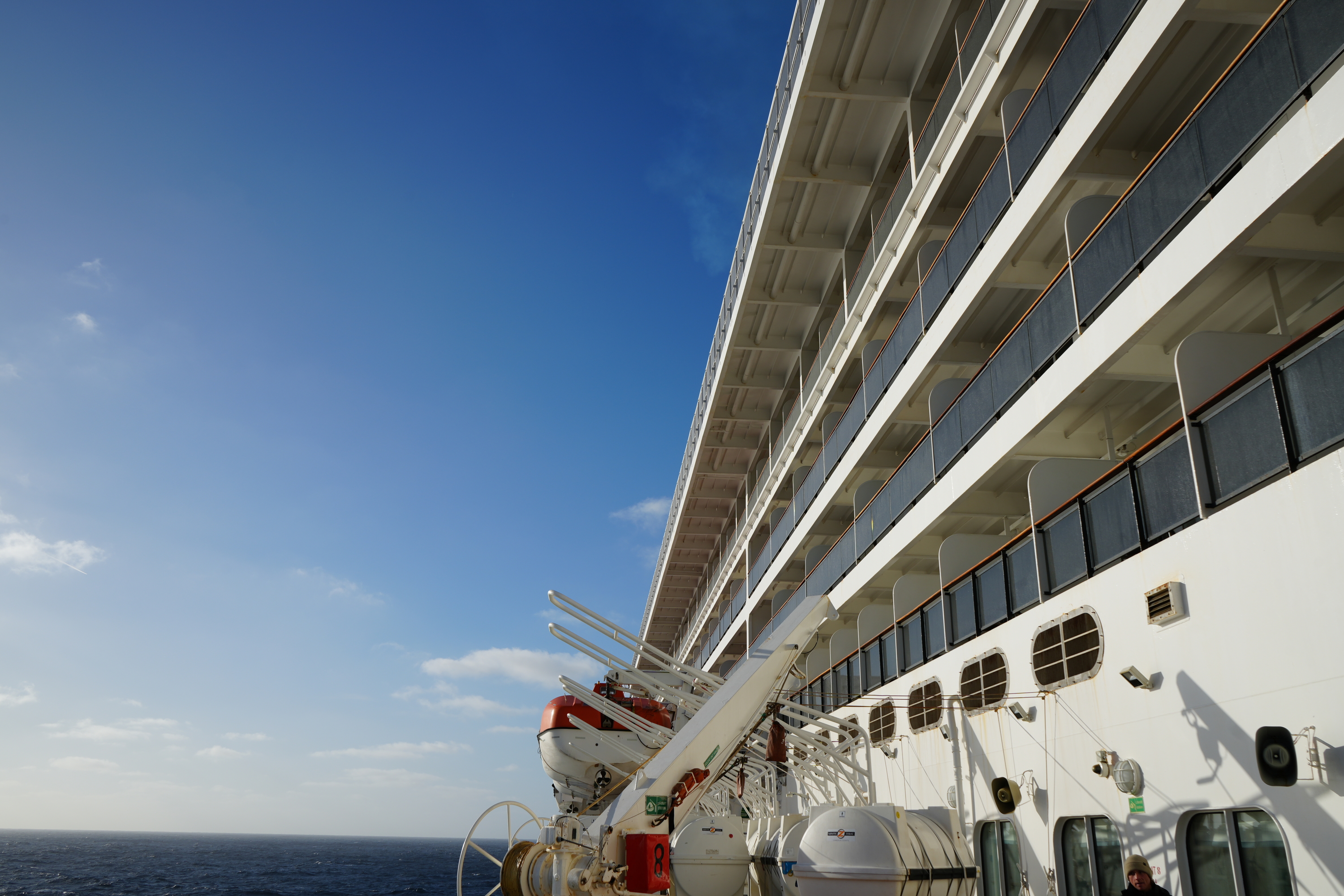
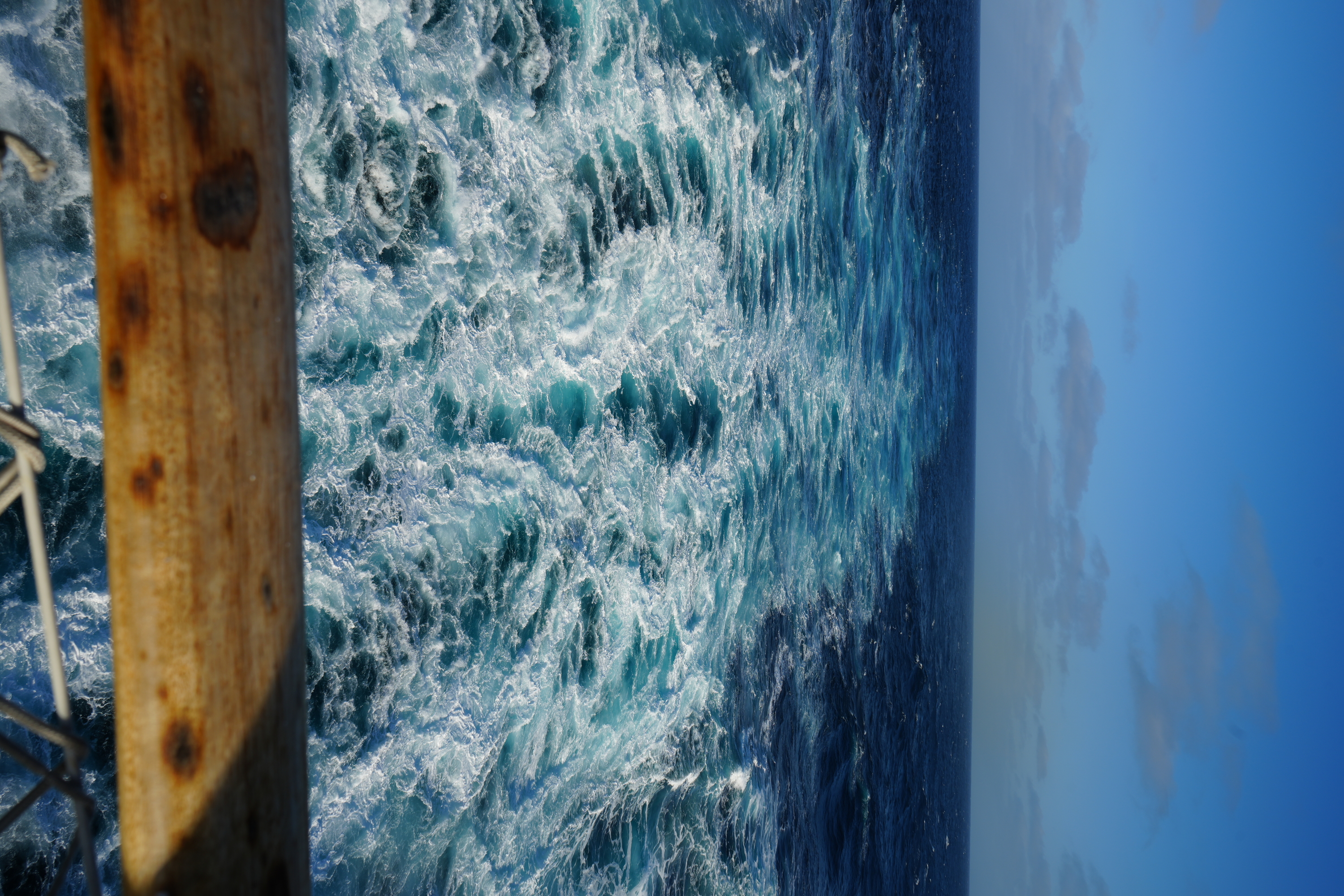
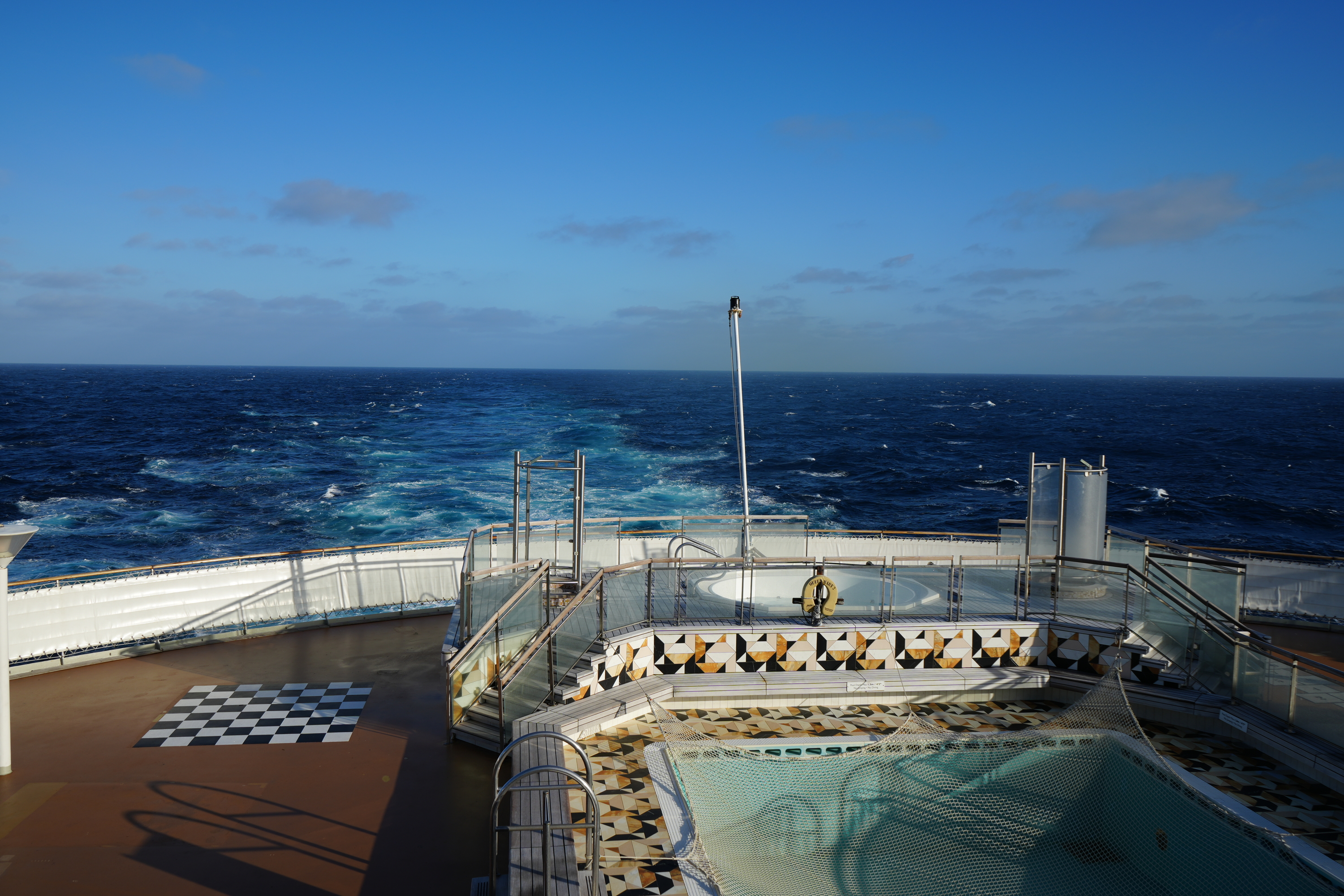
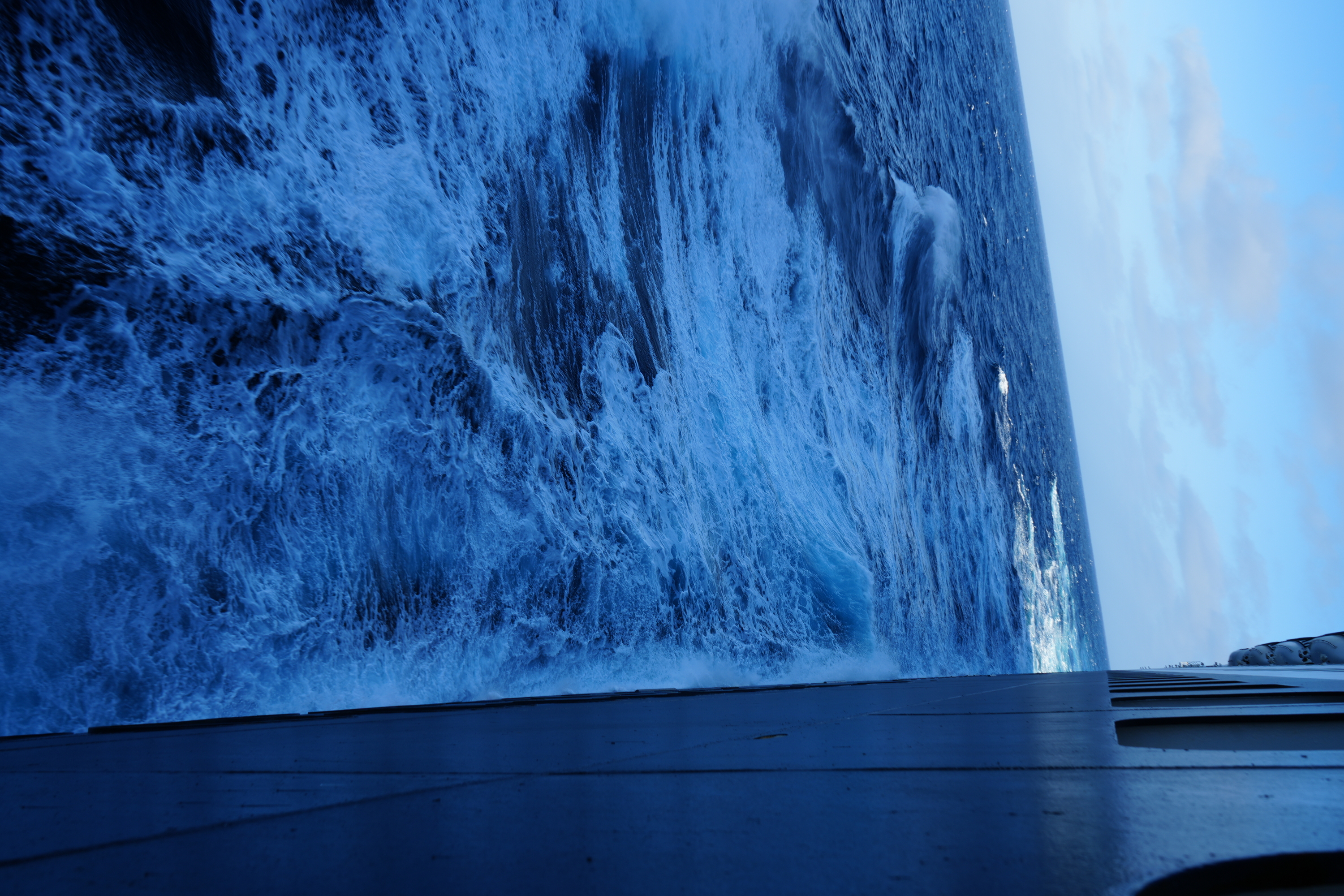
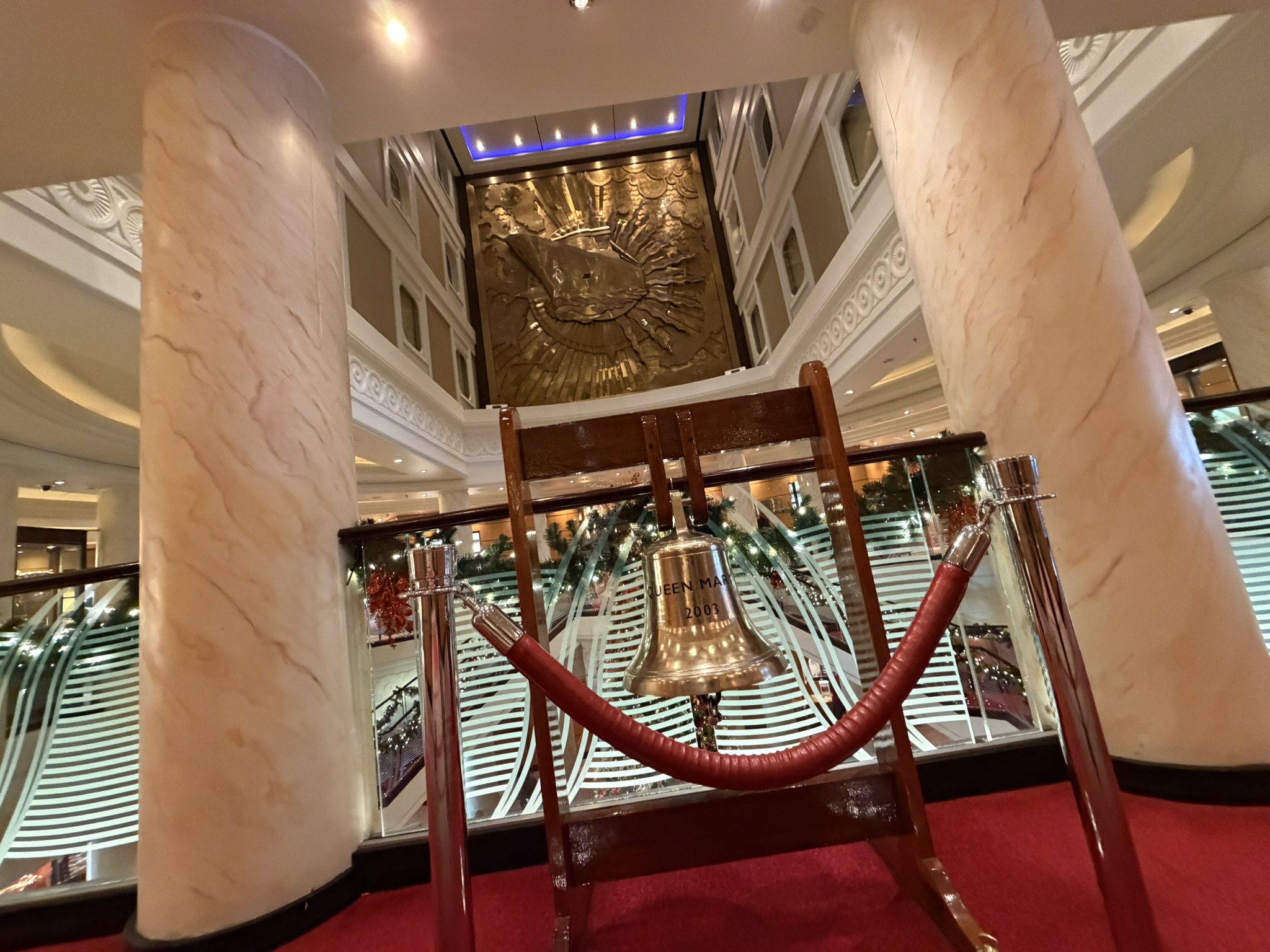
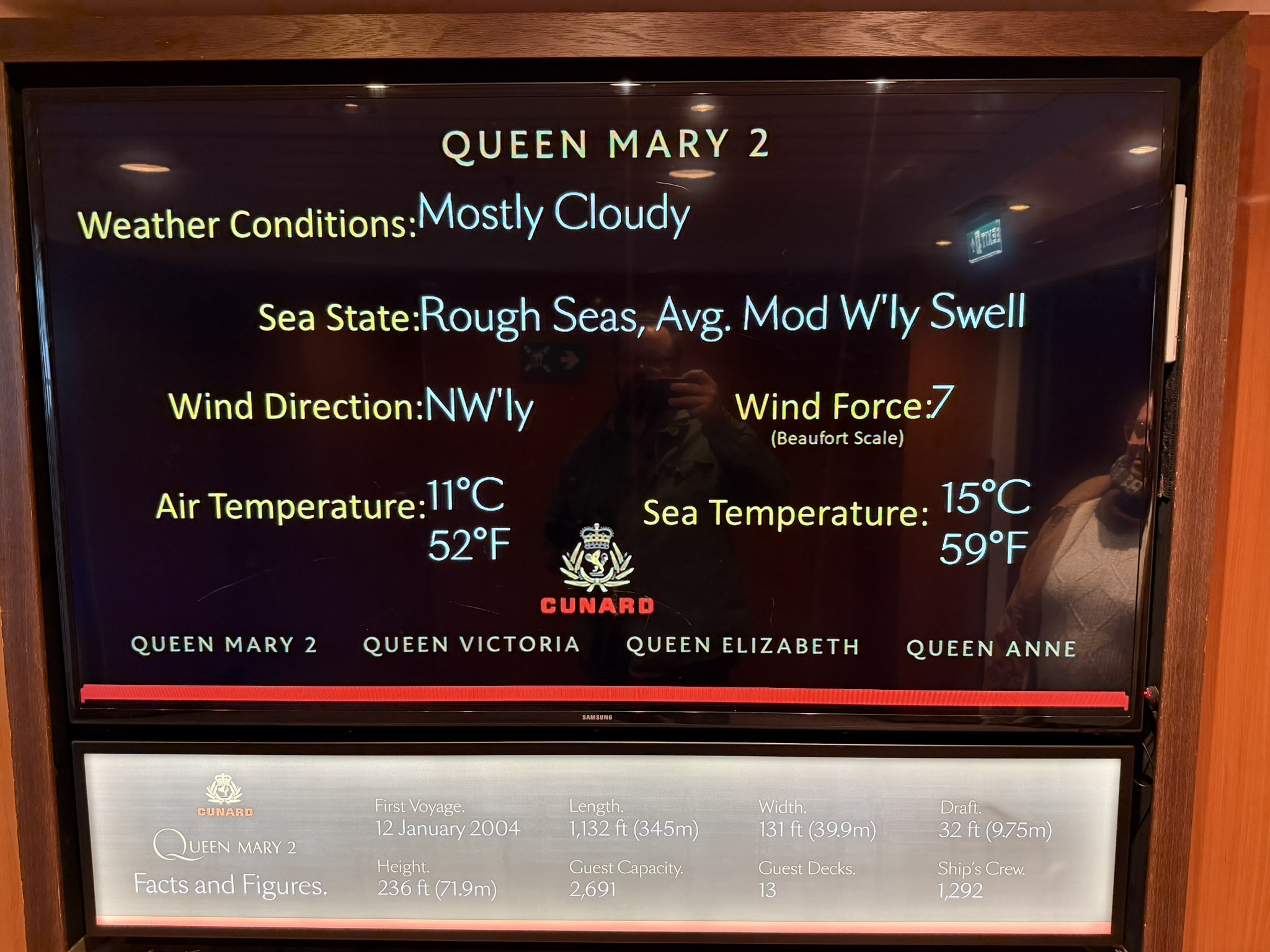
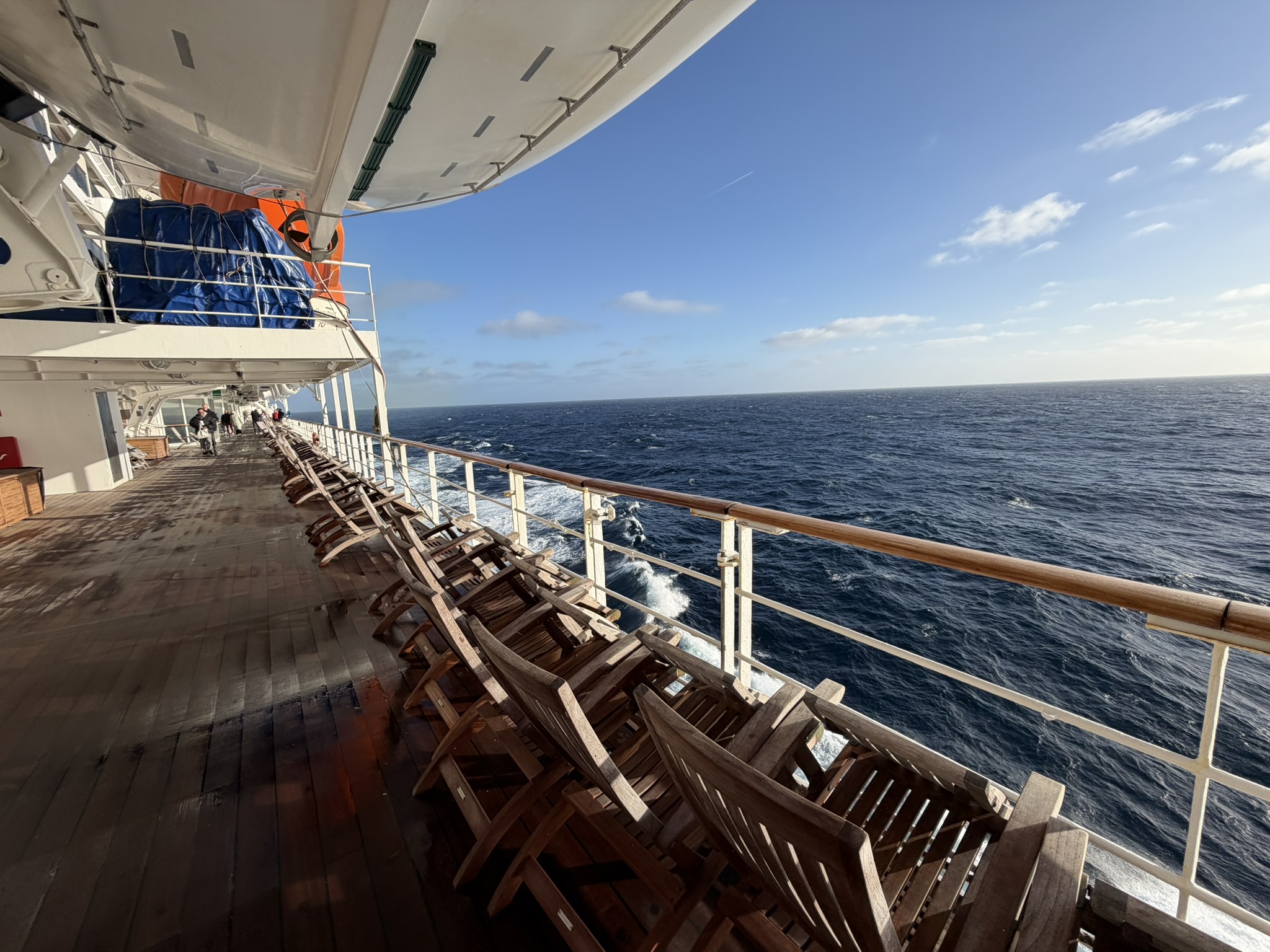
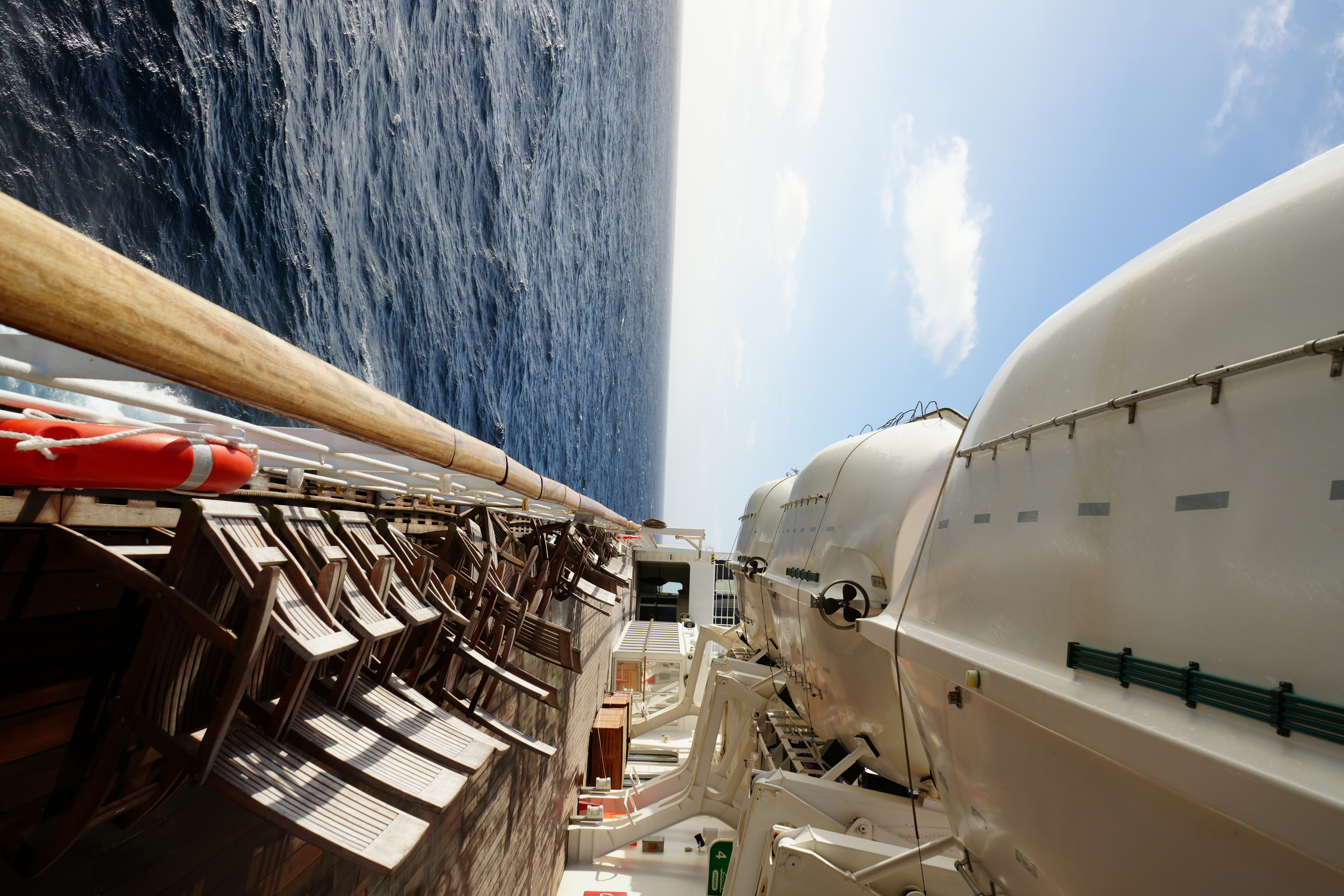
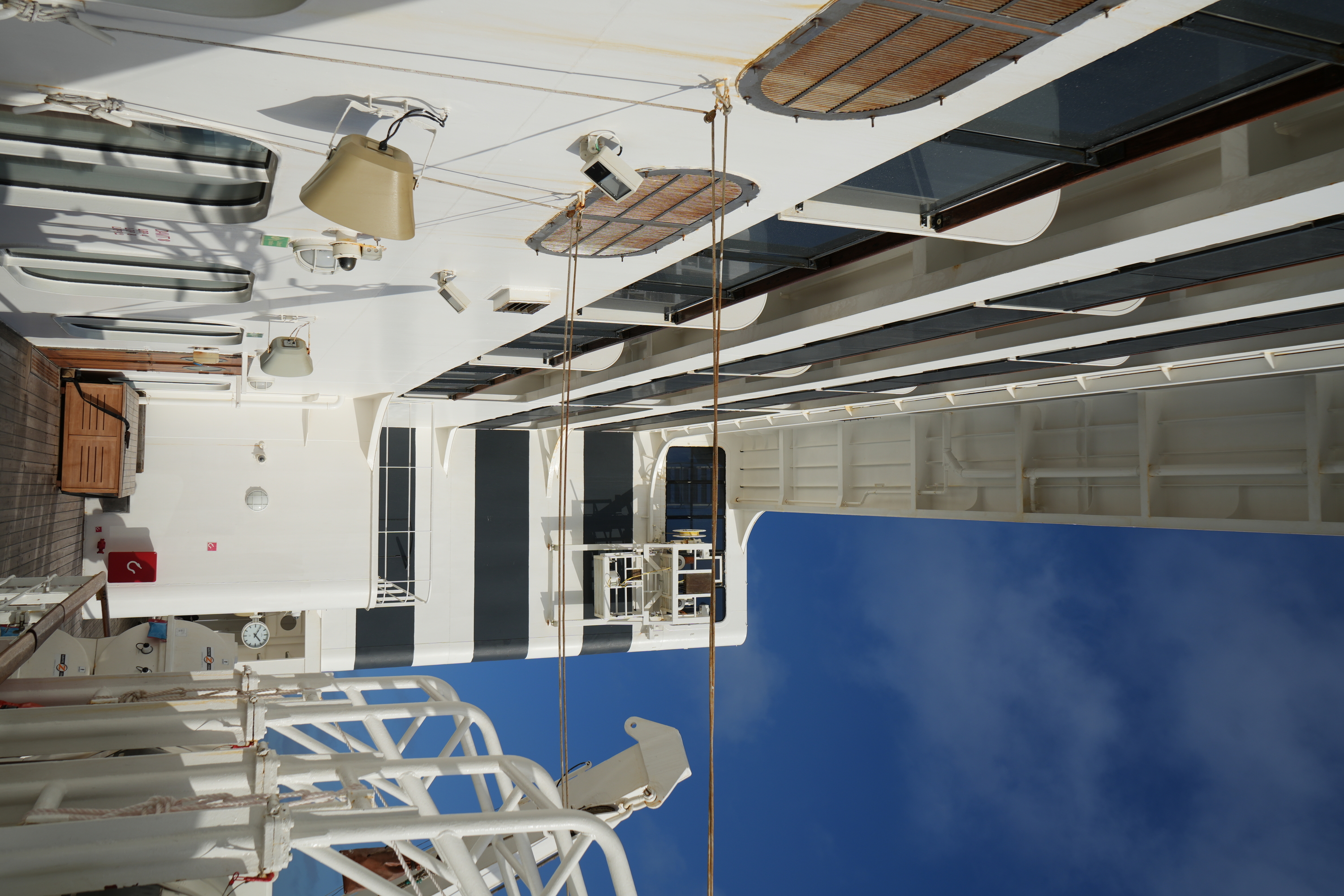
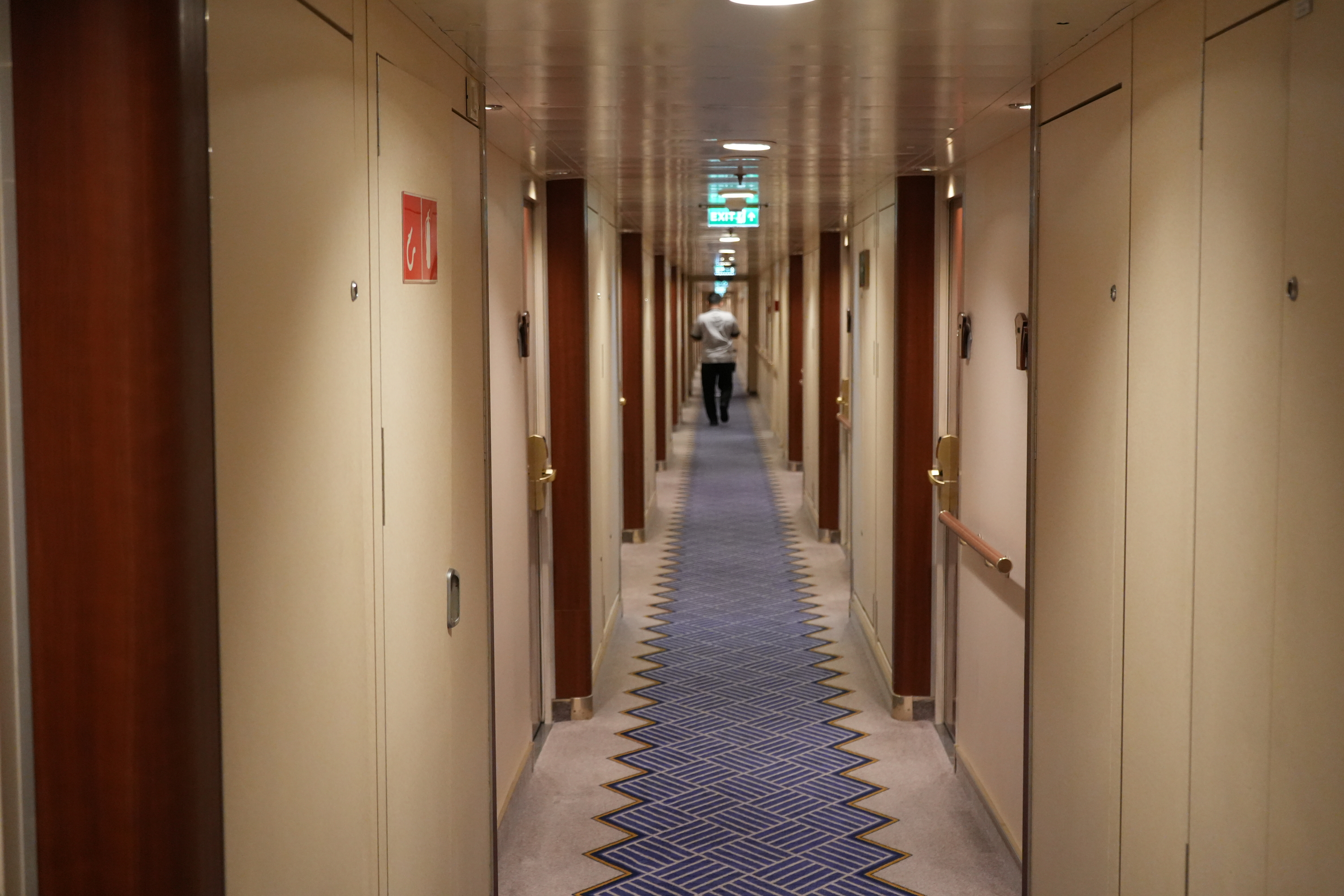
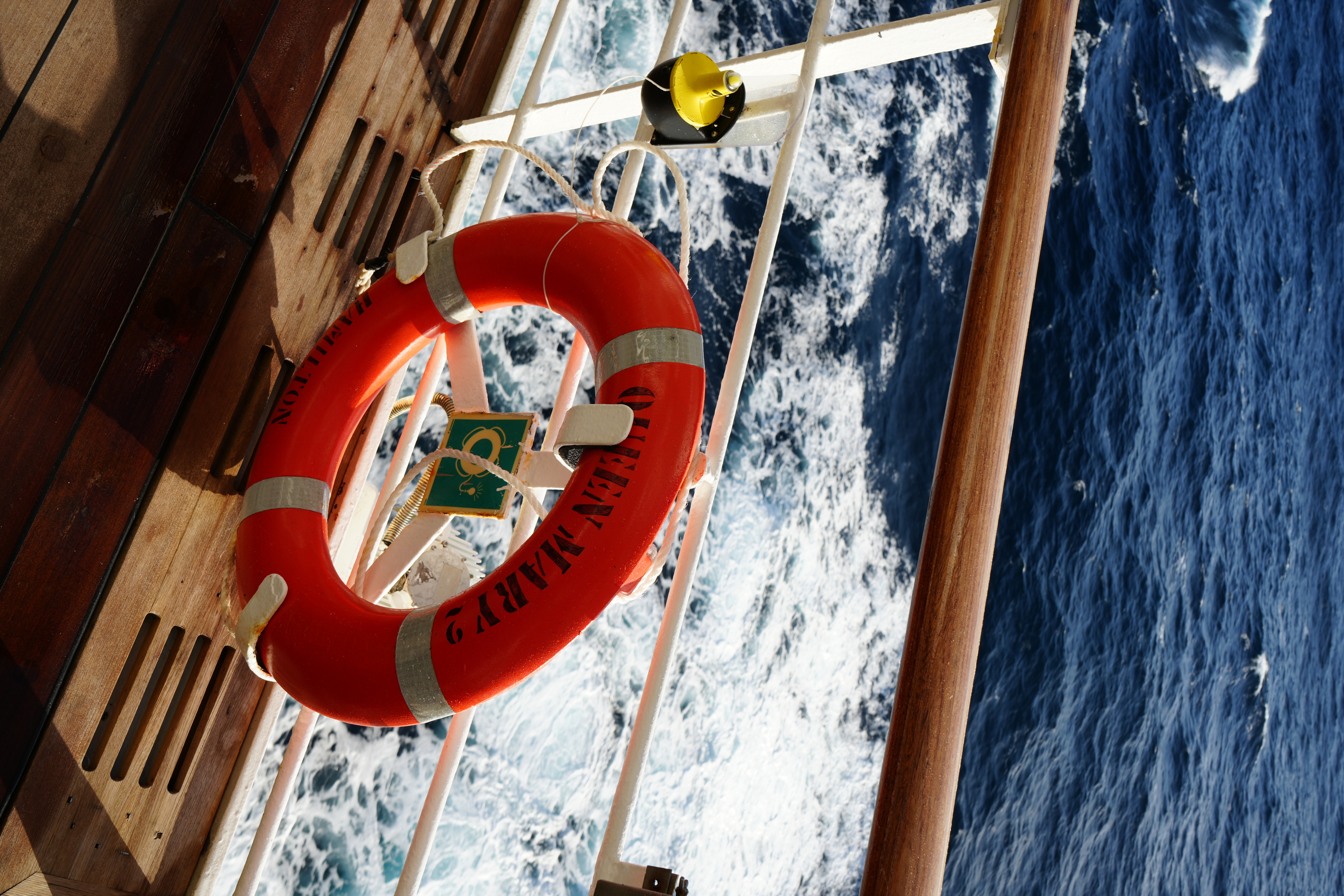
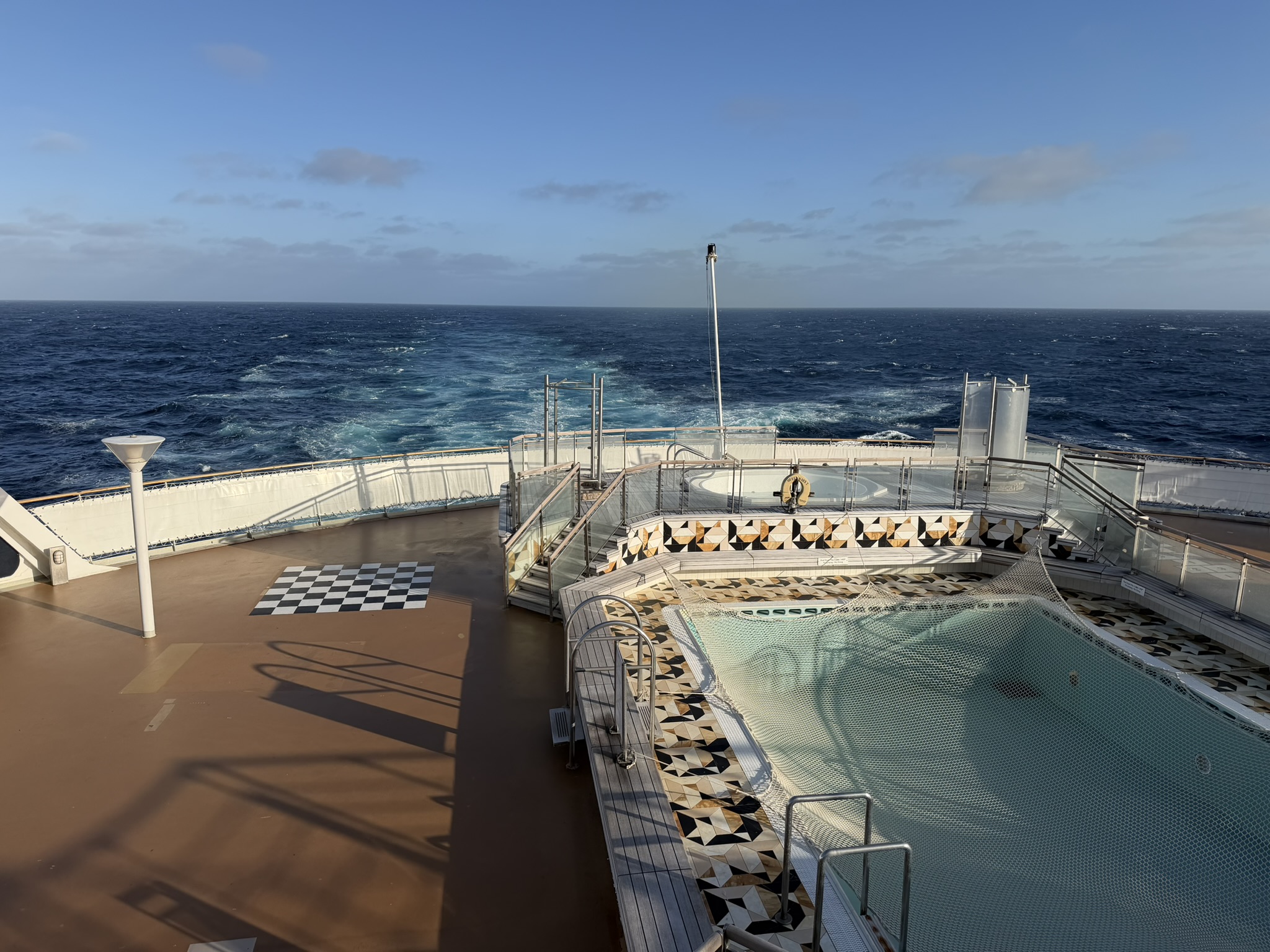
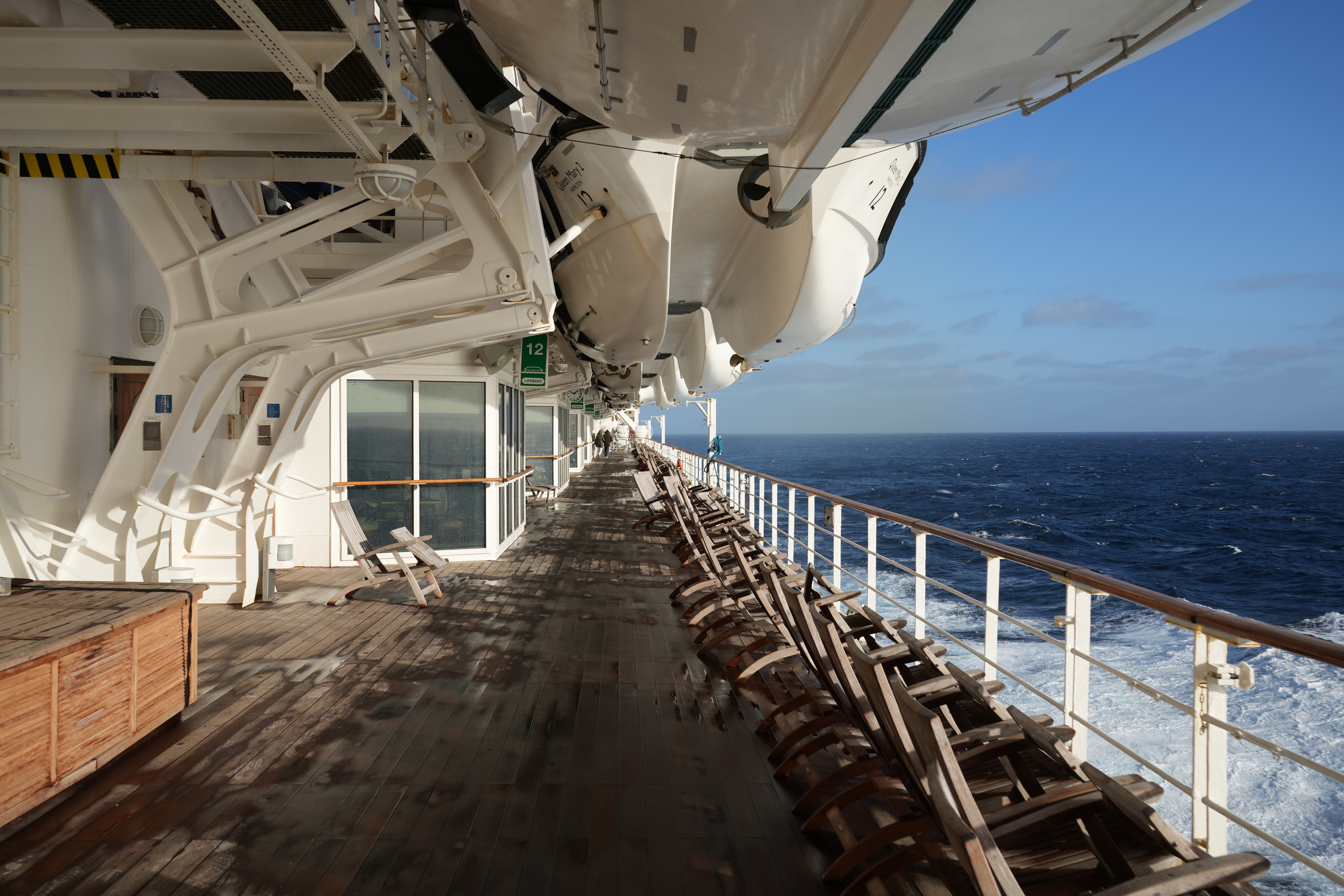
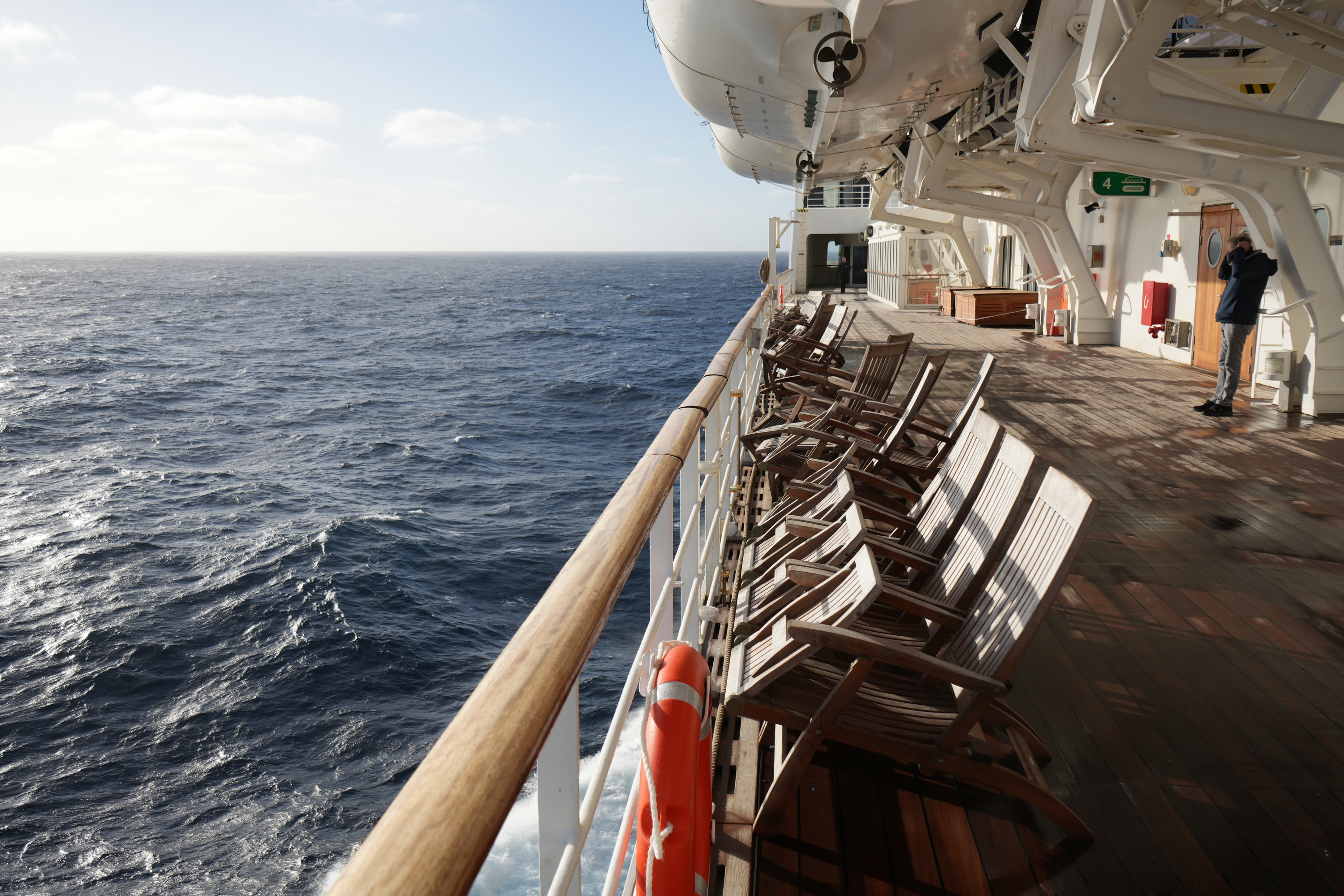
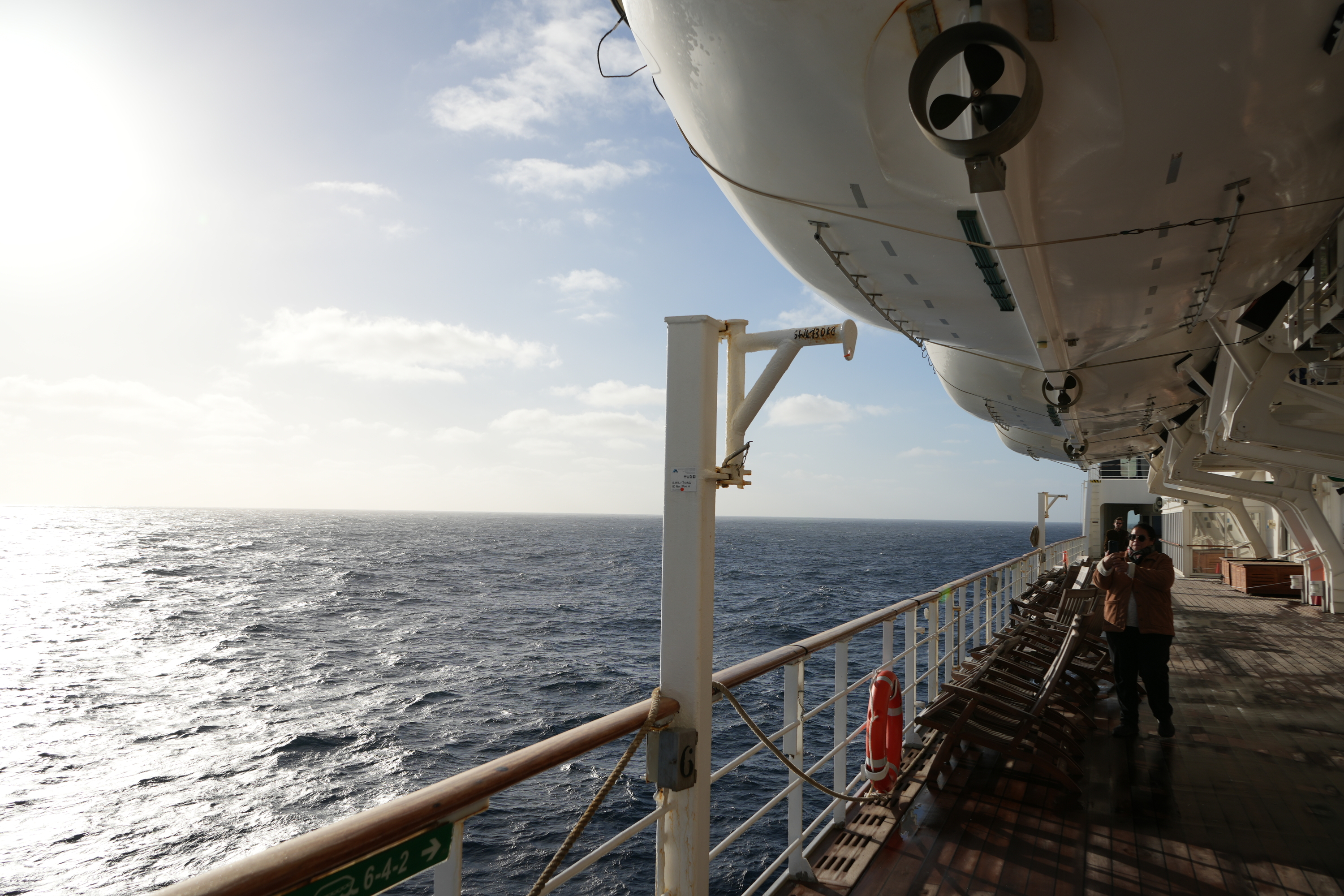
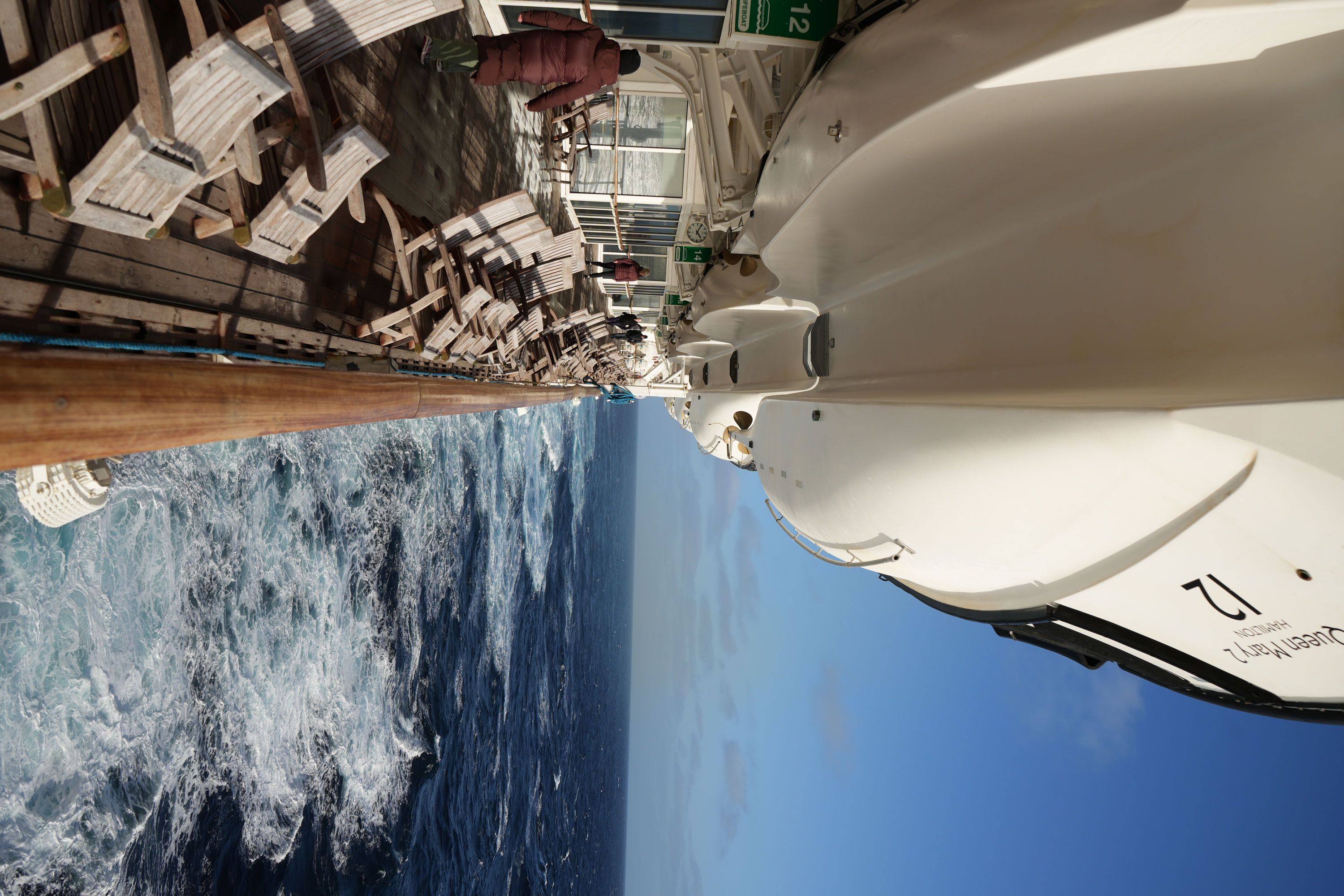
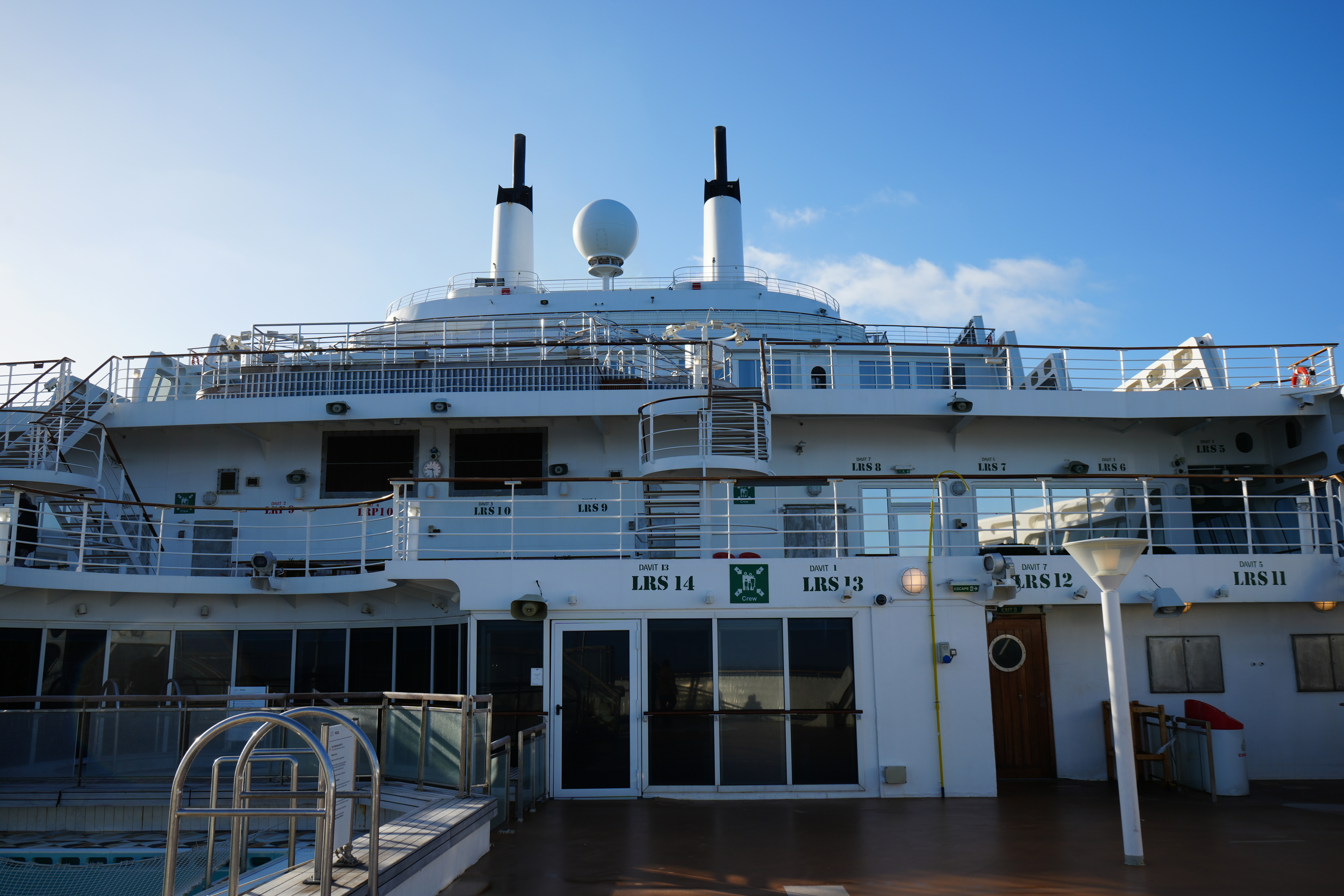
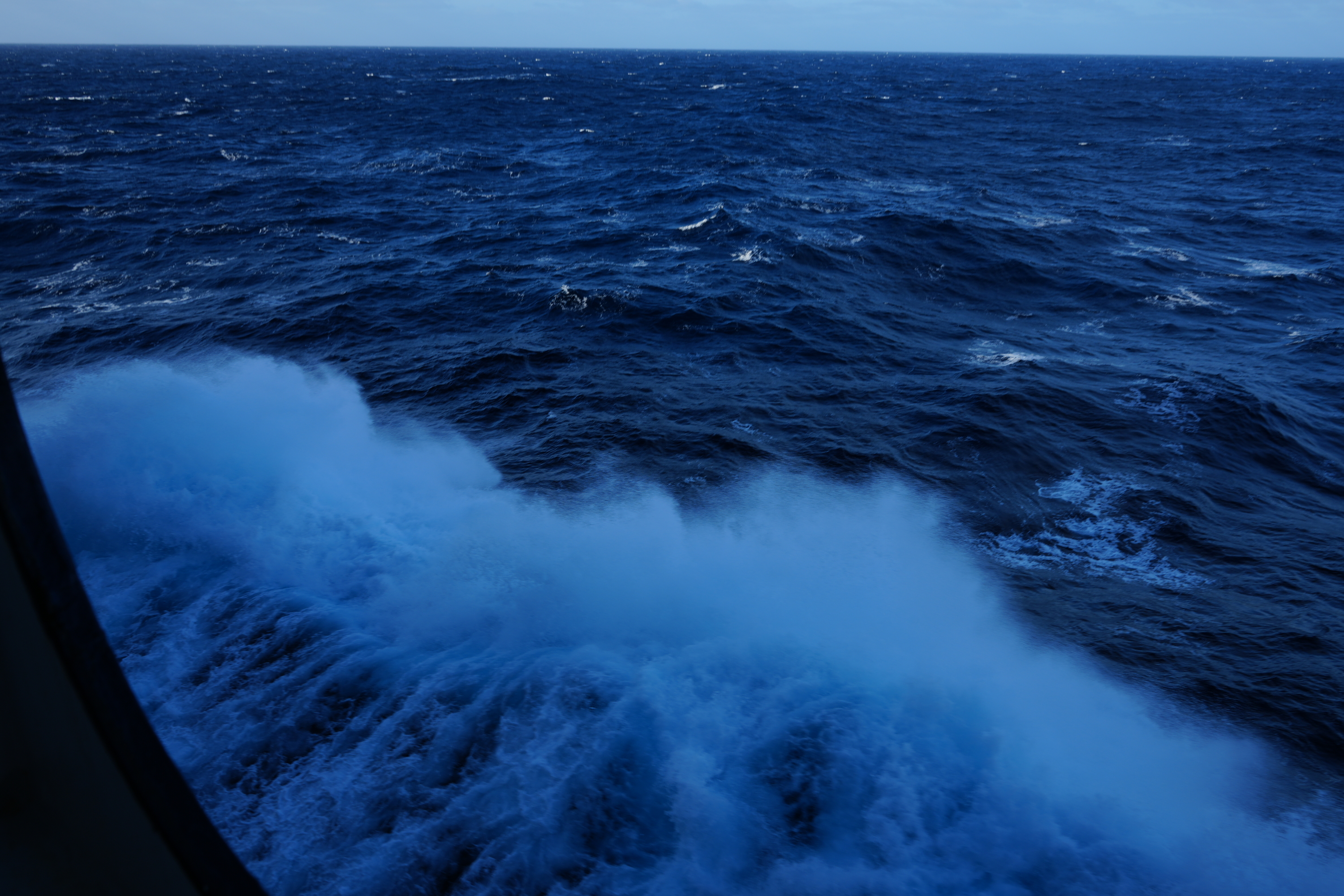
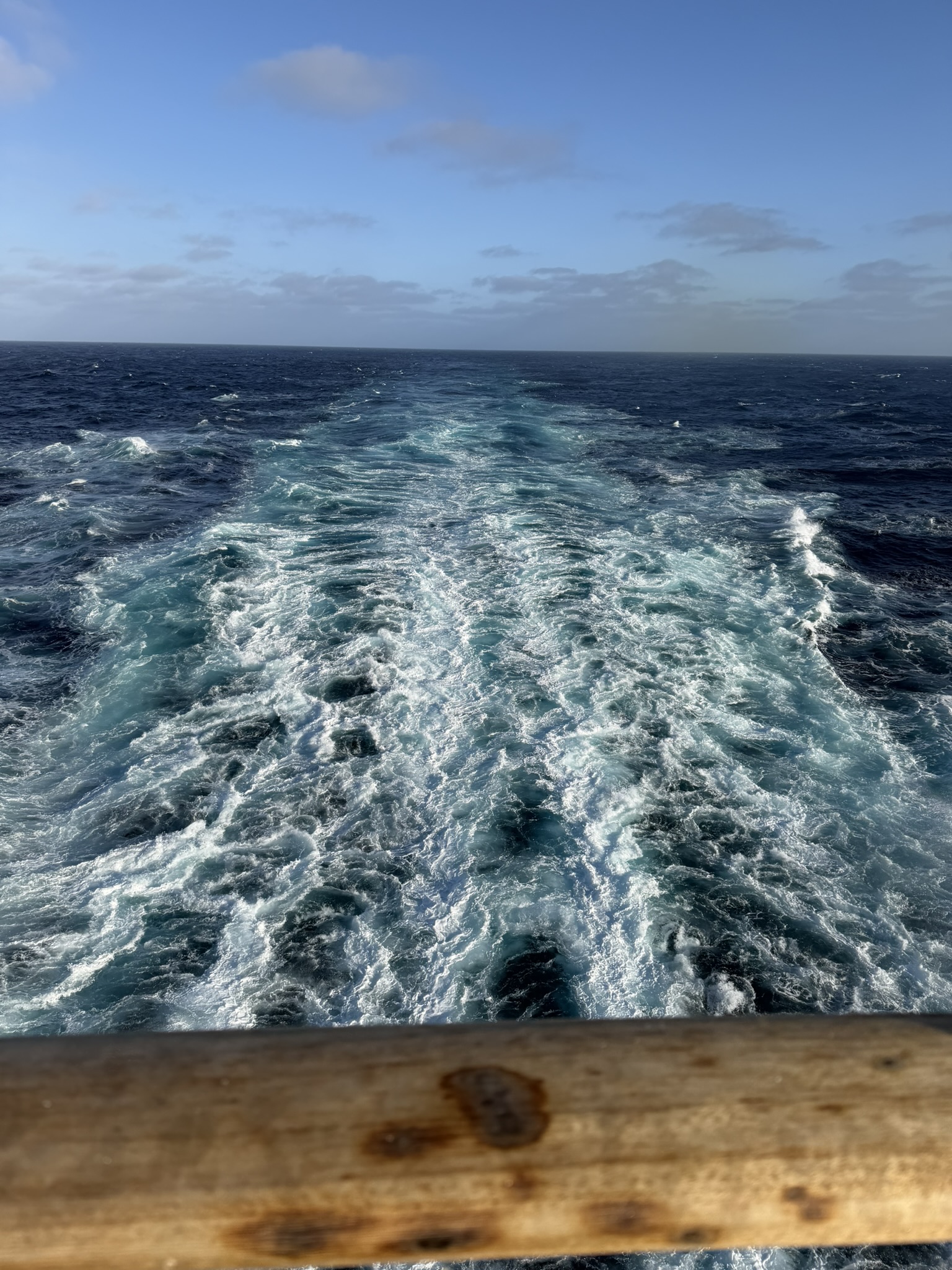
On December 19, 2025, Queen Mary 2 was four days out of Southampton and still at sea on the westbound passage to New York. It was Day 5 of Cunard voyage M539, the fourth of six consecutive sea days. The ship reported rough seas and a moderate swell from the west, with northwesterly winds at Force 7 on the Beaufort scale. Sunlight broke through during the day and spread across the sea beside the covered promenade.
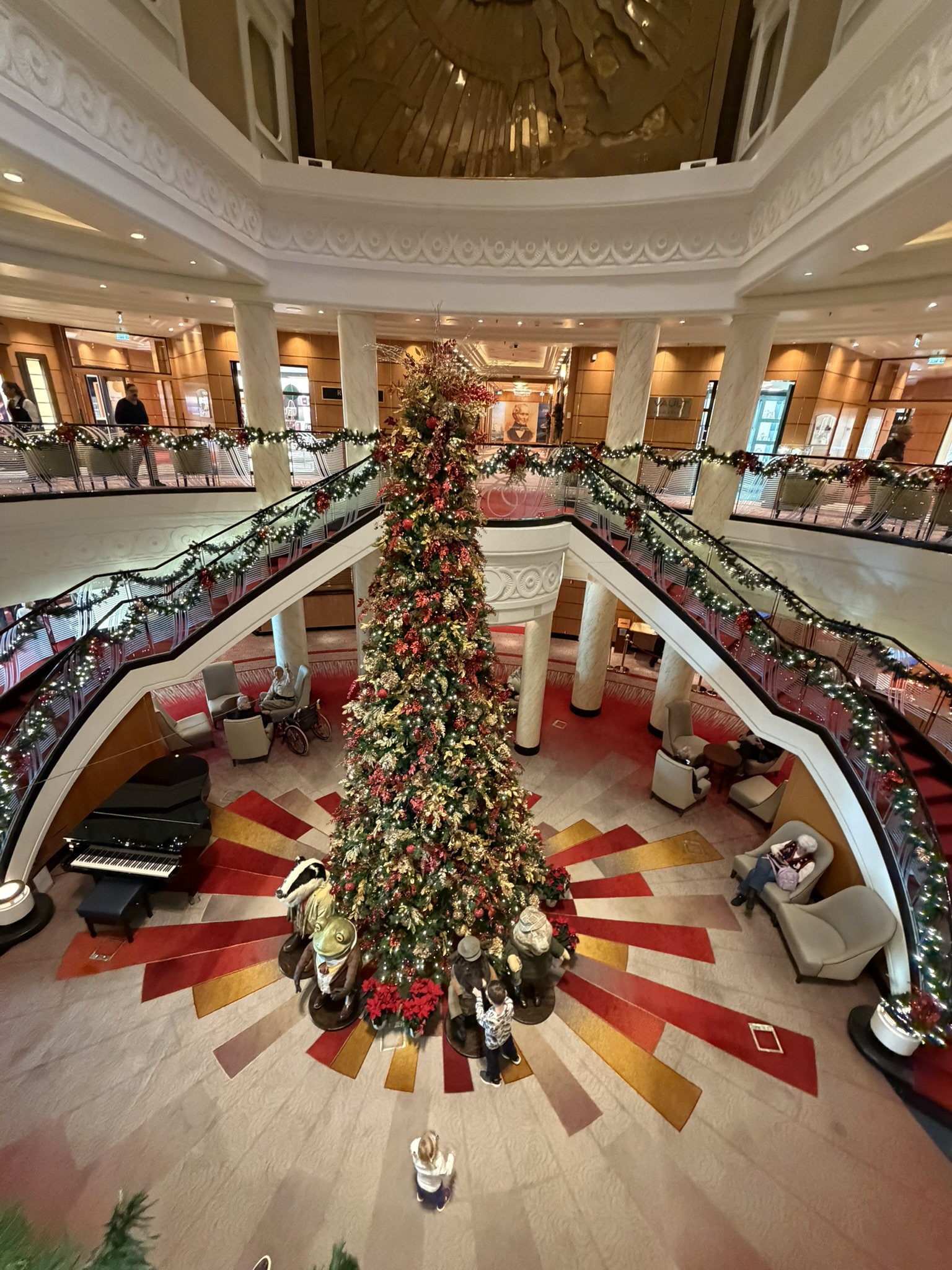
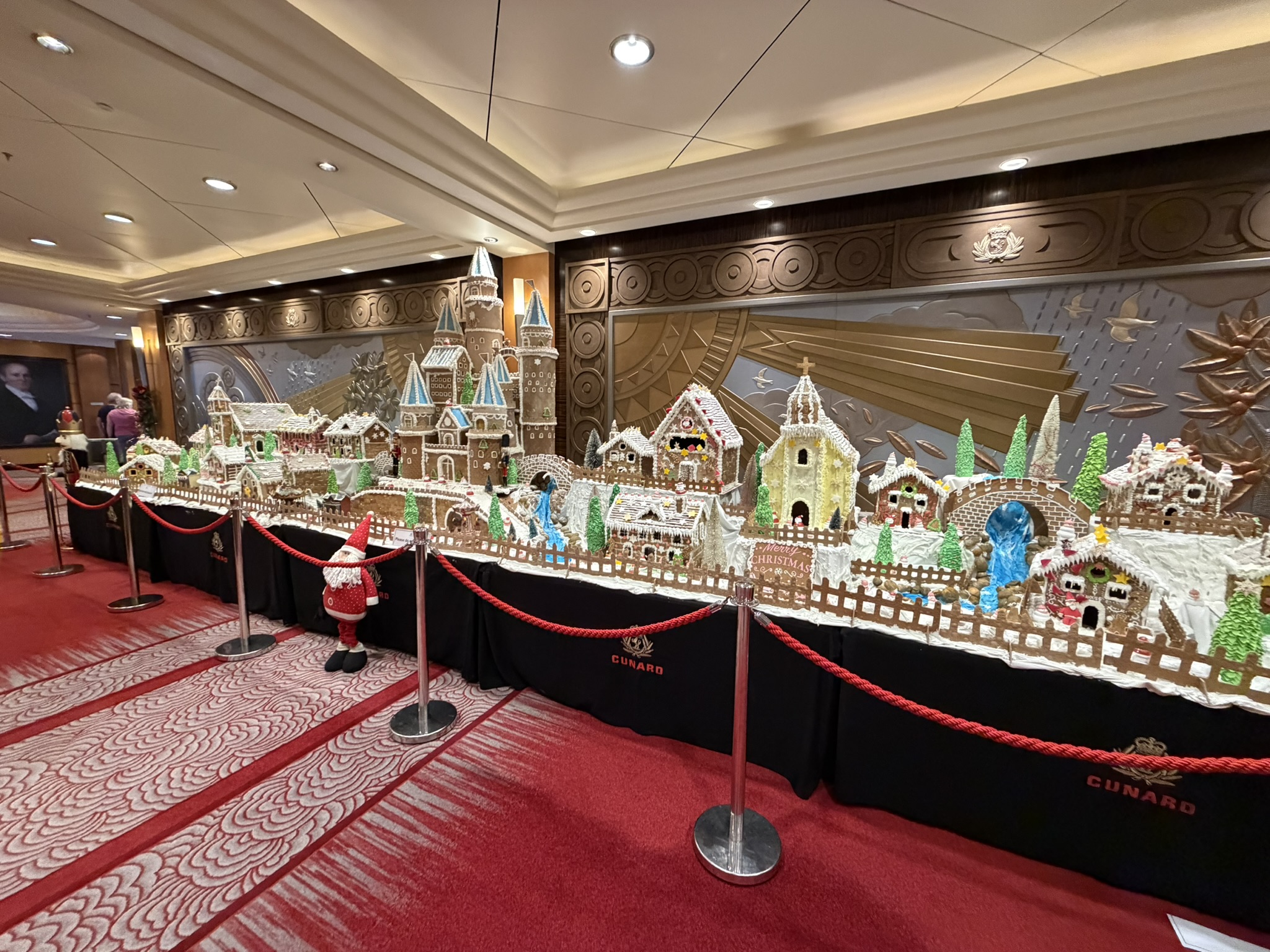
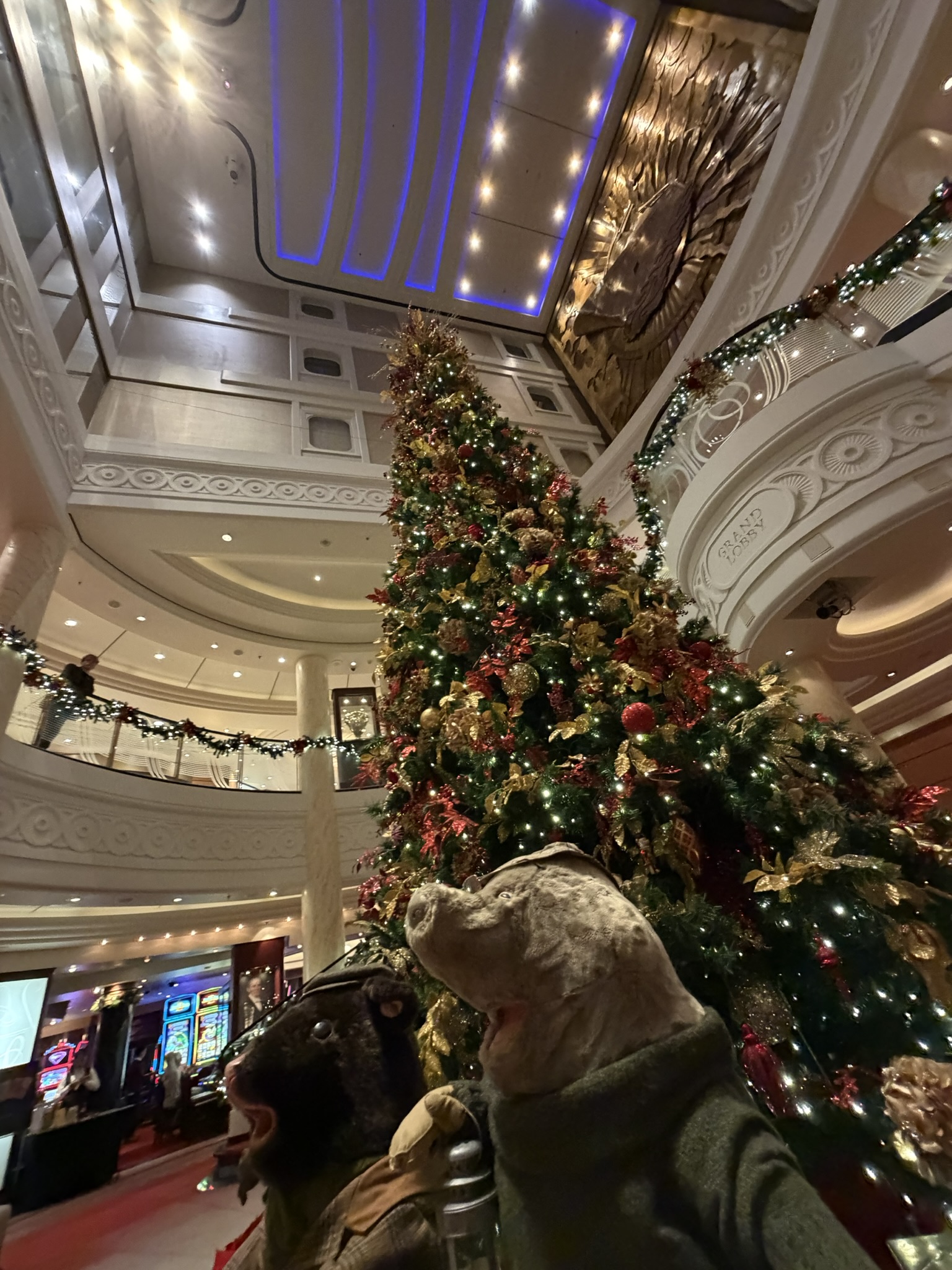
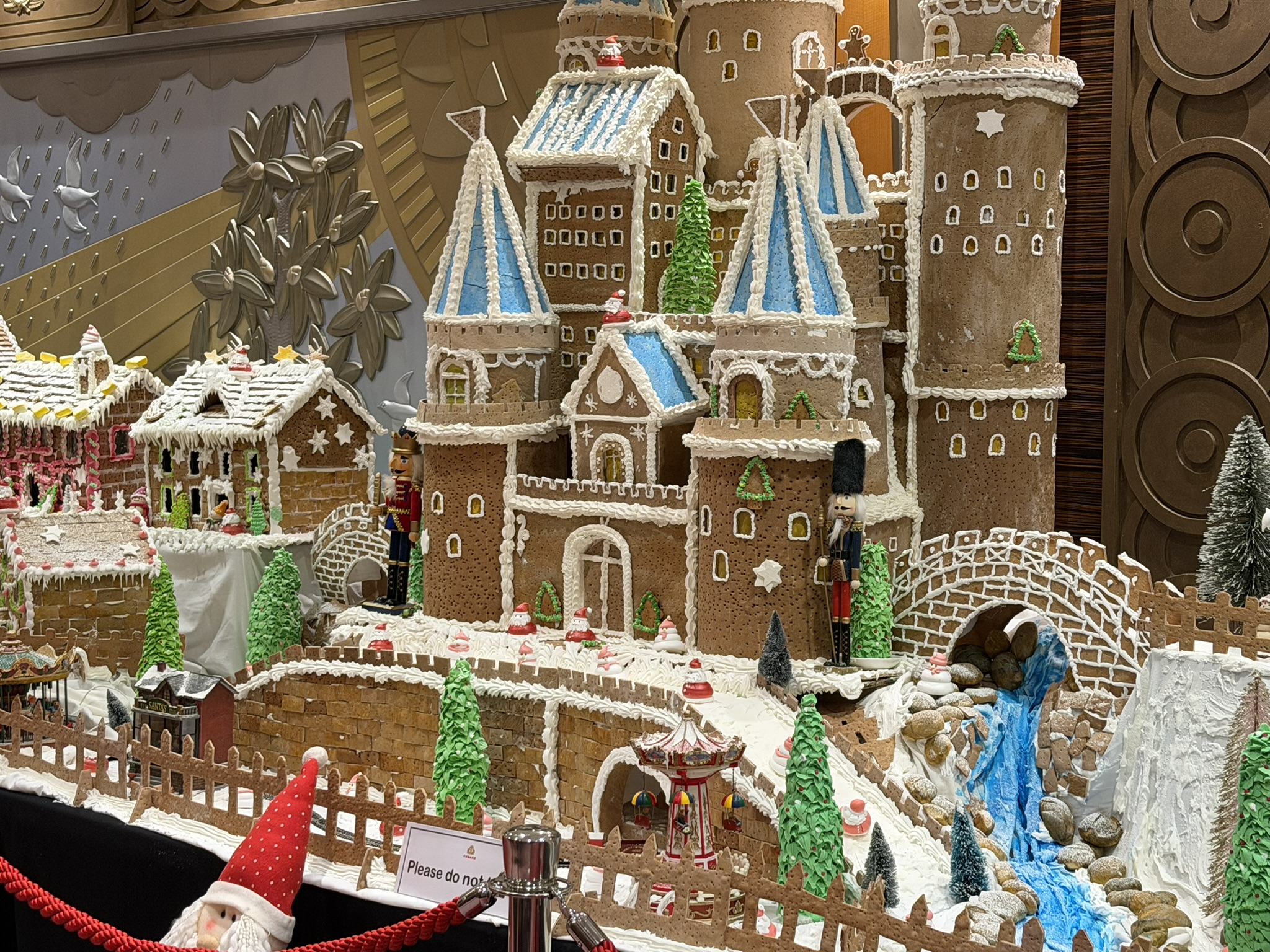
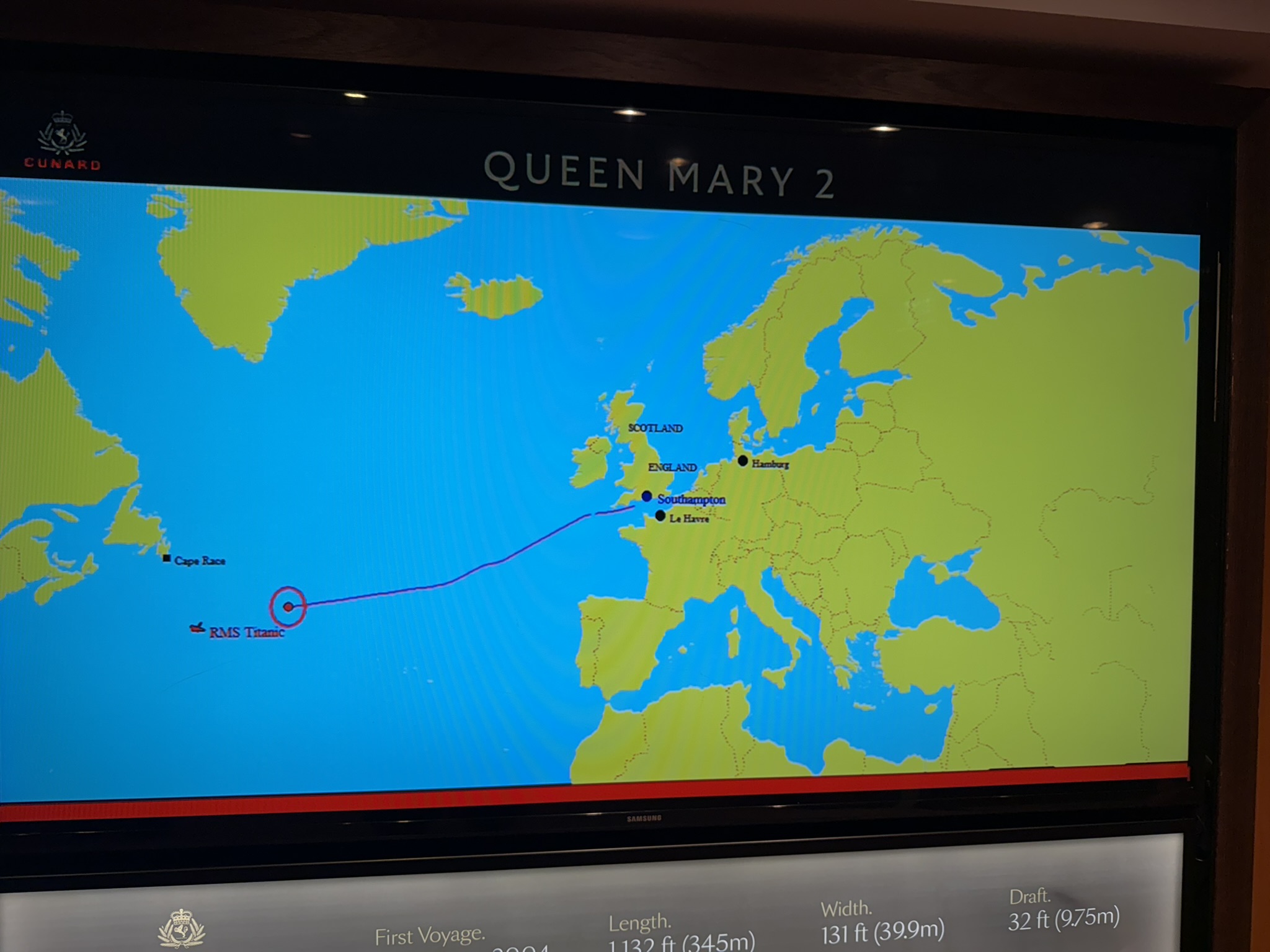
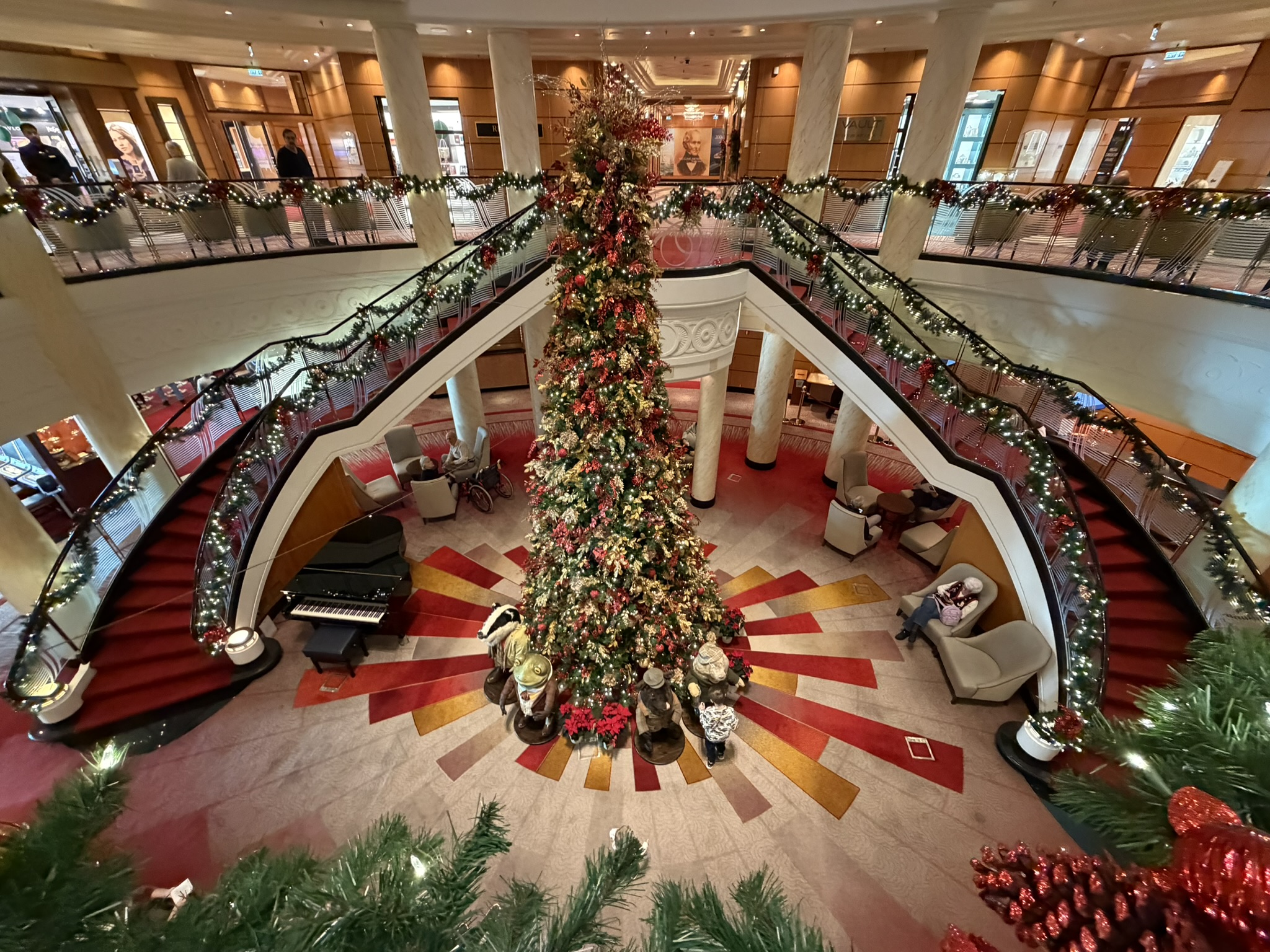
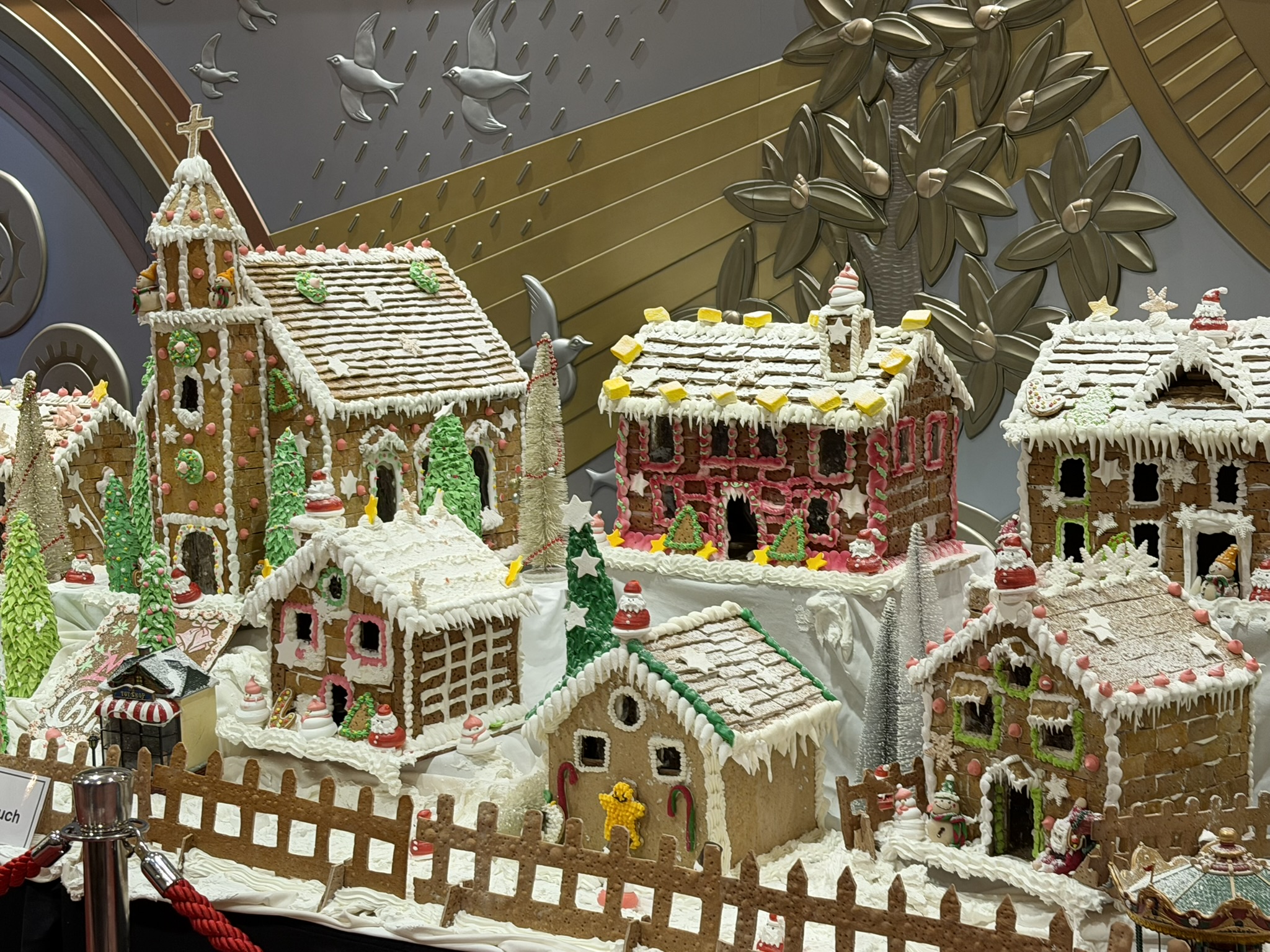
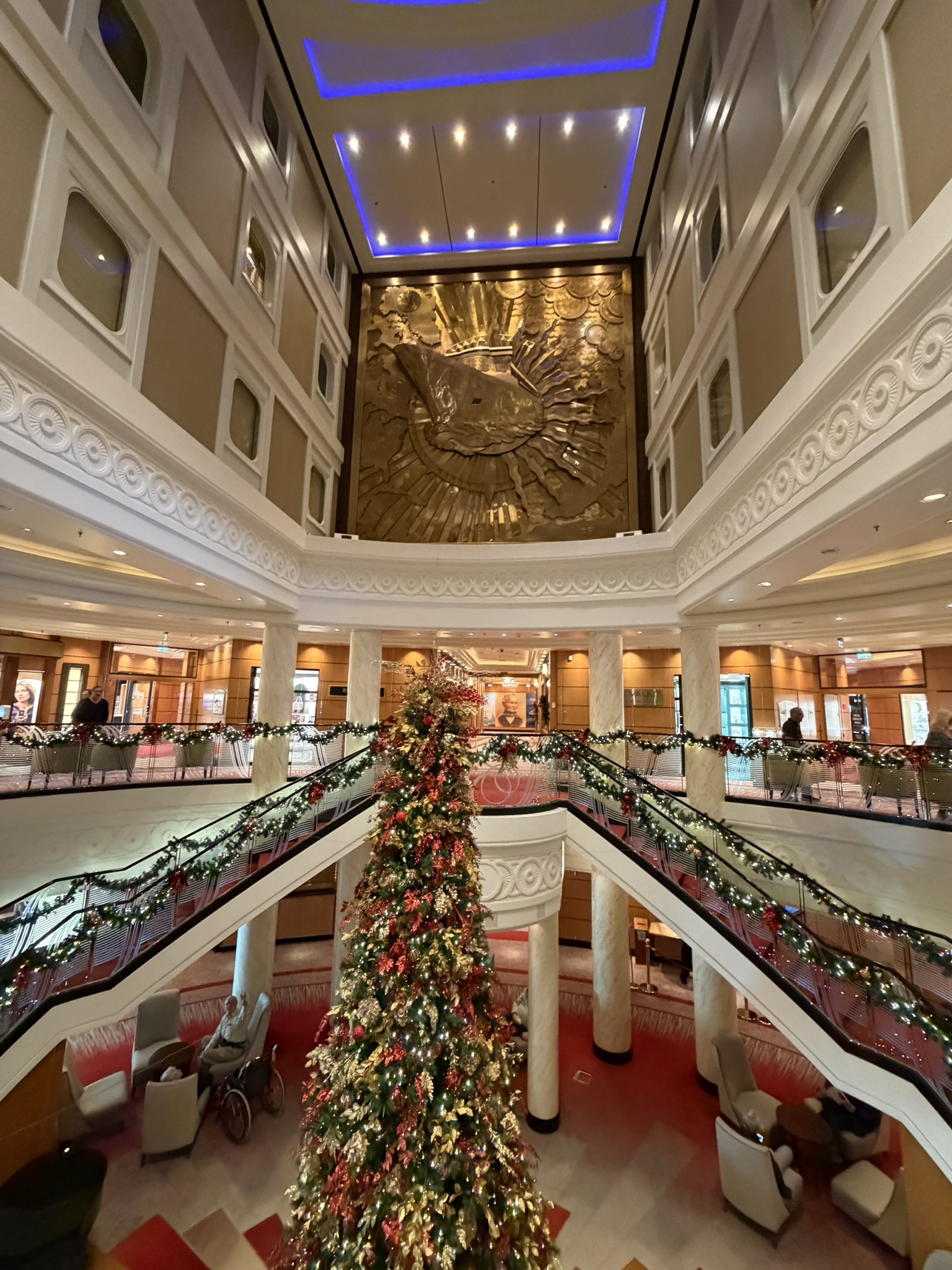
The promenade is one of the places where the liner’s working design and passenger spaces meet. It provides a continuous route around Deck 7 beneath the boats, with places to sit along the sides. The view changes as the deck turns around the ship, from water passing beside the hull to the wake trailing behind. Indoors, Christmas trees and a model village marked the season, while the ship’s route display placed the crossing in the wider Atlantic.
New York was scheduled for December 22, three days before Christmas. With no intermediate call, the six sea days were the substance of the voyage. The liner had been designed for just this kind of scheduled passage, although her first voyage in January 2004 had taken her from Southampton to Fort Lauderdale. The December 2025 series follows the crossing from embarkation in Southampton through Day 2, Day 3 and this later day underway.
Information List
- Name: Queen Mary 2
- Operator: Cunard Line
- Ship Type: Ocean liner
- Role: Cunard flagship and scheduled transatlantic liner
- Builder: Chantiers de l’Atlantique, Saint-Nazaire, France
- Yard Number: G32
- Lead Naval Architect: Stephen Payne
- Keel Laid: July 4, 2002
- Floated Out: March 21, 2003
- Delivered: December 2003
- Named: January 8, 2004, in Southampton by Queen Elizabeth II
- Maiden Voyage: January 12, 2004, Southampton to Fort Lauderdale
- First Westbound Crossing to New York: April 2004
- Length Overall: About 1,132 feet / 345 meters
- Beam at the Waterline: About 131 feet / 40 meters
- Gross Tonnage: About 149,000 GT
- Propulsion: Integrated electric propulsion with four podded propulsors
- Maximum Speed: About 30 knots
- Registry: Hamilton, Bermuda
- IMO Number: 9241061
- Voyage: M539, westbound transatlantic crossing
- Voyage Length: Seven nights
- Day 5: December 19, 2025, at sea in the North Atlantic
- Scheduled Sea Days: December 16-21, 2025
- Scheduled Arrival: December 22, 2025, New York, New York
History and Features
Construction and Entry Into Service
- Cunard commissioned the liner for regular ocean crossings as well as longer cruises. Stephen Payne led the design, and Chantiers de l’Atlantique built the ship in Saint-Nazaire, France. After the keel was laid in July 2002, construction moved toward the March 2003 float-out, followed by trials and delivery that December.
- Queen Elizabeth II named the liner at Southampton on January 8, 2004. The maiden voyage began four days later and headed for Fort Lauderdale. The scheduled transatlantic route to New York began in April, separating the ship’s first passenger voyage from the start of her regular Atlantic assignment.
Hull and Propulsion
- At about 345 meters overall, the ship’s long hull and flared bow were designed for sustained passages. The bow extends well forward of the bridge. As it meets an oncoming sea, its shape helps direct water away from the forward deck.
- Four electrically driven pods provide propulsion. Two are fixed, and two can rotate to direct their thrust. The arrangement supports both the steady demands of days underway and the finer control needed when entering or leaving port.
The Deck 7 Promenade
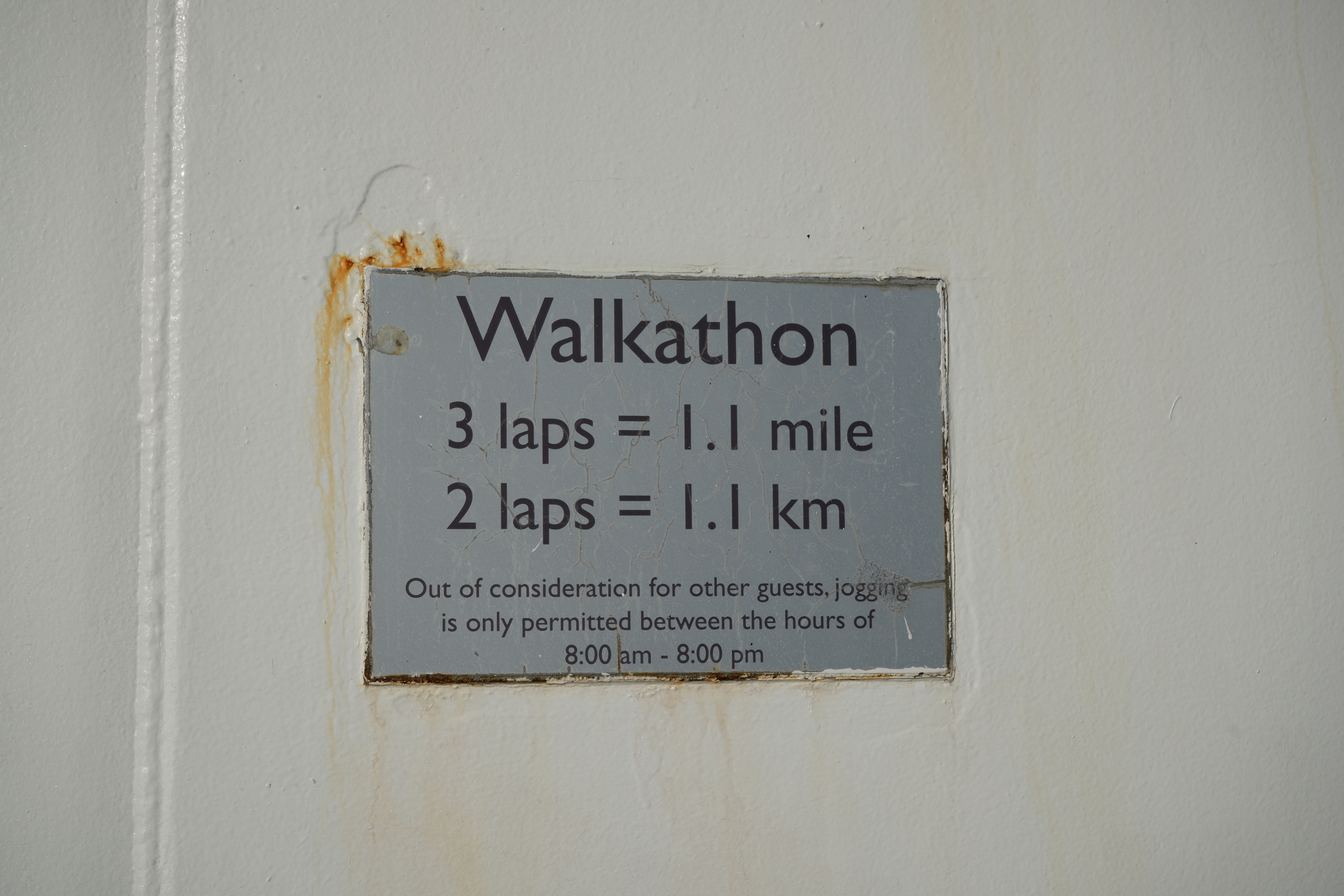
- The walk around Deck 7 is a continuous circuit. Cunard’s posted guide gives three laps as about 1.1 miles. For passengers spending six successive days at sea, a circuit offers a measured walk even when the horizon gives little indication of the distance the ship has covered.
- The boats and their davits occupy the space above the side walkways. Beneath them, the deck provides shelter from above while remaining open to the sea at the rail. Deck chairs give passengers a place to pause without leaving the promenade.
Sea Conditions on December 19
- The ship’s afternoon weather report described mostly cloudy conditions, rough seas and a moderate westerly swell. The northwesterly wind was Force 7, and the report gave air and sea temperatures of 11°C and 15°C respectively.
- The wind and the swell were reported separately. The wind described conditions at the ship, while the swell described the motion of waves coming from the west. Periods of sunshine could occur during a day when the sea remained rough.
Following the Passage
- The onboard route display traced the voyage west from Southampton and marked Cape Race and the location associated with Titanic on the same Atlantic map. The historical marker put an earlier liner’s route in geographical context without making it a stop on M539.
- Weather and route displays gave passengers different ways to follow the passage. The map showed the scale of the open-ocean leg, while the daily conditions explained why the experience on deck changed along the way.
Public Rooms During the Crossing
- The Grand Lobby is an indoor gathering point and a passage between public areas. During the December voyage, it carried seasonal decorations while continuing to serve its usual role. In the ship’s public spaces, a model Christmas village accompanied the full-size decorations.
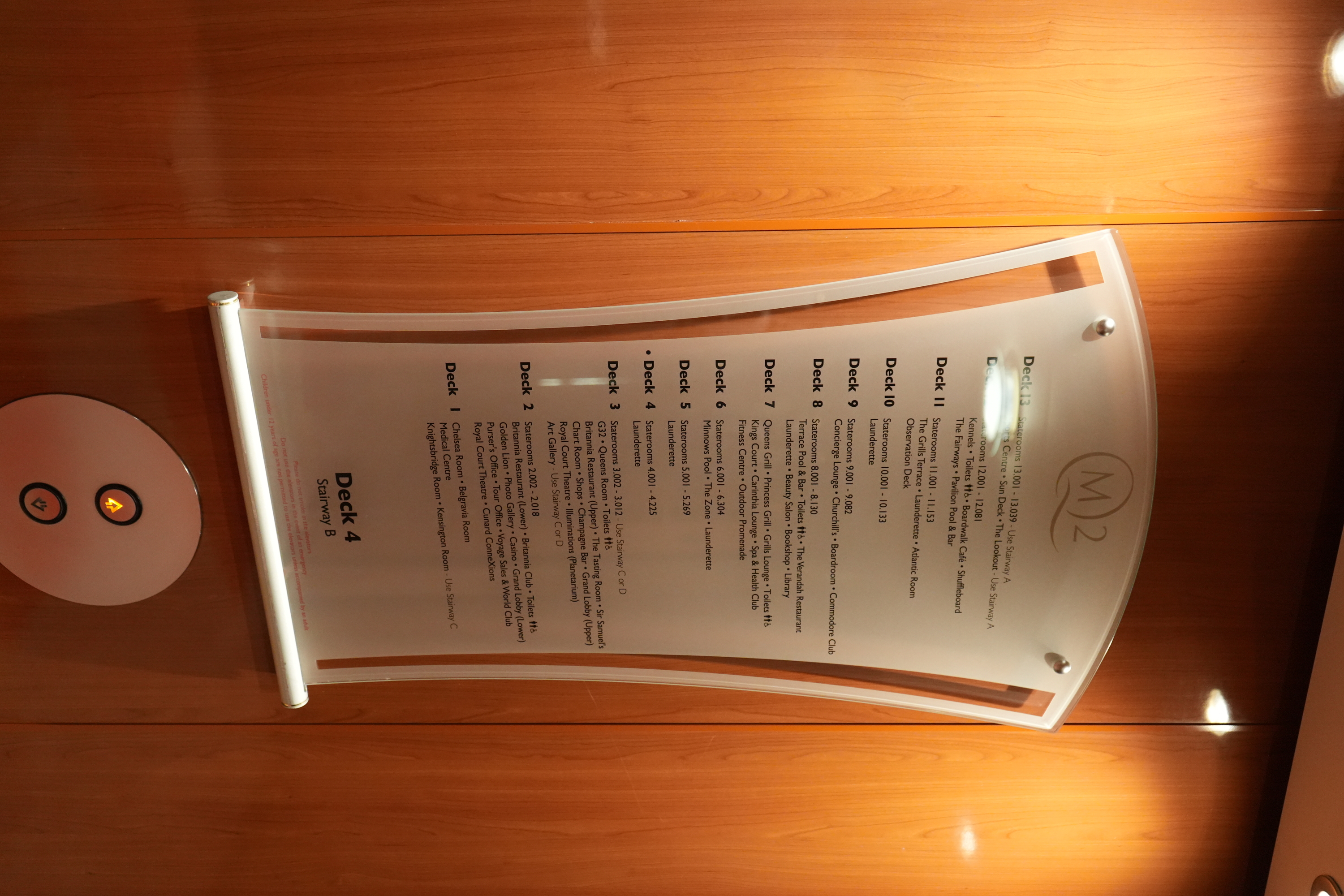
- The 2016 refit reworked the Grand Lobby and Kings Court and introduced the Carinthia Lounge. These spaces offer different ways to spend the hours between ports, from a place to sit near the promenade to meals in Kings Court and gatherings in the lobby.
Service
- In April 2004, the liner made her first westbound crossing from Southampton to New York. The eastbound return paired the new Cunard flagship with Queen Elizabeth 2. The tandem passage linked two generations of ships that served the same North Atlantic route.
- Longer voyages became part of the ship’s schedule alongside the crossings. Her first World Voyage followed in 2007, while Cunard continued to use her for regular Southampton and New York sailings. M539 belonged to that direct Atlantic service.
Day 5 of the Westbound Crossing
- Cunard scheduled a seven-night passage, leaving Southampton on December 15 and reaching New York on December 22. December 19 came after three complete sea days. Two further sea days were scheduled before the arrival on Day 8.
- The December 2024 crossing in the Ocean Liner Photography collection ran eastbound from New York to Southampton. This December 2025 sailing followed the route in reverse, with New York as the destination.
- OLP Social: December 19, 2025, was the fourth of six consecutive sea days on Cunard’s westbound crossing from Southampton, with arrival in New York set for December 22.
- OLP Social 2: Built by Chantiers de l’Atlantique in France, Cunard’s flagship was designed for regular Atlantic service and entered service from Southampton in January 2004.
- OLP Social 3: Four electric propulsion pods drive the liner. Two provide fixed thrust and two can turn, helping the ship maneuver in port and provide thrust on long crossings.
- OLP Social 4: Cunard began regular New York crossings with this liner in 2004. Her first World Voyage followed in 2007, extending her service beyond the Atlantic route.