RMS QUEEN MARY - 1964 TICKETS & MORE
September 10–15, 1964 | Southampton to New York – Tourist Class
This collection preserves the story of my friend, jazz musician Alan Rowe, through the original tickets, daily programs, menus and other memorabilia he saved from his September 10–15, 1964 transatlantic crossing aboard RMS Queen Mary (Cunard). Traveling Tourist Class from Southampton to New York, Alan was on his way to the United States after receiving a full scholarship to attend Berklee College of Music in Boston. During the crossing, he experienced life aboard one of the world’s great ocean liners and even had the opportunity to play with the ship’s band. Before his passing in 2009, Alan entrusted these pieces to me, making them an especially meaningful part of my collection and a lasting connection to his friendship, his music and his journey aboard Queen Mary.
The documents are displayed individually below. Click any image to enlarge it and read the details.


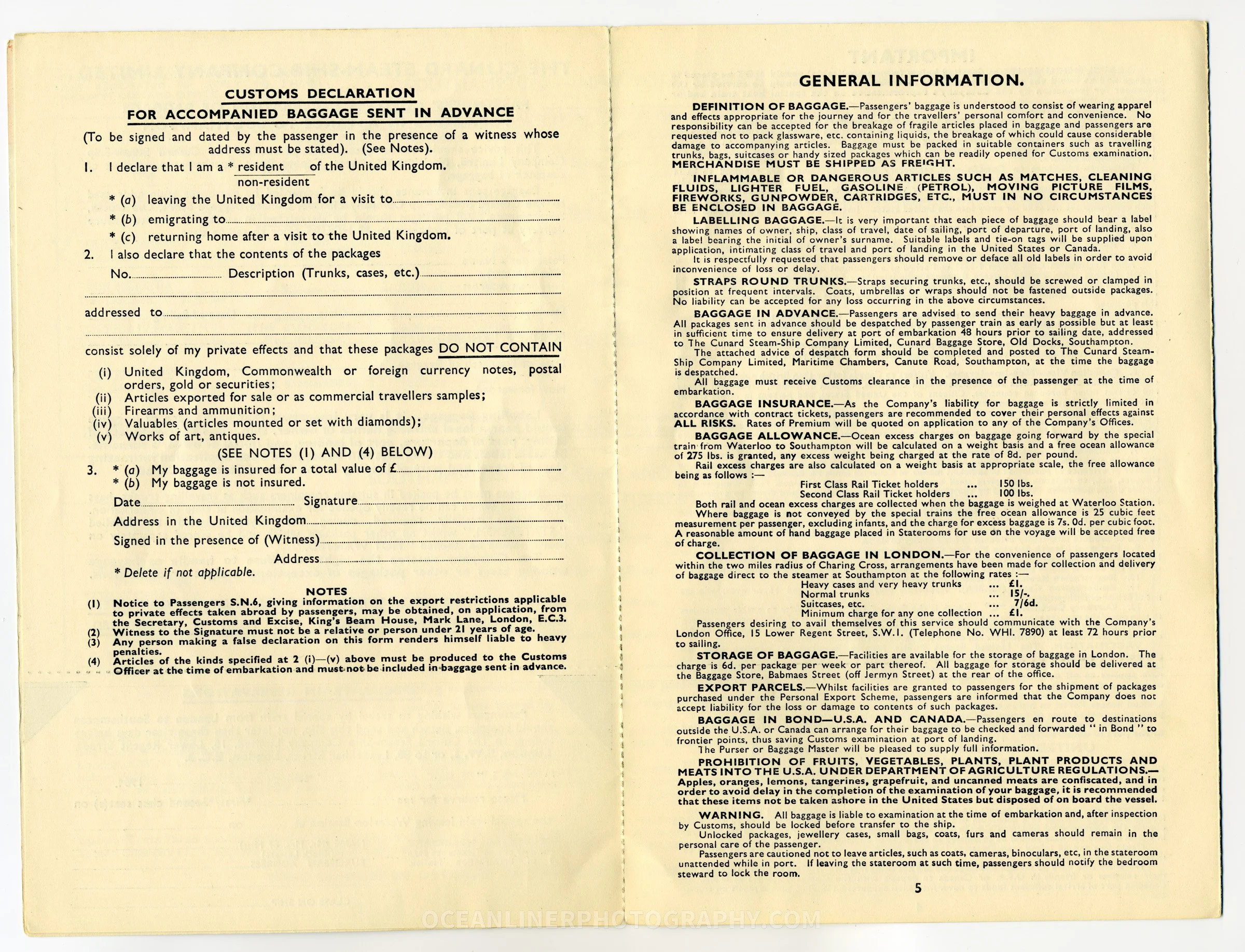

This collection preserves original tickets, daily programs, menus and other material from a transatlantic crossing aboard RMS Queen Mary from Southampton to New York on September 10–15, 1964. The documents belonged to my friend, jazz musician Alan Rowe, and provide a remarkable passenger-level record of traveling aboard the famous Cunard liner during the final years of regular transatlantic ocean travel.
Alan was traveling to the United States after receiving a full scholarship to attend Berklee College of Music in Boston. Rather than fly across the Atlantic, he chose to make the journey aboard Queen Mary, traveling in Tourist Class. He departed Southampton at 2:00 PM on September 10 and arrived in New York on September 15.
Before his passing in 2009, Alan entrusted this collection to me. Preserving the material together maintains its connection not only with Queen Mary, but with the young musician who carried it across the Atlantic as he began an important new chapter in his life. It is an especially meaningful part of my collection because it also preserves the memory of a friend and the story behind the objects he saved.
The Collection
Original Voyage Material:
The collection consists of original material retained from Alan Rowe’s September 1964 crossing aboard Queen Mary.
The surviving pieces include tickets, daily programs, menus and other passenger documents from the voyage.
Some were practical items intended to be used during the crossing, while others became souvenirs of the journey.
Keeping the material together preserves its connection with one passenger, one journey and a specific moment in the history of transatlantic travel.
Its documented connection with Alan gives the collection a personal history that extends beyond the individual objects themselves.
Tickets and Travel Documents:
Alan’s original travel material records his passage from Southampton to New York.
He traveled in Tourist Class aboard Queen Mary.
His passage cost £86/15/0, using Britain’s pre-decimal pounds, shillings and pence system.
The surviving documents provide a tangible record of the practical arrangements involved in crossing the Atlantic by liner in 1964.
Unlike a ticket preserved without any background information, these pieces retain a known connection to the passenger who actually used them.
Daily Programs:
Daily programs recorded the activities and entertainment available aboard Queen Mary during the crossing.
They provide a day-by-day view of life aboard the ship that photographs alone cannot recreate.
Entertainment, social activities and other scheduled events were an important part of filling the days during an Atlantic crossing.
The surviving programs help reconstruct the rhythm of Alan’s voyage more than six decades later.
They also provide context for his memories of the entertainment and music aboard the ship.
Menus and Dining:
Original menus preserve another important part of the passenger experience aboard Queen Mary.
Dining remained an important element of transatlantic travel even as airlines increasingly competed with ocean liners for passengers.
Alan remembered the quality of the food and the tradition of proper English tea during the crossing.
The menus provide a direct record of what Cunard was serving passengers aboard the ship in September 1964.
Preserved with Alan’s other voyage material, they help recreate everyday life aboard the liner rather than simply documenting her exterior appearance.
Alan Rowe’s 1964 Crossing
Southampton to New York:
Alan boarded Queen Mary in Southampton on September 10, 1964.
The ship departed at 2:00 PM for the westbound Atlantic crossing.
He traveled in Tourist Class.
The voyage ended in New York on September 15.
From New York, Alan continued toward Boston and Berklee College of Music.
The crossing therefore represented much more than transportation between Britain and the United States; it was the beginning of an important new stage in his life.
A Journey to Berklee:
Alan was making the journey to the United States after receiving a full scholarship to attend Berklee College of Music in Boston.
His musical talent had opened the opportunity for him to continue his education in the United States.
Choosing Queen Mary rather than an airplane turned the trip into a traditional Atlantic crossing at a time when that form of travel was rapidly declining.
His destination gives the collection a personal story beyond the maritime significance of the ship.
The crossing marked the beginning of an important period in Alan’s musical education and career.
A Musician Aboard Queen Mary:
Music naturally became part of Alan’s experience aboard the ship.
During the crossing, he had the opportunity to play with Queen Mary’s onboard band.
For a young jazz musician traveling to Berklee, the experience created a particularly fitting connection between the reason for his journey and life aboard the liner.
His memories of playing aboard the ship add a personal dimension that could never be recovered from the surviving paperwork alone.
Together, Alan’s recollections and the material he preserved provide a much richer account of the crossing.
Life Aboard the Crossing:
Alan recalled periods of rough weather during the voyage.
Despite the conditions at sea, he enjoyed the experience aboard Queen Mary.
Dining and entertainment were memorable parts of the journey.
Traditional English tea was among the experiences he remembered.
The crossing gave Alan several days aboard one of the world’s most famous passenger liners before beginning his new life as a student in the United States.
Crossing the Atlantic in 1964
Ocean Liners and the Jet Age:
By 1964, transatlantic passenger travel was undergoing a dramatic transformation.
Jet aircraft had made crossing the Atlantic by air significantly faster than traveling by ship.
Ocean liners such as Queen Mary were increasingly competing with airlines for passengers.
Alan’s decision to sail rather than fly therefore placed his journey within the closing years of regular transatlantic liner travel.
Only three years after his crossing, Queen Mary would complete her final year of Cunard service.
Tourist Class Travel:
Alan crossed the Atlantic in Tourist Class rather than First Class.
The surviving material therefore documents a passenger experience that can sometimes be overshadowed by accounts focusing primarily on the liner’s most luxurious accommodations.
Tourist Class was an important part of Queen Mary’s transatlantic service and allowed a broader range of passengers to travel aboard the ship.
Alan’s tickets, programs and menus help preserve that side of the liner’s history.
His collection provides a particularly valuable example because the original passenger and circumstances of the journey are known.
The Queen Mary in 1964
The Final Years of Transatlantic Service:
By the time of Alan’s voyage, Queen Mary had been carrying passengers across the Atlantic for nearly three decades.
The ship remained one of the most recognizable ocean liners in the world.
She continued operating alongside Queen Elizabeth as Cunard maintained regular transatlantic service in competition with increasingly dominant air travel.
Alan’s September 1964 crossing occurred during the final phase of this traditional liner service.
Queen Mary remained in Cunard service until 1967 before beginning her preservation in Long Beach, California.
A Different Kind of Historical Record:
This collection does not attempt to document the complete history or specifications of Queen Mary.
Instead, it preserves what one passenger encountered during one crossing.
The tickets record the journey itself.
The daily programs reveal how time aboard was organized.
The menus preserve part of the dining experience.
Alan’s own memories add details that cannot be found in the printed material.
Together, these pieces provide an unusually personal view of the ship during the final years of her Atlantic career.
From Alan’s Collection to Ocean Liner Photography
A Collection Entrusted to Me:
Alan preserved the material from his 1964 voyage for decades.
Before his passing in 2009, he entrusted the collection to me.
That personal connection makes these pieces especially meaningful within my larger ocean liner collection.
They remain associated with Alan and his journey rather than becoming anonymous examples of Cunard memorabilia.
Caring for the collection also provides a way to preserve the memory of the friend who originally saved it.
Preserving Alan’s Story:
Sharing the collection provides an opportunity to preserve more than the physical documents.
It also keeps the story of the passenger who originally carried them.
Alan was a young jazz musician crossing the Atlantic to pursue his education at Berklee.
His opportunity to play with Queen Mary’s band connects his musical life directly with the voyage.
His tickets, programs and menus preserve the physical record, while his story gives those objects their meaning.
Together, they document both maritime history and an important personal journey.
Preserving Ocean Liner Ephemera
Everyday Material as Maritime History:
Tickets, menus and daily programs were produced to be used during a voyage and were often discarded afterward.
Surviving examples preserve details that can disappear from more conventional histories of a ship.
They show how Cunard communicated with passengers and organized life aboard an Atlantic crossing.
Menus preserve the dining experience, while programs record entertainment and activities.
Tickets and travel documents connect the ship to individual passengers and specific journeys.
The Value of Keeping the Collection Together:
The strongest historical value of this material comes from its documented connection with Alan’s September 1964 voyage.
The pieces were not assembled later from unrelated sources.
They traveled aboard Queen Mary with the same passenger and remained together afterward.
Preserving that provenance allows the collection to tell a much richer story than the individual objects could tell on their own.
Alan’s personal recollections add another layer of history that cannot be replaced once the people who experienced these voyages are gone.
A Lasting Connection:
More than sixty years after the crossing, Alan’s tickets, programs, menus and other memorabilia remain a tangible record of traveling aboard Queen Mary during the closing years of the great transatlantic liners.
They also preserve the beginning of a young musician’s journey to Berklee and the United States.
Because Alan entrusted the collection to me before his passing, preserving and sharing it has become part of preserving his memory.
Within Ocean Liner Photography, this collection represents something more personal than maritime memorabilia alone: it keeps together the ship, the voyage, the music and the story of the friend who experienced them.
OLP Social: Original tickets, menus and daily programs preserve my friend Alan Rowe’s journey to study at Berklee College of Music. The young jazz musician also played with the ship’s band during his Tourist Class crossing.