QUEEN MARY 2
July 21, 2004 | Rotterdam, Netherlands
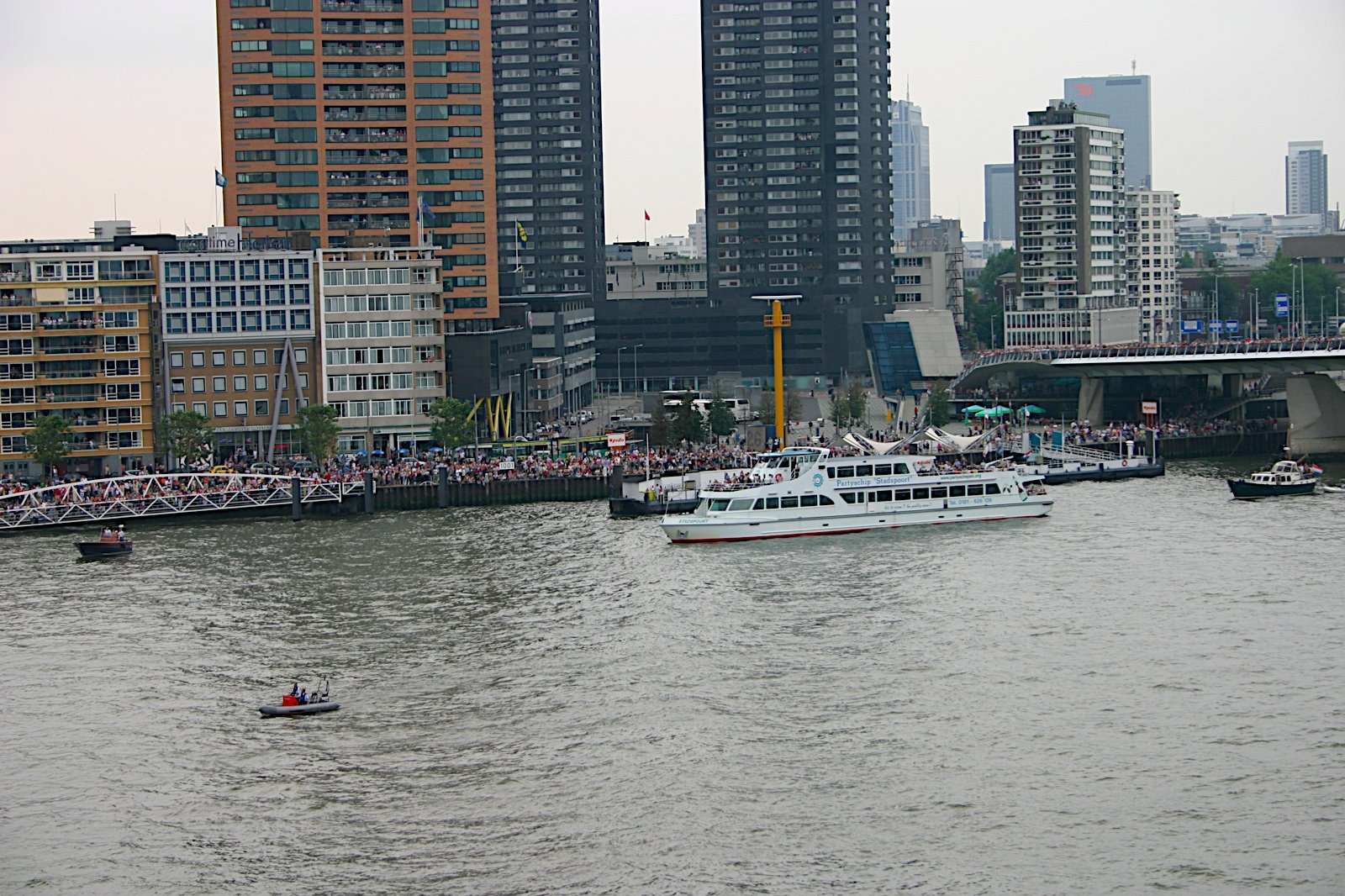
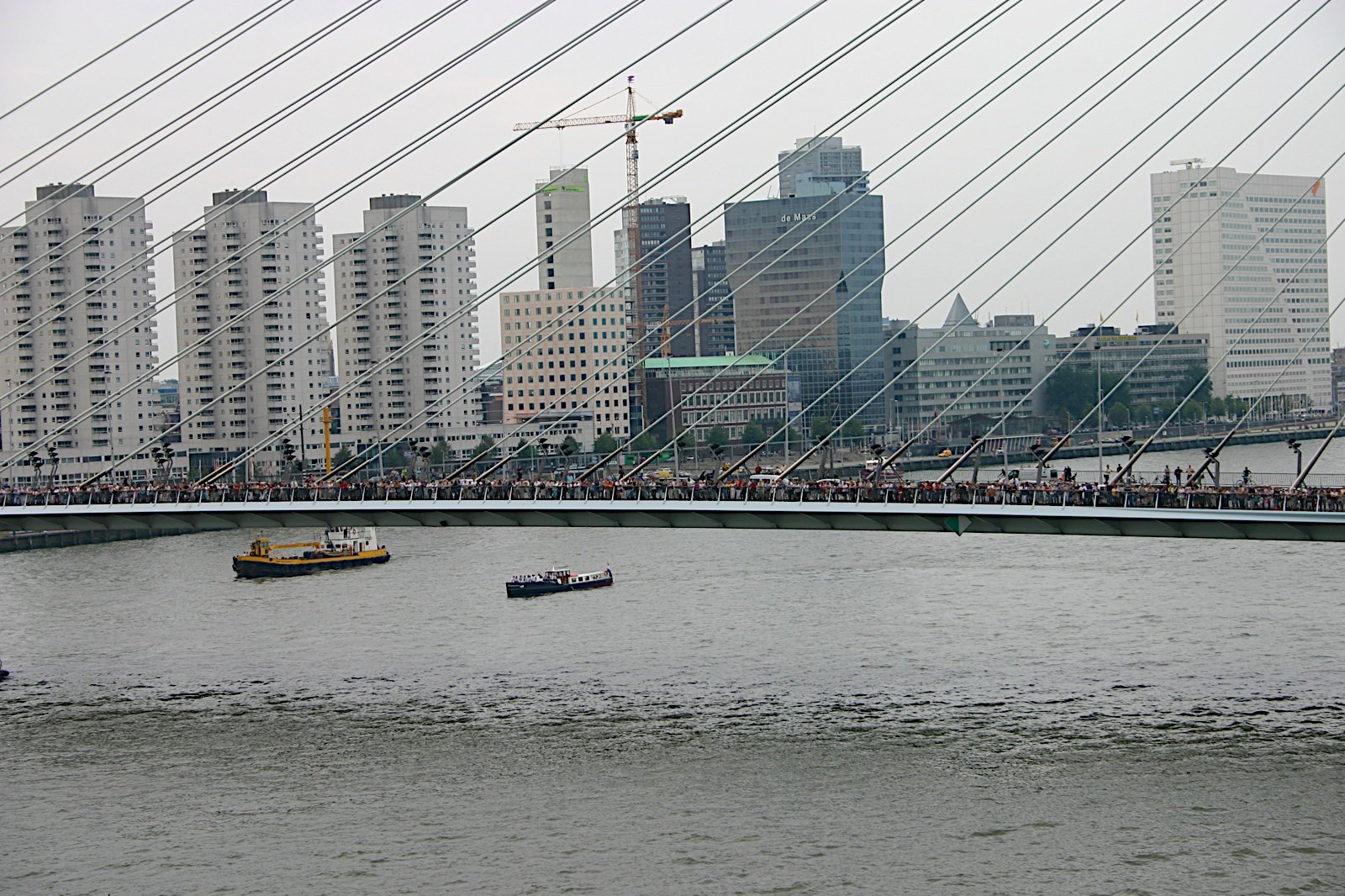
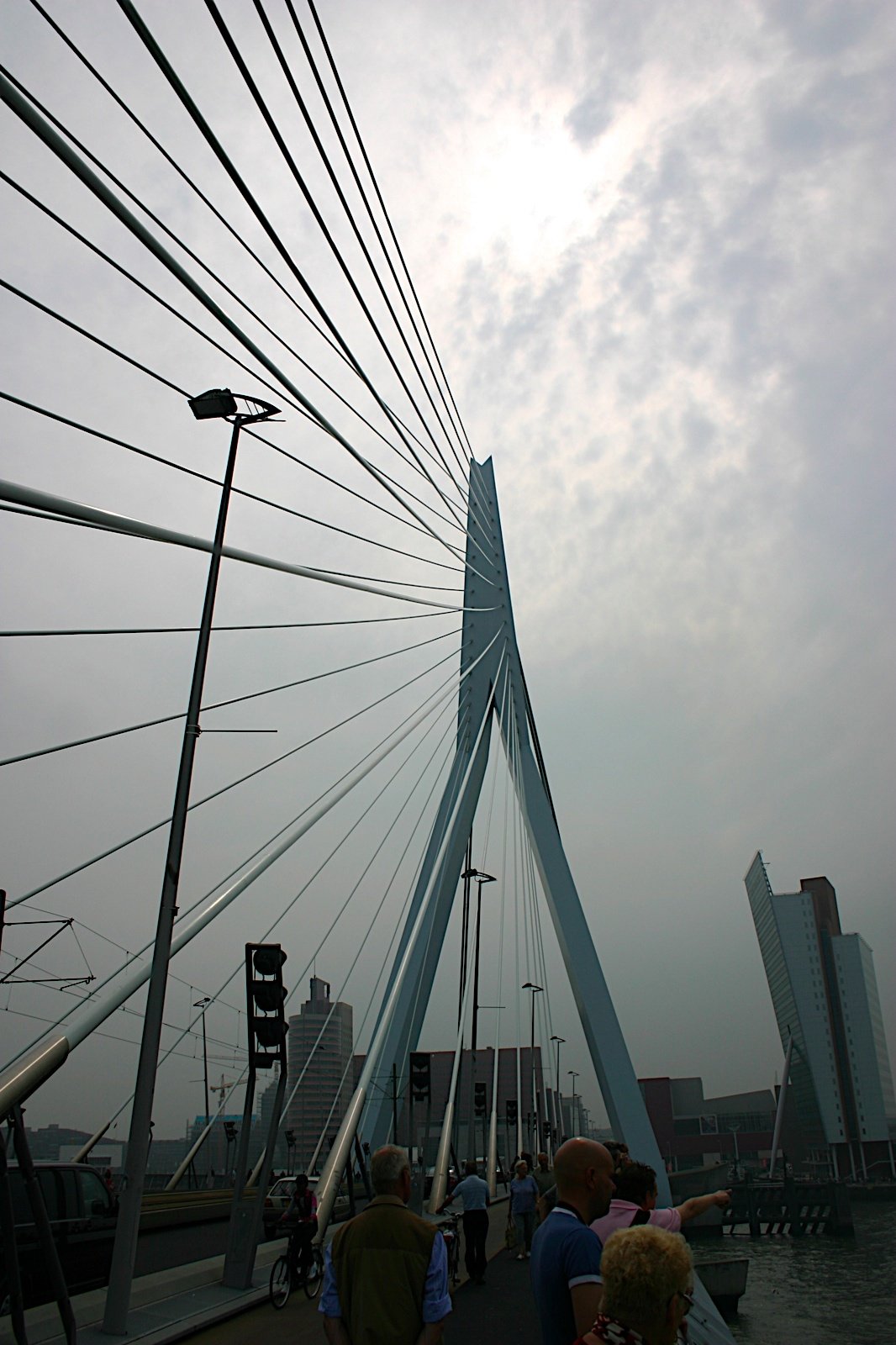
Queen Mary 2 (Cunard Line) in Rotterdam, Netherlands, on July 21, 2004, Day 11 of our Northern Europe cruise. Thousands of spectators gathered to watch the liner depart, with the crowds visible in this gallery. The visit followed an overnight call in Hamburg and was the final port before returning to Southampton.
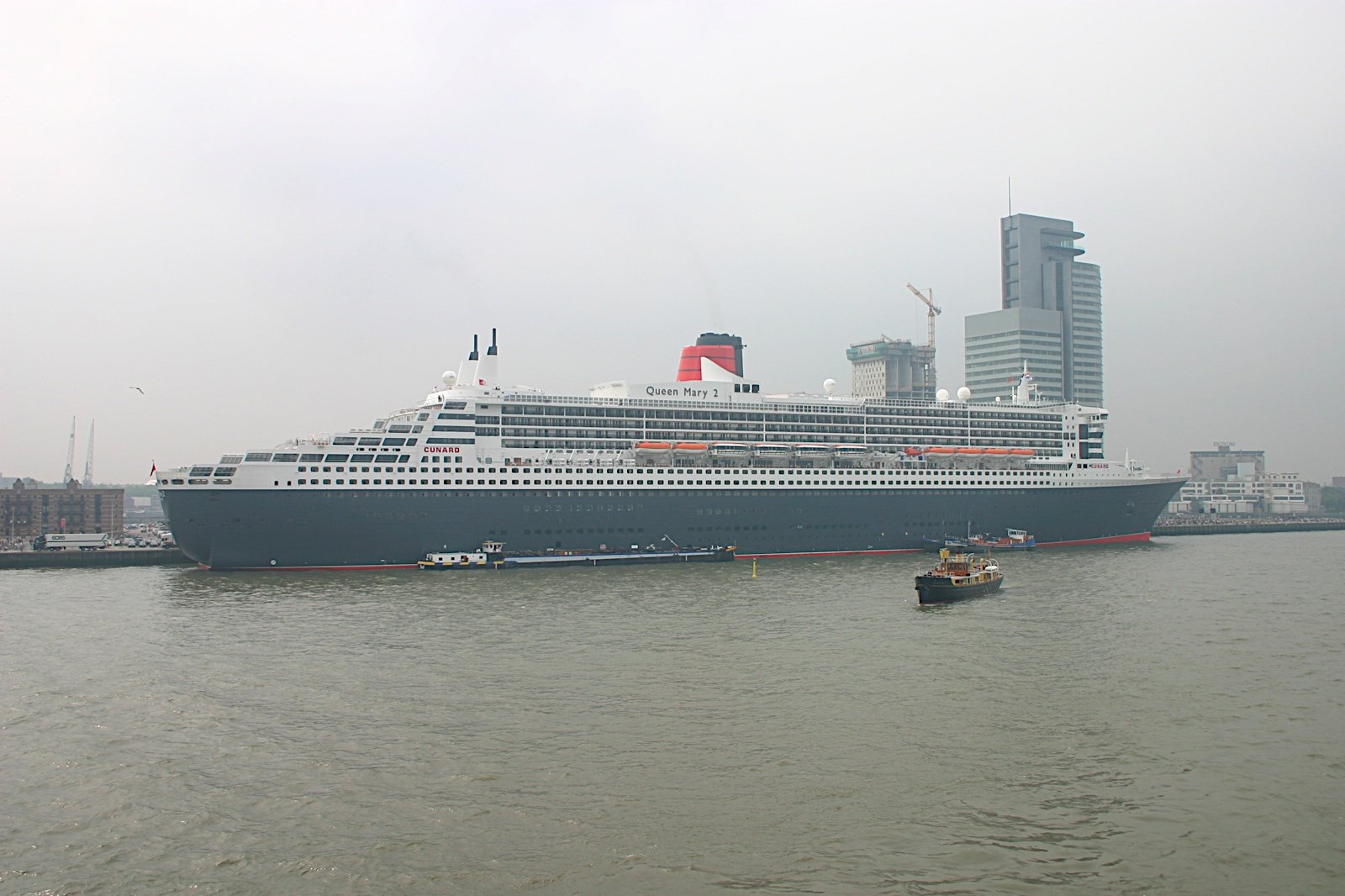
Queen Mary 2 entered service in January 2004 as Cunard’s new flagship and a purpose-built successor to Queen Elizabeth 2 in scheduled transatlantic service. Designed by a team led by naval architect Stephen Payne and constructed at Saint-Nazaire, France, she combined the strength and speed required for North Atlantic crossings with the accommodation and public spaces of a modern passenger ship.
At completion, she was the largest passenger ship ever built. Her long bow, high freeboard and distinctive proportions reflected her ocean-liner role, while her interiors continued Cunard traditions through formal dining rooms, lounges and a large ballroom. Our July 2004 photographs record the ship during her inaugural year, including the public interest surrounding her visits to Northern European ports.
Information List
Ship: Queen Mary 2
Operator: Cunard Line
Builder: Chantiers de l’Atlantique, Saint-Nazaire, France
Yard Number: G32
Keel Laid: July 4, 2002
Launched: March 21, 2003
Delivered: December 2003
Named: January 8, 2004
Godmother: Queen Elizabeth II
Entered Service: January 2004
Maiden Voyage: January 12, 2004
Ship Type: Ocean liner
Length: Approximately 1,132 feet / 345 meters
Beam: Approximately 135 feet / 41 meters
Draft: Approximately 34 feet / 10.3 meters
Gross Tonnage: Approximately 148,500 GT as built
Original Passenger Capacity: Approximately 2,620 at double occupancy
Crew: Approximately 1,250
Service Speed: Approximately 28 knots
Maximum Speed: Approximately 30 knots
Propulsion: Integrated electric propulsion with four podded propulsors
Original Registry: Southampton, United Kingdom
IMO Number: 9241061
Our Cruise: 11-night Northern Europe cruise roundtrip from Southampton
Cruise Dates: July 11–22, 2004
Cruise Day Shown: Day 11
Location Shown: Rotterdam, Netherlands
Date Shown: July 21, 2004
Visit Type: Port call during the ship’s inaugural year, including departure views and spectators
History and Features
Construction and Entry Into Service
Queen Mary 2 was built by Chantiers de l’Atlantique at Saint-Nazaire, France.
Her design was developed specifically to maintain Cunard’s scheduled North Atlantic passenger service.
Construction began during the early 2000s, with her keel laid in July 2002 and her launch taking place in March 2003.
The completed liner was delivered to Cunard in December 2003.
Queen Elizabeth II officially named the ship at Southampton on January 8, 2004.
Her maiden voyage departed Southampton for Fort Lauderdale on January 12, 2004.
Design and Features
Her hull and structure were designed for repeated ocean crossings, including the demanding conditions of the North Atlantic.
A long bow, substantial freeboard and elevated lifeboat positions distinguish her profile from that of a conventional cruise ship.
Diesel engines and gas turbines supplied electricity for her propulsion system.
Four podded propulsors provided the power and maneuverability required by the large liner.
Public spaces included the Britannia Restaurant, Queens Room, Royal Court Theatre, Illuminations, Commodore Club, Golden Lion pub and library.
Her promenade deck and extensive outdoor areas offered opportunities to view ports and coastal scenery during this Northern Europe voyage.
Service
Queen Mary 2 began passenger service in January 2004 and introduced Cunard’s new flagship to ports on both sides of the Atlantic.
Her schedule combined transatlantic crossings with cruises to other regions.
The July 2004 Northern Europe itinerary took place approximately six months after her maiden voyage.
Queen Elizabeth 2 remained in the Cunard fleet at this time, with the two ships representing different generations of ocean-liner design.
European port visits during her inaugural year brought the new liner to audiences beyond her regular transatlantic terminals.
Later refurbishments included work at Blohm+Voss in Hamburg, with a major remastering completed in 2016.
Our 2004 Northern Europe Cruise
We traveled aboard Queen Mary 2 from July 11 to July 22, 2004, during her inaugural year.
Day 1 – July 11: Embarkation in Southampton, England.
Day 2 – July 12: At sea.
Day 3 – July 13: South Queensferry for Edinburgh, Scotland.
Day 4 – July 14: At sea.
Day 5 – July 15: Norwegian fjords, including Hellesylt and Geiranger.
Day 6 – July 16: Ålesund, Norway.
Day 7 – July 17: Bergen, Norway.
Day 8 – July 18: At sea.
Day 9 – July 19: Arrival in Hamburg, Germany.
Day 10 – July 20: Hamburg, completing the overnight call before departure.
Day 11 – July 21: Rotterdam, Netherlands.
Day 12 – July 22: Return to Southampton and disembarkation.
This Rotterdam gallery forms part of the same voyage series as our Scotland, Norwegian port and Hamburg collections.
Rotterdam – July 21, 2004
Rotterdam was the final port call of our Northern Europe cruise before returning to Southampton.
The visit took place on Day 11, following Queen Mary 2’s overnight stay in Hamburg on July 19–20.
Thousands of people came to watch the liner leave Rotterdam, reflecting the interest surrounding the new ship during her inaugural year.
The spectators appear in our photographs, preserving both the ship’s departure and the people who gathered to see her.
Viewed from aboard, the crowds added another perspective to the departure, showing how the liner’s visit was experienced from shore.
Our photographs document this part of the voyage while we were traveling aboard Queen Mary 2.
After leaving the Netherlands, the ship returned to Southampton, where our cruise ended on July 22.
Legacy
Queen Mary 2 continued Cunard’s ocean-liner tradition into the twenty-first century.
Her inaugural-year voyages combined scheduled Atlantic crossings with visits to ports throughout other regions.
This Rotterdam gallery records the enthusiasm surrounding the new liner, with the departure crowds forming a significant part of the photographs.
Together with the other galleries from the voyage, these images preserve our July 2004 Northern Europe cruise during the ship’s first year of service.
OLP Social: Thousands gathered to watch her leave Rotterdam during our Northern Europe cruise, the final port before Southampton in her inaugural year of service.
OLP Social 2: Built by Chantiers de l’Atlantique in France, she began her maiden voyage in January 2004, just six months before our summer cruise through Northern Europe.
OLP Social 3: At 1,132 feet long and 148,500 gross tons as built, she was the world’s largest passenger ship, with room for 2,620 guests at double occupancy in 2004.
OLP Social 4: Designed for regular Atlantic crossings, her long bow and high freeboard carried Cunard’s ocean liner tradition into a new century alongside Queen Elizabeth 2.