QUEEN MARY 2
July 13, 2004 | Northern Europe Cruise – Day 3: South Queensferry / Edinburgh, Scotland
On Day 3 of our July 2004 Northern Europe cruise, Queen Mary 2 (Cunard Line) anchored off South Queensferry on July 13 during her inaugural year. Positioned in the Firth of Forth near the historic Forth Bridge, the call provided access to Edinburgh while offering distinctive views of Cunard's new flagship against one of Scotland's best-known maritime and engineering landscapes.
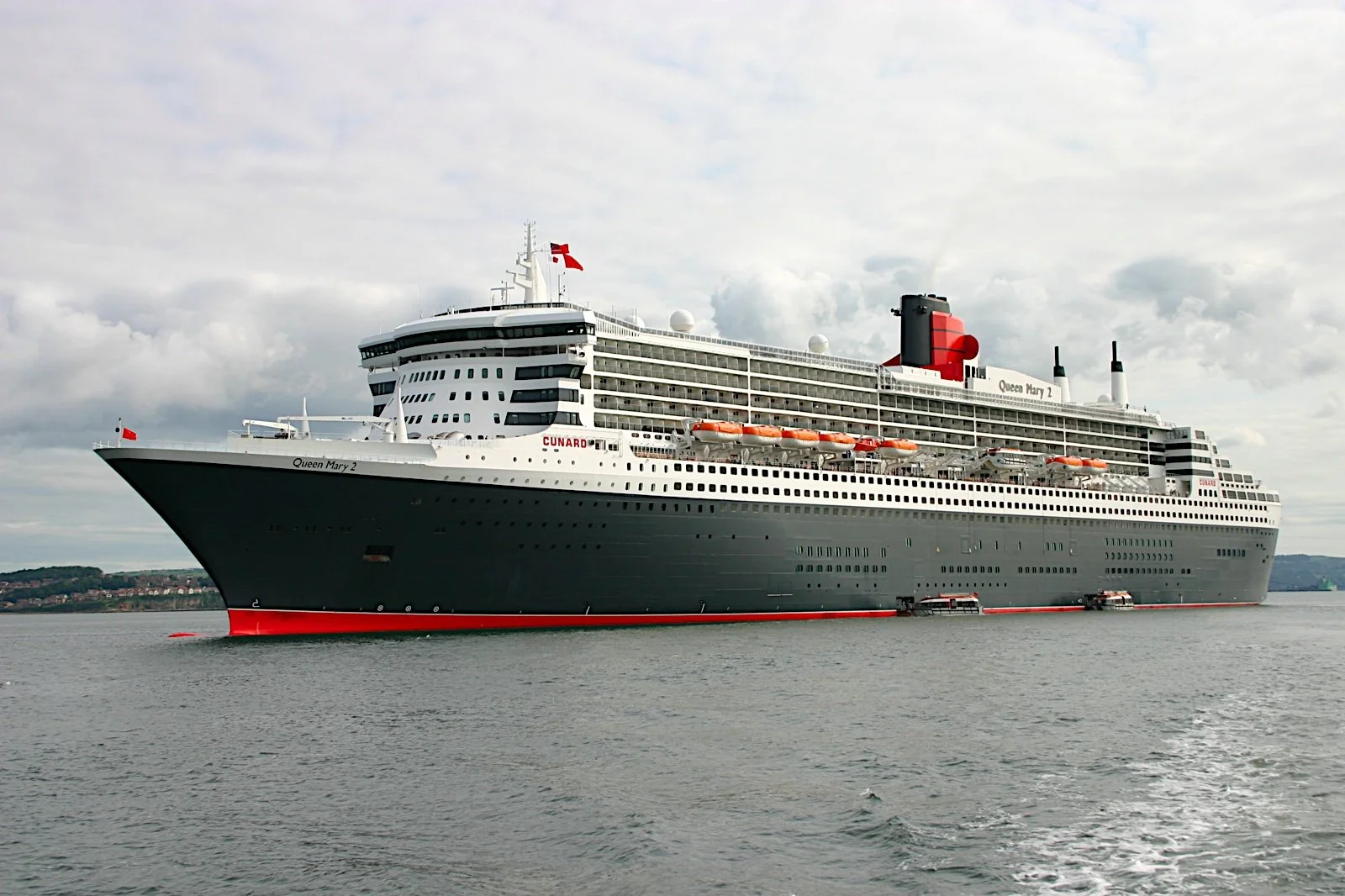
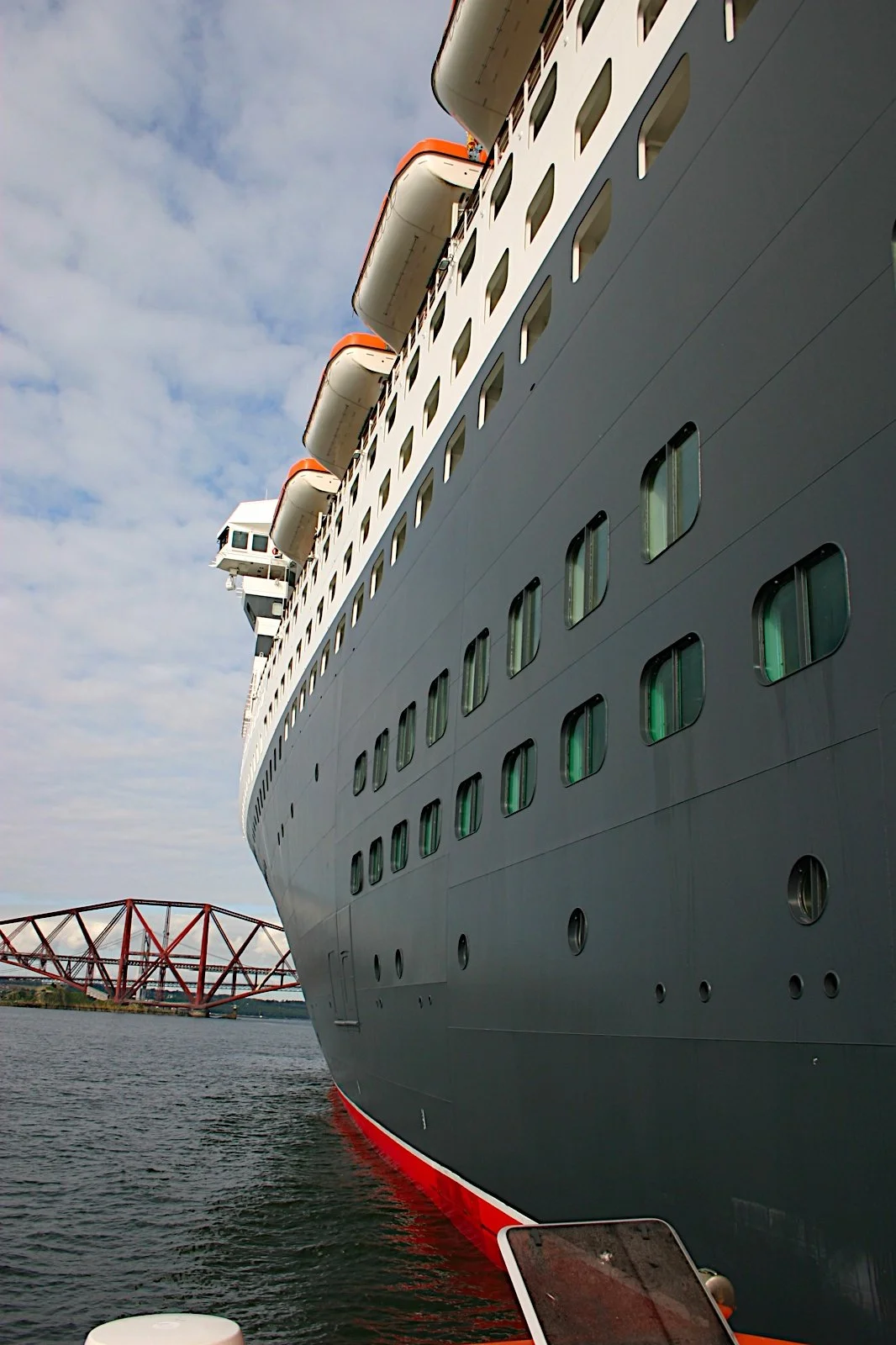
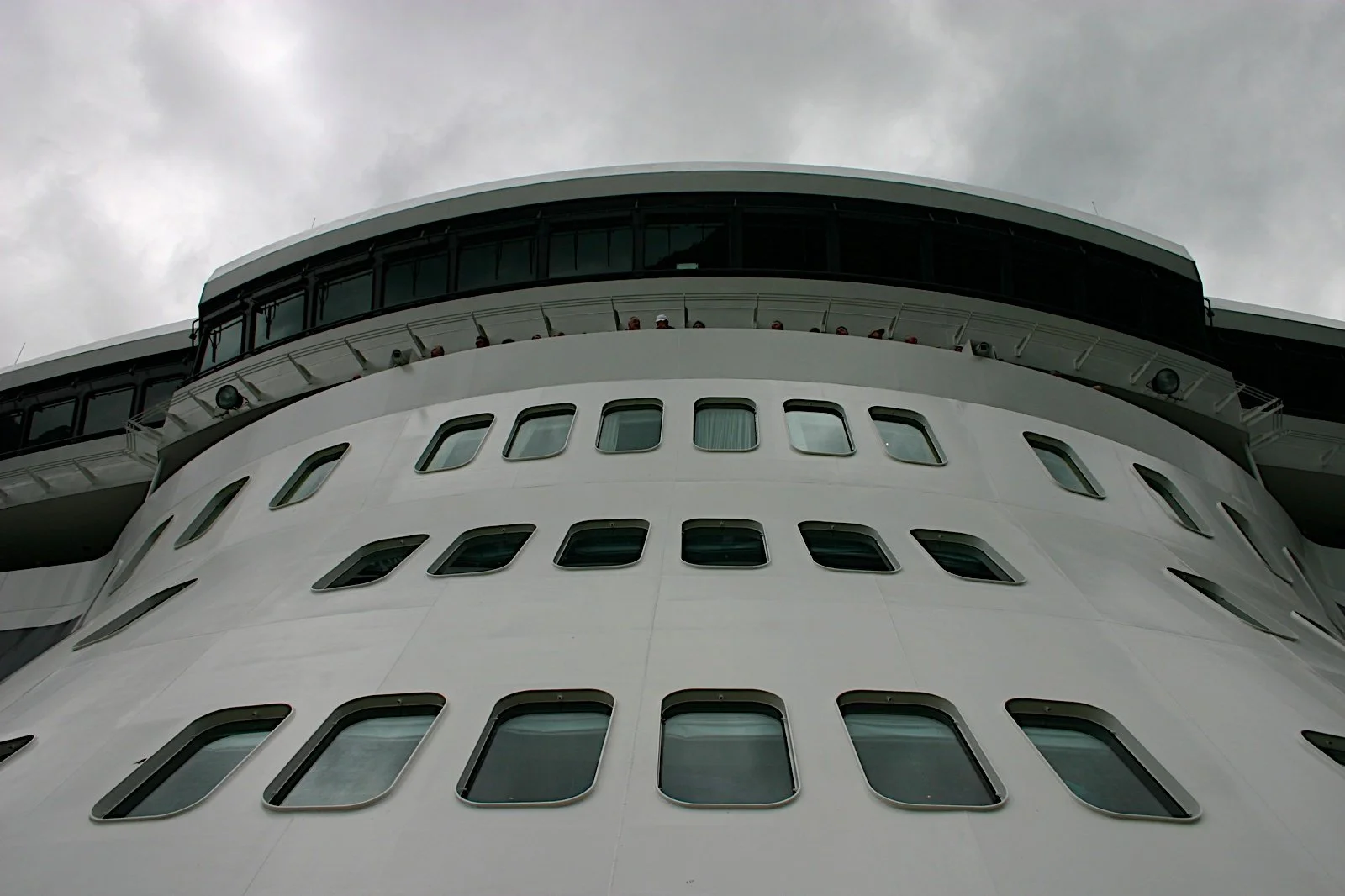
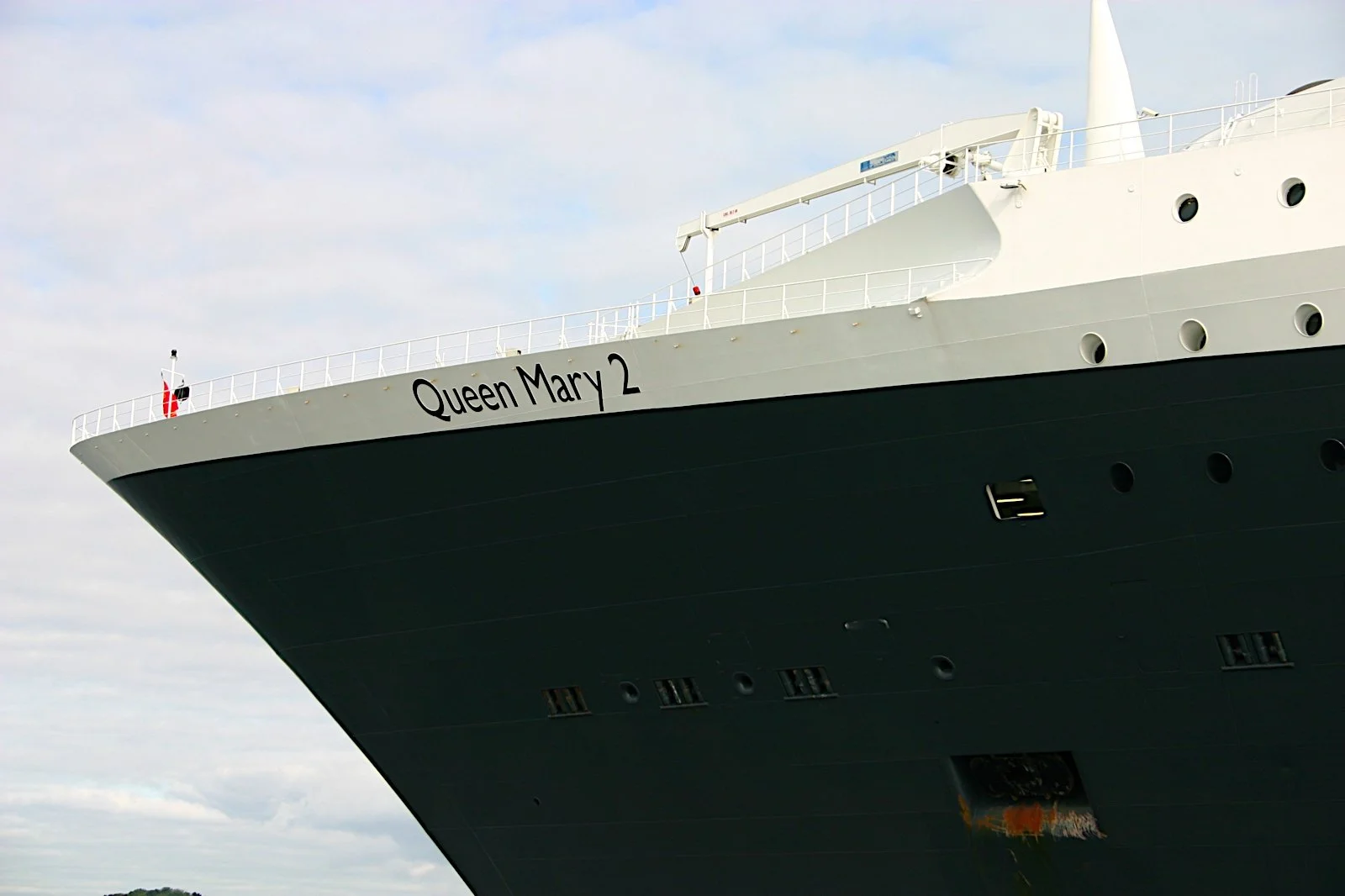
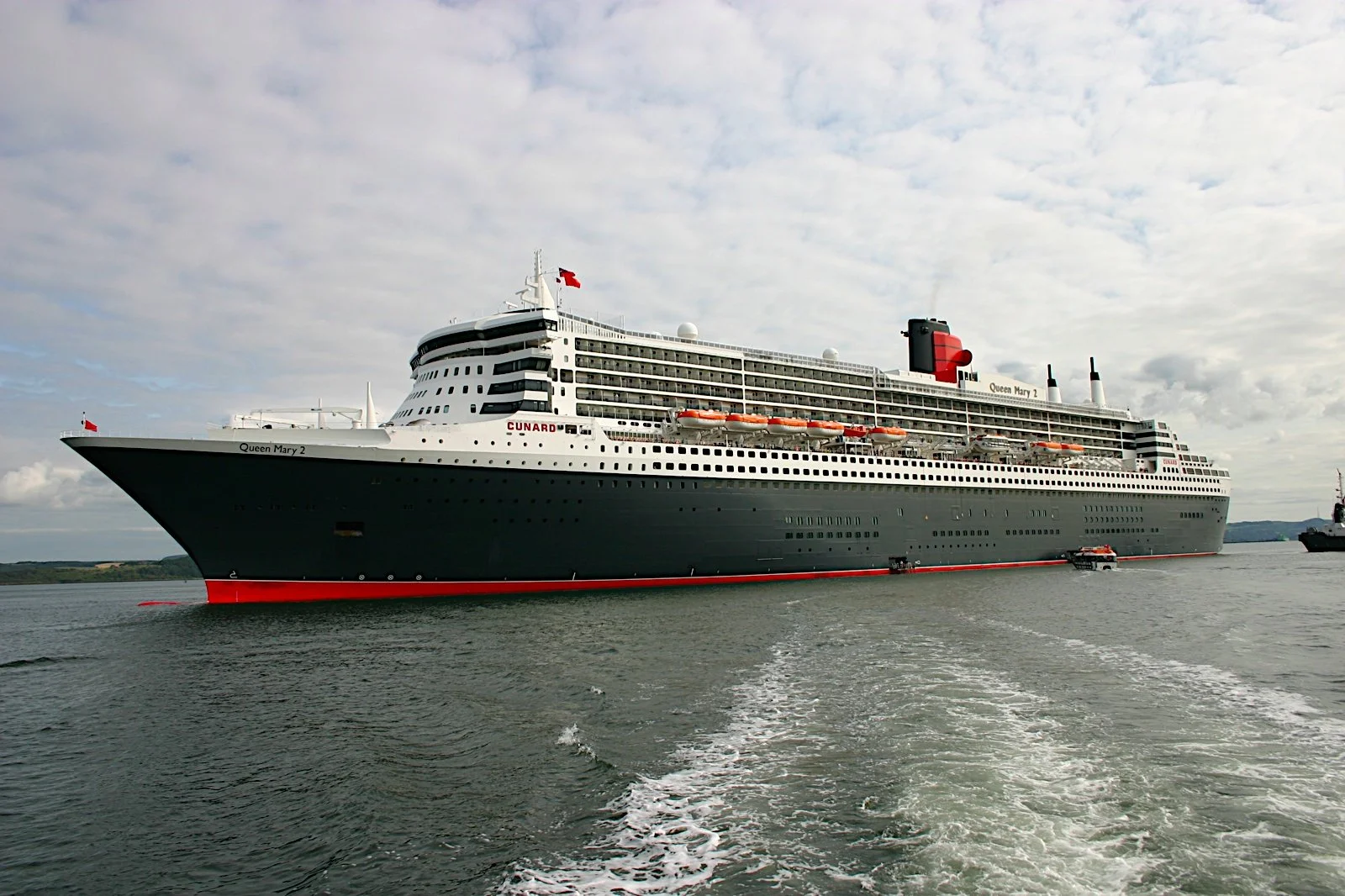
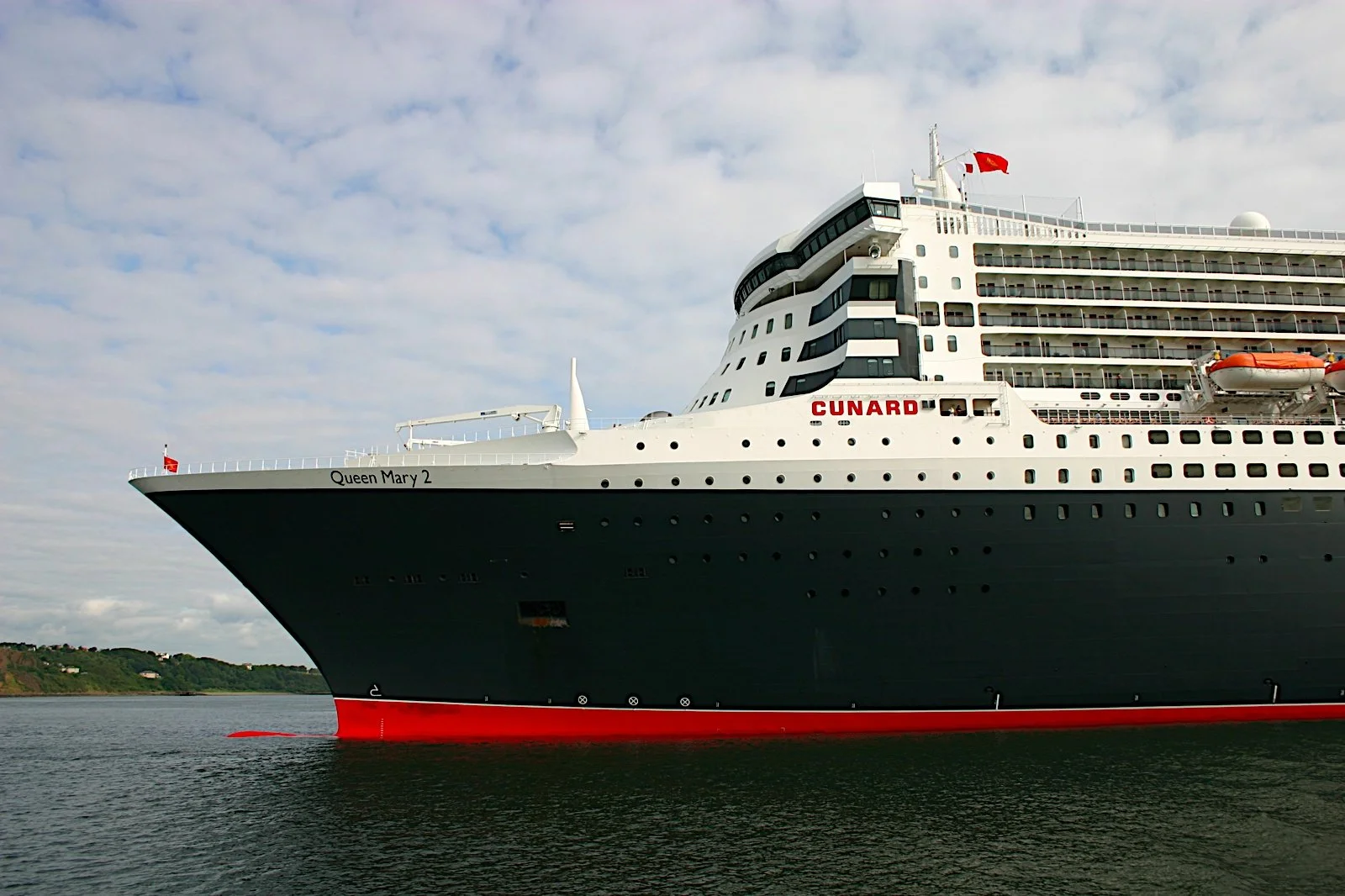
Queen Mary 2 anchored in the Firth of Forth off South Queensferry on July 13, 2004, marking Day 3 of our Northern Europe cruise aboard Cunard's new flagship. Built by Chantiers de l'Atlantique in Saint-Nazaire, France, and entering service only six months earlier, Queen Mary 2 was still in her inaugural season when she reached Scotland. The call combined a visit to Edinburgh with one of the voyage's most distinctive maritime settings, placing the world's newest ocean liner near the historic Forth Bridge and the communities lining the Firth of Forth. This gallery forms part of the larger Ocean Liner Photography record of our July 2004 voyage aboard Queen Mary 2.
Information List
Name: Queen Mary 2
Operator: Cunard Line
Builder: Chantiers de l'Atlantique, Saint-Nazaire, France
Yard Number: G32
Keel Laid: July 4, 2002
Launched: March 21, 2003
Delivered: December 26, 2003
Named: January 8, 2004
Godmother: Queen Elizabeth II
Maiden Voyage: January 12, 2004
Ship Type: Ocean liner
Length: Approximately 1,132 feet / 345 meters
Beam: Approximately 131 feet / 40 meters at the waterline
Draft: Approximately 34 feet / 10.3 meters
Gross Tonnage: Approximately 148,500 GT when delivered
Passenger Capacity: Approximately 2,620 passengers at double occupancy
Service Speed: Approximately 28 knots
Maximum Speed: Approximately 30 knots
Original Registry: Southampton, United Kingdom
IMO: 9241061
Voyage: July 2004 Northern Europe Cruise
Cruise Day: Day 3
Visit Shown: July 13, 2004
Location: South Queensferry / Edinburgh, Scotland
Waterway: Firth of Forth
Personal Voyage: Traveled aboard Queen Mary 2
History and Features
Queen Mary 2 in Her Inaugural Year:
Queen Mary 2 entered service for Cunard in January 2004, making the July visit to Scotland part of her inaugural season.
Designed by naval architect Stephen Payne and built by Chantiers de l'Atlantique, she was created specifically to continue Cunard's scheduled transatlantic liner tradition.
At completion, Queen Mary 2 was the largest passenger ship ever built and the largest ocean liner in history.
Her early cruises introduced the new flagship to ports throughout Europe only months after her maiden voyage.
First-season calls attracted considerable attention as communities encountered the enormous new Cunard liner.
Our 2004 Northern Europe Cruise:
We embarked aboard Queen Mary 2 at Southampton on July 11, 2004, beginning our Northern Europe cruise during the ship's inaugural year.
July 11 was Day 1 of the voyage, followed by a day at sea on July 12.
On July 13, Day 3, Queen Mary 2 reached the Firth of Forth for the cruise's call at South Queensferry and Edinburgh.
Scotland was the first major destination of the voyage before Queen Mary 2 continued toward Norway.
The itinerary later included Norwegian destinations as well as Germany and the Netherlands before returning to Southampton.
The voyage is preserved in a master Ocean Liner Photography gallery, with individual port galleries documenting several destinations in greater detail.
This South Queensferry and Edinburgh collection represents the first individual port chapter in that voyage series.
Day 3 – South Queensferry and Edinburgh:
Queen Mary 2 arrived in the Firth of Forth on July 13, 2004.
The visit took place only about six months after the ship entered passenger service.
The call was part of the series of inaugural port visits made by Queen Mary 2 during this Northern Europe voyage.
The liner remained offshore at South Queensferry while passengers traveled ashore by tender.
South Queensferry provided access to Edinburgh while giving passengers distinctive views of Queen Mary 2 anchored within the Firth of Forth.
Contemporary photographs independently document Queen Mary 2 in the River Forth on July 13, confirming the date of the visit.
South Queensferry and the Firth of Forth:
South Queensferry is located on the southern shore of the Firth of Forth, west of central Edinburgh.
The town has a long history associated with crossings of the Forth.
Its name reflects the ferry traditionally associated with Queen Margaret of Scotland and travel across the water.
For visiting passenger ships, South Queensferry provides access to Edinburgh while offering a distinctive anchorage within the Firth.
The location combines passenger-ship activity with one of Scotland's most historically important transportation corridors.
A Tender Port:
Queen Mary 2 remained offshore during the South Queensferry call rather than docking directly alongside a cruise terminal.
Passengers traveled between the liner and shore using tenders.
Tender operations provided unusually close water-level perspectives of the ship.
Queen Mary 2's approximately 1,132-foot length and high superstructure were particularly imposing when viewed from the much smaller tender craft.
The offshore anchorage also allowed the liner to be seen within the broader landscape of the Firth of Forth.
The Forth Bridge:
The Forth Bridge is one of Scotland's most recognizable engineering landmarks.
Opened in 1890, the railway bridge crosses the Firth of Forth between South Queensferry and North Queensferry.
Its massive cantilever structure represented a major engineering achievement of the late nineteenth century.
The bridge has remained an important part of Britain's railway network for more than a century.
Queen Mary 2 appearing near the Forth Bridge created a striking contrast between two major engineering achievements separated by more than 100 years.
The setting helps distinguish this gallery from the other port calls documented during the cruise.
Edinburgh:
South Queensferry serves as an important gateway for cruise passengers visiting Edinburgh.
Scotland's capital contains a concentration of historic architecture extending from the medieval Old Town to the Georgian New Town.
Edinburgh Castle dominates the city from Castle Rock.
The Royal Mile connects the castle area with the Palace of Holyroodhouse.
Edinburgh provided a major cultural destination during the Scottish portion of our Northern Europe cruise.
Returning to South Queensferry brought passengers back to the distinctive sight of Queen Mary 2 anchored within the Firth of Forth.
Designed for Ocean Service:
Although this voyage was a cruise rather than a scheduled Atlantic crossing, Queen Mary 2 had been designed primarily as an ocean liner.
Her high freeboard, long bow, deep draft and reinforced structure were developed for repeated operation on the North Atlantic.
Lifeboats were positioned higher above the water than on conventional cruise ships to protect them from heavy seas.
Integrated electric propulsion powered four podded propulsors and provided the speed required for scheduled liner service.
Those proportions made the ship particularly distinctive when seen against coastal communities and landmarks around South Queensferry.
A New Generation of Cunard:
The 2004 voyage occurred while Queen Elizabeth 2 was still operating for Cunard.
QE2 had maintained the company's ocean-liner tradition since entering service in 1969.
Queen Mary 2 assumed Cunard's principal transatlantic role while QE2 increasingly concentrated on cruising and special voyages.
During several years of overlapping service, the two ships represented different generations of Cunard ocean-liner design.
Traveling aboard Queen Mary 2 in July 2004 provided an opportunity to experience the new flagship at the beginning of this transition.
Continuing the Voyage:
Following the Scottish portion of the cruise, Queen Mary 2 continued toward Norway.
The Norwegian portion of the voyage produced some of the most dramatic settings in the Ocean Liner Photography 2004 collection.
Later calls brought the ship to the Norwegian fjords and coastal cities before the voyage continued to Germany and the Netherlands.
Those individual galleries will form the following chapters in this same cruise series as they are converted to the current Ocean Liner Photography format.
Ocean Liner Photography Voyage Series:
This gallery forms part of the Ocean Liner Photography record of our July 2004 Northern Europe cruise aboard Queen Mary 2.
The master voyage page documents the cruise as a whole.
Individual galleries preserve the ship at South Queensferry, Norwegian destinations and other ports visited during the voyage.
Using the cruise-day sequence connects these photographs as a single journey rather than treating each port as an unrelated ship gallery.
The series provides a firsthand photographic record of traveling aboard Queen Mary 2 during her inaugural season.
Legacy:
The South Queensferry visit combined two distinctive examples of maritime and engineering history: Cunard's new twenty-first-century ocean liner and the nineteenth-century Forth Bridge.
The call occurred only six months after Queen Mary 2 entered service, when visits by the new flagship remained significant events for the ports receiving her.
For Ocean Liner Photography, Day 3 marks the first major port chapter of our July 2004 Northern Europe voyage.
Together with the galleries that follow, these photographs preserve an early chapter in the career of a ship that would become the world's last regularly scheduled transatlantic ocean liner.
OLP Social: Day 3 of our Northern Europe cruise brought us to an offshore anchorage near the historic Forth Bridge. Tenders connected the new liner with South Queensferry for our visit to Edinburgh.